Moose Population Growth in Washington
It's an amazing time to be an outdoors person in Washington State, especially if you've been around for a while and remember when spotting a moose felt like a once-in-a-lifetime miracle. For decades, these magnificent animals were largely absent from our landscapes, a rare ghost story whispered by a lucky few. But things have changed dramatically, and now, not only are moose more regularly sighted, but Washington's moose population is experiencing a truly remarkable growth, offering limited, but coveted, hunting opportunities for the dedicated few. This guide is here to shed light on this fascinating comeback story, exploring how moose have re-established themselves in Washington, where they're thriving, and what it all means for our state's wildlife and those of us who love to pursue them.
The Return of the Gentle Giants: A Washington Success Story
For a long time, the idea of moose roaming freely across Washington's diverse terrain felt like a dream. Historical accounts painted a picture of sparse, transient populations, often just wanderers from neighboring states or provinces. Yet, in what has become a quiet triumph for wildlife conservation and adaptation, these incredible animals have not just returned; they are flourishing, particularly in the northeastern corner of our state. Understanding this population growth means looking back at their historical presence, or lack thereof, and appreciating the journey that brought them back from the brink of obscurity.
Early Sightings and Lingering Uncertainty
If you asked a hunter or outdoors enthusiast in Washington, say, 50 or 60 years ago, about moose, you’d likely get a shrug or a tale of a single, almost mythical sighting. Moose were never considered a significant resident species in Washington for much of the 20th century. While historical records indicate some presence, likely extensions from robust populations in Idaho and British Columbia, they were largely fleeting. These animals need specific habitats—mixes of mature timber, wet riparian areas, and plenty of young browse—and much of Washington simply didn't provide that in a continuous, connected fashion, or at least not in a way that supported sustained populations. It was truly a rare treat to catch a glimpse, something you'd tell your grandkids about.
This scarcity led to a general perception that Washington wasn't "moose country." We had our elk, our deer, and our bears, but moose seemed to belong to places like Montana, Idaho, or Alaska. This perspective shaped early wildlife management, which naturally focused on species with established populations. There wasn't much thought given to managing a moose population because, well, there wasn't really one to manage in any meaningful sense. This makes their recent resurgence all the more impressive and a testament to the adaptability of these animals and, perhaps, subtle changes in our landscapes.
The Selkirk Foothold: A New Beginning
The true turning point for Washington's moose population began in the remote and rugged Selkirk Mountains, straddling the border with Idaho and British Columbia. This area, with its dense forests, numerous wetlands, and ample forage, provided the perfect entry point and sanctuary for moose dispersing from the thriving herds just across the border. It wasn't a coordinated reintroduction effort by wildlife agencies, but rather a natural migration, a slow but steady push into new, unoccupied territory.
These pioneering moose found a largely unpressured environment. With little competition from other large ungulates in their specific niche, abundant food sources in regenerating forests from past logging or fires, and relatively few predators, they were able to establish a breeding population. The dense cover offered protection, and the mosaic of older timber and newer growth provided both shelter and sustenance. This initial establishment in the Selkirks proved to be the critical foundation, a spring-board from which these animals would eventually expand their range significantly throughout the northeastern part of the state. It set the stage for what we now recognize as the Selkirk Moose Herd, which became the backbone of Washington's burgeoning moose numbers.
Unpacking the Population Boom
The story of Washington's moose isn't just about their return; it's about their impressive growth and spread. What factors have allowed them to not only survive but truly thrive in certain areas of the state? It's a complex mix of environmental conditions, human influence on the landscape, and the inherent resilience of the species itself. Understanding these drivers helps us appreciate the health of our current herds and anticipate where they might continue to expand.
Range Expansion and Dispersal Patterns
Once established in the Selkirks, the moose began a gradual but persistent expansion. From their initial stronghold in Pend Oreille and Spokane counties, they started pushing westward and southward. This dispersal wasn't a sudden explosion but a slow creep, with individual moose and small family groups exploring new territories. Over the past few decades, their presence has become increasingly notable in counties like Ferry, Stevens, and even into parts of Okanogan County.
This expansion has largely followed suitable habitat corridors—areas rich in water, dense cover, and the specific types of browse moose prefer, such as willow, aspen, and subalpine fir. Young, regenerating forests, often a result of past logging or wildfires, create ideal feeding grounds as they produce abundant new shoots and saplings. It's a classic example of a species filling an ecological niche that was previously vacant or underutilized. While the Selkirks remain the heart of the Washington moose population, sightings in areas like the Kettle River Range and even occasionally reaching into the eastern foothills of the North Cascades demonstrate a wider distribution than most people would have predicted a generation ago. For those interested in the distribution of these magnificent animals, detailed maps and data are often available, and sites like GoHunt can be excellent resources for understanding the latest trends and distributions. When considering where to apply for a permit, checking resources like the guide on Washington Moose in the Selkirks can provide deeper insights into specific regional dynamics.
Favorable Habitat and Environmental Conditions
The primary driver behind this population growth, beyond the initial immigration, has been the availability of prime habitat. Moose are specialists; they prefer cooler climates, deep snow in winter (which can protect them from ticks but also make travel tough), and a specific diet. Northeastern Washington, with its numerous small lakes, river systems, and a patchwork of mixed conifer and deciduous forests, offers exactly this. The region's timber industry, while sometimes controversial, has inadvertently created vast swaths of early-successional forest, which are literal buffets for moose. Clearcuts, after a few years, burst with the tender shoots that moose relish.
Furthermore, the relatively low density of human population in these remote areas reduces disturbance, giving moose the space they need to thrive. While black bears and cougars are present, their predation impact on adult moose populations in Washington has historically been less severe than in some other parts of North America where moose herds face more intense wolf predation. This combination of abundant food, suitable climate, and low pressure allowed calves to survive and grow into reproductive adults, fueling the exponential growth seen over the last 30-40 years. Of course, this delicate balance is always subject to change, and understanding these habitat factors is crucial for the long-term health of our herds.
Current Status and Key Herds
It's one thing to hear about moose returning, and another to see the quantifiable success they've achieved. The Washington Department of Fish and Wildlife (WDFW) now actively monitors these populations, and the numbers are truly encouraging. We're no longer talking about a handful of scattered animals but established herds that support limited hunting opportunities.
The Selkirk Moose Herd: The Heart of Washington's Moose Country
The Selkirk Moose Herd remains the largest and most robust moose population in Washington. Researchers estimate that the majority of the state's moose, numbering in the high hundreds to over a thousand, reside within the boundaries of the Selkirk Mountains and the adjacent Pend Oreille and Stevens counties. This herd's success is attributed to its high-quality habitat, which includes numerous wetlands, dense forest cover, and a rich variety of forage. The health of this herd is meticulously monitored through aerial surveys and hunter harvest data, allowing WDFW biologists to track population trends, bull-to-cow ratios, and calf recruitment.
The consistent growth in this region has been so significant that it has facilitated the expansion into other areas, making the Selkirk herd an anchor for Washington's overall moose population. While it's exciting to see these numbers climb, managing such a population requires careful balancing, ensuring that habitat can continue to support the growing numbers without leading to over-browsing or increased disease susceptibility. For hopeful hunters, keeping an eye on Washington Moose Permit Numbers and the Washington Moose Draw Odds specific to this area is key.
Expanding into the Okanogan and North Cascades
While the Selkirks are the undisputed stronghold, moose have steadily expanded their territory, particularly into the rugged landscapes of the Okanogan region. Here, they're finding suitable habitat in the Kettle River Range, the highlands of Ferry County, and gradually pushing further west towards the eastern slopes of the North Cascades. These newer, smaller populations are a clear indicator of the species' adaptability and the connectivity of suitable habitats across the northern reaches of Washington.
These expanding populations present unique challenges for monitoring. Their lower densities and spread-out nature make aerial surveys more difficult. Instead, WDFW often relies on a combination of public sightings, roadkill data, and observations from other wildlife surveys to estimate numbers and track their spread. While these "outlier" populations don't offer the same density as the Selkirks, their presence is vital for the genetic diversity and long-term resilience of moose in Washington. The possibility of spotting a moose while hunting other species in these Okanogan and North Cascades Hunting Areas is no longer a distant dream, but a genuine possibility.
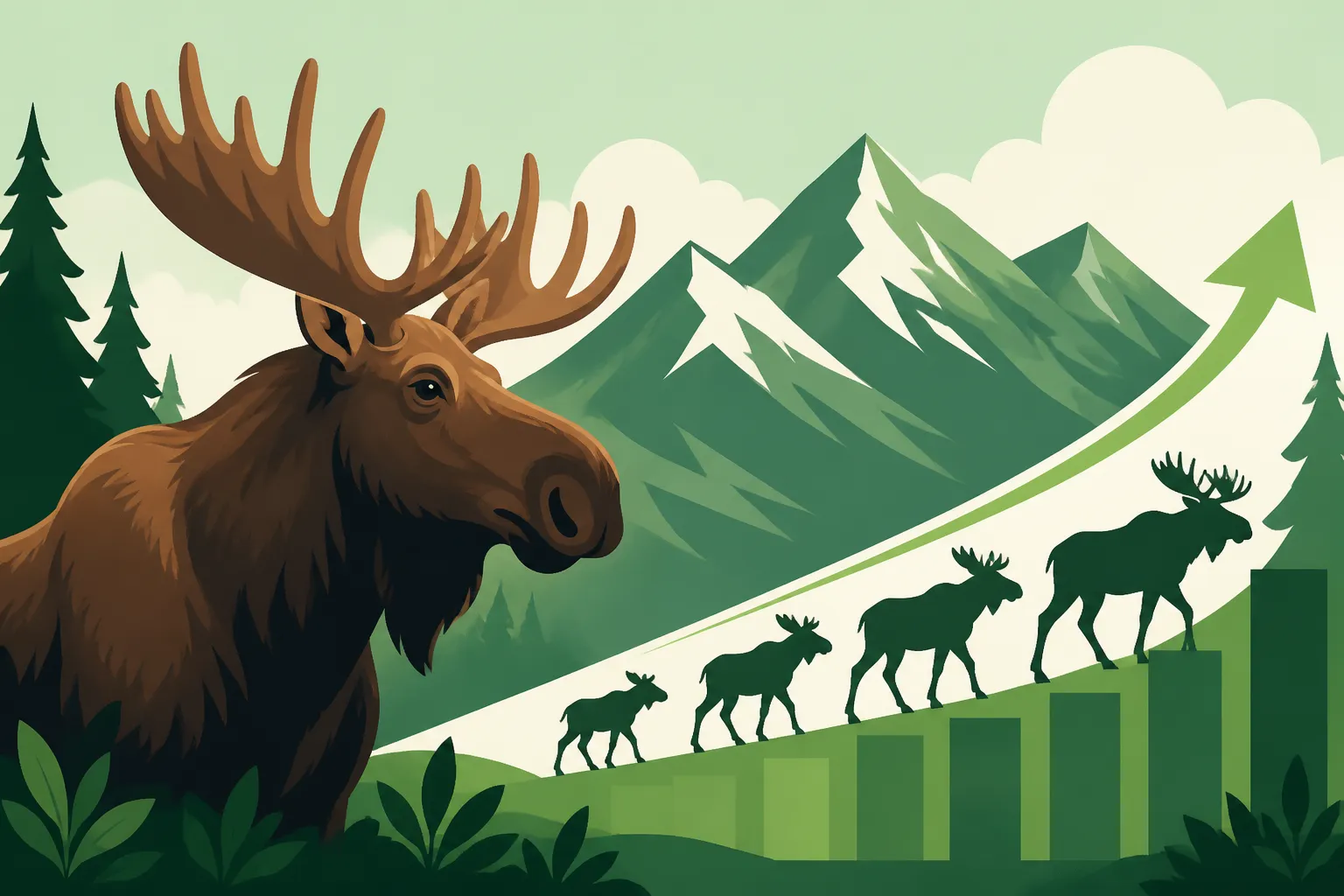
Here's a look at the estimated moose population trend in Washington:
| Year Range | Estimated Population (Northeast WA) | Notable Event/Observation |
|---|---|---|
| Pre-1970s | Very low (occasional transients) | Moose considered absent or extremely rare |
| 1970s – 1980s | 50 – 100 | First established breeding populations in Selkirks |
| 1990s | 200 – 400 | Steady growth, limited dispersal |
| 2000s | 600 – 800 | Significant increase, WDFW begins annual permit draw |
| 2010 – Present | 1000 – 1500+ | Continued expansion, record permit applications, occasional sightings further west |
Note: These are estimates, and precise numbers can vary based on survey methodology and year.
Management, Challenges, and Conservation Efforts
The incredible growth of Washington's moose population is undoubtedly a conservation success, but it also brings with it new responsibilities and challenges for wildlife managers. Balancing the health of the herd with the desires of a growing number of hunters, while also addressing emerging threats, is a delicate and ongoing task for the Washington Department of Fish and Wildlife.
WDFW's Role in Monitoring and Permits
The Washington Department of Fish and Wildlife (WDFW) plays a critical role in managing our state's moose population. Through rigorous aerial surveys, habitat assessments, and careful analysis of harvest data, WDFW biologists work tirelessly to understand the health and trends of these herds. This data is crucial for setting sustainable harvest quotas and ensuring the long-term viability of the moose population. Because moose reproduce slower than deer or elk and are generally more susceptible to certain environmental stressors, their management requires a more conservative approach.
Consequently, hunting opportunities for moose in Washington are strictly limited through a special permit draw system. Each year, only a handful of permits are issued for specific Game Management Units (GMUs) in areas like the Selkirks and Okanogan. The odds of drawing one of these highly sought-after tags are incredibly slim, making it one of the most coveted hunting opportunities in the state. Hunters eager to try their luck should meticulously review the Washington Moose Permit Applications process and the official WDFW Washington Big Game Pamphlet Release for the most current rules and deadlines. Platforms like GoHunt also offer detailed insights into the draw odds and historical permit data, which can be invaluable for making informed application choices.
Emerging Threats and Concerns
While the story of Washington's moose has largely been one of success, it's not without its challenges. As populations grow and expand, new threats inevitably arise. One of the most significant and growing concerns is the impact of winter ticks (Dermacentor albipictus). These parasites can infest moose in staggering numbers, leading to hair loss, anemia, and even death, especially in calves or animals already weakened by other factors. Warmer, shorter winters, which we've certainly seen in Washington recently, can exacerbate tick burdens by allowing more ticks to survive and reproduce. The guide on Moose Ticks and Winter Survival offers a deeper dive into this serious issue.
Another emerging challenge, particularly in the Okanogan region and other areas where moose ranges overlap, is the presence of wolves. While wolves are a natural part of the ecosystem, their predation on moose, especially calves, can have an impact on population dynamics, something WDFW closely monitors in conjunction with wolf pack numbers. Furthermore, increased human-moose interactions, such as vehicle collisions, pose a risk to both wildlife and people as moose expand into areas with more roads and human activity. Habitat fragmentation from development or large-scale landscape changes could also limit future growth. Addressing these threats requires ongoing research, adaptive management strategies, and public education to ensure that Washington's moose population continues to thrive for generations to come.
The Future of Moose Hunting in Washington
The remarkable resurgence of moose in Washington has opened up an exciting, albeit exclusive, chapter for hunters. The future holds the promise of continued, sustainable opportunities, but it also underscores the critical need for responsible stewardship and thoughtful management to protect these magnificent animals.
Balancing Growth and Sustainable Harvest
WDFW's core mission with moose, as with all big game, is to ensure the long-term health and sustainability of the population. This means carefully balancing the desire for hunting opportunities with the biological realities of moose reproduction and habitat capacity. Moose calves generally face high mortality rates, and cows typically don't produce their first calf until they are two or three years old. This slower reproductive rate, coupled with potential threats like ticks and predation, necessitates a conservative approach to harvest. The highly restrictive special permit system is a direct reflection of this cautious management philosophy.
The goal isn't just to allow hunting, but to use hunting as a management tool to maintain healthy bull-to-cow ratios, spread out the age structure, and prevent localized overpopulation that could lead to habitat degradation or increased disease. As the population continues to expand, it's possible that WDFW may adjust permit numbers or expand hunt areas, but this will always be done with the utmost consideration for the scientific data and the health of the herd. Hunters are crucial partners in this by providing valuable harvest data that helps biologists track population trends and animal health.
What Hunters Can Expect in the Years Ahead
For Washington hunters, the prospect of drawing a moose permit remains a distant dream for many, but a dream that is now far more tangible than it once was. The odds will likely remain low, given the relatively small population compared to, say, elk or deer. However, the consistent availability of permits, even in limited numbers, means that the dedicated applicant always has a chance. Many apply annually, building their application points through systems designed to reward persistence, though Washington's moose draw itself is random and does not use a preference point system for the primary draw. Still, understanding the intricacies of the process, including deadlines and rules for applying, is paramount. For those who do draw, it's often a once-in-a-lifetime opportunity.
Scouting for moose will continue to be a challenging but rewarding endeavor. Utilizing tools like E-Scouting a Washington GMU From Home and understanding moose habitat preferences will be key. Moose favor dense cover, wetland edges, and areas with abundant willow and aspen browse. This often means rugged, remote country, far from easy access. Patience, persistence, and a deep respect for the animal and its habitat will define the successful Washington moose hunter for years to come. Whether you're lucky enough to draw a tag or simply hope to spot one of these magnificent animals in the wild, the growing moose population is a testament to the wild beauty that Washington still holds.
Disclaimer
The information provided in this guide is for general informational purposes only. Hunting regulations, seasons, and access rules in Washington are subject to change by the Washington Department of Fish and Wildlife (WDFW). Always consult the official WDFW hunting regulations pamphlet and relevant land management agency rules before planning any hunting activity. It is the responsibility of each hunter to know and obey all applicable laws and regulations.