Elk Hoof Disease Symptoms
It's incredibly frustrating for a hunter to spot a magnificent elk in the field, only to notice something isn't quite right with its hooves or gait. Many of us have seen elk that just don't move right, and it leaves us wondering if we're seeing an injured animal, or something more serious. This guide is dedicated to helping you understand and identify the key symptoms of elk hoof disease, a persistent and challenging issue impacting Washington's elk herds, so you can make informed observations in the field and contribute to wildlife health.
Understanding Elk Hoof Disease in Washington
Elk hoof disease is a topic that stirs a lot of conversation and concern among hunters and wildlife managers alike here in Washington. It's not just a passing ailment; it's a persistent problem that impacts the health and mobility of our beloved elk, particularly the Roosevelt elk on the west side of the state. Getting a handle on what this disease actually is, and why it matters so much, is the first step in understanding its symptoms in the wild.
What is Elk Hoof Disease?
At its core, elk hoof disease is a debilitating condition primarily caused by a group of bacteria called Treponema spp. These are the same types of bacteria responsible for digital dermatitis in cattle, which gives you an idea of how nasty and painful this can be for an animal that relies heavily on its ability to move across diverse terrain. The bacteria invade the tissues of the hoof, leading to inflammation, lesions, and severe structural damage. Imagine trying to walk miles every day, run from predators, or navigate steep, rocky slopes when your feet are constantly sore, deformed, and possibly sloughing off. That's the reality for an elk afflicted with this disease.
Unlike a simple cut or bruise, which might heal fairly quickly, elk hoof disease is often chronic and progressive. It starts subtly, sometimes just as a slight discoloration or tenderness, but over time it can utterly destroy the integrity of the hoof capsule. We're talking about hooves becoming overgrown, misshapen, cracked, or even detaching entirely from the bone. This isn't just a minor inconvenience for the animal; it's a direct threat to its ability to survive, find food, and escape danger. The constant pain and impaired mobility mean these elk are at a severe disadvantage, especially in challenging environments or when facing predators.
This disease first really caught our attention in the late 1990s and early 2000s, especially in southwestern Washington, and it's unfortunately spread to various elk herds across the state since then. It's primarily associated with wet, muddy conditions that create an ideal environment for the bacteria to thrive, which is why it’s often seen more prevalently in our western Washington Roosevelt elk populations. However, it's not strictly limited to one region or subspecies. Understanding how this condition progresses and manifests is crucial for any hunter who spends time in elk country, and there are many efforts being made to track Elk Hoof Disease Spread in Washington.
Why is Hoof Disease a Concern for Hunters?
For us hunters, elk hoof disease is more than just a biological curiosity; it has tangible impacts on our hunting experiences and ethical responsibilities. First and foremost, seeing an animal suffering is tough. We respect these creatures, and witnessing an elk struggling to walk due to this disease can be heartbreaking. It also raises questions about the animal's quality of life and whether harvesting such an animal is the right call. The pain and stress of the disease often lead to a decline in body condition, meaning the animal is not as healthy or robust as it should be, and the meat quality can be affected as well.
Beyond the individual animal, hoof disease poses a significant threat to the overall health and population dynamics of our elk herds. A lame elk is a vulnerable elk. It struggles to outrun cougars or wolves, and it may not be able to reach optimal forage, especially in areas where good feed is spread out. This can lead to increased predation, starvation, and a reduced ability for cows to successfully raise calves, impacting Elk Calf Survival and Predation. Over time, if a significant portion of a herd becomes affected, it can lead to population declines and shifts in herd distribution.
As hunters, we are often the first eyes on the ground, observing wildlife patterns and health. Our observations are invaluable to wildlife agencies like the Washington Department of Fish and Wildlife (WDFW). By understanding the symptoms and reporting what we see, we contribute directly to ongoing monitoring and research efforts aimed at managing and mitigating this disease. Your commitment to watching for and Reporting a Limping Elk to WDFW can make a real difference in the state's Washington Wildlife Disease Surveillance program. We are partners in conservation, and that extends to recognizing and reporting health issues that threaten the very populations we cherish pursuing.
Recognizing the Visible Symptoms of Elk Hoof Disease
When you're out in the field, whether you're actively hunting or just scouting, paying close attention to an elk's movement and physical condition can reveal a lot about its health. With elk hoof disease, the symptoms often start subtly, but they become progressively more obvious as the disease advances. It's not always about seeing a hoof up close; sometimes, it's the way an elk carries itself that gives it away.
The Tell-Tale Limp and Gait Changes
The most common and often the first visible symptom of elk hoof disease is lameness or a limp. This isn't just a slight hobble; it's a noticeable deviation from the smooth, powerful stride of a healthy elk. A normal elk moves with grace and efficiency, covering ground quickly and quietly, even in difficult terrain. Their movements are fluid, their weight evenly distributed. An infected elk, however, will often appear hesitant, take shorter strides, or favor one leg over another. The limp might be barely perceptible at first, especially if the elk isn't putting much weight on the affected hoof, but it typically worsens with activity or as the disease progresses.
Think about watching an elk cross a clearcut or move through timber. A healthy bull will cover ground quickly, his powerful legs propelling him forward. An elk with hoof disease might lag behind the rest of the herd, taking more deliberate, painful steps. You might see a noticeable bobbing of the head or a compensatory sway in the hips as it tries to shift weight off the sore hoof. In severe cases, an elk might even drag a leg or struggle significantly to put any weight on it at all. These changes in gait aren't just about discomfort; they drastically reduce an elk's ability to forage efficiently, meaning it spends more energy moving for less reward, and it significantly compromises its escape response when facing a threat. During Public Land Scouting in Washington Before Opening Day, observing these subtle movements can be a critical skill.
It's particularly important to pay attention to how an elk handles different types of terrain. A healthy elk can bound over downed logs, climb steep hillsides, and navigate rocky areas with ease. An elk suffering from hoof disease will struggle with these obstacles. You might see it hesitate before stepping over a log, or take an unusually long time to ascend a gentle slope. This isn't just about speed; it's about the quality of movement. The painful limping can become even more pronounced on hard, uneven surfaces compared to soft ground, further highlighting the severity of the issue.
Physical Deformities and Lesions on the Hooves
While seeing the actual hooves can be challenging in the wild, if you are lucky enough to get a good look, or if you find an unfortunate animal that has succumbed to the disease, the physical appearance of the hooves themselves provides undeniable evidence. Healthy elk hooves are typically dark, smooth, and symmetrical, with well-defined edges and a strong, dense structure. They are designed for durability and grip across diverse landscapes.
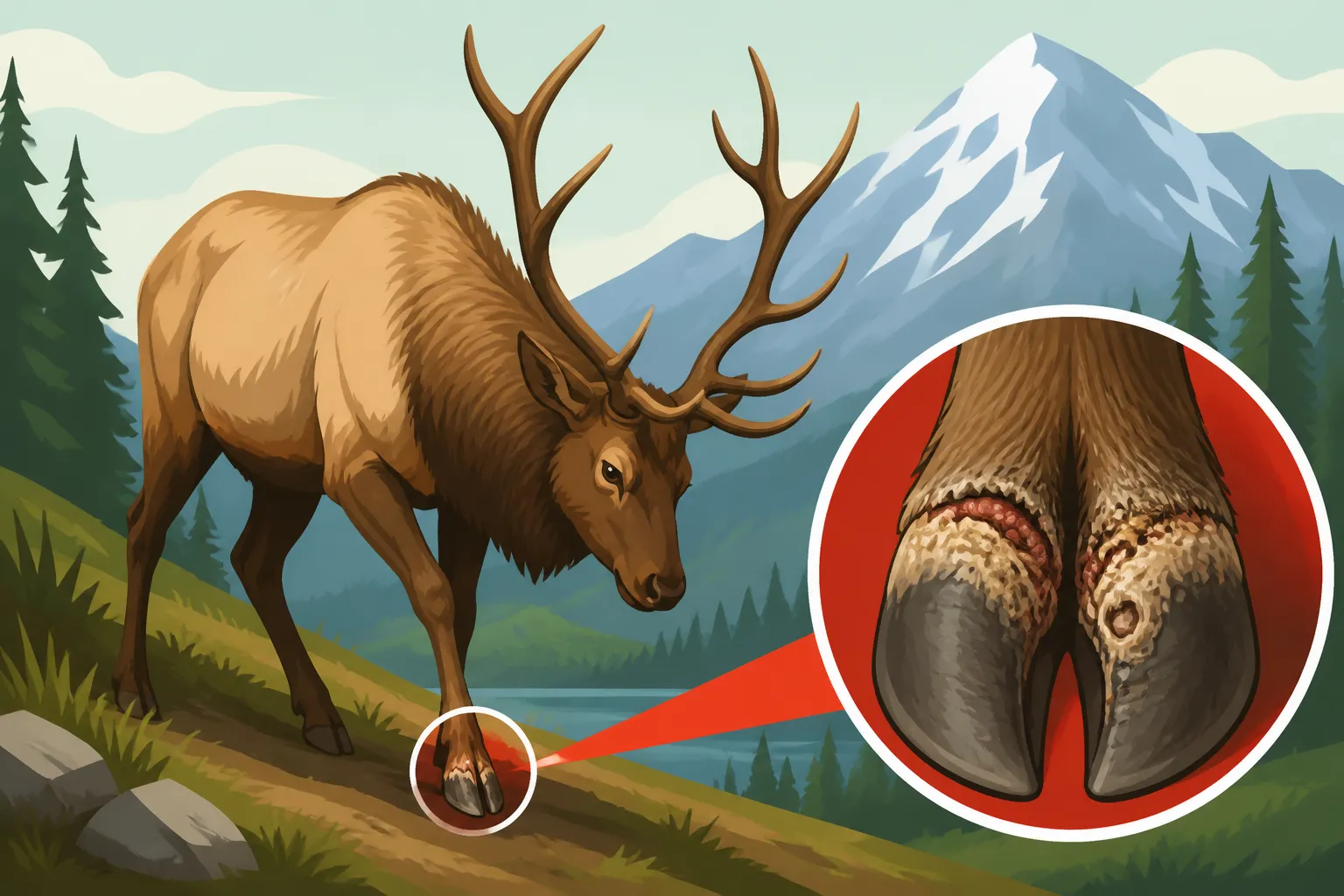
In contrast, hooves affected by the disease often display striking and severe deformities. The most common signs include excessive growth, where the hooves become unnaturally long, curled, or twisted, resembling exaggerated "slippers." This overgrowth isn't just cosmetic; it changes the angle at which the hoof meets the ground, causing immense pain and further compromising the elk's balance and weight distribution. The hoof wall itself might appear brittle, cracked, or even sloughed off in layers, exposing raw, sensitive tissue underneath. You might see abscesses, deep fissures, or areas of necrotic (dead) tissue, sometimes accompanied by a foul odor, which is indicative of advanced bacterial infection.
The lesions associated with elk hoof disease are distinct. They often appear as deep ulcerations or erosions, particularly between the two main digits of the hoof, or along the coronet band (where the hair meets the hoof). These areas can be inflamed, swollen, and ooze pus or blood. Over time, the entire hoof capsule can become severely compromised, losing its structural integrity. In the worst cases, parts of the hoof can completely detach from the underlying bone, leading to chronic lameness and making it almost impossible for the elk to bear weight or move. These severe deformities are not typical of simple injuries, but rather point to a systemic and progressive bacterial attack on the hoof structure.
| Symptom Category | Specific Symptom | Description | Severity Indicator |
|---|---|---|---|
| Movement/Gait | Limping/Lameness | Noticeable favoring of one or more legs; uneven weight distribution; short, stiff strides. | Mild (occasional limp after rest) to Severe (constant, pronounced limp, dragging leg, inability to bear weight). |
| Hesitant Movement | Reluctance to move or climb; difficulty traversing obstacles (logs, steep terrain); lagging behind the herd. | Mild (slight delay) to Severe (complete avoidance of challenging terrain, prolonged hesitation). | |
| Hoof Appearance | Overgrowth/Deformity | Hooves appear unusually long, curled, or twisted ("slipper foot"); asymmetrical growth; abnormal angles. | Mild (slight elongation) to Severe (extreme curling, splaying, or complete detachment of hoof wall). |
| Cracks/Lesions | Deep cracks in the hoof wall; ulcerations, erosions, or pus-filled abscesses, especially between digits or at the coronet band; exposed sensitive tissue. | Mild (superficial cracks) to Severe (deep, oozing lesions; sloughing of hoof material; infection spreading). | |
| Overall Condition | Poor Body Condition | Visible ribs, prominent spine; sunken flanks; dull, shaggy coat, not typical for the season. | Mild (slightly thin) to Severe (emaciated, severely underweight, muscle atrophy). |
| Isolation/Behavioral Changes | Animal separated from the main herd; reduced vigilance; decreased foraging activity; lying down frequently. | Mild (brief separation) to Severe (sustained isolation, unresponsive to threats, spending significant time recumbent). |
Behavioral Indicators of an Infected Elk
Beyond the obvious physical changes, an elk suffering from hoof disease will often exhibit noticeable shifts in its behavior. These changes are a direct consequence of the chronic pain and debilitation caused by the infection, and they serve as important clues for hunters and wildlife observers. An elk's behavior is often a reflection of its internal state, and a struggling animal will not act like a healthy one.
Changes in Foraging and Social Behavior
Imagine being in constant pain every time you take a step. It would undoubtedly affect your motivation to move, especially if moving means finding food. Elk with hoof disease often reduce their foraging activity. They may spend less time actively grazing or browsing, opting instead for areas where food is immediately accessible, even if it's not the highest quality. This might mean they stay closer to water sources or easy-to-reach patches of vegetation, foregoing the extensive travel typically required to find the best forage. This reduced movement directly contributes to a decline in their overall body condition.
Furthermore, social behavior can be significantly altered. Elk are herd animals, relying on the safety in numbers and social cues for survival. However, an elk with severe hoof disease might be observed isolated from the main herd. It struggles to keep up, becoming a liability rather than a contributing member. This isolation leaves it more vulnerable to predation, as it lacks the collective vigilance and defensive capabilities of the group. While a lone bull might be a common sight, a lone cow or a cow with a calf that consistently lags far behind or stays separated from the main matriarchal group could be a red flag. These animals might also exhibit less interaction with other elk, appearing more withdrawn or lethargic. You might not see them engaging in the playful sparring or active communication common among healthy animals. This is particularly true during the rut, where a bull with bad hooves would struggle to compete, affecting his ability to reproduce and maintain his standing within The Yakima Elk Herd or other populations.
Overall Health and Body Condition Decline
Perhaps one of the most disheartening behavioral indicators, and a direct result of limited foraging and chronic stress, is a noticeable decline in the elk's overall health and body condition. A healthy elk, depending on the season, should appear robust, with a thick, glossy coat and a well-muscled frame. During the summer and early fall, they should be packing on reserves, while in winter, their thick coats should obscure most of their skeletal structure.
An elk struggling with hoof disease, however, will often appear thin, even emaciated. You might be able to clearly see its ribs, hip bones, and spine protruding, indicating significant weight loss and muscle atrophy. Its coat might look dull, rough, or shaggy, lacking the healthy sheen of a well-nourished animal. This poor body condition isn't just about aesthetics; it means the elk has fewer fat reserves to draw upon, making it far more susceptible to the harshness of winter, disease, and the stress of migration. Their weakened state means they are less resilient to any additional challenges the environment throws at them.
This decline in body condition is a vicious cycle. The pain in their hooves makes it hard to move and forage, which leads to weight loss. The weight loss, in turn, weakens them further, making the pain even more debilitating and their recovery less likely. For hunters, seeing an elk in very poor condition, particularly outside of the harshest winter months, is a strong indicator that something is seriously wrong. It speaks to a prolonged struggle, often indicative of a chronic condition like hoof disease rather than a recent, acute injury. These observations are crucial not just for individual animals, but for understanding the broader health of Washington Elk Herds and Where They Live.
Differentiating Hoof Disease from Other Injuries
It’s easy to jump to conclusions when you see an elk limping, but it’s crucial to distinguish between a temporary injury and the more serious, chronic condition of hoof disease. Both can cause lameness, but their origins, implications, and potential outcomes are vastly different. As ethical hunters and stewards of wildlife, making this distinction is important for our decisions in the field.
Injuries Versus Disease: A Hunter's Dilemma
Sometimes, an elk might have a temporary limp due to a simple injury. Think about a sprain from a misstep, a cut from sharp rocks or thorns, or even a strained muscle from a fall or an altercation with another elk during the rut. These types of injuries, while painful, typically heal over time. The limp might be acute, meaning it appeared suddenly, and the animal, though favoring the leg, might still exhibit good overall body condition and vigilance. The injury might be to the upper leg, hip, or shoulder, making the animal unable to bear weight properly, but the hoof itself would likely appear normal.
Hoof disease, on the other hand, presents with a specific set of symptoms directly affecting the hoof structure, as we've discussed. The progressive nature of the deformities, the potential for multiple hooves to be affected, and the chronic decline in body condition are all hallmarks that differentiate it from a simple injury. If you observe an elk over a period of time, or during multiple sightings, and the lameness persists or worsens, especially if accompanied by visible hoof deformities, it points much more strongly towards hoof disease. A hunter's keen eye and patience for observation are key here. You might notice an animal's limping behavior in early fall while out Public Land Scouting in Washington Before Opening Day, and then see it again months later, with the condition having worsened.
It’s also important to remember that Washington has specific rules regarding harvesting sick or injured animals. While an animal with a minor, healing injury might still be fair game (check current regulations for specifics), an elk severely impacted by hoof disease raises ethical questions. Many hunters choose not to harvest an animal that is clearly suffering and emaciated, not only for the animal's welfare but also due to concerns about meat quality and potential public perception. This is where your personal judgment, informed by understanding these distinctions, becomes vital.
When to Report a Sighting to WDFW
Your role as an active observer in the field is invaluable to WDFW's efforts to monitor and manage wildlife health. If you encounter an elk that you suspect is suffering from hoof disease, reporting your sighting is a responsible and impactful action. WDFW relies on public reports to track the prevalence, distribution, and progression of the disease across different GMUs and elk herds. The more data they have, the better they can understand the problem and potentially develop management strategies.
So, when should you report? Anytime you see an elk exhibiting clear symptoms of hoof disease, such as a persistent or severe limp, deformed or overgrown hooves, or significantly poor body condition in conjunction with lameness. Don't assume someone else will report it. Even if you're not 100% sure, it's better to make a report and let the wildlife professionals assess the situation. Resources like GoHunt can help you research specific reporting procedures for WDFW, ensuring your observation gets to the right people.
When you make a report, try to provide as much detail as possible. This includes the exact location (GPS coordinates if you have them, or detailed directions), the date and time of the sighting, a description of the elk (sex, approximate age, number of affected hooves, severity of lameness, overall body condition), and any unique identifiers. Photos or videos, if safely obtained, can also be incredibly helpful. Remember, your report contributes to a larger database that helps WDFW track Washington Wildlife Disease Surveillance and understand the impact of diseases like this on our elk populations. If you do end up harvesting an elk, whether healthy or potentially affected, remember to complete your Washington Harvest Reporting Requirements as well, which sometimes includes opportunities to report observations of disease.
Disclaimer
This article is for general informational purposes only and does not constitute professional advice. Laws, prices and regulations vary by location and change over time. Consult a qualified professional for guidance on your specific situation.