Where Washington Wolves Live
It can feel like a real moving target trying to keep up with where wolves are living and moving in Washington, especially when you're trying to plan a hunt and consider what impact they might have on your favorite elk or deer areas. You're not alone in feeling this way; it's a dynamic situation, and understanding their distribution is key for any responsible hunter. This guide will help shed some light on the current general areas where wolf packs are most established and expanding across our beautiful state, giving you a better picture for your next hunting adventure.
The Evolving Landscape of Washington's Wolf Population
For many years, wolves were absent from Washington, a fact that shaped the hunting landscape for generations. Now, their return and subsequent recovery have added a new layer of complexity and fascination to our wild spaces. It's a topic that stirs a lot of emotion, and as hunters, it's our responsibility to understand the reality on the ground, not just the headlines. The truth is, wolves are back, and their numbers and territories are growing, requiring us to adapt our knowledge and strategies.
Historical Context and Recovery
Gray wolves were largely extirpated from Washington by the 1930s, a story common across much of the lower 48 states due to human persecution and habitat loss. For decades, their howls were silent in our forests. However, starting in the early 2000s, wolves began to naturally recolonize the state, primarily dispersing from populations in Idaho and British Columbia. These initial pioneers found suitable habitat and prey, slowly but surely establishing new packs. It's been a remarkable recovery for a species that was once completely gone, a testament to the resilience of nature when given a chance. This recovery has focused heavily on the wilder, more remote areas of the state, particularly in the vast national forests that offer both cover and a reliable food source.
Why Understanding Wolf Range Matters to Hunters
As hunters, our relationship with the land and its wildlife is deeply personal. The presence of wolves directly impacts that relationship, not just emotionally, but practically. Knowing where wolves are established can influence everything from your choice of Washington Game Management Units Explained to the specific tactics you might employ in the field. Are the elk in a certain area acting more skittish? Are deer patterns changing? These could be influenced by a resident wolf pack. It's not about fear, but about informed strategy. Understanding their distribution helps us set realistic expectations, adapt our scouting, and ultimately, be more effective and respectful stewards of the land. It also helps us understand the broader ecosystem health and how all species, including ourselves, fit into that intricate web.
Where Wolves Are Most Established in Washington
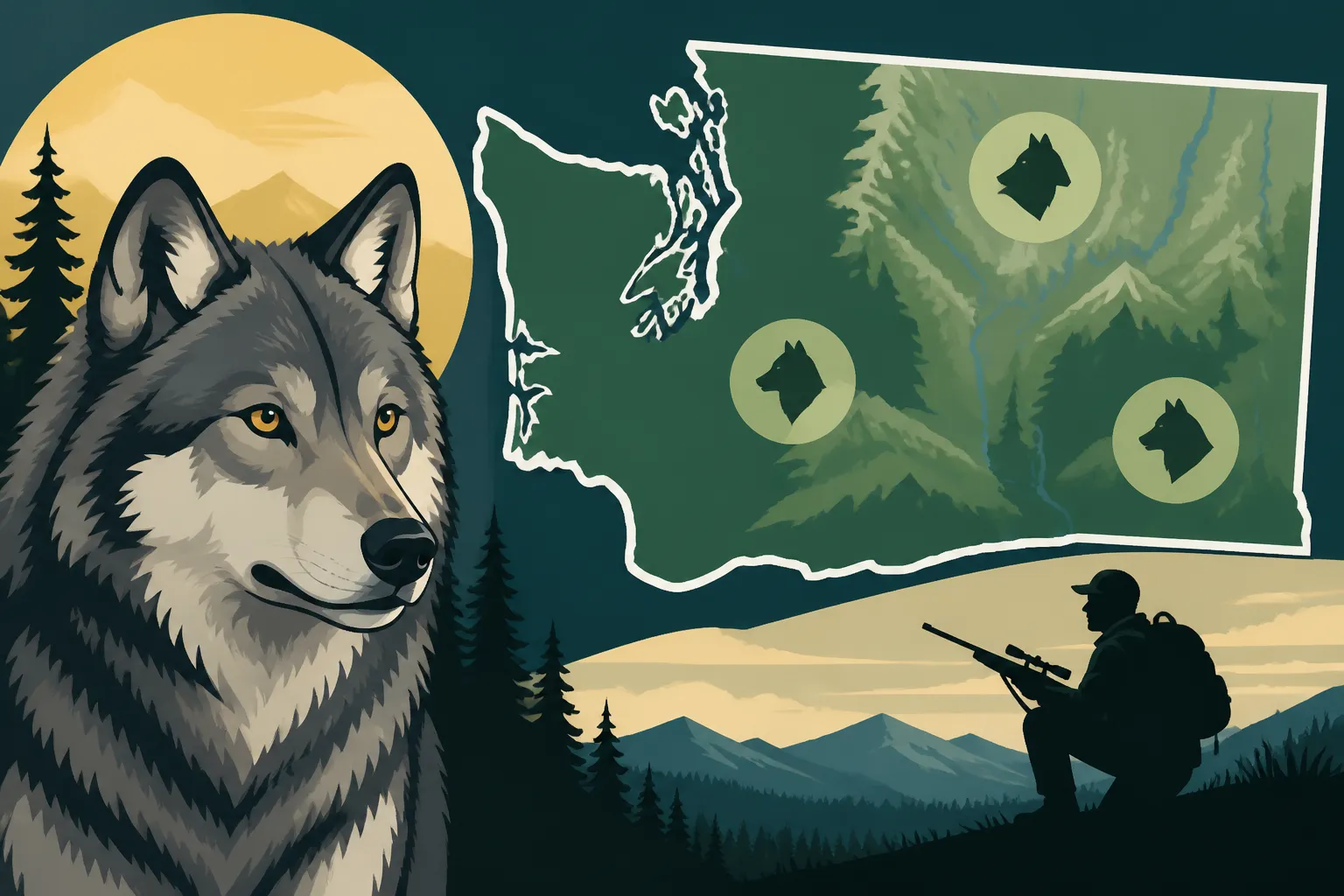
Washington's wolf population isn't evenly distributed; it's concentrated in specific regions, with some areas seeing significant expansion. Generally speaking, the vast majority of wolf activity and established packs are found east of the Cascade Mountains, with increasing evidence of their presence spreading west.
Northeast Washington: The Heartland of Wolf Activity
When you talk about wolves in Washington, the conversation almost always starts in Northeast Washington. This region, encompassing areas like Stevens, Ferry, and Pend Oreille counties, is truly the epicenter of wolf recovery in the state. The sprawling Colville National Forest and surrounding timberlands provide ideal habitat: dense cover, rugged terrain, and abundant prey like white-tailed deer and elk. Many of the state's earliest and most robust packs, such as the Profanity Peak, Dirty Shirt, and Wedge packs, originated here. These areas have had established packs for over a decade, and their presence is a regular, undeniable part of the ecosystem. Hunters in GMUs throughout this corner of the state should assume wolves are present and adjust their expectations and strategies accordingly. This region is where pack activity is most consistent, and it serves as the core population from which wolves are dispersing into other parts of the state.
North Cascades and Central Washington Expansion
While Northeast Washington has been the stronghold, the North Cascades and parts of Central Washington have seen significant and continuous colonization by wolves. Packs like the Methow and Loup Loup have become well-established in the Okanogan-Wenatchee National Forest, extending their territories into rugged, high-elevation country. Further south, into central Washington, new packs have slowly begun to take hold in areas like the Colockum and Teanaway drainage, particularly where there are strong Washington Elk Herds and Where They Live. These wolves are adapting to diverse landscapes, from the mixed forests of the western Cascades to the more open sagebrush and timber mosaic of the eastside. Their expansion into these areas means that hunters who once only considered deer and elk as the primary large predators now need to factor in wolves as well. The higher elevations and vast wilderness areas, such as the Pasayten, offer ideal conditions for wolves to thrive relatively undisturbed, often requiring significant effort for wildlife managers to monitor.
Pockets of Presence and Occasional Sightings
Beyond these established strongholds, individual wolves and small groups are consistently on the move, leading to occasional sightings and even new, nascent pack formations in unexpected places. Wolves are known to travel hundreds of miles in search of new territory and mates. This means that while Westside Washington doesn't have the same density of established packs as the Eastside, it's not immune to wolf presence. Reports of lone wolves or small groups occasionally surface in areas like the Gifford Pinchot National Forest or even further west. These individuals are often transient, but their presence indicates the potential for future expansion. It's a reminder that while general patterns exist, nature is unpredictable, and staying informed is crucial. Even a single wolf passing through an area can influence prey behavior, causing animals to be more vigilant or move into different drainages.
Here's a generalized overview of wolf presence by region:
| Region | General Wolf Activity Level | Notable Characteristics | Impact on Hunting (General) |
|---|---|---|---|
| Northeast Washington | High & Established | Core recovery area, dense forests, robust prey base, numerous long-standing packs. | Hunters should expect wolves, potential changes in deer/elk behavior, increased vigilance. |
| North Cascades | Moderate & Expanding | Rugged, remote wilderness, good connectivity to BC populations, adapting to mountain terrain. | Influence on mountain elk and deer movements, deep wilderness hunting may involve wolves. |
| Central Washington | Moderate & Growing | Mixed forests and open country, increasing packs, potential for more encounters in some GMUs. | Can shift elk/deer patterns, requires more attention to fresh sign and animal behavior. |
| Southeast Washington | Low to Moderate, but Present | Blue Mountains, connected to Oregon/Idaho packs, occasional reports and confirmed packs. | Less prevalent than NE, but still a factor, particularly in the Blue Mountains. |
| Western Washington | Low, Occasional Transients | Less established packs, but lone wolves/dispersers have been confirmed. | Highly unlikely to be a primary factor, but stay aware of isolated reports. |
| Columbia Basin | Very Low / Rare | Open agricultural landscapes, not ideal wolf habitat, very infrequent transient sightings. | Generally not a factor for big game hunting in this region. |
Note: This table represents a generalized overview. Specific pack locations and densities can change seasonally and annually. Always consult official wildlife agency maps for the most current information.
How Wolves Impact Washington's Big Game Herds
The return of wolves inevitably brings questions about their impact on the very game species we pursue. It's a complex issue, not a simple one-to-one relationship. Wolves are predators, and they hunt deer and elk, that's a given. But the overall effect on herd health and numbers is influenced by many other factors too, like habitat quality, winter severity, disease, and human harvest. We have to look at the bigger picture.
Predation Dynamics and Prey Species
Wolves are opportunistic predators, meaning they'll primarily target the most vulnerable prey: the young, the old, or the sick. While they certainly take healthy animals, their role in culling weaker individuals can, over time, contribute to healthier, more robust prey populations. In Washington, their primary prey species are indeed elk and deer, with some packs showing preferences based on availability. For instance, in areas with abundant Washington Moose in the Selkirks, moose might also be on the menu. The presence of wolves can also lead to changes in prey behavior, making elk and deer more wary, moving them into different areas for security, or causing them to band together in larger groups. This can make them harder to locate and approach for hunters. We've seen shifts in how Elk Calf Survival and Predation is impacted in areas with high wolf density, and that's something wildlife managers are constantly monitoring. It’s not just about how many animals are taken, but how the remaining animals react and adapt to constant predatory pressure.
The Complexities of Herd Management
Managing big game herds in the presence of an expanding wolf population adds significant layers of complexity for wildlife agencies. They must balance the needs of wolves, the health of prey populations, and the desires of hunters. This isn't a static calculation. Factors like habitat changes due to logging or wildfire, varying winter conditions, and the ongoing challenge of elk hoof disease in Western Washington all play a part. The goal is often to maintain a sustainable balance, recognizing that wolves are a natural component of the ecosystem. Sometimes, this means adjusting harvest quotas for deer and elk in certain GMUs or focusing on specific antlerless opportunities to balance herds. It's a continuous learning process for everyone involved, and a topic that's always a part of the Washington Fish and Wildlife Commission Rule Meetings. Hunters should understand that this isn't about eradicating wolves, but about finding a way for all species, including humans, to coexist and thrive within Washington's diverse ecosystems.
Resources for Staying Informed on Wolf Activity
Staying current with wolf activity is essential for any hunter who wants to be truly informed and adaptable. The situation is always evolving, and relying on outdated information or hearsay won't do you any favors. Fortunately, there are reliable resources available to help you keep your finger on the pulse of Washington's wolf population.
Utilizing Wildlife Agency Data and Maps
The most accurate and up-to-date information on wolf pack locations and activity comes directly from the state's wildlife agency. They invest significant resources into monitoring packs, tracking dispersals, and confirming new territories. They usually publish annual or semi-annual wolf reports, including maps that show confirmed pack territories, sometimes even detailing pack names and approximate numbers. While they don't give exact den locations (for obvious reasons of protecting the animals), these maps are invaluable for understanding general distribution. Before you head out, checking the official agency website for their latest wolf conservation and management plan, or specific wolf reports, should be a standard part of your E-Scouting a Washington GMU From Home routine. This data can inform your scouting and help you understand the dynamics of the area you plan to hunt. Using tools like GoHunt can also help overlay this public land information with specific hunting unit boundaries, making it easier to visualize.
Hunter Reporting and Community Knowledge
While official data is crucial, local hunter observations and community knowledge also play a vital role. Hunters spend countless hours in the field, often in remote areas where agency personnel can't be everywhere at once. If you see signs of wolf activity – tracks, scat, kills, or hear howls – you can often report this information to the state wildlife agency. This data, when verified, contributes to a more complete picture of wolf distribution and movement. Additionally, joining local hunting forums or conservation groups can provide real-time, ground-level insights into what people are seeing in specific areas. Just remember to verify information from unofficial sources with official data when possible, as rumors can spread quickly. Being a part of the solution, by sharing accurate observations, helps everyone understand the true state of Washington Wolves and Big Game. Tools like GoHunt often include community forums or mapping features where hunters can share observations, adding another layer to your planning resources.
Disclaimer
This article is for general informational purposes only and does not constitute professional advice. Laws, prices and regulations vary by location and change over time. Consult a qualified professional for guidance on your specific situation.