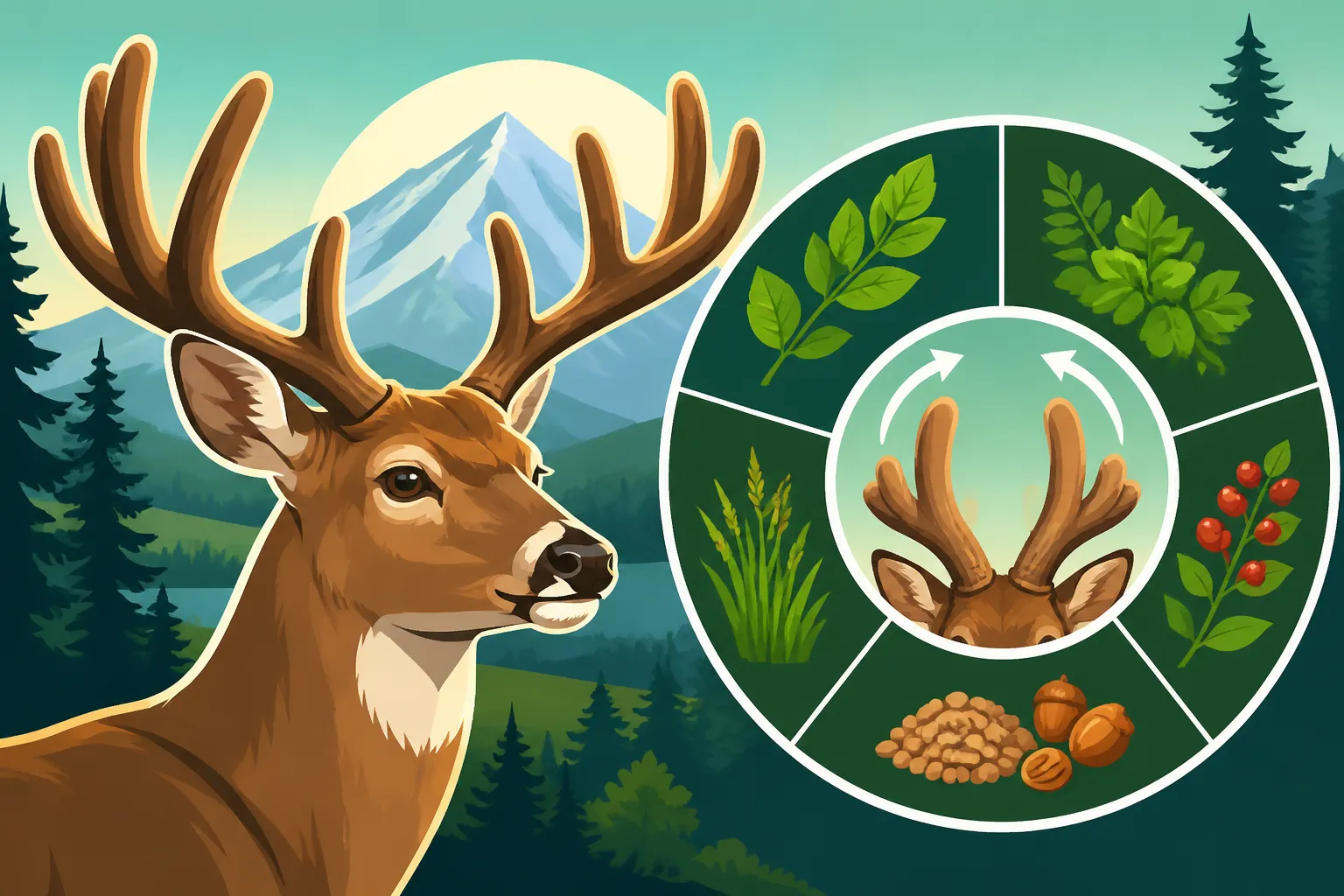
Antler Growth and Nutrition
We all want to see big antlers, right? That majestic rack on a mule deer buck or the imposing spread of a Roosevelt bull often captivates us, leading many hunters to wonder what exactly fuels such impressive growth. If you’ve ever stared at a shed antler or a trail camera photo and thought, "How did he get that big?", you're probably tapping into the fascinating world of antler growth and the critical role nutrition plays. This guide will dive deep into how diet impacts those impressive head ornaments here in Washington.
The Building Blocks of Antler Growth
Antlers are truly remarkable. They're the fastest growing tissue on any mammal, regenerating entirely each year. But this isn't just a magical process; it's a massive biological undertaking that demands an incredible amount of energy and specific nutrients. Think of it like building a house – you need a solid foundation, plenty of strong materials, and the right tools. For deer and elk, their body is the builder, and nutrition provides all the necessary components.
Seasonal Cycles and Hormonal Triggers
The antler cycle is a precise dance with the seasons, dictated primarily by changes in daylight hours and, consequently, hormonal shifts. In late winter or early spring, after the rut has concluded and testosterone levels drop, bucks and bulls will cast off their old antlers. This shedding process marks the beginning of a new growth phase. As spring progresses and daylight increases, a rise in growth hormone and insulin-like growth factor (IGF-1) kicks off the rapid development of new antlers, which are initially covered in a vascular, furry skin known as velvet.
Throughout the spring and summer, while the velvet is intact, antlers grow at an astonishing rate. It’s a period of intense cellular activity and nutrient uptake. As late summer approaches and daylight begins to wane, testosterone levels surge again. This increase in testosterone signals the mineralization of the antlers and the eventual cutting off of blood supply to the velvet. The velvet dries, peels, and is rubbed off, revealing the hard, bony antlers underneath, ready for the breeding season. This entire cycle, from shed to hard antler, is a testament to the animal's physiological capabilities and its ability to gather and utilize resources efficiently.
The Core Nutrients: Calcium, Phosphorus, and Protein
When we talk about nutrition for antler growth, certain heavy hitters immediately come to mind. Calcium and phosphorus are the undeniable kings of antler mineralization. Antlers are primarily made of bone, and bone is largely calcium phosphate. Deer and elk need a steady, abundant supply of both calcium and phosphorus, especially during the rapid growth phase. If these minerals are scarce in their diet, the animal's body will actually draw them from its skeletal reserves, which can impact overall health and future antler potential. This is why you often see smaller antlers in areas with poor soil quality, even if other factors are good.
Protein is another absolute must. It's the building block of all tissues, including the organic matrix of the antler before it calcifies. A deer or elk with a protein-deficient diet will struggle to produce robust antler mass, regardless of mineral availability. Think of it this way: protein helps build the framework, and calcium and phosphorus fill it in. Young, growing animals, pregnant cows, and lactating does also have high protein requirements, which can compete with antler growth resources if forage quality is poor. Ensuring a diet rich in digestible protein from browse, forbs, and grasses is fundamental for maximizing antler potential.
Trace Minerals and Their Impact
While calcium, phosphorus, and protein get most of the glory, we shouldn't overlook the crucial role of trace minerals. These are needed in smaller quantities but are no less vital for optimal antler development and overall health. Zinc, for example, is essential for numerous enzymatic reactions involved in growth and tissue repair, including those supporting antler development. A deficiency in zinc can lead to stunted antler growth and abnormal shapes. Copper also plays a significant role in bone formation and connective tissue development, both of which are critical for antler structure.
Other trace elements like selenium, manganese, and cobalt also contribute to the complex biochemical processes that govern antler growth. While a direct, visible deficiency in these might be less common than with major minerals, suboptimal levels can still subtly hinder a buck or bull from reaching its full genetic potential. This is often where habitat quality really shines – diverse forage on rich soils naturally provides a wider spectrum of these essential micronutrients. If you're studying a particular GMU using a tool like GoHunt, understanding the underlying soil and vegetation types can give you clues about the natural mineral availability for the local deer and elk.
How Nutrition Influences Antler Quality
It's easy to look at a big set of antlers and assume genetics are everything. While genetics certainly set the potential, nutrition acts as the accelerator or brake on that potential. An animal with top-tier genetics in a poor nutritional environment will never grow the antlers it's capable of, just as a genetically inferior animal won't magically sprout a Boone & Crockett rack, no matter how good the food is. It's a complex interplay.
Forage Quality and Availability
The abundance and nutritional density of available forage are arguably the biggest drivers of antler quality in any wild deer or elk population. In Washington, this varies wildly from the lush, moist forests of the Westside to the drier, sage-steppe country east of the Cascades. Western Washington's rainforests, with their dense understory of salal, huckleberry, and vine maple, can provide year-round browse, but the nutritional quality might fluctuate. Roosevelt Elk of Western Washington often thrive on this dense browse, but the sheer quantity needed can be immense.
Conversely, Eastern Washington offers different challenges and opportunities. The Mule Deer of Eastern Washington depend heavily on sagebrush, bitterbrush, and various grasses and forbs. After a wet spring, these areas can explode with highly nutritious growth, leading to excellent antler development. However, late-season droughts or prolonged dry spells can quickly diminish forage quality and availability, putting deer and elk into a nutritional deficit. Hunters often observe that antler quality can vary significantly from one year to the next in these areas, directly correlating with rainfall and forage conditions. When planning a hunt, it's always smart to consider recent weather patterns in your target area.
Impact of Drought and Harsh Winters
Environmental stressors like prolonged drought or exceptionally harsh winters can have a devastating impact on antler quality, sometimes with effects that linger for years. During a drought, forage plants become stressed, and their nutritional value declines. They may produce fewer seeds, fruits, or tender shoots. Water sources can dry up, forcing animals to expend more energy traveling for sustenance, further draining their reserves. This isn't just about deer and elk struggling to find food; it's about the food they do find being less nutritious.
Similarly, a severe winter with deep snow and prolonged cold can deplete an animal's fat reserves built up in the fall. If deer and elk enter winter in poor condition, they'll be hard-pressed to recover enough to support robust antler growth once spring arrives. Their bodies prioritize survival and body maintenance over growing impressive headgear. In these scenarios, you might see smaller racks, fewer points, or thinner main beams, even on mature animals. The stress of survival takes precedence, and antler growth suffers. Understanding Elk Calf Survival in Washington often touches on how these conditions impact herd health.
The Age Factor and Genetic Potential
It’s crucial to remember that nutrition doesn’t work in isolation. It’s part of a powerful triumvirate: age, genetics, and nutrition. An animal must reach maturity to express its full antler potential. A 2.5-year-old buck, no matter how much protein and calcium he consumes, simply hasn't had enough growth cycles to achieve the mass and spread of a 5.5-year-old buck. Peak antler growth for most deer species occurs between 4.5 and 7.5 years of age. During these prime years, if nutrition is excellent, their genetics can truly shine.
Genetics, of course, determine the blueprint for the antlers – the potential number of points, the general shape, and the ultimate size. A deer from a genetically superior lineage, given ample time and top-notch nutrition, will produce massive antlers. However, if that same deer is in a nutritionally deprived environment, its antlers will be suppressed. Think of it like a finely tuned sports car; it has the potential for incredible speed, but without the right fuel and maintenance, it won't perform. This is why Washington's Three-Point Minimum Units are designed to allow younger bucks to mature and spread their genetics. When you're using resources like GoHunt to scout areas, looking at historical harvest data can sometimes give you a general sense of the antler quality potential of a particular GMU, though yearly conditions will always play a role.
Practical Considerations for Washington Hunters
As hunters, we can't control the weather or the genetics of wild animals, but understanding the role of nutrition can certainly inform our scouting and hunting strategies. It helps us interpret what we see in the field and set realistic expectations for the animals in different areas.
Understanding Habitat and Food Sources
Becoming a successful hunter in Washington means becoming a student of habitat. Knowing what deer and elk eat and where those food sources are located is paramount. On the Westside, look for areas with vigorous regrowth in old clearcuts, particularly those with a diverse mix of browse species. South-facing slopes often green up earlier and offer valuable forage in late winter and early spring. Riparian zones, especially during dry periods, can be magnets for deer seeking lush vegetation.
East of the Cascades, focus on areas with good mixes of bitterbrush, sage, and healthy forb populations. After a good spring rain, these plants burst with nutrients. Consider agricultural edges where deer might be hitting alfalfa or winter wheat fields, especially if legal and ethical to hunt. Water sources are also crucial in dry country, as lush vegetation often grows around them. Satellite imagery on platforms like GoHunt can reveal these pockets of green, helping you E-Scouting Washington GMUs Before the Draw by identifying potential feeding areas long before you ever set foot on the ground.
Supplemental Feeding: Legalities and Efficacy in Washington
The idea of supplemental feeding to boost antler growth is a common one, especially in areas with poor natural forage. However, in Washington, it's a complicated topic with significant legal restrictions and ethical considerations. Generally, supplemental feeding of big game is either restricted or outright prohibited on public lands and often on private lands as well, primarily to prevent disease transmission and unnatural congregation of animals. Washington Wildlife Area Rules often explicitly forbid feeding.
Even where legal, the efficacy of supplemental feeding for wild deer and elk is often debated. While a controlled, consistent diet can improve antler quality, simply throwing out corn or commercial pellets won't magically grow huge antlers. It takes a long-term, comprehensive approach to animal health and nutrition, often under the guidance of wildlife biologists. Furthermore, feeding can attract animals to roads, increase predation risk, and disrupt natural migration patterns. For the average hunter, focusing on understanding and hunting natural food sources is a far more practical and ethical approach.
Interpreting Antler Size in the Field
When you're out in the field, sizing up a buck or bull, their antler growth tells a story. A small rack on a visibly mature body might indicate poor nutrition in the preceding year or years. Conversely, a younger animal with surprisingly good antler development suggests an area with excellent forage and healthy conditions. It’s also important to differentiate between typical antler growth patterns for different subspecies. Roosevelt Bull Antler Shape is often thicker and less symmetrical than that of a Rocky Mountain elk, even with comparable nutrition.
Look beyond just the number of points. Consider the mass of the main beams, the length of the tines, and the overall symmetry. These aspects are often strong indicators of sustained nutritional intake. If a buck has a heavy frame but weak, short tines, it might suggest he got a late start on quality feed or experienced a period of stress during the mid-summer growth spurt. Becoming adept at Judging Antler Points Before the Shot involves not just counting, but also assessing the overall health and potential of the animal, much of which is telegraphed through its antlers.
| Nutrient Type | Key Nutrients | Primary Role in Antler Growth | Common Washington Forage Examples |
|---|---|---|---|
| Macrominerals | Calcium, Phosphorus | Structural components, mineralization, density | Leafy greens (forbs), alfalfa, huckleberry, bitterbrush |
| Protein | Amino Acids | Tissue development, organic matrix of antler | Alfalfa, clover, young browse (salal, vine maple), grasses |
| Trace Minerals | Zinc, Copper, Selenium, Manganese | Enzymatic reactions, bone health, growth hormones | Various browse, forbs, mineral-rich soils |
| Energy (Carbs/Fats) | Glucose, Fats | Fuel for rapid growth, body condition, overall health | Grasses, forbs, acorns, berries, agricultural crops |
Conclusion
Antler growth is a complex, beautiful process driven by the interplay of an animal's age, its genetic potential, and, critically, the nutrition it receives from its habitat. As Washington hunters, understanding these factors helps us appreciate the magnificent animals we pursue and become better stewards of the land. It's about more than just a big rack; it's about the health of the entire ecosystem that supports such incredible life cycles.
Disclaimer
This article is for general informational purposes only and does not constitute professional advice. Laws, prices and regulations vary by location and change over time. Consult a qualified professional for guidance on your specific situation.