Riflescopes for Washington Timber and Open Country
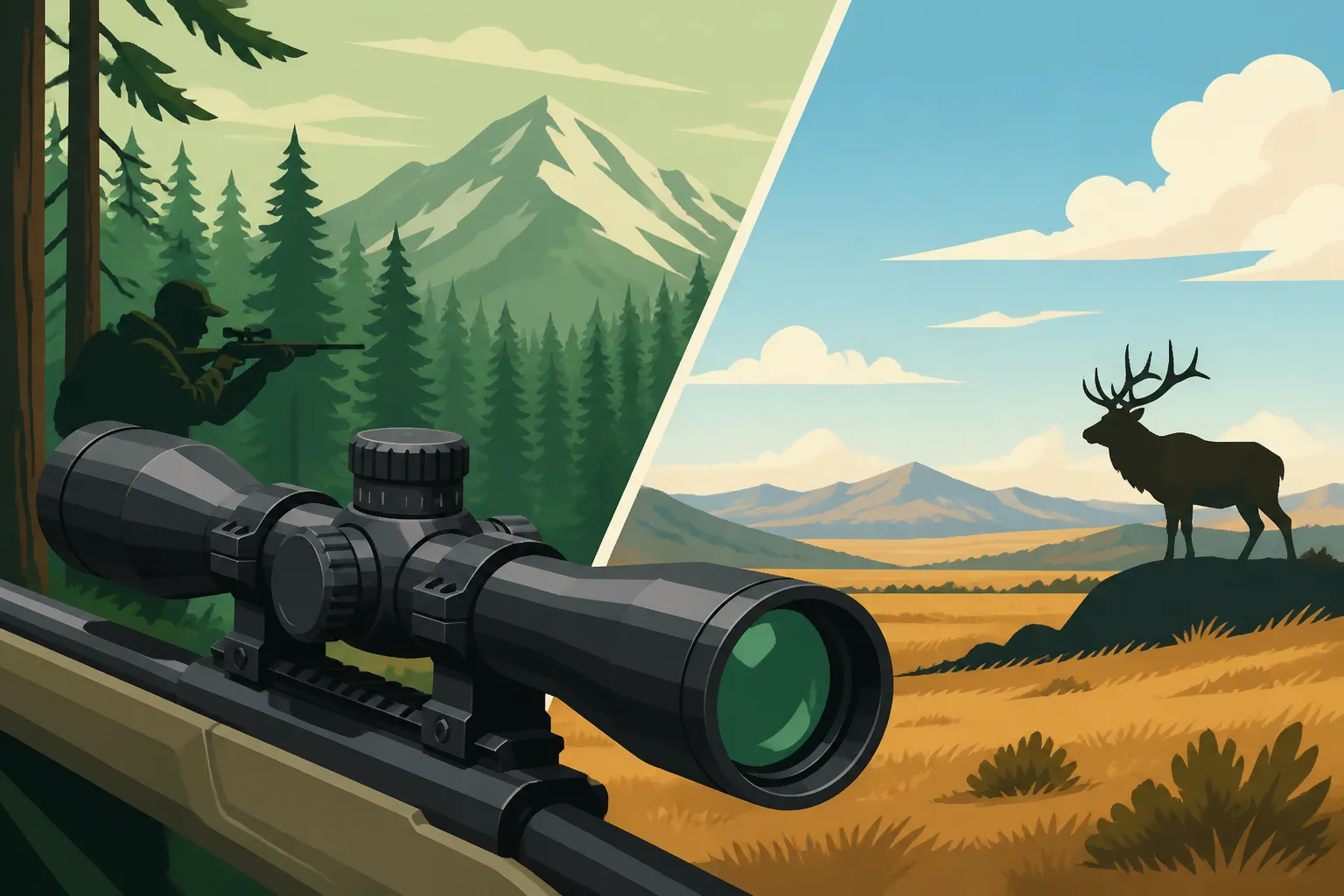
Hunting in Washington State is a game of contrasts, isn't it? One minute you're still-hunting through a rain-soaked, nearly impenetrable thicket of Douglas fir on the west side, hoping a Roosevelt elk materializes 30 yards in front of you. The next, you might be peering across a vast sagebrush basin in Eastern Washington, trying to pick out a mule deer buck bedded a quarter-mile away. This incredible diversity is what makes our state so special, but it also creates a real dilemma when it comes to choosing the right riflescope. How do you find one that can handle both extremes? This guide is going to walk you through the nitty-gritty of selecting a riflescope that's up to the challenge, ensuring you're ready for whatever Washington's wild landscapes throw at you.
Understanding Washington's Diverse Hunting Environments
Before you even start thinking about specific scope models, it's crucial to really grasp the environments you'll be hunting in here in Washington. Our state's terrain is incredibly varied, and a scope that excels in one area might be a serious handicap in another.
The Challenge of Western Washington Timber
Ah, the west side. If you've ever chased Roosevelt Elk of Western Washington or Blacktail Deer Hunting in Western Washington Timber, you know exactly what I'm talking about. This isn't a place for wide-open, long-range engagements. We're talking dense, dark timber, often referred to as "dark timber," where visibility can be measured in dozens of yards, not hundreds. The vegetation is thick – salal, devil's club, and a constant canopy that blocks out the sun.
In these conditions, shots are fast, fleeting, and usually up close. An elk might suddenly appear in a small opening at 50 yards, or a blacktail buck could ghost through the reprod at 75. You need a scope that allows for quick target acquisition, a very wide field of view, and excellent low-light performance to cut through the gloom. A heavy, high-magnification scope here would be a hindrance, often making it harder to find your target in the narrow shooting lanes. Imagine trying to find a deer that just took two steps in thick brush with your scope cranked to 15x – it's like looking through a straw! The last thing you want is to be fumbling with magnification when a bull steps out of the fog.
Eastern Washington's Open Country and Long Shots
Cross over the Cascades, and you enter a whole new world. Eastern Washington is defined by its vastness – sprawling sagebrush flats, rolling wheat fields, steep coulees, and expansive clear-cuts. Here, the game includes Mule Deer of Eastern Washington and Rocky Mountain Elk East of the Washington Cascades, and the distances at which you might spot and shoot are dramatically different.
It's not uncommon to glass a hillside for hours, spotting animals at 500, 600, or even 1000 yards, then planning a stalk to get within shooting range. While you'll always try to close the distance, shots of 200, 300, or even 400 yards are far more common than on the west side. For this kind of hunting, precision and clarity at higher magnifications become paramount. You need a scope that can resolve detail at long distances, allow for precise bullet placement, and often, has reliable dialing turrets for elevation adjustments. The wide-angle, low-power scope that was perfect for the timber would leave you wanting when trying to distinguish antler points on a bedded muley a half-mile away.
The Hybrid Zones: Where Timber Meets Openings
Life isn't always black and white, and neither is Washington hunting. There are plenty of fantastic hunting areas that offer a mix of both environments. Think of the transition zones on the east side of the Cascades, where dense pine forests give way to open parks or recent timber cuts. Or even some west side units where you might still-hunt dark timber but then find yourself overlooking a large logging landing or a natural meadow.
These "hybrid zones" demand versatility from your riflescope. You might be tracking an elk through thick woods at dawn, then later in the day, find yourself glassing across a canyon hoping to pick up a bedded animal in the sun. For these situations, a scope that can truly be an "all-arounder" is gold. It needs to offer a decent field of view at low power but also have enough magnification and clarity to make a confident shot if a longer opportunity presents itself.
Key Riflescope Features for Washington Hunting
Now that we've considered the terrain, let's dive into the technical aspects of riflescopes and what features truly matter for hunting in Washington.
Magnification Ranges and Their Trade-offs
This is often the first thing hunters look at, and for good reason. Magnification dictates how "close" your target appears.
Low power scopes, typically ranging from 1-4x or 2-7x, are fantastic for the thick stuff. They offer an incredibly wide field of view, making it easy to find your target quickly, especially if it's moving. They're also lighter and more compact. If your primary hunting is for Blacktail Deer Hunting in Western Washington Timber, a 1-4x or 2-7x might be all you ever need. The trade-off is obvious: they won't give you the reach or precision for those longer shots.
Mid-range scopes, like the popular 3-9x or 3-12x, are often considered the "workhorses" of the hunting world. They strike a good balance, offering enough magnification for most common hunting distances (up to 300-400 yards) while still providing a reasonable field of view at their lower settings. For many Washington hunters who tackle both sides of the state, or those in the hybrid zones, a quality 3-9x or 3-12x is an excellent choice.
High power scopes, such as 4-16x, 5-20x, or even higher, are built for precision at long distances. They excel in Eastern Washington's open landscapes, allowing you to clearly see your target and aim with utmost accuracy. They can be crucial when trying to count points on a buck from afar or making a careful shot across a canyon. The downsides are a narrower field of view at high magnification, which can make acquiring a close, fast-moving target challenging, and often, increased weight and bulk.
Remember, most shots in hunting occur at much closer ranges than people imagine, even in "open" country. While having high magnification is nice for spotting, you might not always need it for the shot itself, especially if you've closed the distance.
Objective Lens Size and Light Gathering
The objective lens is the front lens of your scope, and its size directly impacts how much light the scope can gather. A larger objective lens generally means a brighter image, especially in low-light conditions like dawn, dusk, or deep timber.
Scopes with objective lenses in the 32mm to 40mm range are usually lighter and more compact. They sit lower on the rifle, which can contribute to better cheek weld and quicker aiming. For much of Western Washington's hunting, where shots are close and quick, these sizes are perfectly adequate, and the reduced bulk is a real benefit when hiking through brush.
Stepping up to 44mm or 50mm objective lenses will noticeably improve light gathering. This can be a huge advantage when you're hunting during the critical first and last minutes of legal light, or trying to see clearly into the shadows of dark timber. However, these larger lenses add weight and require higher scope rings, which can sometimes affect your natural point of aim and cheek weld. You need to consider if the increased light gathering is worth the added weight and potentially less comfortable shooting position for your specific rifle setup. The overall quality of the glass and lens coatings often makes more of a difference than just sheer objective lens size, so don't assume bigger is always better without looking through the scope yourself.
Reticle Types for Different Scenarios
The reticle is that pattern of lines or dots you see when you look through your scope – it's your aiming point. What works best depends heavily on your hunting style and environment.
The classic Duplex reticle (thick outer posts, thin inner crosshairs) is simple, uncluttered, and incredibly fast to use. It's fantastic for quick shots in timber where you don't have time for complicated holdovers. If your target is between the thick posts, you're usually good to go at common timber distances. Many hunters love its simplicity and reliability.
BDC (Bullet Drop Compensating) reticles have a series of dots or hash marks below the main crosshair, designed to correspond to different ranges for a specific cartridge and bullet weight. They offer quick holdover points without needing to dial turrets. They can be very effective for mid-range hunting, offering a good compromise between simplicity and ranging capability. Just make sure the BDC matches your rifle and load well, or it can be more confusing than helpful.
More advanced reticles, like Mil-dot or MOA (Minute of Angle) reticles, often feature a "Christmas tree" pattern of dots and lines. These provide precise aiming points for both elevation and windage, allowing for extremely accurate shots at extended distances, especially when combined with exposed turrets for dialing. These are popular with long-range shooters and those hunting in Eastern Washington where precise adjustments are more common. They come with a steeper learning curve, requiring practice and a solid understanding of ballistic principles. Tools like GoHunt's resources can help you understand how different reticles perform with various cartridges and conditions.
Turrets: Capped, Exposed, and Zero Stops
Turrets are the knobs on your scope that adjust the reticle's point of impact.
Capped turrets are typically found on hunting scopes where the hunter sights in at a specific range (like 200 yards) and then uses holdover for different distances. The caps protect the turrets from accidental bumps or adjustments while you're crawling through brush or packing your rifle. This "set it and forget it" approach is excellent for hunters who prefer simplicity and aren't often shooting beyond 300 yards.
Exposed turrets (often called target turrets) are larger, uncapped, and designed for easy manipulation in the field. Hunters who "dial" their shots will use these to adjust for bullet drop at various ranges. This is very popular for long-range hunting in Eastern Washington. If you choose exposed turrets, ensure they have clear, tactile clicks, are repeatable (meaning they return to the same point after adjustment), and ideally, have a zero stop.
A zero stop is a mechanical feature that prevents the elevation turret from being dialed below your established zero. This is a game-changer for dialing, as it allows you to quickly return to your zero setting without counting clicks, even in the dark or under pressure. If you plan to dial for your shots, a zero stop is a highly recommended feature.
Practical Considerations and Setup for Washington Hunters
Beyond the core features, how you handle and set up your scope makes a world of difference in its performance.
Durability and Weather Resistance
Washington State weather is legendary, and not always in a good way for hunters. Rain, fog, snow, and extreme temperature swings are common. Your riflescope must be built to withstand this abuse.
Look for scopes that are advertised as fully waterproof, fog-proof, and shockproof. Waterproofing typically involves O-ring seals, while fog-proofing usually means the scope has been purged of air and filled with dry nitrogen or argon gas to prevent internal condensation. A shockproof design means it can handle the recoil of your chosen cartridge and the inevitable bumps and scrapes that come with hunting in rugged terrain. A scope that fogs up internally or shifts its point of impact after a fall is utterly useless. Don't skimp here; reliability in adverse conditions is non-negotiable.
Mounting and Eye Relief
A top-tier scope is only as good as its mounting system. Poorly mounted rings or bases can lead to inconsistent accuracy, or worse, your scope coming loose in the field. Invest in quality rings and bases that match your rifle and scope's tube diameter.
Proper eye relief is also critical. This is the distance your eye needs to be from the eyepiece to see a full, clear image. Too little eye relief, and you risk "scope bite" – where the scope recoils back into your eyebrow. Too much, and you might struggle to get a full sight picture quickly. Aim for a comfortable, consistent eye relief that allows you to quickly shoulder your rifle and see a clear image without straining or adjusting your head too much. When mounting, ensure the scope is level and that you have adequate clearance for your bolt handle.
Sighting In and Zero Distances
Sighting in your rifle is more than just getting it "on the paper." It's about understanding your rifle's capabilities with your chosen ammunition at various distances. For most Washington hunting, a 100-yard or 200-yard zero is common.
For heavy timber hunting where shots are almost exclusively under 150 yards, a 100-yard zero might be perfect. It keeps your bullet trajectory relatively flat at those closer ranges. For more open country, a 200-yard zero often gives you a good "point blank range" where your bullet won't rise or fall too much within common shooting distances, reducing the need for holdover. For example, many popular hunting cartridges sighted at 200 yards will be within a few inches of dead-on from 0 to about 250 yards, making quick shots much simpler.
It's vital to Sighting In Before the Opener and practice at varying distances, not just your zero. Know your bullet drop at 50, 100, 200, 300, and even 400 yards. Practice shooting from different positions – Practicing Offhand and Kneeling Shots – as you rarely get a bench rest in the field. After a long hike or a fall, always make sure to Checking Zero After a Rough Pack-In.
Choosing a Scope Based on Your Primary Hunt Type
Now, let's tie it all together and suggest some scope philosophies based on the type of hunting you mostly do in Washington.
Timber Hunter's Choice: Wide Field of View and Low Power
If your heart truly lies in the thick, dark forests of Western Washington, pursuing big Roosevelt bulls or wary blacktail bucks, then your scope priorities are clear: speed, wide field of view, and excellent low-light performance.
You'll want a scope with a true 1x or 2x on the low end, and perhaps a maximum magnification of 4x to 7x. Think about scopes like a 1-4x20mm, 1-6x24mm, or 2-7x33mm/35mm. The smaller objective lenses keep the scope compact and light, which is a blessing when navigating dense brush. An illuminated reticle can be a huge asset in low light or against dark timber, helping you quickly place your aiming point. Focus on quality glass with great coatings to maximize what little light is available. These scopes are less about long-range precision and more about fast, confident shot placement in tight quarters.
Open Country Hunter's Choice: Magnification and Precision
For those drawn to the vast, expansive landscapes of Eastern Washington, where mule deer graze on distant hillsides and Rocky Mountain elk might be spotted miles away, your scope needs to be a precision instrument.
Here, a higher magnification range is beneficial, something like a 3-15x, 4-16x, or even a 5-20x. You'll want a larger objective lens (44mm-50mm) to gather ample light and provide a bright, clear image at high magnifications. A fine reticle, whether it's a Mil-dot, MOA, or a precise BDC, will aid in accurate aiming. Exposed, tactile turrets with a reliable zero stop are highly recommended if you plan to dial for elevation. You'll be using this scope to pick apart distant details, plan your stalks, and then, when the shot presents itself, make a confident, ethical shot at potentially longer ranges.
Many experienced long-range hunters in Eastern Washington rely heavily on external ballistic solvers and custom turret caps. They'll use resources like those found on GoHunt to research specific GMU regulations and analyze terrain features from home, E-Scouting Washington GMUs Before the Draw. This preparatory work helps them understand the distances they might encounter and set up their scope accordingly.
The Versatile All-Arounder: Balancing Both Worlds
What if you hunt both sides of the state, or frequently find yourself in those "hybrid zones" that mix timber and openings? You need a scope that compromises intelligently without sacrificing too much performance on either end.
Scopes in the 2-10x, 2.5-12x, or 3-12x range with a 40mm-44mm objective lens are often excellent choices here. They provide enough low-end magnification for decent field of view in timber and enough top-end power for reliable shots out to 300-400 yards. Many of these scopes will feature capped turrets for protection but often have clear, repeatable clicks underneath, allowing you to dial if you need to for a specific longer shot. Some even offer hybrid reticles that provide simple holdovers while remaining uncluttered. The key is finding one with excellent glass quality, as that will maximize its utility across the widest range of lighting and environmental conditions.
| Feature | Timber Hunting (Western WA) | Open Country Hunting (Eastern WA) | All-Around Hunting (Hybrid) |
|---|---|---|---|
| Magnification | Low (1-4x, 2-7x) | High (3-15x, 4-20x) | Mid (2-10x, 3-12x) |
| Objective Lens | 32-40mm (compact, good light) | 44-56mm (max light, clarity) | 40-50mm (balance) |
| Reticle Type | Simple Duplex, Illuminated dot | Mil/MOA, BDC | Duplex with BDC or clear holdovers |
| Turrets | Capped (set & forget, protected) | Exposed, repeatable, zero stop | Capped with clear markings, or exposed with zero stop |
| Field of View | Wide | Narrower at high mag | Balanced |
| Eye Relief | Generous (for quick mounts) | Standard | Generous |
| Weight | Lighter, compact | Can be heavier | Moderate |
| Durability | Essential (rain, bumps, humidity) | Essential (dust, bumps, temperature) | Essential (all conditions) |
Maximizing Your Riflescope's Performance in the Field
Having the right scope is just one piece of the puzzle. How you care for it and use it in the field directly impacts your success.
Lens Care and Protection
Whether you're battling rain, fog, or dust, keeping your scope lenses clean is paramount. A smudged or dirty lens will drastically reduce clarity and light transmission, especially at critical moments.
Always use good quality lens caps when your rifle isn't in use. Carry a lens cleaning pen or a microfiber cloth specifically designed for optics. Resist the urge to wipe lenses with your shirt or a dirty rag, as this can scratch the delicate coatings. In rainy conditions, a simple piece of electrical tape over the objective lens (and peeled off quickly before the shot) can keep water off until the last second. In dusty Eastern Washington, keep those caps on until you're ready to glass or shoot.
Practicing with Your Setup
A riflescope isn't just something you mount and forget. It's an integral part of your shooting system, and like any tool, it requires practice to master. Don't just sight in at the bench; practice shooting from field positions you might actually encounter. That means prone, kneeling, sitting, and even standing. Practice quick target acquisition, especially with a variable power scope – can you get on target quickly at low power, then smoothly increase magnification if needed?
If your scope has a BDC reticle, practice shooting at the ranges those hash marks represent so you truly understand their capabilities. If you plan to dial, practice dialing under timed conditions to ingrain the muscle memory. Confidence in your equipment comes from familiarity, and familiarity comes from regular, thoughtful practice. Rifle Setup for Washington Elk and Deer should always include regular range time to ensure proficiency.
Understanding Ballistics and Environmental Factors
For those longer shots, especially in Eastern Washington, understanding external ballistics is crucial. Factors like temperature, altitude, and humidity all affect how your bullet flies. A shot that's dead on at 300 yards in cool autumn air might be a few inches off in freezing temperatures or higher altitudes.
Many hunters use ballistic calculators (apps on their phone or handheld devices) to get real-time firing solutions. These tools take into account your cartridge, bullet, muzzle velocity, and environmental conditions to provide precise holdover or dialing instructions. Understanding your specific cartridge's trajectory, knowing your Washington's Minimum Rifle Caliber Rule for the species you're chasing, and having a rangefinder with angle compensation become invaluable tools. It's a lot to learn, but the rewards are increased accuracy and more ethical shots. Understanding these factors is particularly important when considering Cartridges That Suit Washington Roosevelt Elk or Cartridges for Long Eastside Shots in Washington.
Disclaimer
This article is for general informational purposes only and does not constitute professional advice. Laws, prices and regulations vary by location and change over time. Consult a qualified professional for guidance on your specific situation.