Washington’s Eastside and Westside Split
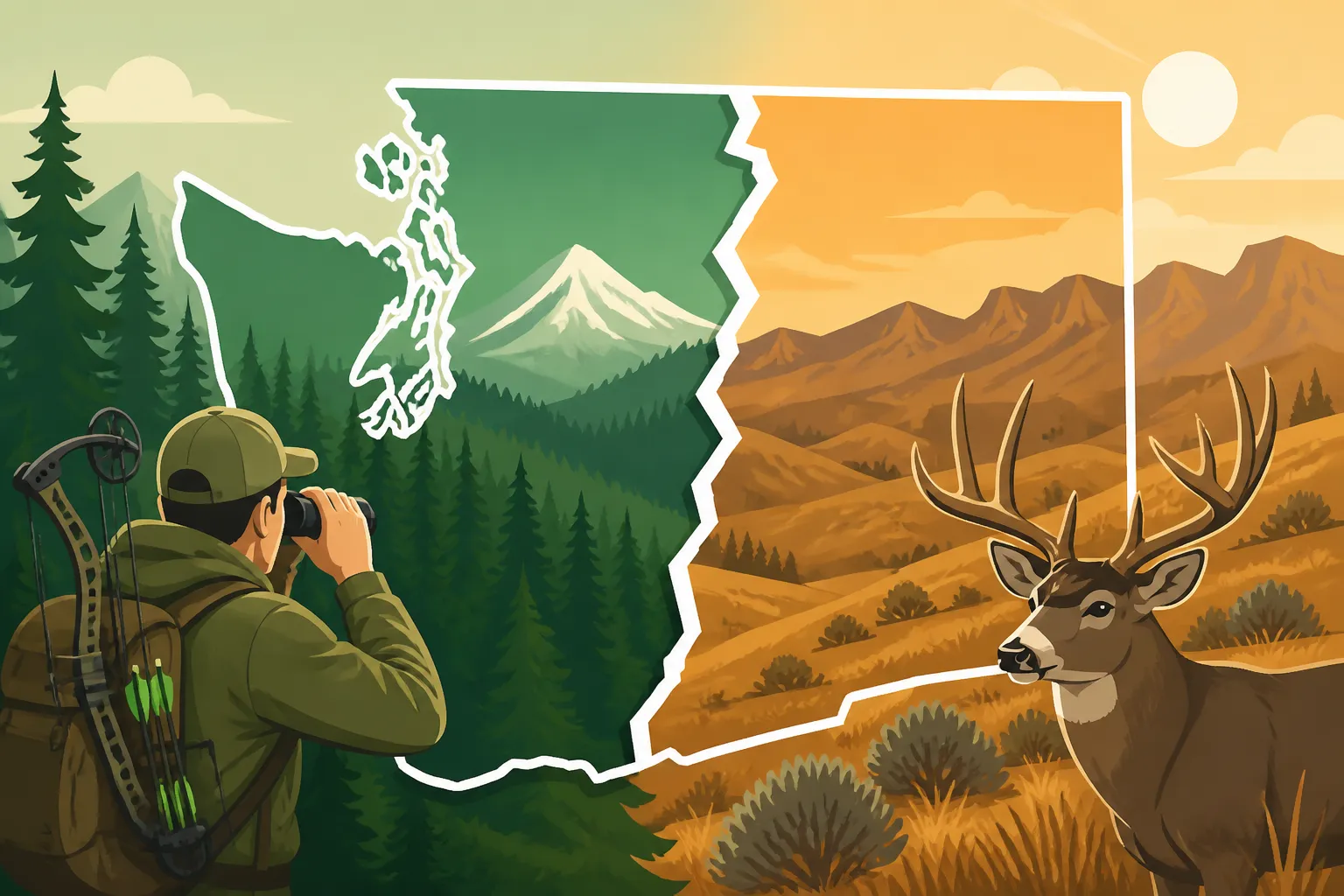
If you've ever looked at a hunting map of Washington state, you've probably felt like you're staring at two entirely different worlds. That's because, in many ways, you are. The towering Cascade Mountain Range carves a definitive, almost spiritual, divide right down the middle of our state, creating a distinct "Eastside" and "Westside" that impacts everything from the weather you'll encounter to the type of game you're pursuing and the very tactics you'll employ. This guide is all about helping you understand this fundamental split so you can stop feeling overwhelmed and start strategizing for a successful hunt, no matter which side of the mountains you choose.
The Cascade Curtain: A Fundamental Divide
The geological backbone of Washington, the Cascade Range, isn't just a pretty backdrop; it's a massive environmental barrier that dictates much of the state's hunting landscape. Understanding this "Cascade Curtain" is the first step in unlocking Washington's diverse hunting opportunities.
Geographic and Climatic Differences
Imagine a giant wall running north to south. That's essentially what the Cascades are, dramatically altering weather patterns. On the Westside, you're looking at a maritime climate directly influenced by the Pacific Ocean. This means heavy rainfall, often measured in feet rather than inches, and milder, wetter winters. Summers are generally cooler and greener, even at lower elevations. The air always feels a bit damp, and the moss grows thick on everything. This perpetual moisture shapes the very ecosystem.
Cross over the Cascades to the Eastside, and you're in a completely different world. Here, the mountains cast a "rain shadow," blocking much of that Pacific moisture. The climate becomes semi-arid, characterized by hot, dry summers and cold, snowy winters. You'll experience true four seasons, often with significant temperature swings between day and night. Instead of constant drizzle, rain often comes in distinct storms, and snow can accumulate deeply in the higher elevations, creating dramatic winter range issues for game. This stark contrast in climate fundamentally dictates water sources, vegetation growth, and animal behavior.
Vegetation and Terrain Impact
The climate, in turn, dictates the vegetation, which then sculpts the terrain. On the Westside, think dense, dark timber. We're talking about old-growth rainforests, thick second-growth timber, and clearcuts that rapidly regenerate into nearly impenetrable brush. Species like salal, huckleberry, and devil's club form an unforgiving understory that can make a ten-yard retrieve feel like a marathon. The topography is often steep and rugged, carved by ancient glaciers and modern logging roads, but the sheer density of the vegetation means visibility is almost always limited. You might be hunting what feels like a green tunnel, where shots beyond 50 yards are rare.
The Eastside, in contrast, offers a much more open, expansive landscape. Here, you'll find vast sagebrush flats, rolling wheat fields, and dramatic coulees carved by ancient floods. Higher up, the terrain transitions into vast ponderosa pine forests, often with a more open understory, making for easier walking and longer sightlines. Rimrock canyons and steep, broken country define much of the mule deer and Rocky Mountain elk habitat. While still rugged in places, especially in the breaks of the Blue Mountains or the Okanogan highlands, the general feel is one of vastness, where spotting game from a distance is a key component of the hunt. This difference in cover and visibility means completely different hunting strategies are required to be successful.
Game Species and Their Preferences
The Eastside/Westside split isn't just about scenery; it defines where different species thrive and how they behave. Knowing what to expect on each side will directly influence your hunt planning.
Elk Subspecies and Habitat
When it comes to elk, Washington is unique in that it hosts two distinct subspecies, neatly divided by the Cascade crest. On the Westside, you'll find the impressive Roosevelt elk. These animals are typically larger-bodied than their Rocky Mountain cousins, built for pushing through the thick, wet coastal and Cascade forests they call home. They are often masters of cover, moving quietly through dense timber and seemingly disappearing into clearcuts that appear impenetrable to humans. Their bugles can be less frequent and intense than Rocky Mountain elk, especially once the peak rut is over, making them incredibly challenging to locate and hunt. If you're chasing Roosevelt Elk of Western Washington, be prepared for a hunt that often involves still-hunting, tracking, and close-quarters encounters.
Venture to the Eastside, and you'll encounter the Rocky Mountain elk. While still formidable, these elk are adapted to a more open, often drier environment. They can be found ranging from the vast sagebrush steppe of the Columbia Basin to the high alpine meadows and ponderosa pine forests of the Blue Mountains, Colockum, or Yakima herds. Rocky Mountain Elk East of the Washington Cascades are often more vocal, especially during the rut, and their tendency to gather in larger herds can make them easier to spot from a distance. However, their ability to cover vast amounts of ground in open country, often crossing miles between feeding and bedding areas, presents its own set of challenges. Hunting these elk often involves extensive glassing and long-range approaches.
Deer Species and Environments
Just like elk, Washington's deer populations are also largely segregated by the Cascade Mountains, with an exciting bonus species in the northeast. The Westside is prime territory for the Columbian Blacktail deer. These small-to-medium sized deer are absolute ghosts of the forest. They thrive in the dense, wet, brushy habitat of western Washington, particularly in the regenerating clearcuts and thick timber. Columbian Blacktail Deer in Western Washington are notoriously shy and difficult to spot, often preferring to melt away into the cover rather than flee in the open. Hunting blacktails often feels like a slow, meticulous game of hide-and-seek, requiring keen eyes and patience in dense surroundings.
Crossing to the Eastside, the dominant deer species is the Mule deer. With their large ears, rope-like antlers, and distinctive bounding gait, mule deer are iconic to the open and semi-open landscapes east of the Cascades. You'll find them inhabiting everything from the sagebrush flats of the Columbia Basin to the timbered draws of the Okanogan and the breaks of the Blue Mountains. Mule Deer of Eastern Washington are often spotted at great distances, and successful hunting typically involves glassing vast areas and then executing a strategic spot-and-stalk. Their tendency to "bed high and feed low" means hunters spend a lot of time on ridges with binoculars.
And then, in the very northeast corner of the state, particularly in areas like Pend Oreille and Stevens counties, you'll find a strong population of White-tailed deer. These deer prefer the thicker riparian zones, dense creek bottoms, and agricultural edges that offer plenty of cover. While present in smaller numbers in other parts of the Eastside, their stronghold is definitely in the northeast. White-Tailed Deer in Northeast Washington are known for their explosive speed and signature flagging tail when alarmed, often preferring to use dense cover for escape rather than relying on distance.
Hunting Tactics and Access Strategies
The dramatic differences in terrain and game mean that the way you approach a hunt in Washington will be fundamentally different depending on which side of the Cascades you find yourself. Forget "one size fits all" advice here.
Westside Hunting Approaches
Hunting on the Westside is a grind, plain and simple. It's often defined by close quarters, low visibility, and a constant battle with the elements and dense vegetation. Still-hunting is a primary tactic, moving slowly and deliberately through the timber, pausing frequently to scan and listen. You're looking for subtle movements, a flick of an ear, or a patch of hair through the foliage. Calling, particularly cow calls for elk, can be effective in drawing an animal out of the thick stuff, but often you're relying on bumping into game or tracking fresh sign in the wet forest duff. Still-Hunting Blacktails in Wet Washington Brush requires incredible stealth and a keen understanding of wind direction in swirling timber thermals. Shot opportunities are often quick and close, demanding fast target acquisition and precise shot placement through small windows in the brush.
Access to prime Westside hunting grounds often presents its own set of hurdles. Much of the land is managed by private timber companies like Weyerhaeuser or Hancock Forest Management. These lands often have locked gates, requiring special permits for motorized access, or are designated walk-in only. Understanding Timber Company Permits in Western Washington is crucial, as availability and cost can vary. National Forest and DNR lands are also prevalent, but even here, overgrown roads and extensive logging can make for challenging navigation. Hunters must be prepared for rough, steep, and often muddy terrain, and the sheer density of vegetation means miles walked can feel exponentially longer. A good mapping tool like onX Hunt is absolutely invaluable for navigating property boundaries and understanding access rules, especially when dealing with checkerboard land ownership.
Eastside Hunting Approaches
On the Eastside, the name of the game is glassing. The more open terrain, whether it's sagebrush flats, ponderosa parks, or rimrock canyons, lends itself perfectly to long-range observation. Hunters often spend hours perched on vantage points, methodically scanning hillsides, coulees, and timber edges with high-powered binoculars and spotting scopes. The goal is to locate game at a distance, analyze their behavior, and then plan a careful spot-and-stalk approach. Glassing Eastern Washington Breaks for Mule Deer demands patience, quality optics, and a good tripod to keep your glass steady. Once game is spotted, the stalk itself can be long and challenging, requiring careful use of topography and wind to close the distance without detection in the often sparse cover.
Access on the Eastside is generally more straightforward for public land hunters. Vast tracts of National Forest, BLM (Bureau of Land Management), and Washington Department of Fish and Wildlife (WDFW) wildlife areas provide extensive hunting opportunities. However, navigating land ownership for private agricultural lands, which often hold significant numbers of deer and elk, is critical. Getting Written Permission on Private Land is often the key to unlocking some of the best hunting, and doing so respectfully and well in advance is essential. While roads are generally better maintained than on the Westside, late-season snow can quickly shut down high-country access, and hunters need to be mindful of winter range closures designed to protect vulnerable game. Using an app like onX Hunt or consulting resources like GoHunt can help you identify land ownership, potential access points, and historical hunt data to refine your strategy.
Gear Considerations for Each Region
Because the environments are so different, the gear you prioritize for a successful hunt on the Westside versus the Eastside will also vary significantly. Think of it as equipping yourself for two different expeditions.
Westside Gear Essentials
Given the relentless moisture, your primary concern on the Westside is staying dry. High-quality rain gear isn't optional; it's survival. We're talking about durable, waterproof-breathable outer layers that can withstand constant abuse from brush and rain without wetting out. Beyond just a jacket, waterproof pants and gaiters are critical to keep your legs dry when pushing through wet brush. Rain Gear and Layering for Washington Hunts means a robust system of moisture-wicking base layers, insulating mid-layers, and that bombproof outer shell. Your boots need to be absolutely waterproof, high-ankled, and durable enough to handle mud, stream crossings, and slippery roots. Traction is paramount on steep, wet slopes.
Optics on the Westside often lean towards lower magnification binoculars (8x or 10x) simply because dense cover limits effective glassing distances. A rangefinder is still useful for confirming distances in clearings or across small ravines, but less critical for long-range spotting. For archery hunters, Archery Gear for Washington's Wet Westside means paying extra attention to waterproofing your release, keeping strings waxed, and ensuring your broadheads are razor sharp for quick, clean kills in close quarters. Rifle hunters often opt for shorter-barreled, handier firearms that are easier to maneuver through thick timber, with scopes that perform well in low-light conditions. Durability and waterproofing extend to all your gear, as everything will eventually get wet.
Eastside Gear Essentials
On the Eastside, while weather can still be a factor (especially cold and snow), the emphasis shifts heavily towards optics and layering for wide temperature swings. This is where high-powered binoculars (10x, 12x, or even 15x with a tripod) and a quality spotting scope truly shine. Optics for Washington Elk and Deer Hunting on the Eastside are your primary scouting tools, allowing you to pick apart distant hillsides and identify game miles away. A sturdy tripod is non-negotiable for steady glassing sessions that can last hours. A rangefinder with angle compensation is also crucial for accurately judging shots across canyons or up steep slopes, where distances can be deceiving.
Layering is still key, but for different reasons. You might start a morning hunt in freezing temperatures, only to shed layers by midday as the sun beats down on open sagebrush. Then, as evening approaches, the chill returns rapidly. Breathable, quick-drying fabrics are your friend. Boots for the Eastside should be durable, offer excellent ankle support for rocky, uneven terrain, and prioritize comfort for long miles. While still needing to be weather-resistant, extreme waterproofing isn't always the top concern unless you're hunting in deep snow. For rifle hunters, Rifle Setup for Washington Big Game on the Eastside often involves cartridges capable of longer, flatter trajectories and scopes with excellent light transmission and reliable dialing turrets for those extended shots. A good GPS unit or a reliable mapping app like onX Hunt, loaded with offline maps, is indispensable for navigating vast landscapes, identifying legal access, and marking points of interest far from established roads.
Regulatory and Seasonal Nuances
Washington's hunting regulations, season dates, and permit structures often reflect the Eastside/Westside divide, making it crucial to understand these nuances when planning your hunt.
General Season Differences
It's common for general season dates to vary between the Eastside and Westside, especially for popular species like deer and elk. For example, archery elk seasons might open and close on slightly different schedules, or modern firearm deer seasons could have different lengths depending on which side of the Cascades you're hunting. These variations are designed to manage distinct populations, address differing habitat conditions, and balance hunter pressure. Moreover, specific Game Management Units (GMUs) on either side might have unique rules, such as spike-only elk regulations in certain Westside units, or Washington's Three-Point Rule and What Counts in specific Eastside deer units.
Road closures are another significant factor, particularly on the Eastside. Many roads, especially in higher elevations, are designated as winter range closures, meaning they are off-limits to vehicles (and sometimes foot traffic) during specific periods to protect vulnerable deer and elk. These closures can begin as early as November and extend well into spring, dramatically impacting late-season hunting opportunities. Always check the current WDFW regulations pamphlet and local Forest Service or DNR offices for the most up-to-date information on GMU-specific rules and access restrictions.
Special Permits and Draw Strategy
Washington offers special hunt permits for deer, elk, moose, sheep, and goat, which are highly sought after by hunters looking for quality animals or less crowded hunting experiences. The strategy for applying for these permits often takes the Eastside/Westside split into account. Eastside draws might focus on trophy mule deer in the Okanogan or branch-antlered Rocky Mountain elk in the Colockum or Blue Mountains. Westside draws, on the other hand, frequently offer opportunities for quality Roosevelt elk in units like the Olympic Peninsula or the Coweeman.
Understanding Washington Special Hunt Permits and How to Apply involves carefully researching draw odds, historical harvest data, and population trends for specific GMUs on each side of the state. Resources like GoHunt can be incredibly helpful for analyzing these statistics, allowing you to make informed decisions about where to apply your limited hunt choices. While Washington doesn't have a preference point system (it's a truly random draw), maximizing your chances often means targeting units that align with the specific species and hunting experience offered by the Eastside or Westside.
Here's a quick comparison of the two sides:
| Feature | Westside (West of Cascades) | Eastside (East of Cascades) |
|---|---|---|
| Climate | Wet, mild winters, cool summers, high rainfall | Dry, hot summers, cold snowy winters, distinct seasons |
| Terrain | Dense forests, clearcuts, steep, rugged, thick understory | Sagebrush flats, ponderosa pine forests, coulees, rimrock, agricultural |
| Primary Elk | Roosevelt Elk (dense timber, larger body) | Rocky Mountain Elk (open country, more vocal) |
| Primary Deer | Columbian Blacktail (shy, thick cover) | Mule Deer (open country, glassing), Whitetail (NE Washington) |
| Hunting Tactics | Still-hunting, tracking, close-quarters, calling | Glassing, spot-and-stalk, long-range observation |
| Visibility | Limited, short shooting lanes | Expansive, long shooting opportunities |
| Access | Private timberlands (permits often required), heavy brush | National Forests, BLM, WDFW lands, private farms (permission) |
| Key Gear | Durable rain gear, waterproof boots, quieter fabrics, lower-power optics | High-power binoculars/spotting scope, tripod, rangefinder, long-range rifle |
| Challenges | Constant wet, dense cover, physical exertion | Temperature extremes, long distances, wind, snow |
Disclaimer
This article is for general informational purposes only and does not constitute professional advice. Laws, prices and regulations vary by location and change over time. Consult a qualified professional for guidance on your specific situation.