White-Tailed Deer in Northeast Washington
For many hunters in Washington, the focus often gravitates toward the majestic Rocky Mountain or Roosevelt elk, or perhaps the elusive mule deer of the eastside breaks. But tucked away in the dense timber and agricultural fringes of Northeast Washington lies a vibrant, often overlooked opportunity: the white-tailed deer. These cunning creatures present a unique challenge and reward, and understanding their habits, habitat, and how to hunt them is key to success in this distinct corner of our state. This guide will take a deep dive into everything you need to know to pursue Washington's whitetails.
Understanding Washington's Whitetail Population
When you mention "deer hunting" in Washington, most folks immediately picture a blacktail buck sneaking through dense coastal brush or a big muley glassing across a vast canyon. But the northeastern quadrant of our state offers a completely different, equally exciting deer hunting experience: the whitetail. These deer have a strong, growing presence, offering fantastic opportunities if you know where to look and how to hunt them.
Historical Presence and Current Numbers
White-tailed deer aren't exactly new to Washington, but their populations in certain areas, particularly the northeast, have really flourished in recent decades. Historically, their range was more limited, often overlapping with the mule deer in transitional zones. However, with changes in forest management, agricultural practices, and perhaps even milder winters, whitetails have found ideal conditions to expand and thrive. Today, the populations in Pend Oreille, Stevens, and Ferry counties, and parts of Spokane and Lincoln counties, are robust, providing consistent hunting opportunities. The Washington Department of Fish and Wildlife (WDFW) monitors these herds closely, often showing stable or increasing numbers, which is great news for hunters. It's not uncommon to hear tales of seasoned hunters seeing multiple deer in a day, a testament to the healthy populations in these areas.
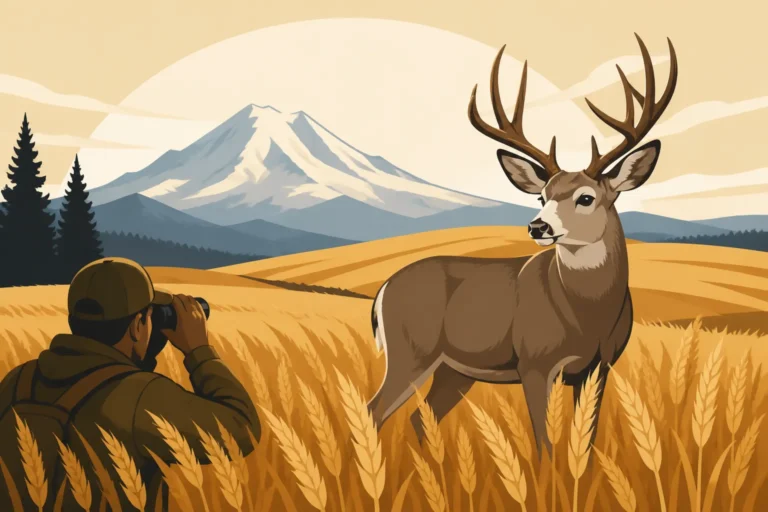
A common misconception is that whitetails are small. While they generally don't reach the immense body size of a mature Rocky Mountain elk, a healthy adult whitetail buck can still be a substantial animal, weighing well over 200 pounds live weight, with a chest that looks like a barrel. Their antlers, with tines typically growing off a main beam that sweeps forward, are truly iconic and highly sought after by hunters. These robust deer are perfectly adapted to their environment, making them both resilient and a rewarding quarry.
Whitetail Range and Expansion
The primary stronghold for Washington's whitetails is unequivocally the northeast region. Think of the vast timberlands and river drainages that feed into the Columbia, Pend Oreille, and Spokane rivers. This mosaic of dense conifer forests, aspen groves, riparian zones, and interspersed agricultural fields creates perfect whitetail habitat. Unlike their mule deer cousins who prefer open, broken country, whitetails are creatures of cover. They thrive where they can melt into thick brush, dense timber, or creek bottoms, using their incredible stealth and senses to evade predators and hunters alike.
While their core range is in the northeastern counties, you'll find pockets of whitetails expanding into areas further south and west as well. However, the consistent, huntable populations truly lie east of the Okanogan and north of Spokane. This expansion is often driven by suitable habitat corridors, access to water, and reliable food sources. Hunters often describe seeing whitetails utilizing the edges of clearcuts that are several years old, where new growth provides both browse and cover. Understanding Whitetail Range in Northeast Washington is paramount to focusing your hunting efforts effectively. It's a landscape that rewards careful observation and a willingness to explore beyond the obvious.
Whitetail Versus Mule Deer Identification
For those new to hunting deer in Washington, or even seasoned hunters crossing from one side of the state to the other, telling the difference between a whitetail and a mule deer can sometimes be tricky at a distance or in fleeting glimpses. However, there are some clear characteristics that, once learned, make identification much easier and are crucial, especially if you're hunting in a mixed-species zone. Misidentification can lead to an illegal harvest, so paying attention to details is vital.
Here's a breakdown to help you distinguish between the two:
| Feature | White-tailed Deer | Mule Deer |
|---|---|---|
| Antlers | Main beam sweeps forward, tines grow off main beam | Forked antlers, each beam forks and re-forks |
| Tail | Long, wide, brown tail with white underside; flags when alarmed | Shorter, rope-like tail with a black tip |
| Ears | Shorter, proportionate to head | Large, "mule-like" ears, very prominent |
| Color | Reddish-brown in summer, grayish-brown in winter | Grayish-brown year-round, often paler |
| Rump Patch | Small, indistinct white rump patch | Large, prominent white rump patch |
| Movement | Runs with fluid strides, "flags" tail up | Bounding "stotting" gait (all four feet together) |
| Habitat | Dense cover, forests, agricultural edges | Open country, sagebrush, broken terrain |
The most obvious difference is often the tail. A whitetail's tail is famously long and bushy. When alarmed, it will raise that tail like a flag, flashing its bright white underside as it bounds away. This "flag" is an unmistakable signature. Mule deer, conversely, have a much narrower, rope-like tail, usually with a distinctive black tip, and they rarely "flag" it. Their ears are also significantly larger, hence the "mule" in their name. Observing Whitetail Versus Mule Deer Identification closely in the field, even with binoculars, will sharpen your skills. Remember, taking the time to confirm your target is always the right call.
Prime Whitetail Habitat in Northeast Washington
To successfully hunt white-tailed deer, you first need to understand where they live and why. Northeast Washington presents a diverse landscape that provides everything a whitetail needs to thrive: food, water, and most importantly, security cover. This isn't wide-open mule deer country; this is a place where you often have to get in close and sometimes dirty.
Forested Areas and River Bottoms
The deep, often dense forests of Northeast Washington are whitetail heaven. These areas, particularly those with a mix of mature timber, regenerating clearcuts, and thick underbrush, offer both ample food and impenetrable cover. Whitetails are browsing animals, meaning they feed on twigs, leaves, and buds from a wide variety of plants. You'll often find them munching on aspen, willow, huckleberry, serviceberry, and various shrubs that grow prolifically in the forest understory. Look for areas where different forest types meet, or where timber companies have recently logged, creating new growth.
River bottoms and creek drainages are also critical habitat. The riparian zones along the Pend Oreille, Colville, and Spokane rivers, as well as countless smaller creeks, are often choked with thick alders, willows, and other hardwoods. This dense vegetation provides excellent thermal cover, particularly in winter, and a consistent water source. Deer will often bed down in these areas during the day, emerging to feed in the evenings and mornings. These low-lying areas act as natural travel corridors, funnelling deer movement, which can be a prime spot for setting up an ambush or still-hunting. Don't overlook the smaller, unnamed draws and seeps; whitetails will utilize any cover that offers protection.
Agricultural Edges and Private Land Considerations
While whitetails love the timber, they are also heavily drawn to agricultural lands, particularly during certain times of the year. The transition zones where dense forest meets fields of alfalfa, peas, wheat, or corn are incredibly productive. These crops provide a high-energy food source that supplements their natural browse, allowing deer to put on critical fat reserves, especially before the rut and winter. Hunters often find whitetails feeding heavily in these fields at dawn and dusk, before retreating into the safety of the adjacent timber during daylight hours.
Hunting these agricultural edges often involves navigating private land. Many of the productive farming areas in Northeast Washington are privately owned. Respectful and proactive engagement with landowners is paramount. Often, a knock on the door well before the season, a polite conversation, and an offer to help with chores can go a long way in securing permission. It’s also wise to check the WDFW's private lands access programs, such as Washington Register to Hunt Properties or Washington Feel Free to Hunt Properties, which can provide access to enrolled lands. Remember, private land access is a privilege, not a right, and maintaining a good relationship benefits all hunters.
Public Land Hotspots and Challenges
Fortunately, Northeast Washington boasts a significant amount of public land that holds excellent whitetail populations. The Colville National Forest, in particular, offers vast tracts of accessible hunting ground. Areas like the Selkirk Mountains and the Kettle River Range within the Colville are renowned for their whitetail densities. DNR (Department of Natural Resources) lands also provide opportunities, though specific access rules and permit requirements (like the Discover Pass for parking) should always be verified.
The challenge on public land often comes down to pressure and finding those overlooked pockets. Popular roads and easily accessible areas will see more hunters. To find success, you'll need to embrace hiking further, exploring dense cover that others avoid, or utilizing less obvious access points. Mapping tools, like those from GoHunt, are invaluable for identifying land ownership, potential access points, and terrain features that might hold deer. When using these digital tools, look for areas with a mosaic of forest ages, dense riparian zones, and minimal road access, as these often translate to less pressure and more undisturbed whitetails. Don't be afraid to put on some miles on your boots; the best public land spots are often a bit off the beaten path.
Whitetail Behavior Through the Seasons
Understanding the seasonal patterns and behaviors of white-tailed deer is like unlocking a secret code. Each season presents different opportunities and challenges for the hunter, dictated by the deer's biological needs for survival, reproduction, and food.
Spring and Summer Patterns
As winter snows recede and the landscape bursts into green, whitetails enter a period of growth and recovery. In spring, their focus is on replenishing fat reserves lost over winter and supporting new antler growth for bucks, and gestation for does. You'll find them grazing on tender new shoots, forbs, and grasses in forest openings, along roadsides, and in regenerating clearcuts. This is also when fawns are born, typically in late May or early June. Does become incredibly secretive during this time, stashing their fawns in dense cover and only visiting them periodically to nurse.
Summer sees bucks in velvet, often forming bachelor groups in remote, food-rich areas. Their antlers are rapidly developing, and their diet remains high in protein and nutrients. Does are busy raising their fawns, which by mid-summer are often seen accompanying their mothers. While hunting isn't open during these months, this is an excellent time for scouting. You can observe deer feeding patterns, locate travel corridors, and identify potential bedding areas without disturbing them. Using optics like a good pair of binoculars, you can often spot these summer patterns from a distance, gathering valuable intelligence for the fall.
Fall Pre-Rut and Rut Dynamics
Ah, fall! This is when whitetail hunters live for. As days shorten and temperatures drop, a hormonal shift takes place, ushering in the magical period known as the rut. The pre-rut, typically starting in late September and October in Northeast Washington, sees bucks becoming more aggressive. They'll begin rubbing their antlers on saplings and making scrapes, which are patches of disturbed earth where they deposit urine and glandular secretions, signaling their presence to other deer. This is a time of increased activity, as bucks start searching for does.
The peak rut, usually in early to mid-November in Washington, is when bucks are most active and vulnerable. Driven by the urge to breed, they often let their guard down, traveling extensively in search of receptive does. This is when a big buck that has been nocturnal for weeks might suddenly appear in broad daylight. Hunters often observe bucks following doe trails, grunting, and chasing. Understanding Whitetail Rut Timing in Washington is crucial for planning your hunt; hitting the woods during this peak window dramatically increases your odds of encountering a mature buck. Doe activity is also high, as they are the magnets that draw the bucks in.
Winter Survival Strategies
Once the rut subsides and winter descends upon Northeast Washington, whitetails shift their focus entirely to survival. Food sources become scarce, and deep snow can make movement difficult and energy-intensive. Deer will often congregate in "winter range" areas, which are typically south-facing slopes, dense conifer stands, or river bottoms that offer thermal cover and some protection from the elements. These areas allow them to conserve energy and access what little forage is available.
During harsh winters, whitetails rely heavily on fat reserves built up during the fall. Their metabolism slows, and they move as little as possible. Hunting during the late season (if permitted in your GMU) requires a different strategy. Deer will be concentrated, but also incredibly wary and often feeding only during brief windows. Look for areas with heavy thermal cover and limited snow depth, where deer might be able to find browse. Respecting winter range closures, which are implemented to protect deer during this vulnerable time, is also critical for conservation.
Scouting and Locating Whitetails
The key to consistently finding and harvesting mature white-tailed deer, especially in the thick cover of Northeast Washington, is diligent and intelligent scouting. You can't just stumble into success; you need to understand the land and the deer that inhabit it.
E-Scouting Techniques for Northeast Washington
Before you even set foot in the woods, the power of technology can give you a massive advantage. E-scouting, or electronic scouting, allows you to analyze vast areas from the comfort of your home. Platforms like GoHunt and onX Hunt provide invaluable satellite imagery, topo maps, and land ownership layers. Start by identifying potential public lands in areas known for whitetails, such as the Colville National Forest.
Look for key features on these maps:
- Edge Habitat: Whitetails thrive on edges. Identify where dense timber meets clearcuts, agricultural fields, or riparian zones. These are natural travel corridors and feeding areas.
- Topographical Funnels: Look for saddles, narrow ridges, or pinch points between steep terrain. These act as natural funnels that deer will use to travel from bedding to feeding areas.
- Water Sources: Identify perennial creeks, springs, or ponds. Even small seeps can be critical water sources, especially during dry periods.
- Bedding Areas: These are typically dense, dark timber stands, thick brush, or north-facing slopes that offer protection from the elements and a vantage point. E-scouting can help you pinpoint areas of heavy cover that might serve as sanctuaries.
Overlaying different map layers, such as timber cuts (often shown as different shades or textures on satellite imagery), can reveal crucial information about habitat regeneration and potential browse. Understanding E-Scouting a Washington GMU From Home allows you to prioritize areas for on-the-ground scouting, saving you valuable time and effort.
On-the-Ground Scouting for Sign
Once you've narrowed down your areas with e-scouting, it's time to hit the dirt. On-the-ground scouting is where you confirm your theories and find the fresh sign that tells you deer are actively using an area. Early spring and late summer/early fall are ideal times to scout, as deer are less pressured, and you can see their activity without disturbing hunting season.
Look for these tell-tale signs:
- Tracks: Fresh tracks in mud, soft earth, or snow (if scouting late) tell you deer are present. Pay attention to the size of the tracks – larger, splayed tracks can indicate a heavier animal.
- Scrapes: These are circular patches of disturbed earth, often under a low-hanging branch (a "licking branch"). Bucks paw these out and urinate in them, leaving scent. Scrapes become more frequent closer to the rut.
- Rubs: Bucks rub their antlers on small trees and saplings to remove velvet and later to mark their territory. Look for fresh rubs, where the bark is recently scraped off. A series of large rubs along a line indicates a "rub line," a common travel route for a buck.
- Browsing: Look for clipped twigs and nipped-off leaves on preferred browse plants. Fresh browsing indicates recent feeding activity.
- Bedding Areas: These are often flattened areas in dense cover, sometimes with scat nearby. Finding a fresh bed tells you a deer was recently there.
Focus your scouting on transition zones, funnel points, and thick cover. Walk quietly, observing your surroundings, and pay close attention to the wind, as deer will almost always bed or travel with the wind in their favor to detect predators.
Trail Cameras for Whitetail Intelligence
Trail cameras have revolutionized whitetail hunting, offering a 24/7 scouting tool that provides objective data on deer presence, activity times, and antler development. Deploying trail cameras strategically in Northeast Washington can provide invaluable insights.
When placing cameras, consider these locations:
- Over Scrapes and Rub Lines: This is a classic placement, as bucks will revisit these areas regularly, especially during the pre-rut and rut.
- Trail Intersections: Focus on areas where multiple game trails converge, particularly those leading from bedding cover to feeding areas.
- Food Sources: Place cameras overlooking natural browse patches, alfalfa fields (with landowner permission), or near known mast crops like oak or apple trees.
- Water Sources: If legal and accessible, a camera over a secluded water source can capture consistent activity.
Remember to follow all WDFW regulations regarding trail camera use on public lands; generally, they must be marked with your name and address. Check Trail Camera Placement on Ridge Saddles or near any prominent funnel point where deer movement is concentrated. Reviewing photos and videos will help you identify individual bucks, track their movement patterns, and pinpoint the exact times they are most active. This information is gold when planning your stand locations and hunt times.
Effective Hunting Strategies for Whitetails
Hunting white-tailed deer in Northeast Washington is an art that blends patience, stealth, and an intimate understanding of their behavior. These are not open-country animals; they thrive in dense cover, making close-quarters encounters the norm.
Stand Hunting and Ambush Tactics
One of the most effective ways to hunt whitetails, particularly mature bucks, is from a static position, often referred to as stand hunting. This can involve using a tree stand, a ground blind, or simply finding a natural hide that offers good concealment and a clear shot lane. The key is to position yourself along a travel corridor or near a food source where deer are likely to pass by.
Consider these tactical placements:
- Funnel Points: Set up where natural features like thickets, steep ravines, or narrow strips of timber force deer into a predictable path. A saddle between two ridges, or a narrow strip of woods connecting two larger blocks of cover, can be excellent ambush points.
- Food-to-Bedding Transitions: Locate a stand between a known bedding area (dense, secure cover) and a preferred feeding area (e.g., an alfalfa field, a regenerating clearcut, or an oak flat). Deer will use these routes at dawn and dusk.
- Near Scrapes and Rub Lines: During the pre-rut and rut, setting up within bow or rifle range of an active scrape or rub line can pay off. Bucks will regularly check these signposts.
Wind direction is absolutely critical. Always hunt with the wind in your favor, carrying your scent away from where you expect deer to approach. Arrive at your stand early and leave late to avoid disturbing deer movement. Your patience will often be rewarded with a quiet, close encounter.
Still-Hunting in Thick Cover
For those who prefer a more active approach, still-hunting is an incredibly rewarding, albeit challenging, strategy for whitetails in the dense cover of Northeast Washington. This involves moving through the woods at an incredibly slow pace, often taking only a few steps every minute or two, pausing to observe, listen, and scan for deer. The goal isn't to walk to a destination, but to hunt every step of the way.
Key principles for successful still-hunting:
- Slow Pace: Think of it as stalking, but without a specific animal in mind. Move like a predator, silently, deliberately. Take one or two steps, then pause for several minutes, scanning the woods, listening for subtle sounds like a rustle of leaves or a twig snap.
- Wind and Terrain: Always hunt into the wind or with a crosswind. Use topography to your advantage, moving along ridge lines, benches, or through creek bottoms, using contours and vegetation for concealment.
- Use Your Optics: Even when still-hunting, periodically stop and glass thoroughly with binoculars, especially into dense thickets, shadows, and areas with broken ground. A deer's camouflage is incredible, and often only a flicker of an ear or the horizontal line of a back will give them away.
- Target Thick Cover: Whitetails love security. Don't shy away from the densest patches of timber, reprod, or brush. This is where they feel safe, and it's where you're most likely to jump a buck from its bed. Still-Hunting Blacktails in Wet Washington Brush might focus on blacktails, but the principles of silent, slow movement in dense understory apply directly to whitetails as well.
The beauty of still-hunting is the intimate connection it fosters with the forest. You learn to interpret every sound, every shadow, and every movement, truly becoming part of the environment.
Calling and Decoying Strategies
While not as universally employed as in some other whitetail regions, calling and decoying can be effective tools during the rut in Northeast Washington. These tactics aim to mimic deer sounds or visual cues to attract a buck within range.
- Grunting and Bleating: A simple grunt call can mimic a buck looking for a doe or asserting dominance. A "doe bleat" can sound like a lonely doe, potentially drawing in a curious buck. During the rut, an excited "rattling" sequence, simulating two bucks fighting, can sometimes bring in a challenger buck or one curious about the commotion.
- Decoys: Using a realistic doe or young buck decoy can be very effective, especially in more open timber or field edges. A buck might approach a doe decoy out of breeding interest, or a buck decoy out of territorial aggression. Always set up your decoy downwind of your position and far enough away that an approaching buck won't pinpoint you before interacting with the decoy. Ensure you have a clear shot lane towards the decoy.
When using calls or decoys, always be aware of other hunters in the area. Safety is paramount, especially when rattling or using decoys, as you are actively trying to attract deer. If hunting on public land, wearing hunter orange is essential and, in some cases, legally required. These strategies require timing and practice, but when conditions are right, they can provide some of the most exciting whitetail hunting experiences.
Washington Whitetail Seasons and Regulations
Navigating the Washington Department of Fish and Wildlife (WDFW) regulations is a critical part of a successful and legal whitetail hunt. Ignorance of the rules is never an excuse, so taking the time to understand the seasons, weapon restrictions, and reporting requirements specific to Northeast Washington whitetails is essential.
General Season Dates and Weapon Choices
Whitetail general seasons in Northeast Washington typically run from October through November, with specific dates varying by Game Management Unit (GMU) and weapon type. Modern firearm seasons are usually the shortest but offer a wide range of opportunities. Archery seasons often start earlier, in September, and may extend into late November. Muzzleloader seasons typically fall between archery and modern firearm, or run concurrently with part of the modern firearm season.
It is absolutely crucial to consult the annual WDFW Big Game Hunting Seasons and Regulations pamphlet, which is released each spring. This pamphlet provides the precise dates for each GMU. For example, some GMUs might have an early archery season, followed by a muzzleloader season, and then a general modern firearm season. Some units may offer late-season antlerless opportunities or specific youth hunts. Remember, when you choose your weapon, your tag will be for that specific weapon type. For instance, an archery tag only allows you to hunt with archery equipment during the designated archery season. Reviewing your Choosing a Weapon Season for a Washington Elk Tag will show similar considerations that apply to deer hunting.
Tagging and Reporting Requirements
Once you've successfully harvested a whitetail, the process isn't over. Washington has strict tagging and reporting requirements designed to help WDFW manage wildlife populations. Immediately after harvesting, you must complete your transport tag, which is part of your hunting license. The tag must be securely affixed to the deer, usually to an antler or leg, before you move the carcass. This tag must remain with the animal until it's processed and stored.
Within 10 days of harvesting your deer, you are legally required to report your harvest to WDFW. This can be done online through your WILD account or by phone. Even if you don't harvest a deer, you are usually still required to report an "unfilled" tag by the specified deadline. This data is vital for wildlife biologists to assess harvest rates, monitor population trends, and make future season recommendations. Failing to report your harvest can result in penalties, so always make it a priority. Information on Washington Harvest Reporting Requirements is readily available on the WDFW website.
Antler Restrictions and Management Units
Many GMUs in Northeast Washington have specific antler restrictions for deer, often referred to as "3-point minimum" rules. This means that a legal buck must have at least three points on one antler, not including the brow tine. This regulation is in place to protect younger bucks and allow them to mature, leading to an older age structure and potentially larger antlers in the population. It's vital to understand what counts as a legal point; typically, a point must be at least one inch long.
Some units may have different regulations, such as "any deer" or "any buck," while others might offer specific antlerless (doe) permits. Carefully check the regulations for the specific GMU you plan to hunt. Using mapping tools from GoHunt can help you identify GMU boundaries clearly, ensuring you stay within the correct management area. Understanding Washington's Three-Point Rule and What Counts is crucial, as miscounting points or misidentifying a legal buck can lead to a costly violation. Always carry a copy of the current regulations pamphlet and refer to it if you have any doubts in the field.
Gear Essentials for Northeast Washington Whitetail Hunters
Hunting whitetails in Northeast Washington means being prepared for varying terrain, dense cover, and unpredictable weather. Having the right gear isn't just about comfort; it's about safety, effectiveness, and bringing home your game.
Optics and Firearm Considerations
- Optics: While wide-open glassing might be less common than for mule deer, quality optics are still essential. A good pair of 10×42 binoculars, like those from a reputable brand such as Vortex or Leupold, will serve you well for scanning dense timber, identifying deer in shadows, and confirming antler points. If you're hunting field edges, a rangefinder is critical for precise shot placement, especially in varying light conditions. For more detailed scrutiny, a compact spotting scope isn't always necessary for whitetail, but a quality binocular will be your best friend. Choosing Best Binocular Magnification for Elk Hunting can give you insights into similar considerations for deer.
- Rifle: For modern firearm seasons, a flat-shooting, accurate rifle in a common deer caliber is ideal. Cartridges like the .270 Winchester, .30-06 Springfield, .308 Winchester, or 6.5 Creedmoor are all excellent choices. Given the often-thick cover, shots are more likely to be closer, so extreme long-range setups aren't always necessary. A variable power scope (e.g., 3-9×40 or 2-10×42) is versatile for both timber shots and longer views across clearcuts or fields. Ensure your rifle is sighted in accurately for your chosen hunting distance. For more general advice, consider Rifle Setup for Washington Elk and Deer.
- Archery Equipment: For bowhunters, a reliable compound bow with a draw weight suitable for ethical harvest is key. Broadheads must meet Washington's legal requirements, which typically include a minimum cutting width. Practice extensively from various positions, including sitting and kneeling, as many shots in thick whitetail cover are taken from less-than-ideal stances.
Layering and Weather Protection
Northeast Washington weather can be famously fickle, especially during the fall hunting season. You can experience crisp, sunny mornings followed by rain, sleet, or even early snow, all in the same day. Effective layering is paramount to staying comfortable and focused.
- Base Layers: Start with moisture-wicking synthetic or merino wool base layers. These pull sweat away from your skin, preventing chills when you stop moving.
- Mid-Layers: A fleece jacket or a puffy insulated vest provides warmth. These are easy to shed or add as activity levels and temperatures change.
- Outer Shell: A waterproof and windproof jacket and pants are non-negotiable. Look for fabrics that are quiet in the woods, as rustling can spook deer. Good quality rain gear will make or break your comfort on a wet, cold day. Insights from Layering for Wet Cold Weather are directly applicable here.
- Headwear and Gloves: A warm hat is essential, as much body heat is lost through the head. Waterproof gloves are also critical for keeping hands warm and functional, especially in wet conditions.
Remember, staying dry is just as important as staying warm. Even mild cold can become dangerous if you're soaked to the bone.
Meat Care and Pack-Out Gear
Successfully harvesting a whitetail is just the beginning; now you need to get that valuable meat from the field to your freezer. Proper meat care is essential, especially during early-season hunts when temperatures can still be warm.
- Knives and Sharpeners: A sharp, sturdy fixed-blade knife is a must for field dressing. Consider carrying a replaceable blade knife or a small sharpener to maintain a razor edge throughout the process.
- Game Bags: Forget burlap. Invest in good quality, breathable synthetic game bags (e.g., from brands like Kuiu or Argali). These protect the meat from flies, dirt, and debris while allowing it to cool. Plan for at least 3-4 bags for a whitetail, one for each quarter and one for backstraps/tenderloins. Read up on Field Dressing in Warm Early-Season Weather for crucial tips on handling your animal quickly.
- Pack Frame: Even a whitetail, which is smaller than an elk, can be a heavy load, especially if you're deep in the timber. A sturdy pack frame or a hunting backpack with a load shelf (like those from Mystery Ranch or Stone Glacier) is invaluable for comfortably packing out quarters.
- Coolers: Once you get the meat back to your vehicle, have large, clean coolers ready with plenty of ice. Get the meat cooled down quickly to prevent spoilage. If processing yourself, ensure you have a clean workspace and sharp butchering tools. Knowing how to Getting a Carcass Cooled Fast is vital for preserving meat quality.
Don't underestimate the effort involved in packing out an animal, particularly solo. Always have a plan for extraction before you even pull the trigger.
Conservation and Future of Washington Whitetails
Hunting isn't just about the harvest; it's deeply intertwined with conservation. The health of Washington's white-tailed deer population relies on responsible management, hunter participation, and ongoing monitoring. Understanding these aspects helps ensure that future generations will also have the opportunity to pursue these magnificent animals.
Disease Monitoring and Management
Like all wildlife, white-tailed deer are susceptible to various diseases, some of which can have significant impacts on herd health. In Washington, Chronic Wasting Disease (CWD) is a major concern, although it has not yet been detected in the state's deer or elk populations. WDFW actively monitors for CWD through mandatory or voluntary sampling stations, particularly in areas near the Idaho border where the disease is present in neighboring states. Hunters play a crucial role in this surveillance by participating in testing efforts and by reporting any deer they observe showing abnormal behavior or signs of illness.
Other diseases, such as epizootic hemorrhagic disease (EHD) or blue tongue, can cause localized die-offs, particularly during hot, dry summers. These viral diseases are transmitted by biting midges and can spread quickly. While hunters can't prevent these outbreaks, reporting sick or dead deer to WDFW helps biologists track their spread and assess impacts. Familiarize yourself with CWD Testing and Carcass Rules to understand how you can contribute to monitoring efforts and prevent potential spread. It's a collective responsibility to keep our herds healthy.
Challenges and Opportunities for Hunters
The future of white-tailed deer hunting in Northeast Washington faces both challenges and exciting opportunities. One of the biggest challenges is habitat loss and fragmentation due to development, particularly in riparian zones and agricultural interfaces. Maintaining healthy forests through sustainable logging practices and ensuring public land access are also ongoing concerns. Pressure from predators, including cougars and a growing wolf population in the region, also plays a role in deer dynamics.
However, there are many opportunities. The whitetail population in Northeast Washington is generally robust and provides consistent hunting. WDFW actively manages these herds through regulated seasons and bag limits, striving for a balance between harvest and population health. Hunter education programs help ensure ethical and responsible hunting practices. Furthermore, the increasing popularity of e-scouting and advanced gear makes accessing and understanding these remote areas more feasible for dedicated hunters.
The whitetail is a resilient animal, perfectly adapted to the varied terrain of Northeast Washington. By being informed, ethical, and engaged, hunters can ensure that the pursuit of these cunning deer remains a vibrant tradition for years to come. Utilize resources like GoHunt to stay informed on unit-specific data and population trends, allowing you to make well-informed hunting decisions and contribute to the long-term health of the herd.
Disclaimer
Please note that hunting regulations, seasons, and access rules can change frequently. Always consult the most current Washington Department of Fish and Wildlife (WDFW) hunting regulations pamphlet and relevant land management agency rules before planning and engaging in any hunting activities. This guide is for informational purposes only and should not be considered a substitute for official regulations.