Optics for Washington Elk and Deer Hunting
One of the biggest frustrations many Washington hunters face isn't just finding game, it's actually seeing it before it sees you, especially in our state's incredibly diverse and often dense terrain. From the vast, open sagebrush of the Columbia Basin to the thick, unforgiving timber of the Olympic Peninsula, clear vision and accurate ranging are absolutely critical. This guide is all about helping you cut through the visual clutter and truly understand how to choose and use the right optics to boost your success and ensure ethical shots on Washington's elk and deer.
Why Optics Matter in Washington Hunting
Let's be honest, you can have the best rifle, the most dialed-in archery setup, and the strongest legs, but if you can't see the game, none of it matters. In Washington, where a legal bull might be a spike-only in one unit or a branch-antlered in another, and a blacktail buck can vanish into a clearcut in seconds, your optics aren't just a luxury – they're your eyes, your scout, and often, your judge.
The Diverse Washington Landscape
Think about it: one minute you're trying to pick apart a distant hillside in the Okanogan for a mule deer buck, staring into the shimmering heat waves. The next, you're hiking through the rain-soaked Westside, peering into dark timber, hoping to catch a flicker of movement from a Roosevelt elk through a momentary break in the fog. Washington doesn't have a "one size fits all" hunting landscape. The dense, wet forests west of the Cascades demand different visual strategies than the expansive, broken country of Eastern Washington. On the Westside, you're often hunting tight quarters, looking for subtle details – an ear, a patch of hide, the curve of an antler in a sea of green. East of the mountains, you might be glassing for hours, trying to locate animals miles away. Your optics need to be versatile enough to handle both extremes, providing clarity and detail whether your target is fifty yards or fifteen hundred.
The Edge Quality Glass Provides
It's not just about seeing something; it's about seeing enough to make an informed decision. I've been on countless hunts where the difference between success and going home empty-handed came down to the quality of my glass. A cheap pair of binoculars might show you a brown blob, but a good pair will reveal an antler tine, the glint of an eye, or the definitive shape of an animal bedded down a mile away. This clarity helps you identify species, judge antler size accurately (which is huge for Washington's antler point restrictions), and confirm that you're looking at a legal animal. Poor optics lead to squinting, head-shaking, and ultimately, doubt, which can cost you precious minutes or even lead to passing on an animal you otherwise would have pursued. Investing in quality optics is truly investing in your hunting effectiveness and your confidence in the field.
Ethical Hunting and Target Identification
Beyond just finding game, optics play a crucial role in ethical hunting. You must be able to clearly identify your target and what's beyond it before you even consider taking a shot. This means confirming it's the right species, the right sex, and in some Washington units, that it meets specific antler point requirements. Imagine the gut-wrenching feeling of realizing you shot a spike in a branch-antlered unit, or worse, mistaking a cow for a bull in thick cover. Quality binoculars and spotting scopes allow you to confidently make these distinctions, ensuring you stay within regulations and make responsible decisions. Your rangefinder, of course, is indispensable for knowing the exact distance, eliminating guesswork and dramatically improving shot placement, especially in steep, broken terrain where distances can be deceiving.
Binoculars: Your Primary Glassing Tool
If you only buy one piece of optics for Washington hunting, make it a solid pair of binoculars. These are your everyday workhorses, always at the ready, whether you're scanning a distant ridge or checking out a rustle in the brush just off the trail.
Understanding Magnification and Objective Lens
Binoculars are typically described by two numbers, like 10×42 or 15×56. The first number is the magnification – how many times closer an object appears. A 10x binocular makes an object appear ten times closer than it would to the naked eye. The second number, the objective lens diameter in millimeters, indicates how much light the binocular gathers. A larger objective lens generally means a brighter image, which is invaluable during low-light conditions like dawn and dusk when game is most active.
For most Washington hunting scenarios, a 10x magnification is an excellent all-around choice. It provides enough power to pick apart distant hillsides without being so powerful that it's difficult to hold steady without a tripod. A 42mm objective lens is a great balance of light gathering and portability. However, if you spend a lot of time glassing very open country, like the vast expanses of Eastern Washington or high alpine basins, stepping up to a 12x or even 15x magnification with larger objective lenses (e.g., 50mm or 56mm) can significantly enhance your ability to find distant game. The trade-off is increased weight and bulk, and a greater need for a tripod to maintain a steady image. I've often debated 10×42 Versus 15×56 for Washington Open Country myself and usually end up packing a 10x as my primary, but often wishing for the 15x on those wide-open days.
Choosing the Right Binocular for Your Hunt
When selecting binoculars, consider where and how you primarily hunt. For the thick, brushy timber of Western Washington, a compact 8×32 or 10×42 might be perfect. You're not often glassing miles away; instead, you're looking for subtle movement in dense cover, and wider fields of view are often more useful than extreme magnification. For open country hunting, particularly for mule deer or Rocky Mountain elk on the Eastside, a 10×42 or even a 12×50 might be preferred. These offer a bit more reach to pick apart expansive sage flats or distant canyon walls.
Beyond magnification, look for key features. Good eye relief is important, especially if you wear glasses. A wide field of view makes it easier to scan large areas and find game quickly. Waterproofing and fog proofing are non-negotiable in Washington's often damp and fluctuating conditions. A quality pair of binoculars should feel good in your hands, offer precise focus adjustment, and have comfortable eyecups. Some hunters might even prefer a binocular with an integrated rangefinder, which can simplify your setup, though it often comes with a weight and cost penalty. Remember, you'll be carrying these all day, so weight is definitely a factor in your decision.
Comfort and Durability in the Field
Washington hunting is tough on gear. Your binoculars will get rained on, bumped, dropped, and exposed to all sorts of abrasive dust and dirt. This is why durability is paramount. Look for binoculars with robust armor coatings, well-sealed optics, and a reputation for holding up under harsh conditions. A good binocular harness is also essential for comfort and quick access. It keeps the binoculars secure against your chest, preventing them from swinging around as you hike through Blacktail Deer Hunting in Western Washington Timber or climb steep ascents. A harness also distributes the weight better than a neck strap, reducing fatigue over a long day.
Cleaning your optics regularly is also key to their longevity and performance. Dust and grime can scratch lens coatings over time, degrading image quality. Carry a lens pen or a micro-fiber cloth specifically for cleaning lenses, and always use it gently. Never wipe lenses with your shirt, as this can introduce scratches. Keeping your binoculars clean, protected, and well-maintained will ensure they provide clear views for many hunting seasons to come.
Spotting Scopes: When to Magnify Further
While binoculars are your bread and butter, a spotting scope takes your long-range observation capabilities to an entirely new level. They are invaluable tools for serious Western hunters, particularly when targeting elk or mule deer in vast, open landscapes.
The Role of a Spotting Scope in Open Country
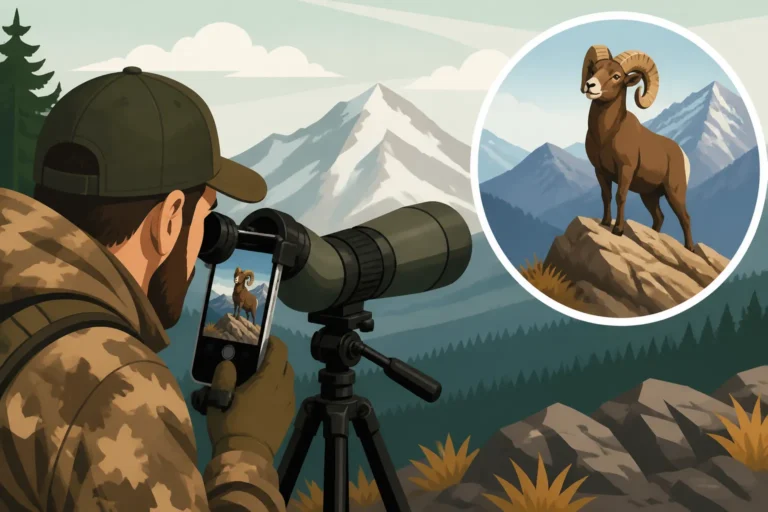
In areas like the Okanogan or the Blue Mountains, where you might be Glassing Eastern Washington Breaks for Mule Deer from miles away, a spotting scope becomes indispensable. It allows you to literally pick apart mountainsides, ravines, and distant timber patches with incredible detail, confirming if that dark spot is a rock, a stump, or indeed, the flank of a bull elk. What might look like a faint speck through your binoculars can become a clear image of an animal, allowing you to count points, judge size, and assess whether a stalk is warranted without disturbing the animal. This saves you countless hours of hiking to investigate "maybe" animals, preserving your energy for actual stalks on legal game.
A spotting scope truly shines when you've located potential game with your binoculars but need more magnification to make a definitive identification. This is especially true for Washington's antler point restrictions. With a good spotter, you can often clearly see the difference between a spike and a two-point, or ensure a bull is indeed "branch-antlered." It also lets you observe animal behavior for extended periods, learning their patterns, feeding habits, and travel routes, all from a safe, undetectable distance.
Straight vs. Angled Eyepieces
Spotting scopes come with two main eyepiece configurations: straight or angled. Each has its advantages depending on your hunting style and the terrain.
- Straight Eyepieces: These are generally preferred for quick target acquisition, especially when scanning from a standing position or when hunting from a vehicle (where legal). They're intuitive to use, simply point and look. If you're often searching for animals that pop up unexpectedly or if you frequently share the scope with others who are different heights, a straight eyepiece can be simpler to adjust and use. They also tend to be slightly more compact.
- Angled Eyepieces: These are often favored for extended glassing sessions, particularly when you're set up on a tripod for hours. The angled view allows for a more comfortable, relaxed posture, especially when looking uphill or downhill. You can often sit on a shorter stool or even lie down, reducing neck strain. This ergonomic advantage becomes very apparent during long days of Glassing Sage and Wheat Edges for Washington Mule Deer. While it takes a little more practice to acquire targets initially, the comfort for sustained viewing usually outweighs that learning curve for dedicated glassing setups.
Ultimately, the choice comes down to personal preference and how you intend to use it most often. Many seasoned hunters swear by angled eyepieces for their comfort during marathon glassing sessions.
Magnification and Clarity for Distant Detail
Spotting scopes typically offer a zoom range, such as 20-60x or 27-60x. This allows you to scan a wider area at lower magnification and then zoom in for detailed inspection once you've located something of interest. A larger objective lens, usually 65mm, 80mm, or even 95mm, will gather more light, providing a brighter image, which is critical at high magnifications and in dim light. However, be aware that as you zoom in, the image will naturally dim slightly, even with the best glass.
The key to a good spotting scope isn't just magnification, but optical clarity. Cheaper scopes might offer high magnification but provide a blurry, dark image that's unusable. High-quality glass, advanced lens coatings, and robust construction are what truly deliver the crisp, bright images needed to discern antler tines at extreme distances. When researching, look for terms like ED (Extra-low Dispersion) or HD (High Definition) glass, which indicate superior optical performance and reduced chromatic aberration (color fringing). Always remember that a steady platform is absolutely essential for getting the most out of a spotting scope; without a solid tripod, even the best scope is nearly useless at high magnifications. Consider the internal link Spotting Scopes and When You Need One for a deeper dive.
Rangefinders: Precision for Ethical Shots
There's simply no excuse for guessing distances in today's hunting world. A rangefinder is an absolute non-negotiable piece of equipment for ethical, precise shooting, especially in the varied and often steep terrain of Washington.
Line of Sight vs. Angle Compensating
Modern hunting rangefinders come with two primary ranging capabilities:
- Line of Sight (LOS): This measures the straight-line distance from you to your target. While accurate for flat ground, it doesn't account for inclines or declines. If you shoot uphill or downhill at an animal, gravity has less effect on the bullet, meaning you'll effectively hit higher than if you shot the same LOS distance on flat ground. If your rangefinder only gives LOS, you'll need to know how to calculate the "hold under" or "hold over" for angled shots, or at least be very familiar with how much a steep angle affects your specific rifle and load.
- Angle Compensating: This is the gold standard for mountain hunting and what I highly recommend for Washington. An angle-compensating rangefinder (often labeled ARC, TBR, or similar by different brands) measures the true horizontal distance to the target, regardless of incline or decline. This "shoots like" distance is what your bullet's trajectory is actually reacting to, allowing you to use your standard ballistic drops for a flat-ground shot. In the steep canyons of Eastern Washington or the rugged foothills of the Cascades, where a 400-yard LOS shot might only be a 350-yard horizontal equivalent, an angle-compensating rangefinder is critical for precise shot placement. Rangefinders for Steep Washington Terrain are a game-changer.
Effective Range and Target Acquisition
When choosing a rangefinder, pay close attention to its advertised maximum range, but more importantly, its effective range on reflective vs. non-reflective targets (like a deer or elk hide). Many rangefinders boast ranges of 1,000+ yards, but that might only be on a highly reflective sign or building. On an actual animal in varied cover, that effective range might drop significantly. For most hunting scenarios, a rangefinder that can reliably range an animal out to 600-800 yards is more than sufficient, as most ethical hunting shots will occur well within that distance.
Speed of target acquisition is another important factor. When a bull steps out into a small opening, you don't have time to fiddle with a slow rangefinder. Look for models that provide rapid, consistent readings. Features like "scan mode," which gives continuous readings as you pan across terrain or a moving animal, can also be very useful. The reticle within the rangefinder should be clear and easy to see, even in low light, without obscuring the target.
Battery Life and Weather Resistance
Like all your outdoor gear in Washington, your rangefinder needs to be tough and reliable. Look for models that are fully waterproof and fog proof, as they will inevitably encounter rain, snow, and condensation. Battery life is also a key consideration. Nothing is more frustrating than having your rangefinder die in the middle of a hunt. Choose a model with good battery longevity and always carry a spare battery. Lithium batteries often perform better in cold weather than alkaline batteries, so keep that in mind.
Consider ergonomics as well. The rangefinder should fit comfortably in your hand, with easily accessible buttons that can be operated even with gloves on. Some models are very compact, fitting easily into a binocular harness or a pant pocket, while others might be slightly larger but offer better optical quality or longer ranging capabilities. Ultimately, the best rangefinder is one that you can quickly and reliably deploy when the moment of truth arrives, giving you the confidence to make an ethical shot.
Riflescopes: The Window to Your Shot
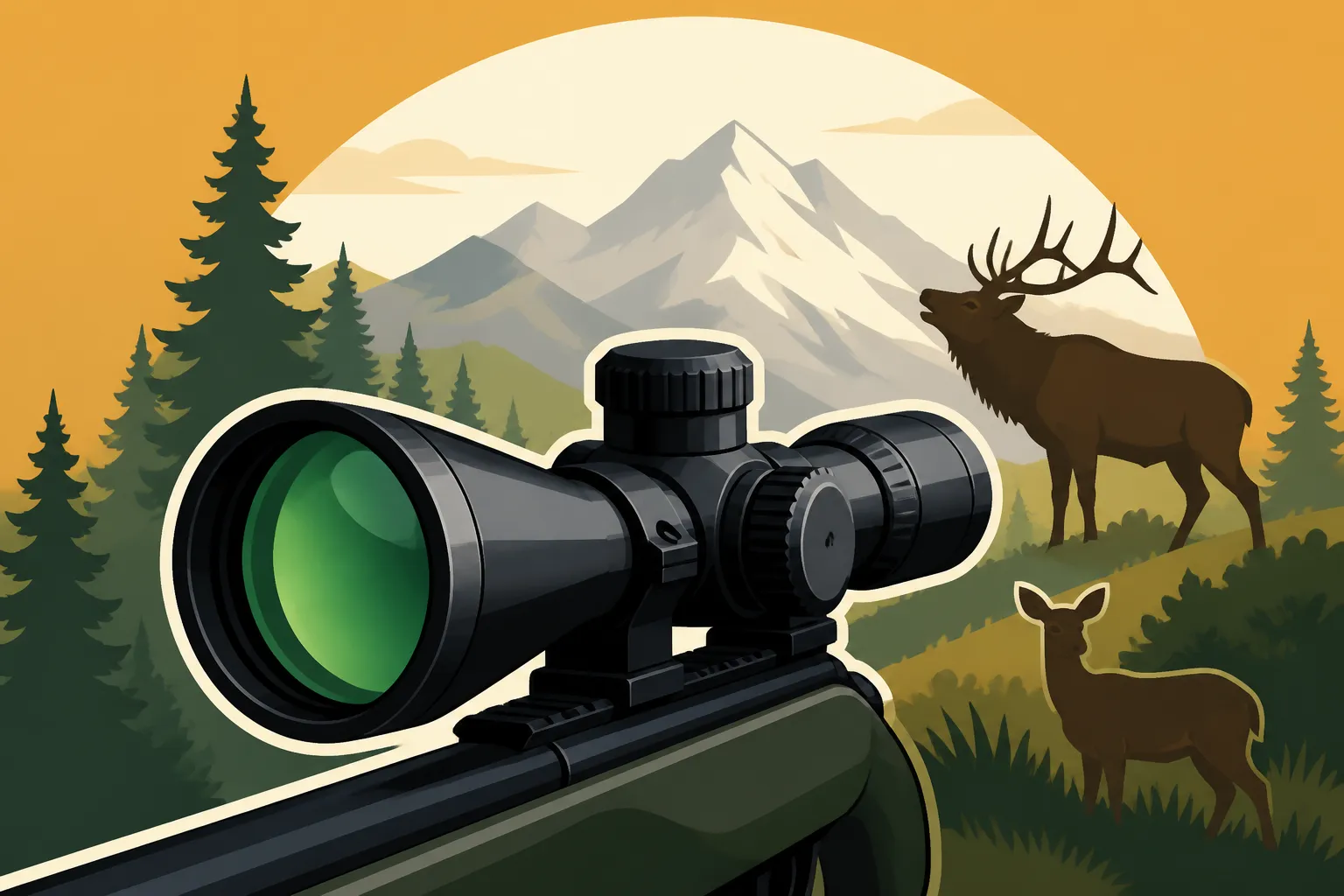
Your riflescope is the critical link between your eye and your target when it comes to accuracy with a firearm. Choosing the right scope for Washington hunting involves balancing magnification, reticle features, and durability for our diverse conditions.
Magnification Ranges for Different Terrain
Washington hunting presents a wide array of shot opportunities, from close-quarters encounters in dense timber to long-range shots across vast open country. Your riflescope's magnification range needs to be versatile enough to handle both.
- Low Magnification (1-4x, 2-7x, 3-9x): For the tight, dark timber of Western Washington or anywhere you anticipate shots under 150 yards, a scope with a low minimum magnification is crucial. A 1-4x or 2-7x allows for a wide field of view, fast target acquisition, and excellent situational awareness. This is perfect for still-hunting through thickets where elk or blacktail deer might jump up close. You can easily acquire a moving target and still make a precise shot at close range.
- Mid-Range Magnification (3-9x, 3-12x, 4-16x): The venerable 3-9×40 has been a workhorse for decades, offering a great balance for most hunting across North America, including much of Washington. It allows for close shots at 3x and enough magnification to reach out to 300-400 yards with confidence at 9x. Scopes in the 3-12x or 4-16x range offer a bit more flexibility for open country without becoming overly bulky. These are excellent choices for hunting mule deer in the eastern breaks or pursuing elk in more open timber.
- High Magnification (4-20x, 5-25x): If you primarily hunt expansive Eastern Washington terrain where shots over 400 yards are common, a scope with higher maximum magnification might be beneficial. These scopes allow for extremely precise aiming at long distances. However, they are heavier, often have a narrower field of view at higher power, and can be overkill (and even a hindrance) in tight timber. When selecting a riflescope, consider Riflescopes for Washington Timber and Open Country carefully.
Reticle Types and Turrets
The reticle (crosshairs) in your scope is how you aim. There are many variations, each serving a different purpose.
- Duplex or Standard Crosshairs: Simple, clean, and fast for close-to-medium range hunting. They are easy to see in various light conditions and are very robust.
- BDC (Bullet Drop Compensating) Reticles: These reticles have markings below the main crosshair that correspond to bullet drop at different distances. Once you've zeroed your rifle, you can use these hash marks to hold over for longer shots without adjusting your turrets. They are fast for field use but are calibrated for a specific cartridge and velocity, so practice is key.
- MRAD or MOA Reticles: These reticles have precise markings (usually dots or hash marks) that allow you to estimate range (if you know the target size) and apply precise holdovers or wind corrections. When combined with exposed, resettable turrets, they allow for "dialing" your shot directly to the exact range provided by your rangefinder. This is the most precise method for longer-range shooting but requires more practice and understanding of your rifle's ballistics.
Exposed turrets allow you to quickly adjust for elevation and windage. Capped turrets are more traditional for hunting, protecting the adjustments from accidental bumps. For most Washington hunting, a good BDC reticle or capped turrets set for a sensible zero, like 200 yards, is sufficient. If you plan to truly stretch the limits, a quality scope with exposed, repeatable turrets and an MRAD or MOA reticle is worth the investment. Regular practice at the range to Sighting In and Zero Distances is non-negotiable, regardless of your chosen reticle.
Durability and Low Light Performance
Washington weather can be brutal on riflescopes. It needs to be fully waterproof, fog proof (nitrogen or argon purged), and shockproof to withstand recoil and inevitable bumps in the field. A sturdy, one-piece tube construction is generally more durable. Lens coatings are crucial for light transmission and image brightness, especially during the low-light periods when game is most active. Look for scopes with multi-coated or fully multi-coated lenses.
Mounting your scope correctly with quality rings and bases is just as important as the scope itself. A poorly mounted scope will never hold zero, no matter how good it is. Ensure your chosen scope has sufficient eye relief to prevent "scope bite" under recoil, and that the reticle remains consistent across the magnification range. Investing in a durable, reliable riflescope is investing in confidence and accuracy when that hard-earned shot opportunity finally presents itself.
Tripods and Accessories: The Unsung Heroes
You might think of optics as just the glass itself, but the accessories that support and protect them are equally vital, especially in Washington's demanding hunting environment. A good tripod, adapters, and proper cleaning supplies can make or break your glassing experience.
The Importance of a Stable Platform
This cannot be stressed enough: a good tripod is essential for maximizing the performance of your binoculars and absolutely mandatory for a spotting scope. Trying to freehand a 10x binocular for more than a few minutes, let alone a 15x or a 60x spotting scope, is an exercise in futility. The slightest tremor in your hands, the smallest breeze, or just plain fatigue will turn your crisp image into a vibrating mess.
A tripod provides a rock-solid foundation, allowing you to settle in, relax your eyes, and truly pick apart distant terrain for extended periods. It stabilizes the image, making it easier to spot subtle movements, count antler points, and study animal behavior without eye strain. For long sessions, especially when you're Glassing Breaks at First Light or systematically searching an entire basin, a tripod saves your neck, shoulders, and eyes. It transforms your optics from a quick peek to a serious scouting tool. Look for a tripod that is stable yet lightweight enough to pack, with smooth, fluid pan and tilt movements. Carbon fiber models are excellent for weight savings, though they come at a higher cost.
Binocular Adapters and Quick Release Plates
To attach your binoculars to a tripod, you'll need a binocular adapter. Most modern hunting binoculars have a threaded port on the front hinge specifically for this purpose. Adapters vary from simple L-shaped brackets to more robust clamp-style mounts. A good adapter should hold your binoculars securely without any wiggle.
For maximum efficiency in the field, I highly recommend using a quick release plate system. This allows you to quickly detach your binoculars (or spotting scope) from the tripod for a quick freehand scan or to move to a new location, and then reattach them just as swiftly without having to screw and unscrew them every time. Look for systems that are universal or that offer plates compatible with all your primary optics, so you can swap seamlessly between binoculars and spotting scope on the same tripod head. This fluidity is crucial when you're trying to relocate a target or switch between different observation needs in dynamic hunting situations. Consider checking out Tripods and Binocular Adapters for more detailed information.
Cleaning and Maintenance for Longevity
Washington is a dusty, muddy, wet place. Your optics will get dirty. Proper cleaning and maintenance are critical to protecting your investment and ensuring clear views for years to come.
Here's a basic kit you should always have:
- Lens Pen or Blower Brush: Use these first to gently remove loose dust and grit from the lens surfaces. Blowing or brushing prevents scratching the delicate lens coatings.
- Microfiber Cloths: Dedicated optical microfiber cloths are designed not to scratch lenses. Breathe lightly on the lens to add a bit of moisture, then gently wipe with the cloth in a circular motion, starting from the center and working outwards. Never use your shirt, paper towels, or any abrasive material.
- Lens Cleaning Fluid: For stubborn smudges, a drop of specialized lens cleaning fluid on a microfiber cloth can do wonders. Apply the fluid to the cloth, not directly to the lens, to avoid seepage into the lens housing.
- Soft Brush or Cotton Swabs: For cleaning around the edges of the lenses, eyecups, and other crevices.
Always keep lens caps on your binoculars and spotting scope when not in use to protect the glass from dust and impacts. Store your optics in a padded case or your binocular harness when traveling. After a wet hunt, ensure your optics are completely dry before storing them away to prevent mildew or corrosion. Regular, gentle cleaning and protection will keep your glass performing at its peak.
Choosing Optics for Specific Washington Game
The type of game you're pursuing in Washington, and the specific terrain you'll be hunting, should heavily influence your optics choices. What works best for a blacktail in coastal rainforest might be completely inadequate for a mule deer in the high desert.
Elk Hunting: Power and Ruggedness
Elk are big animals that live in big country, and they are masters of concealment. Hunting elk in Washington demands powerful, rugged optics.
- Roosevelt Elk (Westside): These majestic animals inhabit the dense, wet forests of Western Washington. While they are large, the terrain means your typical shot distances will be closer, often under 200 yards. For Roosevelt elk, a quality 10×42 binocular is generally ideal. You need excellent light-gathering capabilities to pierce the gloom of the dark timber and a wide field of view to spot subtle movement in thick cover. A spotting scope is less critical here, but a compact one might be useful if you're hunting clearcuts or higher elevation areas with more open visibility. Durability and waterproofing are paramount. You'll be crashing through brush, in and out of the rain, so your gear needs to be built tough.
- Rocky Mountain Elk (Eastside): East of the Cascades, Rocky Mountain elk often inhabit more open, broken country, from timbered slopes to sagebrush-filled canyons. Here, glassing is your primary scouting method. A 10×42 or even a 12×50 binocular is a great starting point. However, a quality spotting scope (65mm or 80mm with 20-60x magnification) becomes a vital tool for locating herds and evaluating bulls at extreme distances. You'll spend hours behind the glass, picking apart distant hillsides. Your rangefinder needs to be angle-compensating and have reliable long-range performance for those potential shots across canyons. For your riflescope, a 3-12x or 4-16x with good light transmission is a versatile choice, allowing for both timber and longer-range opportunities. Understanding Washington Elk Hunting Tactics by Weapon Season will further inform your specific optics needs.
Deer Hunting: Adaptability for Varying Terrain
Deer hunting in Washington also presents diverse challenges, from stealthy blacktails to wide-ranging mule deer.
- Columbian Blacktail Deer (Westside): Blacktails are notorious for living in incredibly dense cover. They are ghosts of the forest. Like Roosevelt elk, your encounters will often be close and fast. A lightweight, bright 8×32 or 10×42 binocular is perfect. You'll be doing a lot of still-hunting and scanning ahead in short bursts. A spotting scope is rarely needed. Your rangefinder should be quick and easy to deploy, as shots can materialize suddenly. A lower magnification riflescope (1-4x, 2-7x, or 3-9x) with a wide field of view is ideal for the thick brush and short-range opportunities. When Still-Hunting Blacktails in Wet Washington Brush, quick target acquisition is key.
- Mule Deer (Eastern Washington): Mule deer typically inhabit more open, broken country, especially in the central and eastern parts of the state. Glassing is paramount here. A 10×42 or 12×50 binocular will be your primary tool for scanning the vast landscape. A spotting scope is highly recommended for identifying bucks and judging antler size across canyons and long draws. Your rangefinder must be angle-compensating, as mule deer are often found on steep slopes and in ravines where accurate distance measurement is critical. A riflescope with a 3-12x or 4-16x magnification range allows for both closer timber shots and longer crosses on open hillsides.
Optimizing for Westside vs. Eastside Hunts
The fundamental difference between Westside and Eastside hunting in Washington boils down to visibility and distance.
- Westside (Rainforest, Dense Timber): Prioritize light transmission, rugged waterproofing, and wider fields of view. Magnification beyond 10x for binoculars is often overkill. Compactness and fast handling are important. Low-power, fast-acquisition riflescopes are key.
- Eastside (Open Breaks, Sagebrush, High Country): Emphasize magnification and optical clarity for long-range glassing. A spotting scope becomes a crucial asset. Angle-compensating rangefinders with longer effective ranges are a must. Versatile riflescopes that can reach out with precision are highly valuable.
Many hunters use mapping apps like those from GoHunt or onX to scout units and identify specific terrain types before they even step foot in the field. This E-scouting can help you decide which optics setup will be most beneficial for your planned hunt. E-Scouting Washington GMUs Before the Draw is a smart move that informs your gear choices.
Budgeting for Optics: Smart Spending Strategies
Let's face it, quality optics can be expensive. It's easy to get sticker shock when you start looking at the top-tier brands. However, there are smart ways to approach your optics budget to ensure you get the best performance for your dollar, without breaking the bank.
Prioritizing Your Optics Investment
If you have a limited budget, it's crucial to prioritize where you spend your money. My advice is always to invest in the best binoculars you can afford. They are your most versatile and frequently used tool. A really good pair of 10×42 binoculars will serve you well across almost all Washington hunting scenarios, allowing you to effectively scout, locate game, and identify targets.
Investment Hierarchy (General Guideline):
- Binoculars: This is your primary investment. Don't skimp here. A clear, bright, durable pair of 10x42s is invaluable.
- Riflescope: Your riflescope is directly tied to your accuracy. A good one will hold zero, transmit light well, and offer clear aiming. Match it to your anticipated shot distances.
- Rangefinder: Essential for ethical shooting. Angle compensation is a must. You can often find excellent rangefinders at a reasonable price point that perform very well.
- Tripod & Adapter: You can get a perfectly functional tripod and adapter without spending a fortune. Stability is key, not necessarily the lightest carbon fiber model.
- Spotting Scope: While amazing for specific hunting styles (like open-country mule deer or Eastside elk), it's often the last piece to add if budget is tight. You can hunt successfully for years without one if your primary hunting involves tighter terrain.
Don't fall into the trap of buying the cheapest available option for every category. It's often better to buy one really good item (like binoculars) and save up for the next quality piece, rather than ending up with a bag full of mediocre gear that frustrates you in the field.
Exploring Entry-Level and Mid-Range Options
The good news is that the quality of optics across all price points has dramatically improved over the last decade. You don't necessarily need to spend thousands to get excellent performance.
- Entry-Level (Under a few hundred dollars): You can find perfectly functional binoculars, riflescopes, and rangefinders in this price range. While they won't have the ultimate low-light performance or edge-to-edge clarity of high-end glass, many brands offer surprisingly good value. These are often great for new hunters or those with very specific, close-range hunting needs. Look for brands known for solid performance within this segment.
- Mid-Range (Several hundred to roughly a thousand+ dollars): This is often the sweet spot where you get a significant jump in performance, durability, and features for a reasonable price. Many hunters find their "forever" binoculars or riflescope in this category. You'll get much better light transmission, superior glass, and more robust construction that stands up to Washington's conditions. This is where you start seeing features like ED glass, advanced coatings, and more precise turret adjustments. When comparing options, GoHunt often has detailed reviews and comparisons that can help you navigate this space and find the best bang for your buck. Even within this range, you can still find Budget Optics That Actually Work.
When considering entry-level or mid-range options, read reviews carefully, focusing on aspects like low-light performance, edge clarity, and durability. Sometimes, saving a little more to jump into the next quality tier makes a huge difference in your field experience.
Long-Term Value and Warranties
Think of optics as a long-term investment. A quality piece of glass, properly cared for, can last you a lifetime. Many reputable optics manufacturers offer excellent, even lifetime, warranties. This is a huge factor in value. A company that stands behind its product gives you peace of mind that if something goes wrong – whether it's an accident in the field or a manufacturing defect – you'll be covered. Factor this warranty into your purchase decision. It adds significant long-term value.
Finally, consider buying used. There's a thriving market for pre-owned hunting optics, and you can often find fantastic deals on high-quality glass. Just be sure to inspect the lenses for scratches, check all moving parts, and ideally, test them in varying light conditions before committing. With a bit of research and a smart budget, you can equip yourself with the optics you need to confidently hunt Washington's diverse and challenging landscapes.
| Optic Type | Primary Use in Washington | Key Benefit | Considerations |
|---|---|---|---|
| Binoculars | General scanning, close-to-medium range identification | Versatile, always accessible, wide field of view | Magnification for terrain, durability, waterproofing |
| Spotting Scope | Long-range observation, detailed identification, trophy judging | High magnification, extreme detail | Tripod essential, bulkier, specialized for open country |
| Rangefinder | Precise distance measurement for ethical shots | Eliminates guesswork, improves accuracy | Angle compensation, effective range on game, battery |
| Riflescope | Aiming and shot placement for firearms | Magnifies target, holds zero, improves precision | Magnification range, reticle type, low light clarity |
Disclaimer
This article is for general informational purposes only and does not constitute professional advice. Laws, prices and regulations vary by location and change over time. Consult a qualified professional for guidance on your specific situation.