Calling Cougars Without Dogs in Washington
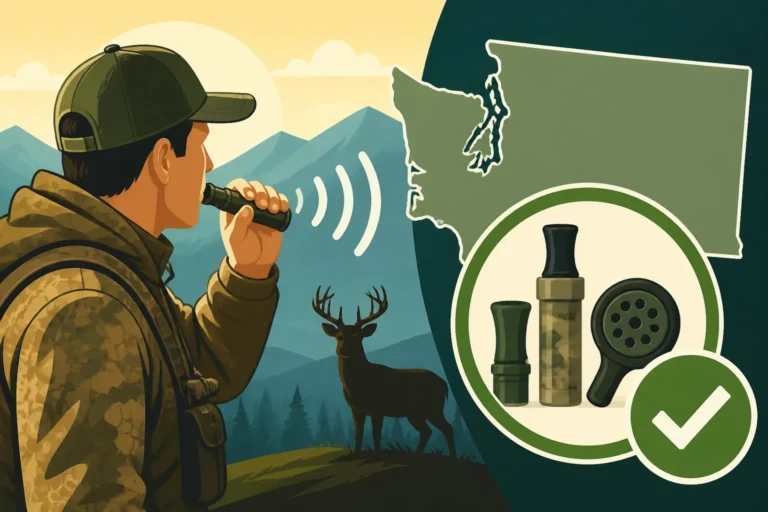
Hunting cougars in Washington state without the aid of dogs is a challenge that many hunters find incredibly daunting, if not downright impossible. The historical methods relied heavily on hounds to track and tree these elusive predators, and with that option off the table for most, figuring out how to even begin can feel like staring at a blank map. This guide is here to walk you through the precise strategies, gear considerations, and deep understanding of cougar behavior necessary to successfully call in a lion in the dense forests and rugged landscapes of Washington.
Understanding Washington's Cougar Hunting Landscape
Let's be real, cougar hunting in Washington is tough. The very nature of these animals – solitary, nocturnal, and incredibly stealthy – makes them difficult to even glimpse, let alone consistently pursue. When you add the legislative restrictions into the mix, it elevates the challenge to another level entirely.
The Reality of Hunting Without Hounds
For decades, the most effective way to hunt cougars was with a pack of trained hounds. These dogs could pick up a fresh track, follow the scent through miles of unforgiving terrain, and eventually tree a cougar, allowing the hunter to approach for a shot. However, in 1996, Washington voters passed Initiative 655, which banned the use of hounds for cougar hunting. This single act drastically altered cougar hunting dynamics in the state, making it a true test of a hunter's woodcraft, patience, and ability to adapt.
The immediate impact was a dramatic decrease in cougar harvest numbers. Hunters accustomed to the efficiency of hounds were left scrambling for alternative methods. Still-hunting, tracking in the snow, and calling quickly became the primary, albeit much less productive, options. While the state has explored limited hound use in specific areas for population control or damage permits, for the average hunter, the reality is that you are on your own, relying purely on your skill to outsmart one of North America's most intelligent predators. Understanding What I-655 Banned for Cougar Hunters is key to appreciating the current landscape. It's not just about what you can't do, but what you must learn to do differently.
Cougar Biology and Behavior for Callers
To effectively call a cougar, you first need to think like one – or rather, think like its next meal. Cougars are obligate carnivores, meaning meat is their sole sustenance. In Washington, their primary prey consists of deer (both blacktail and mule deer, depending on the region) and elk calves. They are opportunistic predators, often targeting the young, old, or infirm. Their daily routine is largely dictated by hunting, feeding, and patrolling their extensive territories.
A typical cougar's Cougar Territory and Movement can span hundreds of square miles, though females with cubs might have smaller, more concentrated ranges. They are masters of ambush, using dense cover and terrain to get within striking distance before launching a lightning-fast attack. They are most active during crepuscular hours – dawn and dusk – but will hunt at any time if the opportunity arises. After a successful kill, a cougar will often cache its prey, burying it under leaves, dirt, or snow, and return to feed over several days. Understanding this behavior is critical for callers. A hungry cougar, actively hunting, is much more likely to respond to a distress call than one that has recently fed and is simply resting or guarding a kill. Knowing What a Cougar Kills in a Year can also give you insight into their feeding habits and preferred prey.
Essential Gear and Preparations for Calling Success
Successfully calling a cougar isn't just about making the right sounds; it's about being prepared for the incredibly fleeting opportunity a call might create. This means having the right gear to locate and identify a cougar, and the appropriate weapon to make a clean, ethical shot when it presents itself.
Optics and Scouting for Cougar Sign
When you're not tracking with dogs, your eyes become your most important tool. High-quality optics are non-negotiable for spotting subtle cougar sign from a distance or for picking apart dense cover where a cougar might be silently approaching your call. A good pair of 10×42 binoculars is a solid starting point for general use, allowing you to scan distant hillsides, rock formations, and clearings for movement or sign. However, if you're hunting more open, eastern Washington landscapes, a larger pair like 15×56 binoculars or a quality spotting scope mounted on a tripod can be invaluable for picking apart vast areas. For more details on choosing the right optics, refer to Choosing Binoculars for Washington Glassing.
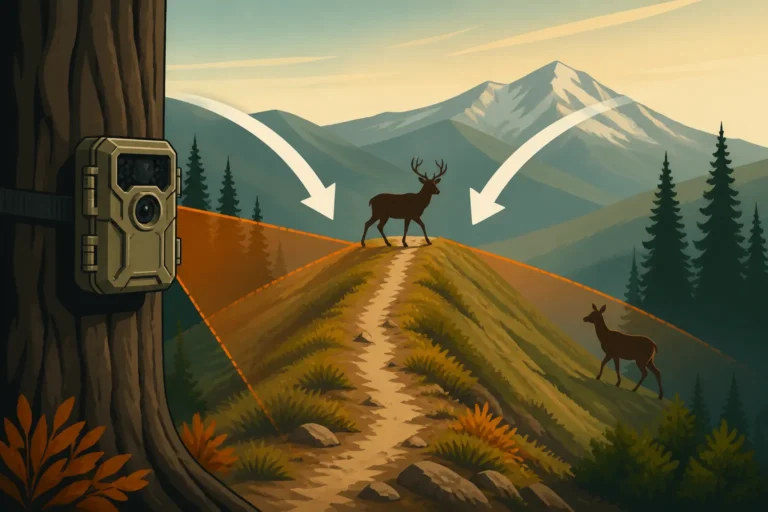
Beyond basic glassing, e-scouting plays a pivotal role. Platforms like GoHunt offer powerful mapping tools that allow you to identify potential cougar hotspots right from your computer. Look for areas with steep, broken terrain, thick riparian zones, rocky outcrops, and saddles that connect dense timber pockets. Cross-reference these features with historical deer and elk activity. You can effectively narrow down your search for productive calling locations and potential ambush sites long before you ever set foot in the field. This detailed reconnaissance can save you countless hours of unproductive hiking. Learning E-Scouting a Washington GMU From Home is a powerful skill for this kind of hunting.
Weapon Choice and Shot Placement Considerations
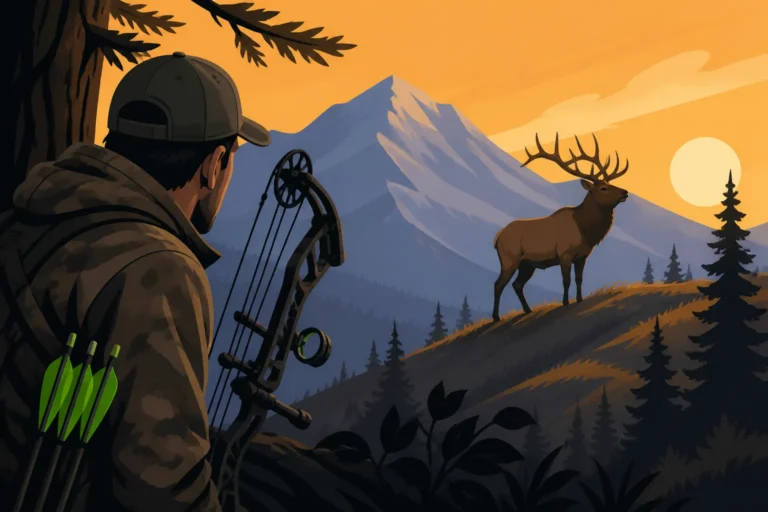
Cougars are robust animals, and their musculature can be surprisingly dense. When choosing a weapon, ethical harvest is paramount. A centerfire rifle in a common deer caliber like .270, .30-06, or .308 is highly effective. Even the smaller end of Washington's legal rifle calibers, like a .243, can work with proper bullet selection, but many hunters prefer something with a bit more punch for a cougar's sturdy frame. For close-quarters timber hunting, a shotgun loaded with slugs or a powerful archery setup can also be viable options, though they require a much higher degree of situational awareness and precision. Remember to adhere to Washington's Minimum Rifle Caliber Rule and other specific regulations for big game.
Regardless of your weapon, practice precise shot placement. The most effective shot on a cougar is typically through the shoulder into the vitals (heart/lungs). Their vitals are relatively small, and a cougar can disappear into thick cover in a flash, even with a solid hit. Practice shooting from various field positions – offhand, kneeling, sitting – as you rarely get a perfect benchrest scenario in the field. Your Rifle Setup for Washington Big Game should prioritize accuracy and rapid target acquisition. Broadhead choice for archery is also critical; a fixed blade or a strong mechanical broadhead with a wide cutting diameter will maximize your chances of a quick, clean kill.
Mastering Cougar Calling Techniques
Calling a cougar is less about volume and more about realism, repetition, and confidence in your setup. It's about convincing a wary predator that there's an easy meal struggling nearby, worthy of investigation.
Types of Calls and When to Use Them
The most effective cougar calls mimic distress sounds from their natural prey. The two primary categories are fawn distress and rabbit distress, each with its own nuances and ideal scenarios.
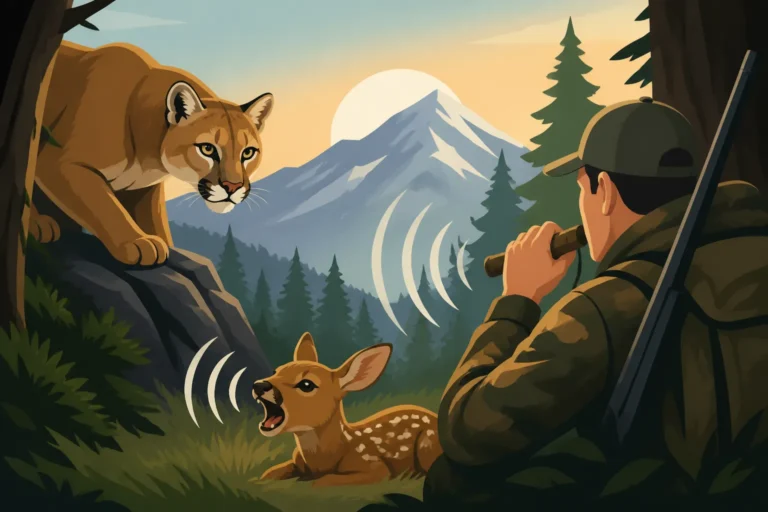
Fawn Distress Calls: These calls imitate the cries of a young deer in distress. This sound is particularly effective in areas with high deer populations and during the fawning season (late spring through early fall), when cougars are actively targeting vulnerable fawns. A fawn distress call creates a sense of urgency and vulnerability, tapping into a cougar's instinct to capitalize on an easy meal. When using these calls, vary the intensity and duration. Start with softer bleats, gradually increasing in volume and franticness, mimicking a fawn that's been caught or injured. After a few minutes of calling, go silent for several minutes to listen intently, as a cougar might approach cautiously. Many hunters find Calling Cougars With a Fawn Distress Sound to be one of the most compelling sounds.
Rabbit Distress Calls: These calls mimic the screams of a rabbit or hare under attack. Rabbits are a year-round food source for cougars, making these calls effective anytime and anywhere cougars reside. They are generally more high-pitched and frantic than fawn distress calls. Like fawn calls, vary the intensity and rhythm. Electronic calls are also an option, offering a wide variety of sounds and the ability to control volume and duration precisely. Washington allows the use of Electronic Calls and What Washington Allows for cougar, which can be a significant advantage, as you can place the call away from your position, drawing the cougar's attention elsewhere. Start with short, sharp bursts of distress, then increase the duration and franticness. Always pause frequently to listen.
Other Prey Sounds: While fawn and rabbit distress are primary, don't overlook other potential prey distress sounds like birds, small rodents, or even other large game distress if you know a cougar has been targeting those species. The key is to project a sound that suggests an easy, unearned meal.
Setting Up Your Stand and Ambush Strategy
Your calling setup is arguably as important as the call itself. A poorly chosen stand can alert an approaching cougar before you even know it's there.
Wind Direction is Paramount: Cougars have an incredible sense of smell. Always set up with the wind in your face or quartering into it. This ensures your scent is carried away from the likely approach routes. If the wind is swirling or unpredictable, reconsider your location or wait for more stable conditions. A cougar will almost always try to circle downwind to get a whiff of the "prey" before committing.
Elevation and Cover: Seek an elevated position that offers good visibility of the surrounding terrain, especially downwind, but also provides ample cover for you to conceal yourself. A downed log, a rock outcropping, or a dense cluster of trees can provide the necessary concealment. Make sure you have clear shooting lanes in multiple directions, as a cougar can appear silently from unexpected angles. Look for natural funnels or pinch points in the landscape where a cougar is likely to travel.
Patience and Duration: Cougar calling is often a waiting game. Most experts recommend sitting on a stand for at least 30-45 minutes, sometimes up to an hour, before moving. Cougars don't typically come charging in like coyotes. They are cautious, often circling downwind, moving slowly, and pausing frequently to assess the situation. The question of How Long to Sit a Cougar Stand is a common one, and patience truly is the virtue here. A cougar might respond to your call from a quarter-mile away, and it could take them 15-20 minutes or more to close the distance. Resist the urge to fidget or move prematurely.
Reading the Landscape and Interpreting Sign
Finding the right place to call is half the battle. This requires a keen eye for topography and an understanding of where cougars prefer to live and hunt.
Identifying Prime Cougar Habitat
Cougars are creatures of habit and prefer areas that offer both concealment and a reliable food source. In Washington, this often means focusing your efforts on specific types of terrain and vegetation.
Dense Cover and Steep Terrain: Cougars thrive in areas with thick vegetation, such as dense conifer stands, brushy clearcuts (especially older ones with good regrowth), and steep, rugged canyons or rimrock country. These environments provide excellent ambush cover and allow them to move undetected. The Olympic Peninsula and the foothills of the Cascades, with their dense rainforests and broken topography, are classic cougar country. Even in eastern Washington, look for draws and canyons with pockets of timber or dense brush that offer refuge.
Proximity to Prey: Since deer and elk are their primary food, hunting areas with healthy populations of these animals will naturally correlate with higher cougar densities. Look for areas that serve as deer or elk winter range, migration corridors, or bedding areas. Creeks, springs, and other water sources also tend to concentrate prey animals, which in turn attracts cougars. Highlighting Cougar Predation on Washington Deer Herds shows how closely their populations are linked. When e-scouting with a tool like GoHunt, identify these features and prioritize them. Areas where logging has recently occurred might temporarily displace prey, but once new growth emerges, they can become prime cougar hunting grounds again.
Tracking and Locating Fresh Sign
Even without hounds, you can learn a lot by actively scouting for cougar sign. This isn't just about finding tracks; it's about understanding the nuances of their presence.
Tracks: Cougar tracks are typically rounder and larger than canine tracks, lacking claw marks (as their claws are retractable). Look for distinct, four-toed prints with a prominent heel pad. Fresh tracks in snow or soft dirt are obviously ideal, indicating a cougar has recently passed through. However, even older tracks can tell you about travel corridors. Pay close attention to trails, logging roads, and creek beds, which cougars often use for easy travel. Learning to identify Finding Cougar Tracks Without Hounds is a crucial skill.
Scat and Kills: Cougar scat is usually segmented and often contains hair and bone fragments from their prey. Fresh scat is dark and moist, while older scat is dry and faded. More importantly, look for kill sites. Cougars often cover their kills with debris – leaves, branches, grass – to protect them from scavengers. Finding a fresh kill site, especially one that's been partially covered, indicates a cougar is likely in the immediate vicinity and will return to feed. This is an opportune time to set up a call. Also, keep an eye out for "scratch posts," which are typically logs or trees where cougars will sharpen their claws and leave scent. These are often found along travel routes or near bedding areas. Reading Cougar Sign in the Snow can be especially productive, as tracks and kill sites are much more apparent.
| Sign Type | Description | Ideal Scenario for Calling |
|---|---|---|
| Fresh Tracks | Large, round, claw-less prints in mud, dust, or snow. | Following a fresh track to estimate proximity and then setting up. |
| Kill Site | Deer/elk carcass, partially eaten and covered with debris. | Setting up downwind of a fresh kill where the cougar will return. |
| Scat | Segmented, often containing hair/bone. Dark/moist (fresh) vs. dry/faded. | Indicates recent presence; follow up with calling in the vicinity. |
| Scratch Posts | Vertical marks on trees/logs, often near travel routes. | Good indicator of frequented areas for blind calling. |
| Vocalizations | Rarely heard, but can confirm a cougar's presence (hisses, growls, meows). | If heard, indicates extremely close proximity; prepare for action. |
Strategic Considerations for Public Land Hunters
Washington offers vast tracts of public land, from national forests to state DNR lands, that are open to cougar hunting. However, these areas can also see significant human pressure, especially during deer and elk seasons. Smart use of technology and an emphasis on safety are key.
Utilizing E-Scouting and Mapping Tools
For public land hunters, e-scouting is your greatest ally. Tools like GoHunt, onX Hunt, and the WDFW Hunt Planner allow you to layer different map types (satellite, topo, public/private land ownership) to identify overlooked cougar country. Look for:
- Remote Pockets: Areas difficult to access, perhaps at the end of a long hike or behind a walk-in-only gate, are less likely to be disturbed by other hunters.
- Edge Habitat: Focus on the transition zones between different vegetation types – where dense timber meets an old clearcut, or where forest gives way to rimrock. These are natural travel corridors and ambush points.
- Water Sources: Identify springs, perennial creeks, and small ponds. Animals, including cougars, will gravitate towards these, especially in drier areas.
- Roadless Areas: Wilderness areas and roadless portions of national forests, though requiring more effort to access, can offer pristine cougar habitat with minimal human disturbance. The WDFW Hunt Planner map layers for Washington are invaluable for this.
By overlaying these features, you can identify a handful of high-probability calling spots before you even leave home. This strategic preparation minimizes wasted time and maximizes your chances of encountering a cougar. It also helps you understand land ownership, ensuring you’re always hunting legally on public access land or with proper permission on private parcels.
Patience, Persistence, and Safety in the Field
Calling a cougar without dogs is an endeavor for the patient and persistent hunter. The odds are inherently low, and success often comes after many fruitless attempts. Don't get discouraged if you don't call one in on your first, fifth, or even tenth try. Each outing is a learning experience, helping you understand cougar behavior, wind patterns, and the nuances of your calling technique in different environments.
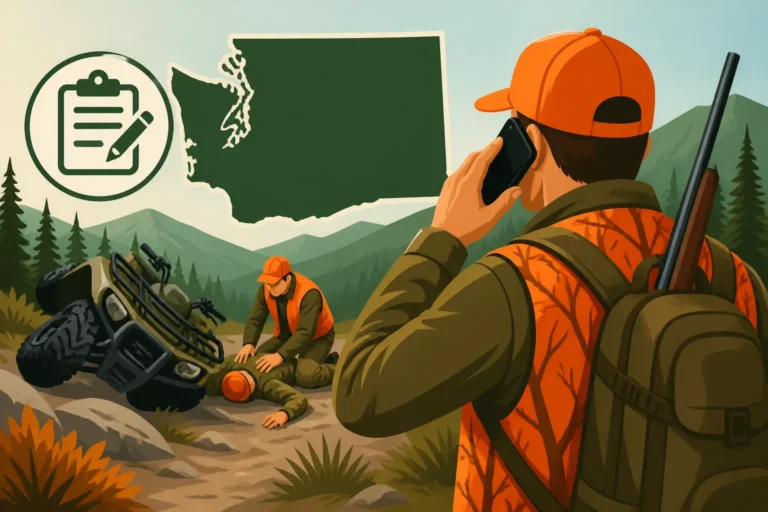
Given the solitary nature of this pursuit and the often remote locations, safety must be a top priority.
- Tell someone your plans: Always inform a reliable person where you are going, your expected return time, and specific details about your hunting area. Update them if your plans change. This is critical for Leaving a Trip Plan at Home.
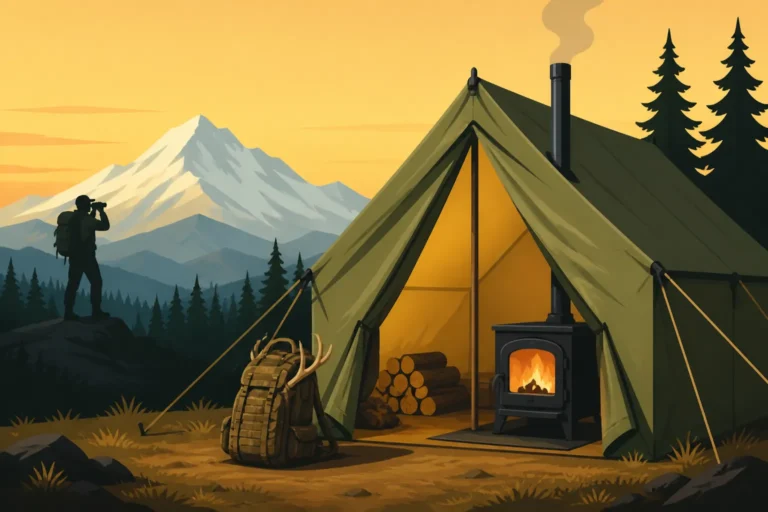
- Carry essential gear: Beyond your weapon and calls, bring a first-aid kit, emergency shelter, fire-starting materials, extra water and food, and navigation tools (GPS device or a smartphone with offline maps and a power bank). Cell service can be spotty to non-existent in many prime cougar habitats in Washington. A satellite messenger device can be a literal lifesaver for Solo Hunting Safety Precautions.
- Be aware of your surroundings: When you're calling, you're trying to attract a predator. Stay vigilant. Continually scan your surroundings, not just in front of you but to your sides and rear. Be prepared for a cougar to approach silently and quickly.
Hunting cougars in Washington without dogs is a testament to the hunter's dedication and skill. It demands a deep understanding of the animal, meticulous preparation, and unwavering patience. While the odds may be steep, the reward of outsmarting such a magnificent and elusive creature on its own terms is a truly profound experience.
Disclaimer
Please ensure you are aware of and adhere to all current Washington Department of Fish and Wildlife (WDFW) regulations regarding cougar hunting, season dates, harvest guidelines, and required licenses and tags. Hunting laws can change, so always consult the latest WDFW hunting pamphlet or website before heading afield.