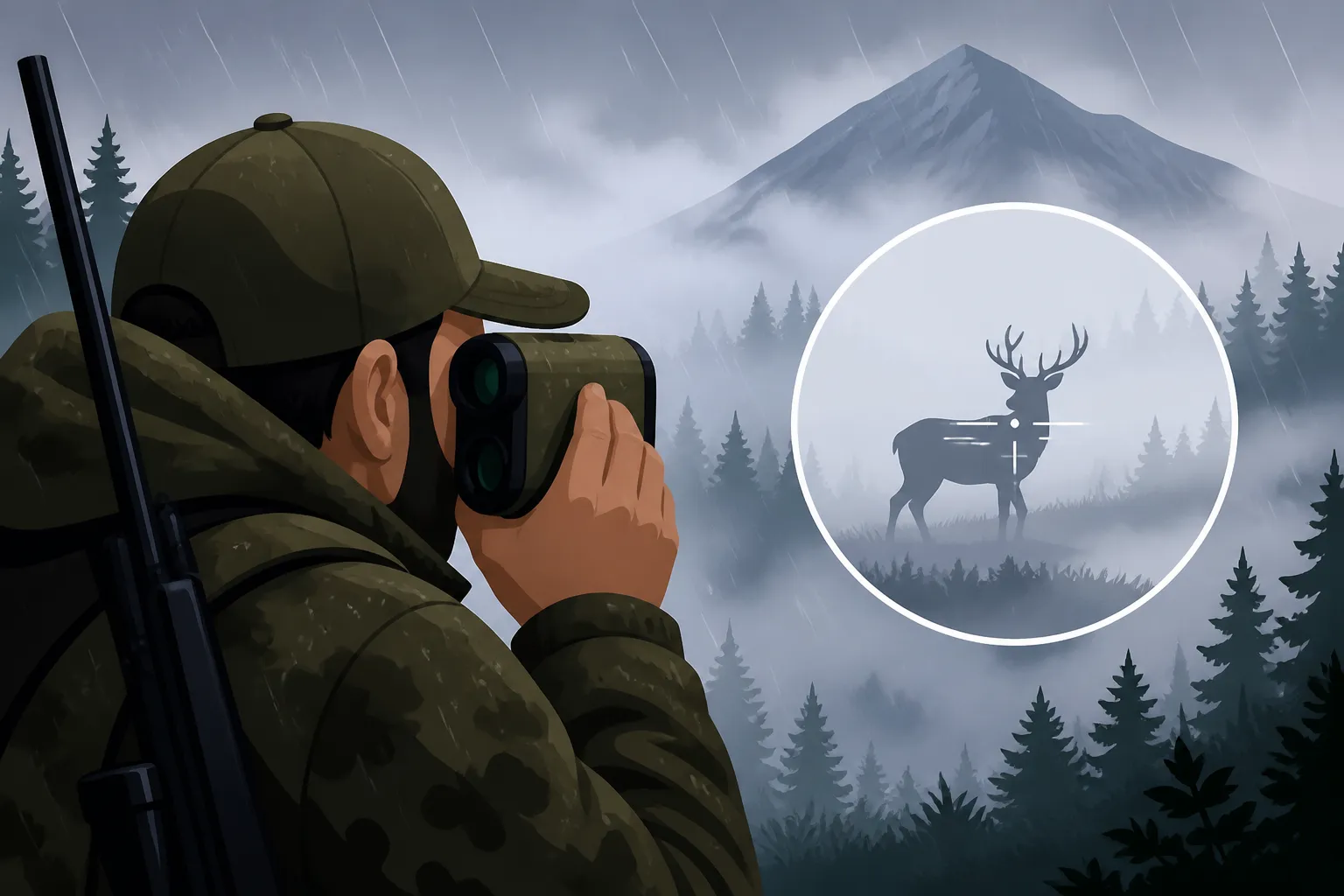
Rangefinding in Rain and Fog
There's nothing quite like the heart-sinking feeling of spotting that trophy animal through the mist or persistent drizzle, only to press your rangefinder button and get an erratic reading, or worse, nothing at all. Washington hunters know this struggle all too well; our diverse landscapes, from the humid coastal forests to the misty high Cascades and even the fog-prone eastern plains, mean we're often hunting in less-than-ideal atmospheric conditions. This guide is all about navigating those tricky weather days, helping you get accurate yardage when rain and fog try their best to throw you off your game.
Understanding How Rain and Fog Affect Your Rangefinder
When you're out in the field, whether it's chasing a blacktail through the Blacktail Deer Hunting in Western Washington Timber or glassing mule deer across a dewy sage flat, you rely on your rangefinder to give you that critical distance. But rain and fog aren't just annoying; they actively interfere with the very principles your rangefinder uses to work its magic. It's not just your eyes struggling to see clearly; it's the device itself fighting a physics battle.
The Science Behind the Struggle
Most modern hunting rangefinders use a laser beam to calculate distance. They send out an invisible pulse of light, and then measure the time it takes for that pulse to reflect off your target and return to the unit. Simple, right? Not so much when you introduce millions of tiny water droplets or ice crystals into the equation.
Think of it like trying to shout across a crowded room versus shouting across an empty field. In a clear, dry environment, your laser beam travels cleanly, hits the target, and bounces back with minimal interference. But when rain or fog rolls in, those water particles act like countless miniature obstacles, scattering, absorbing, and deflecting the laser light before it can even reach your intended target. The laser beam gets "diffracted" and "attenuated," meaning it spreads out and loses power. It's like trying to hear a whispered conversation during a rock concert. The rangefinder's sensor struggles to pick out the faint, weakened return signal from the actual target amidst all the "noise" created by the weather. Sometimes, it might pick up a reflection from a raindrop closer than your animal, giving you a false, short reading. Other times, the signal is so weak that it simply can't register anything at all, leaving you with those frustrating dashes on the display. This is a common pain point for hunters trying to range anything beyond a couple hundred yards in tough conditions, especially with less powerful units.
Types of Weather Interference
It's not just a blanket "bad weather" scenario; rain and fog each present their own distinct challenges to rangefinders.
- Rain: Raindrops are relatively large water particles. When they're falling, they can directly intercept the laser beam. A heavy downpour means a higher density of these intercepting droplets. The laser can bounce off a large raindrop before it even reaches your deer, giving you a premature, inaccurate reading. Or, the sheer volume of water in the air can significantly weaken the beam, making it harder for the rangefinder to get any return from a distant target.
- Fog/Mist: Fog and mist consist of much smaller, denser water droplets suspended in the air. While individual droplets are tiny, their sheer number creates a thick, opaque barrier. This is often more challenging for rangefinders than rain because the droplets are so numerous and evenly distributed, creating a more consistent "wall" that the laser has to penetrate. It's like trying to see through a cloud – which is essentially what fog is. The laser beam scatters much more, losing its coherence and strength, leading to blank readings or incredibly short, false ranges as it reflects off the nearest dense patch of moisture. Hunting blacktail deer in fog and rain requires a specific approach to ranging.
- Snow: While less common during the early general seasons, late-season hunts in Washington can involve snow. Snowflakes, like raindrops, can intercept laser beams. Wet, heavy snow can behave similarly to heavy rain or thick fog, causing significant interference. Dry, light snow might be less problematic, but any falling precipitation will degrade performance. When Late-Season Hunting in Washington Snow, understanding these limitations is key.
Strategies for Reliable Ranging in Washington's Foul Weather
Given these challenges, you can't just point and shoot and expect perfect results. You need a strategy, a toolkit of techniques to help you overcome the environmental obstacles and secure that crucial yardage measurement.
Ranging Techniques When Conditions are Poor
When the weather's trying to conspire against you, a little cleverness can go a long way. Don't just give up after the first failed reading!
- Range Multiple Times: This might sound obvious, but it's often overlooked in the heat of the moment. Instead of relying on a single reading, especially if it seems suspicious or inconsistent, take three or four readings. If you get a cluster of similar numbers (e.g., 275, 276, 275), you can be more confident in that range. If you get wildly different numbers (e.g., 150, 270, 80, 275), that's a huge red flag, and it's time to try other methods.
- Scan Mode to Your Advantage: Many modern rangefinders have a "scan" mode, where they continuously take readings as you move the unit across the landscape. In foggy or rainy conditions, this can be invaluable. Instead of holding steady on the animal, sweep the rangefinder slowly across the area around the animal. You might pick up a consistent reading on a tree just behind or in front of it, or a rock face to the side. These consistent readings can give you a better idea of the general distance, even if you can't pin down the exact target.
- Range Nearby Objects: If you can't get a solid reading on the animal itself, look for distinct objects very close to it. Is there a specific tree trunk, a boulder, a patch of brush, or a dip in the terrain right next to your target? Range that object. Even if it's not the exact animal, it'll give you a much closer approximation than a random reading off a raindrop. When Shot Placement on a Quartering Elk is critical, being within a few yards of accurate is better than a wild guess.
- Use Angle Compensation: Washington is notoriously steep. Whether you're in the Blue Mountains Hunting in Southeast Washington or the Okanogan and North Cascades Hunting Areas, shots are rarely flat. Even if rain or fog is messing with the raw distance, ensure your rangefinder has angle compensation (ARC or similar technology) turned on. This feature provides the "shoot-for" distance, which is the horizontal equivalent range, taking into account the uphill or downhill angle. This is critical for accurate bullet drop calculations, even if the raw distance reading is slightly off due to weather. Rangefinder Angle Compensation is not just a luxury; it's a necessity here.
Manual Estimation and Backup Plans
Sometimes, technology just can't overcome Mother Nature. That's when your brain and traditional skills come into play.
- Practice Estimation Regularly: This is a skill every hunter should cultivate, regardless of technology. Start practicing in your backyard, in a local park, or even on a drive. Guess the distance to an object, then verify with your rangefinder. Do this repeatedly, in different terrains and lighting, and you'll be amazed at how quickly your eye becomes calibrated. Knowing that a specific fence post is "about 200 yards" from your blind, or that the next clearcut edge is "roughly 350 yards," can be a lifesaver when your rangefinder is struggling.
- Pre-Ranging Key Landmarks: Before the hunt even begins, or as you settle into your stand or glassing spot, take the time to range various prominent landmarks around you. Note down distances to trees, rock outcroppings, changes in elevation, or distinctive clearcut edges. You can even mark these on a small piece of flagging tape tied to your stand or bipod. If that bull suddenly appears at a pre-ranged rock, you've got your distance, rain or shine. This is especially useful in areas like the Colockum Elk Herd where visibility can change quickly.
- Use Known Reference Points on Your Map: If you're using a topographical map or a digital mapping app like GoHunt's mapping feature, take note of known distances between identifiable points. Maybe it's 400 yards from that prominent ridge line to the stream bottom, or 250 yards from the old logging road to the edge of the dark timber. If you spot an animal in relation to these points, you can make an educated estimate. E-Scouting Washington GMUs Before the Draw can help you identify these reference points even before you step foot in the unit.
- Ballistic Drop Charts and Reticles: Understand your rifle's ballistic performance cold. Know your bullet drop at 100, 200, 300, and 400 yards. If you can only get a vague estimate from your struggling rangefinder (e.g., "definitely under 300, probably closer to 250"), having those ballistic numbers memorized, or etched onto your rifle scope, can help you make a more confident shot. Reticles with holdover points can also be invaluable for quick aiming adjustments without relying on turret dialing, which takes more time and precision.
Choosing the Right Gear for Washington's Challenging Conditions
Not all rangefinders are created equal, especially when it comes to battling the elements. Investing in the right unit can make a world of difference when you're facing those notorious Washington grey skies.
Key Rangefinder Features for Adverse Weather
When you're shopping for a rangefinder with Washington's weather in mind, look for these specific characteristics and technologies.
- Powerful Emitters and Sensitive Receivers: This is often an internal specification that brands don't highlight with flashy marketing terms, but it's crucial. A higher-quality rangefinder will have a more powerful laser emitter and a more sensitive receiver. This means the beam can penetrate more atmospheric interference and still register a return signal. While no rangefinder is perfect in a whiteout, a premium unit will outperform a budget option in marginal conditions every single time. Look for models that boast extreme long-range capabilities, even if you only plan to shoot at moderate distances; that extra power translates to better performance when it's raining or foggy.
- Multiple Target Modes (First/Last Priority):
- First Priority Mode (or Rain Mode): This mode is designed to ignore smaller, closer objects like raindrops, snowflakes, or brush. It will prioritize the first strong return signal it receives. Some rangefinders specifically call this a "rain mode." This is incredibly useful for cutting through precipitation to find your actual target.
- Last Priority Mode: This mode prioritizes the farthest strong return signal. This is excellent for ranging through light brush, tree limbs, or tall grass, as it ignores the closer interference and locks onto your animal behind it. While not specifically for rain/fog, it helps when precipitation and vegetation are obscuring your target.
- High-Quality Optics and Coatings: Even if the laser is doing its job, you still need to see your target clearly through the optics of the rangefinder. Look for fully multi-coated lenses, which reduce glare, improve light transmission, and provide a brighter, clearer image. This can be a huge advantage when peering through fog or trying to identify an animal in low light conditions that often accompany bad weather. Good glass also helps reduce eye strain during prolonged glassing sessions, which is common in Washington's big country.
- Waterproof and Fogproof Construction: This should go without saying for any gear used in Washington, but it's especially critical for electronics. Look for ratings like IPX7, which indicate strong waterproofing. You need a unit that can withstand a true downpour, not just a light drizzle. Fogproof performance means the internal optics won't condense and fog up from changes in temperature or humidity, keeping your view clear. Many Rangefinders for Steep Washington Terrain will already have these features.
Enhancing Your Setup with Additional Tools
Beyond the rangefinder itself, other gear can complement your efforts to get accurate distances in poor weather.
- Rangefinder Binocular Combos: For serious hunters, a rangefinding binocular can be a game-changer. These integrate a rangefinder directly into a pair of high-quality binoculars. The advantage here is twofold: you're already glassing with your primary optic, so you can range instantly without lowering one device and raising another, saving precious seconds. More importantly, the larger objective lenses and superior optical quality of a good binocular often result in a brighter image and better light-gathering capability, which can aid in seeing targets clearly in gloomy, foggy, or rainy conditions. Brands like GoHunt often feature detailed reviews of these integrated units, helping hunters compare their performance. Rangefinder Binocular Combos are an investment, but many Washington hunters find them indispensable.
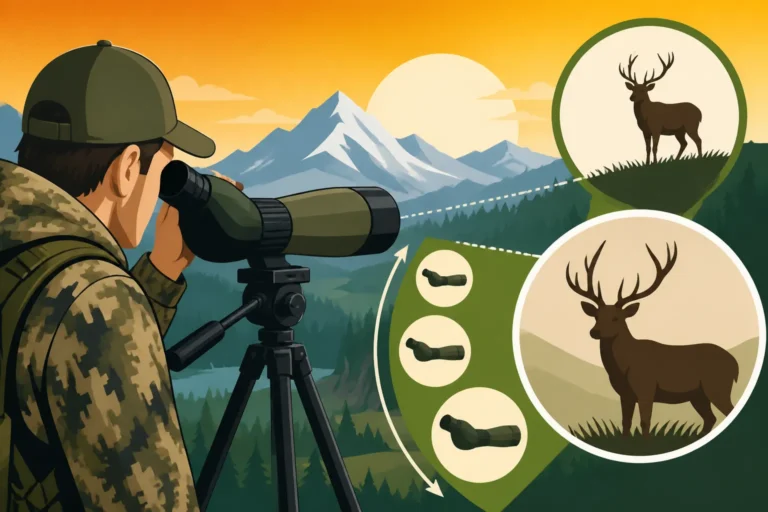
- Tripod and Adapter: If you're trying to range a distant animal in marginal conditions, holding your rangefinder steady is paramount. Even the slightest shake can cause the laser to miss or return an inconsistent reading. Mounting your rangefinder (or rangefinding binoculars) on a sturdy tripod with an appropriate adapter can drastically improve stability and, thus, accuracy. This is particularly helpful when you're trying to get multiple readings or use scan mode on a subtle target through a fog bank. You'll often find yourself using a tripod for your spotting scope anyway when Glassing Eastern Washington Breaks for Mule Deer, so having a quick-release plate for your rangefinder can streamline your setup.
- External Ballistic Calculators: While your rangefinder might give you an accurate distance, an external ballistic calculator (either a dedicated device or an app on your smartphone) can help you quickly translate that distance into a precise firing solution. Many modern rangefinders have basic ballistic capabilities, but a dedicated calculator can integrate more variables like temperature, barometric pressure, humidity, and even spin drift, which can become more relevant for longer shots that might be taken after the fog lifts. If you're going to trust your shot to a potentially tough range, you want every other variable dialed in.
| Feature Type | Benefit in Rain/Fog | Why it Matters in Washington |
|---|---|---|
| Laser Power | Stronger signal penetrates more atmospheric particles. | Cuts through dense coastal fog or heavy Cascade downpours. |
| Target Modes | First Priority ignores close interference (rain, brush). | Prevents ranging a raindrop instead of the elk at 200 yards. |
| Optic Quality | Clear, bright image helps identify targets through gloom. | Improves visibility in low light, foggy mornings, or dense timber. |
| Waterproofing | Protects electronics from moisture ingress. | Essential for surviving typical Washington hunting weather. |
| Angle Comp. | Provides horizontal "shoot-for" distance for angled shots. | Crucial in Washington's steep, broken terrain, rain or shine. |
| Scan Mode | Continuous readings help find consistent ranges. | Great for sweeping around an animal partly obscured by mist. |
Practical Tips for Hunting Washington in Wet and Foggy Conditions
Beyond your gear and techniques, there are some overarching principles and habits that will serve you well when hunting in Washington's famously wet and foggy environments.
Pre-Hunt Preparation and Scouting
Your preparation before you even hit the trail can significantly impact your success when the weather turns sour.
- Research Weather Patterns for Your GMU: Before your hunt, delve into the typical weather patterns for your chosen Game Management Unit (GMU). Is it known for coastal fog? Frequent rain? High-elevation snow? Knowing what to expect allows you to prepare adequately. Checking Washington Fire Closures Before You Go is one aspect, but understanding the general climate is another. Websites and apps can give you historical data and local microclimates.
- E-Scouting for Natural Ranging Markers: Use satellite imagery to identify natural features that could serve as ranging markers. Look for distinct changes in vegetation, prominent rock formations, old logging decks, or unique tree clusters. Pay attention to how far these features are from potential bedding or feeding areas. This way, if you spot an animal, you already have a mental map of distances. E-Scouting Washington GMUs Before the Draw is a critical first step. You can use platforms like GoHunt or other mapping apps to digitally "range" these points from potential shooting positions.
- Always Carry a Physical Map and Compass (or GPS): Relying solely on your phone for navigation and ranging is risky in wet conditions, as batteries drain faster in the cold and moisture. A waterproof physical map and compass, or a dedicated handheld GPS unit, are crucial backups. These won't help you range an animal, but they'll ensure you know where you are, where you're going, and how to get out safely.
- Zero Your Rifle Accurately and Understand Your Ballistics: This isn't just about rangefinding, but it's interconnected. Your rangefinder gives you the number, but your rifle needs to send the bullet there accurately. Spend time Sighting In Before the Opener and thoroughly understand your bullet's trajectory. If you get a less-than-perfect range, but it's within a reasonable margin, a deep understanding of your ballistics can help you make an ethical shot.
During the Hunt: Mindset and Adaptability
Once you're in the field, it's about making smart decisions and adapting to the conditions.
- Patience is a Virtue: Hunting in rain and fog often means slower movement, lower visibility, and reduced opportunity. Don't rush your shots. If you can't get a reliable range, wait. The animal might move to a clearer spot, the fog might lift momentarily, or you might be able to close the distance. Impatience often leads to rushed shots and poor outcomes.
- Focus on Closer Opportunities: When visibility is poor, shift your focus to opportunities at closer ranges. A 100-yard shot in dense fog is significantly more manageable and ethical than a 400-yard shot in the same conditions. This might mean adjusting your hunting strategy, perhaps still-hunting more slowly through timber instead of glassing open clearcuts.
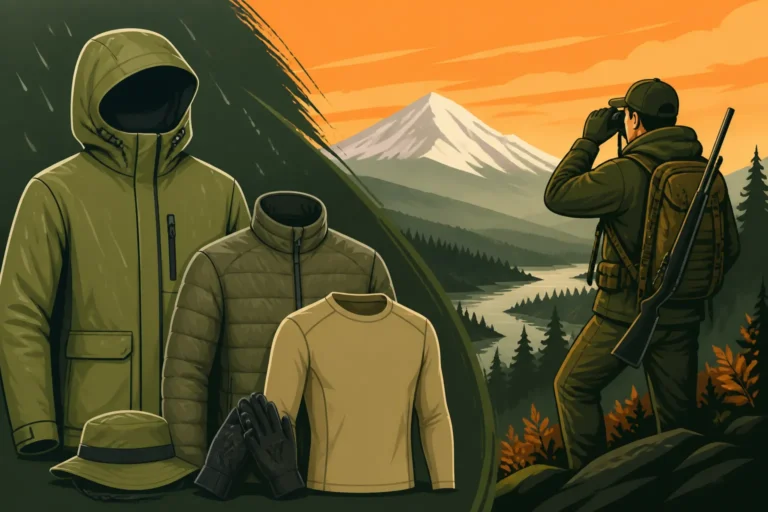
- Dress for Success: While not directly related to rangefinding, staying dry and warm is critical for maintaining focus and comfort in adverse weather. Being cold and wet will distract you, making it harder to concentrate on ranging and executing a shot. Invest in quality Rain Gear That Survives a Washington Westside Season and understand Layering for Wet Cold Weather. If you're miserable, you're less likely to make good decisions.
- Know When to Call It: There will be days when the fog is too thick, the rain too heavy, or the visibility too poor to hunt safely and ethically. Knowing when to pack it in and try again another day is a sign of a responsible hunter. No animal is worth risking a dangerous situation or a questionable shot that could lead to a wounded animal.
Hunting in Washington's varied and often challenging weather is part of the experience. By understanding how rain and fog interact with your rangefinder, employing smart techniques, investing in the right gear, and maintaining a prepared and adaptable mindset, you can significantly increase your odds of success, even when Mother Nature throws her worst at you. Stay safe out there, and happy hunting!
Disclaimer
This article is for general informational purposes only and does not constitute professional advice. Laws, prices and regulations vary by location and change over time. Consult a qualified professional for guidance on your specific situation.