Blood Trailing in Salal and Devil’s Club
There’s almost nothing more disheartening for a hunter than making a shot on an animal, feeling good about it, and then watching that animal disappear into a tangled mess of Pacific Northwest vegetation. The frustration quickly turns to anxiety when you step into a dense patch of salal or devil's club, and the blood trail that seemed so obvious at the shot vanishes into the undergrowth. This guide is all about equipping you with the knowledge, tools, and mindset to navigate the brutal reality of blood trailing in Washington’s most unforgiving landscapes, giving you the best chance of recovering your hard-earned game.
The Unique Challenges of PNW Vegetation
Washington’s westside, and even some areas east, are notorious for their incredibly dense undergrowth. When you’re trying to follow a blood trail, this thick cover isn't just an inconvenience; it's a significant barrier that can quickly turn a hopeful recovery into a gut-wrenching lost animal if you're not prepared for it. It's not like trailing through open ponderosa pines where every drop stands out. Here, the forest floor is a different beast entirely.
Understanding Salal's Dense Growth
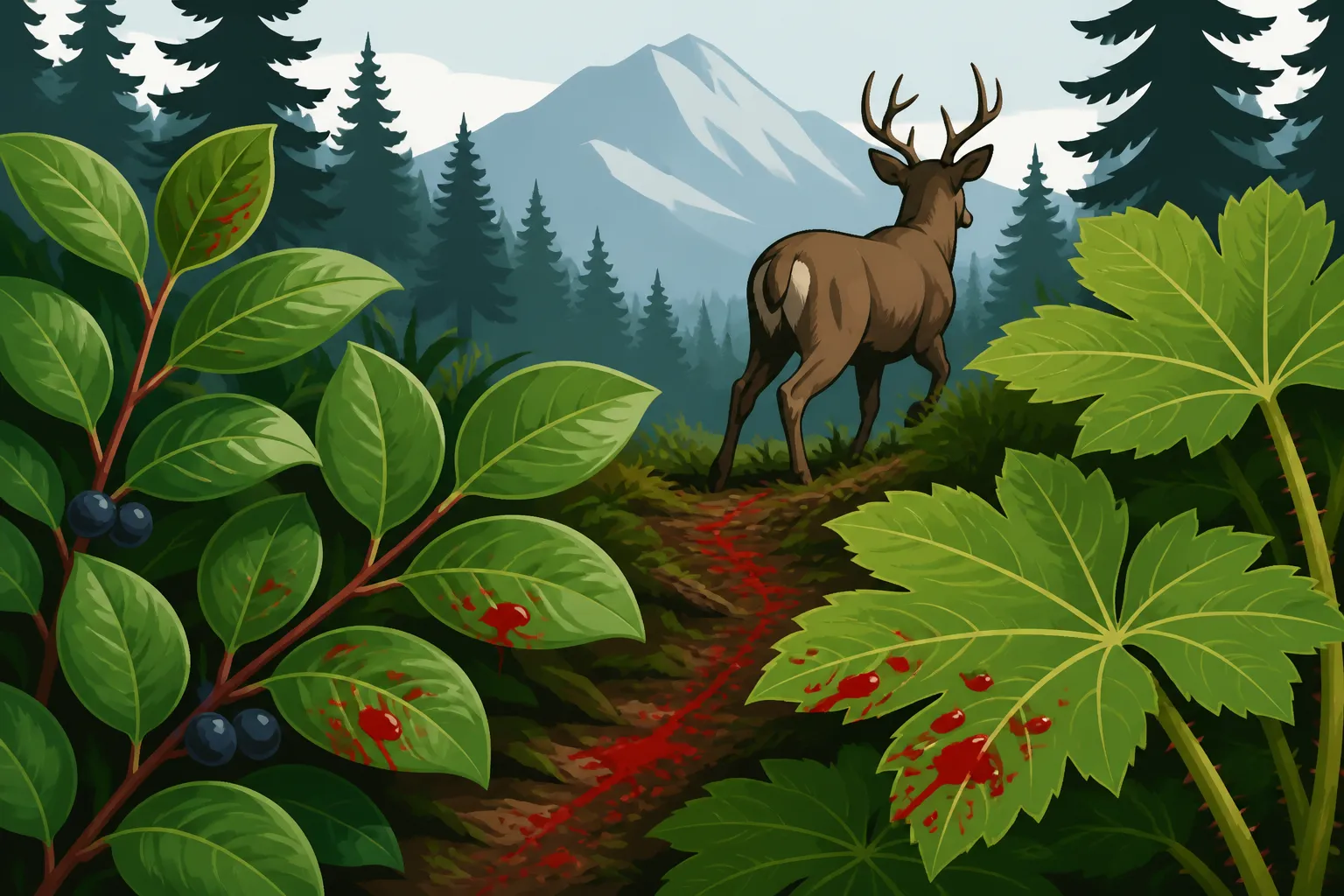
Salal, Gaultheria shallon, is practically the unofficial state plant of Western Washington’s forests. It's a low-growing, evergreen shrub that forms incredibly dense, almost impenetrable thickets. These thickets can be anywhere from knee-high to chest-high, and when an animal runs through them after a shot, they often act like a sponge, soaking up blood before it can hit the ground. The large, leathery leaves can also obscure what little blood does make it through, making every single drop a treasure to find.
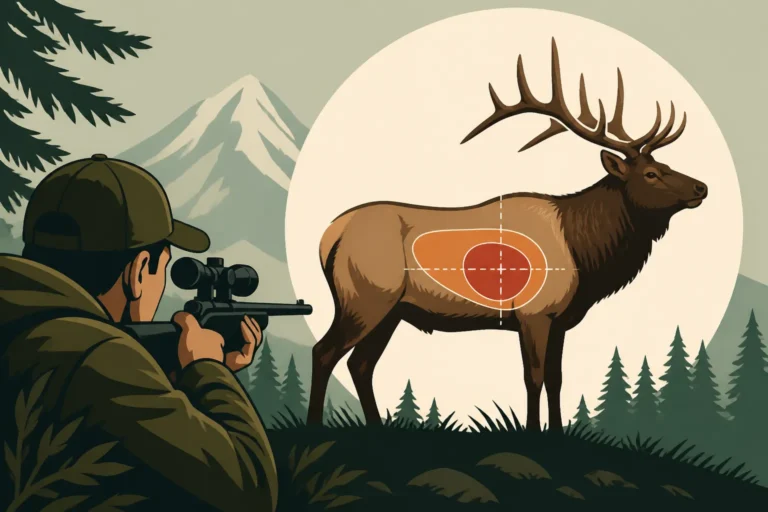
Imagine a bull elk crashing through a patch of salal. The branches snap back, the leaves flutter, and any blood that might have been on its coat gets wiped clean or absorbed by the vegetation itself. What you might find is a few specks on the tops of leaves, or nothing at all for a frustrating stretch. This isn't a sign you missed; it's just the nature of the beast. You have to learn to look through the salal, examining every stem and leaf, often on your hands and knees, to find the smallest clue. It’s a painstaking process that demands extreme patience and a keen eye, often making a recovery feel like searching for a needle in a leafy haystack.
Furthermore, the structure of salal can make movement itself a chore. You’re not just walking; you’re pushing, ducking, and sometimes even crawling. This slow movement can be exhausting, and it drains your energy and focus, which are both crucial when trying to pick apart a faint blood trail. The sheer effort required to move through it means you need to be physically ready, and also mentally prepared for the grind. It's not a sprint; it's a marathon through the green tunnels.
The Menace of Devil's Club
If salal is annoying, then devil's club, Oplopanax horridus, is downright hostile. This formidable plant, easily identifiable by its large, maple-like leaves and stems covered in sharp, brittle spines, is pure agony to deal with. It tends to grow in damp, shady areas, often along creek bottoms, old logging roads, and other places where game animals love to bed down or travel. Encountering devil's club on a blood trail can be a physically painful experience, turning a tough situation into an absolute nightmare.
The spines are the real problem. They easily break off in your skin, causing irritation, pain, and sometimes even infection. This means pushing through a patch of devil’s club without proper protection is a non-starter. A wounded animal crashing through these thickets can also wipe away blood just like salal, but the added danger to the hunter makes searching even more difficult. You’re hesitant to crawl, and trying to part the spiny branches with bare hands is a quick trip to the emergency room.
The presence of devil's club often indicates prime elk or deer habitat, especially in the deeper timber. This means that if you hit an animal in such an area, you're likely going to have to contend with this thorny foe during your recovery. It’s not just about finding blood; it’s about doing so without injuring yourself, which can significantly slow down your progress and even force you to abandon the trail if you’re not equipped to handle it safely. You must assume you'll encounter it, especially when considering Blood Trailing in Thick Understory.
Why Blood Trailing Here is Different
Blood trailing in Washington’s dense cover, particularly with salal and devil's club, isn’t just about looking for red drops on green leaves. It’s about a complete shift in strategy and mindset. In more open country, you might walk a grid, looking for splashes. Here, you're often down on your hands and knees, dissecting every foot of ground. The blood trail might not be a continuous line; it could be a speck here, a smear on a broken branch there, a patch of disturbed moss 20 yards further.
The sheer volume of vegetation means that even a well-hit animal might not leave a copious trail, especially early on. The animal's fur and the surrounding brush absorb a lot of the initial bleed. This makes the first few yards, what we often call the "strike zone," absolutely critical. You need to meticulously search the area where the animal stood at the shot and its immediate escape path. If you don't find much right away, don't panic. It's normal. Instead, expand your search area, looking for any sign, no matter how small. Understanding Blood Trailing in Salal and Devil's Club is an absolute must to even comprehend how challenging this can be.
Moreover, the terrain often works against you. Western Washington is famous for its steep, broken country, wet creek beds, and old-growth timber with massive blowdowns. An animal can drop quickly into a ravine or weave through a maze of downed trees, further complicating the trail. The constant dampness can also dilute or wash away blood, especially after a persistent rain, leaving you with even fewer clues to work with. It's an environment designed to test your resolve, but with the right preparation, it's not insurmountable.
Essential Gear for Tough Trails
Successfully recovering game in Washington's dense cover hinges significantly on having the right tools at your disposal. This isn't just about bringing a flashlight; it's about having specialized equipment that enhances your ability to find faint sign, navigate difficult terrain, and protect yourself from the elements and the vegetation. Being under-equipped can mean the difference between filling your freezer and going home empty-handed with a heavy heart.
Illumination is Key
When daylight fades or you're deep in dark timber, a powerful and reliable light source becomes your most important tool. Standard headlamps often aren't enough. You need something specifically designed for blood trailing. The goal is to make dried blood, which can appear dark brown or even black in low light, stand out against the greens and browns of the forest floor.
Many experienced hunters swear by specialized blood trailing lights that use specific wavelengths (often blue or green) to make blood fluoresce. While some hunters find these effective, a high-lumen LED flashlight or headlamp with a bright, crisp white light can also work wonders. The key is to have enough power to cut through the darkness and a beam that can be focused to highlight small details. Consider carrying both a powerful handheld flashlight and a good headlamp. The headlamp keeps your hands free for moving brush or marking the trail, while the handheld can be used to sweep areas and identify subtle changes in color. Always carry extra batteries or a rechargeable power bank, because a long night of trailing can drain them quickly, and nothing is worse than losing light when you're close. For extended operations, knowing Using a Light to Track After Dark can prove invaluable.
| Light Type | Pros | Cons | Best Use |
|---|---|---|---|
| High-Lumen White LED | Versatile, excellent general illumination, readily available | Can be difficult to distinguish dried blood from dark earth/leaves | General trailing, finding larger blood splashes, navigating terrain |
| Specialized Blood Light | Designed to make blood fluoresce and stand out | Less effective for general navigation, can be expensive | Meticulous searching for faint, dried blood trails in thick cover |
| Red Light Filter (on headlamp) | Preserves night vision, good for low-impact visibility | Not suitable for actual blood identification, only for movement | Moving between segments of a trail, checking maps without losing night vision |
Navigation and Marking Tools
Losing a blood trail is bad enough, but getting lost yourself, especially when focused intently on the ground, is even worse. Having robust navigation and marking tools is non-negotiable in Washington's wilderness. A reliable GPS unit or a smartphone with a hunting app like GoHunt that allows for offline map downloads and waypoint marking is essential. Before you even head out, ensure your maps are downloaded, your batteries are charged, and you know how to use the device to drop pins for the last blood found and your entry point. This becomes crucial if you have to back out and return later, or if you need to call for help.
Beyond electronic navigation, physical trail markers are your best friend. Brightly colored flagging tape (non-biodegradable so it lasts and is easily visible, but remember to remove it after recovery!) or small, reflective tacks can be invaluable. Every time you find a confirmed sign of blood, mark it. Don't assume you'll remember exactly where it was. These markers serve as breadcrumbs, allowing you to easily retrace your steps, establish a search grid, or pinpoint the last known location if the trail goes cold. A roll of orange flagging tape is cheap, lightweight, and can save you hours of frustration. Always remember to clean up your flagging tape once the animal is recovered, or if you abandon the trail, to keep the woods clean.
Protection for Yourself
Fighting through salal and devil's club without adequate protection is a recipe for misery and injury. Your personal gear needs to be as tough as the environment you're in. Sturdy, waterproof boots with good ankle support are crucial for navigating uneven, wet terrain and preventing punctures from thorns. You should be considering boots that are up to the task of Boots for Washington's Eastside Rock and Westside Mud. Heavy-duty brush pants or gaiters are absolutely essential to protect your legs from punctures, scrapes, and soaking wet brush. Trust me, one encounter with devil's club through thin pants will make you a believer.
Additionally, tough gloves are vital. Not thin leather gloves, but something substantial that can stand up to thorns and sharp branches. Even with gloves, be cautious. A solid rain jacket and pants, perhaps a quiet, durable one designed for hunting, will keep you dry and comfortable during prolonged searching in Washington's often-wet conditions, especially on the Westside. You'll thank yourself for investing in quality Rain Gear for Westside Hunting and understanding proper Layering for Wet Cold Weather. Don't forget a basic first-aid kit; small cuts and scrapes are inevitable, and spines from devil's club need to be removed promptly to prevent infection. Packing a small pair of tweezers is a good idea for this very reason. Having a good First Aid Kit for a Remote Hunt is non-negotiable.
The Art of Reading the Trail
Finding an animal in Washington's thick cover is rarely a simple walk in the park. It requires an almost forensic approach, analyzing every bit of sign, no matter how subtle. It’s about more than just seeing red; it’s about understanding what that red, or lack thereof, is telling you. This mental puzzle is where the true art of trailing comes into play.
Interpreting Blood Sign and Type
Not all blood is created equal, and understanding what you’re seeing can give you crucial clues about the animal's injury and how far it might have gone. Bright red, frothy blood often indicates a lung hit, which is typically fatal and suggests the animal won't travel far. Darker, venous blood, on the other hand, might point to a muscle hit or a less severe wound, meaning the animal could run for a considerable distance. Blood mixed with stomach contents or green matter points to a gut shot, which is almost always fatal but requires a much longer waiting period before trailing to ensure the animal expires and doesn't push further.
When you find blood, don't just note its color. Look at its consistency, the volume, and how it's distributed. Is it a continuous drip, or distinct splashes? Are there smears on vegetation, indicating contact? Even tiny flecks can tell a story. If the blood changes color or volume, that's significant. More blood or frothy blood appearing later in the trail usually means the animal is weakening or the wound is opening up. Conversely, decreasing blood can be a sign it’s clotting, or that you're trailing an animal with a superficial wound. A good understanding of Shot Placement on a Quartering Elk or deer will help you interpret these signs more accurately.
Beyond Blood: Hair, Bone, and Disturbed Ground
Sometimes, the blood trail is practically non-existent, especially in salal and devil’s club. This is when you have to become a detective, looking for other, more subtle clues. Hair is one of the most valuable non-blood signs. Long, coarse guard hairs often indicate a superficial hit, while short, fine undercoat hairs suggest a deeper penetration. The color of the hair can also help confirm it’s your animal, especially if there are other animals of different colors in the area. Finding bone fragments, stomach contents, or pieces of internal organs (though often absorbed by thick brush) can be definitive signs of a lethal hit.
Disturbed ground is another critical clue. Look for broken branches, scuffed leaves, bent grass, or overturned moss. A large animal crashing through thick cover leaves a signature, even if it's not immediately obvious. Often, these subtle disturbances are easier to spot from a slight elevation or by moving perpendicular to the animal's last known direction of travel. Pay attention to how the animal traveled: was it running frantically, or did it slow down and walk? A slower, deliberate pace often means the animal is weakening. Scrapes on bark or broken saplings at shoulder height can indicate the direction and height of the animal, confirming it was the one you shot. GoHunt's satellite imagery can sometimes help you visualize escape routes or terrain features that an animal might have used, even if the on-the-ground trail is sparse.
Pushing the Envelope: When to Back Out and When to Push On
One of the hardest decisions in blood trailing is knowing when to keep going and when to back off. If you’re seeing good, consistent blood, especially frothy lung blood or copious amounts of dark venous blood, and it seems to be getting stronger, it’s usually safe to continue, albeit slowly and meticulously. This indicates a serious wound, and the animal is likely not far.
However, if the blood trail is sparse, inconsistent, or vanishes completely, and you suspect a gut shot or a muscle hit, the best course of action is often to back out. A gut-shot animal, if pushed, can travel for miles, and often holes up in the densest, nastiest cover it can find. Giving it 4-6 hours (for deer) or 6-12 hours (for elk), or even overnight, allows the animal to bed down and expire. Pushing too soon on a marginally hit animal is the most common reason for not recovering game. Mark the last blood found with your GPS and flagging tape, then leave the area as quietly as possible. Come back after the appropriate waiting period, preferably with a fresh pair of eyes or a tracking dog if legal and available. The decision of Following Up a Marginal Arrow Hit often makes or breaks a recovery.
Strategic Trailing Techniques
Navigating the dense vegetation of Washington requires more than just a good flashlight and a keen eye; it demands a strategic approach to ensure no stone is left unturned. When the trail is difficult, a systematic method is your best chance for success.
The Grid and Swarm Approach
When a blood trail becomes almost impossible to follow in dense salal or devil's club, a structured search strategy can be incredibly effective, especially if you have a hunting partner or two. The "grid" method involves establishing the last known point of blood and then systematically searching in expanding concentric circles or a grid pattern around that point. One person stays at the last blood, marking it with flagging tape. The other person (or persons) then moves out in a controlled direction, slowly and meticulously searching for any sign.
A "swarm" approach is similar but allows for more flexibility, particularly in extremely thick cover. After marking the last blood, everyone spreads out slightly, moving forward in a line, staying within sight or earshot of each other, constantly communicating any finds. The idea is to cover every inch of ground in a systematic fashion. When a new sign is found, everyone converges on that spot, marks it, and then the process repeats. This method is particularly effective in areas where the animal might have doubled back, made a sharp turn, or where the blood trail is so faint that one set of eyes alone would surely miss it. Always keep the wind in mind; if the animal is still alive, it might react to your presence.
Utilizing a Tracking Dog
In Washington, using tracking dogs for wounded game recovery is legal under specific conditions, primarily that the dog is on a leash. This can be an absolute game-changer, especially in the kinds of dense cover we're discussing. A well-trained tracking dog, often a breed known for its scenting ability like a Bavarian Mountain Hound, Teckel, or Labrador, can follow a faint blood or scent trail that no human eyes could ever detect.
If you suspect a difficult trail or have lost one, don't hesitate to contact a professional tracking dog handler. Many regions have dedicated groups or individuals who offer this service, understanding the ethical imperative of recovering wounded game. Getting a dog on the trail sooner rather than later is always best, as rain, time, and other animals can quickly degrade a scent trail. Always check the current WDFW regulations regarding the use of tracking dogs, but know that this is a highly effective tool that can drastically increase your chances of a successful recovery, particularly when the conditions are working against you. This is an ethical choice that every hunter should consider for their Washington hunting safety precautions.
Dealing with Rain and Fading Sign
Washington weather is infamous for its wetness, and rain is the arch-nemesis of a blood trailer. Even a light drizzle can dilute and wash away fresh blood, making an already faint trail disappear entirely. If rain starts while you're on a trail, the urgency to find the animal increases dramatically. You need to move as quickly and meticulously as possible, focusing on finding enough sign to predict the animal's direction of travel.
If the trail goes cold due to rain, you'll need to rely heavily on secondary signs: broken branches, scuffed earth, disturbed vegetation, and footprints. At this point, it often becomes a matter of predicting where the animal would go based on the terrain – likely towards dense cover, a creek bottom, or away from human activity. Using a map tool like GoHunt to analyze topography for potential bedding areas, draws, or escape routes can help you anticipate the animal's likely path, even without visible blood. You may also need to consider glassing nearby areas if you can gain elevation, as discussed in Glassing Sage and Wheat Edges for Washington Mule Deer, though this is less effective in dense timber. It's a testament to your persistence and woodsmanship when you can piece together an animal's final movements without the obvious visual cues.
Mindset, Persistence, and Safety
Blood trailing in salal and devil's club is as much a mental game as it is a physical and technical one. The thick vegetation, difficult terrain, and frustratingly sparse signs can quickly wear down even the most seasoned hunter. Maintaining the right mindset, embracing persistence, and always prioritizing safety are paramount for a successful outcome.
Patience and Mental Fortitude
When you're crawling on your hands and knees through a thorny thicket, straining your eyes for a speck of blood, it's easy to get discouraged. Doubt creeps in. You might second-guess your shot or feel the urge to give up. This is where patience and mental fortitude become your most valuable assets. Remind yourself why you're out there: to ethically recover the animal you shot. It's a commitment you made the moment you squeezed the trigger.
Take breaks when you feel overwhelmed. Step back, clear your head, and re-evaluate. A fresh perspective can often help you spot something you missed. Bring snacks, water, and plenty of patience. The slower and more methodical you are, the higher your chances of success. Rushing will only lead to more frustration and potentially overshooting the animal. Remember, the animal isn't going anywhere if it's expired, and if it's still alive, a slow, quiet approach is less likely to spook it further. This methodical approach is similar to Still-Hunting Blacktails in Wet Washington Brush, where slow, deliberate movement is key.
Knowing When to Call for Help
There's no shame in admitting you need help. In fact, knowing when to call for reinforcements is a sign of a responsible hunter. If you've exhausted your options, the trail has gone cold, or you're simply physically or mentally drained, reaching out to friends, family, or fellow hunters can make a huge difference. Fresh eyes and renewed energy can often pick up a trail that you've overlooked.
Before you even start your hunt, have a plan for who you can call in an emergency or for assistance. Share your hunting plans and general location with someone reliable at home. If you're hunting solo, a satellite messenger or two-way radio like those often used for Two-Way Radio Use While Hunting is a smart investment, allowing you to communicate even without cell service. If the situation becomes truly desperate, such as nightfall approaching with no recovery in sight, or if you encounter dangerous terrain or adverse weather, don't hesitate to temporarily back out and return with a larger, rested team in the morning. Your personal safety always comes first.
Safety First in Thick Cover
While the primary goal is animal recovery, your safety should always be the top priority. Dense cover can hide more than just blood trails; it can conceal steep drop-offs, unstable ground, angry animals (if still alive and cornered), or even other hunters. Always be aware of your surroundings. If you're in a thicket so dense you can barely see a few feet in front of you, use extreme caution.
Keep your firearm or bow pointed in a safe direction. If the animal is still alive and might be bedded nearby, approach cautiously, ready for a follow-up shot if necessary, but never rush blindly into thick cover. Make noise as you move to avoid startling a bedded animal at close range, which could lead to a dangerous charge. If you’re with a partner, maintain communication and always know where they are. The wilderness demands respect, and Washington's dense, often wet, and steep terrain can be unforgiving if you let your guard down. A good understanding of Solo Hunting Safety Precautions if you're alone is also vital.
Disclaimer
The information provided in this guide is for informational purposes only and is not a substitute for professional training or current Washington Department of Fish and Wildlife (WDFW) regulations. Hunting laws and regulations can change, so it is the responsibility of each hunter to check the latest WDFW hunting pamphlets and laws before heading into the field. Always prioritize safety and ethical hunting practices.