Sows With Cubs and the Legal Line
You finally glass a black bear feeding across a huckleberry slope, the wind is right, and the stalk looks easy. Then a small dark shape tumbles out of the brush behind it. Washington makes it illegal to kill a cub or a sow with cubs, and the line is not always obvious at 300 yards. This guide shows you how to read that situation before you ever touch the trigger.
What the Washington Rule Actually Says
The Plain-Language Version
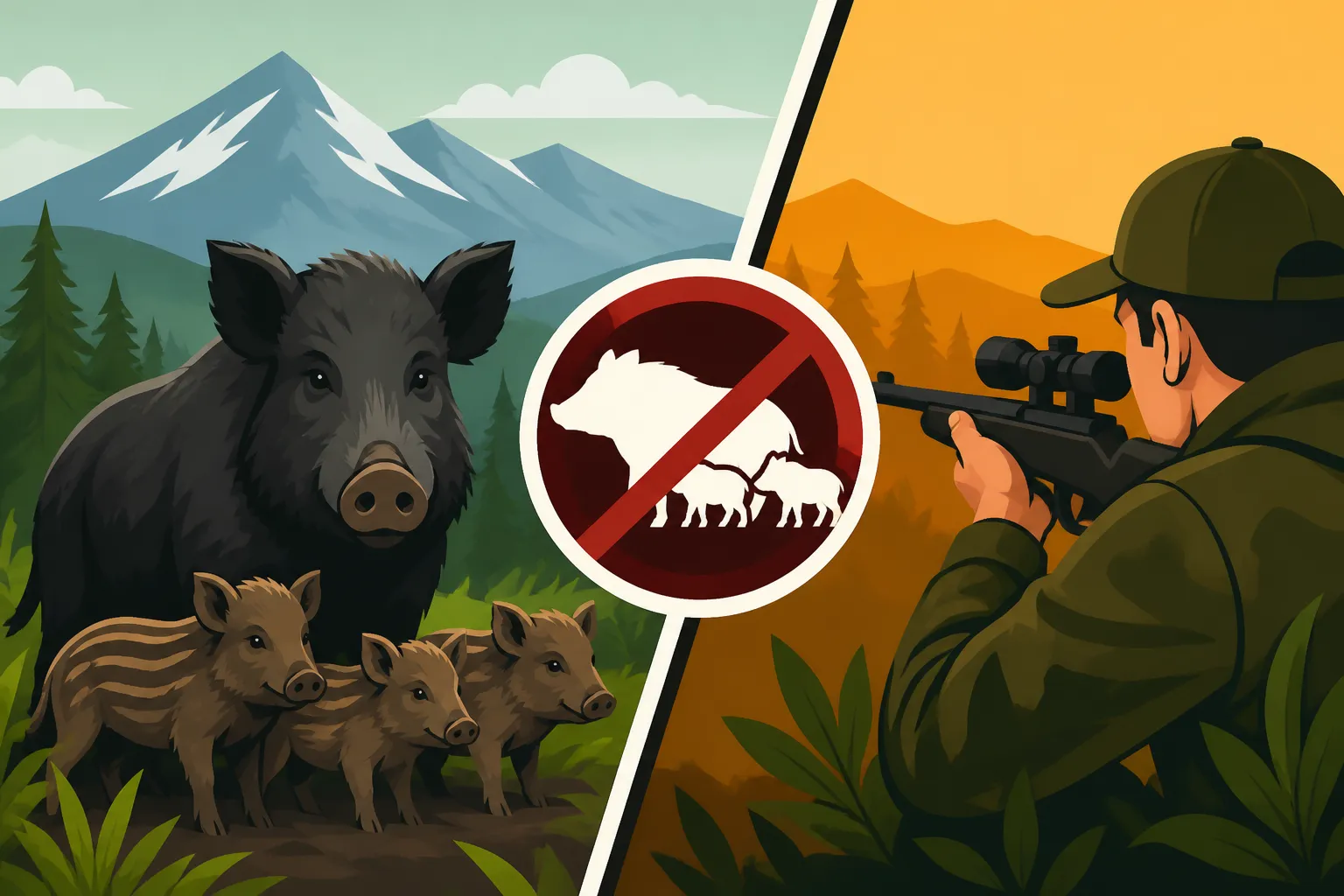
Washington’s big game rules protect two groups of bears: cubs, and adult female bears that have cubs with them. If a bear is a cub, you cannot shoot it. If a bear is a sow accompanied by cubs, you cannot shoot her either. The rule does not care whether you saw the cubs before the shot or found them afterward. If the bear on the ground turns out to be a sow with young at her side, you are the one explaining it to an officer.
The same idea runs through the state’s cougar rules, where spotted kittens and the adults traveling with them are off limits. If you hunt both species, it helps to think of it as one principle: you leave family groups alone. The exact wording, definitions and any exceptions live in the current big game pamphlet, so read that section every season rather than relying on what a hunting partner remembers from years ago.
Why the Line Exists
Bear populations recover slowly. A sow typically does not breed every year, litters are small, and cubs depend on their mother through their first summer and into the following year. Take a sow with cubs and you often remove the cubs too, because young cubs on their own rarely make it. That is a big hit to the next generation from a single shot.
Washington already runs its bear program without bait and without a spring season, which you can read more about in Why Washington Bans Bear Bait and Why Washington Ended the Spring Bear Hunt. Protecting sows with cubs is part of the same approach: let hunters take mature bears, but keep the breeding core of the population intact.
What Happens if You Get It Wrong
Killing a protected bear is a wildlife violation. Depending on the circumstances, that can mean fines, the loss of the bear, and the possible suspension of hunting privileges. The details and penalty amounts are set by state law and change over time, so check Washington Wildlife Violation Penalties rather than guessing. The practical point is simpler: no bear is worth the risk of a shot you cannot fully justify.
If a mistake does happen, report it yourself and right away. Calling the department, leaving the animal where it is unless told otherwise, and being honest about what happened is always better than walking away from it.
How to Spot a Sow With Cubs in the Field
Read Behavior Before Body Size
Size alone is a poor guide. A big boar and a big sow can look similar at distance, and a lean young male can look smaller than a fat older female. Behavior tells you far more. A sow with cubs tends to move in short bursts, stops often, and looks back over her shoulder. She may stand up to check her surroundings, then drop and keep feeding while staying close to cover. Boars are usually more relaxed and travel with purpose, often walking in a straight line from one feeding spot to the next.
Watch where the bear stops. A sow with cubs will often feed near a tree the cubs can climb. If the bear keeps returning to the same patch of timber edge, or seems unwilling to stray far into the open, stay patient and keep watching.
Give It Time Before You Decide
Cubs do not stay glued to their mother. They wander, wrestle, nap in the brush and climb trees, and they can be out of sight for long stretches. A hunter who glasses a bear for two minutes and decides it is alone has not really looked.
A good rule of thumb many experienced bear hunters use is to watch a bear for at least 15 to 20 minutes before deciding, and longer if the cover is thick. If you can, move to a second viewpoint so you can see behind the bear and into the brush it came out of. This is where good glassing habits pay off, and the approach in Spotting Bears on Avalanche Chutes works well here too.
Signs That Should Stop the Stalk
Some clues should end the stalk on their own:
- A second or third smaller bear anywhere near the first one
- Fresh small tracks next to large ones in mud or dust
- Squealing, bawling or huffing sounds from cover near the bear
- A bear that keeps looking up into a tree
- A bear that seems nervous, alert, and unwilling to leave timber
None of these proves cubs are present, but each is a strong reason to wait. If you cannot rule cubs out, let the bear walk.
A Step-by-Step Process Before the Shot
The Checklist I Use Every Time
This is the sequence that keeps me honest when a bear is in front of me and my heart rate is up:
- Find the bear and settle in before you start a stalk. Get your binoculars or spotting scope on a steady rest.
- Watch it for at least 15 to 20 minutes. Note where it came from and where it seems to be heading.
- Scan every bit of cover within about 100 yards of the bear, including trees and stumps where cubs could climb.
- Look for body language that suggests a sow with young: frequent stops, looking back, staying near a climbable tree.
- If possible, move to a second angle and look again before closing the distance.
- During the stalk, stop at each new view and recheck the surroundings, because cubs may appear as the angle changes.
- At shooting distance, take one more full look around the bear before you settle the crosshairs or draw your bow.
- If anything in steps 2 to 7 gives you doubt, do not shoot.
That last step matters most. The rule is strict, and there is no prize for being nearly sure.
Using Optics and Apps Wisely
Good glass makes the biggest difference. A quality 10x binocular on a tripod lets you pick apart brush in a way that hand-held glassing never will, and a spotting scope helps confirm details like body shape and tracks at long range. Mapping and research tools such as GoHunt can help you find likely bear country, open slopes and burns before you go, but they will not tell you whether a particular bear has cubs. That decision always happens through your own optics on the mountain.
If you hunt with a partner, split the job. One person keeps the glass on the bear while the other watches the surrounding cover. Two sets of eyes catch cubs that one person misses.
Comparing Common Situations
The table below summarizes how I treat the situations hunters run into most often.
| Situation | What it often means | What to do |
|---|---|---|
| Lone bear feeding in the open for 20 minutes | Likely alone, but not certain | Check nearby cover again, then decide |
| Bear repeatedly looking back toward timber | Could be watching cubs | Keep watching from distance |
| Two bears of very different size together | Often a sow with a cub or yearling | Do not shoot either bear |
| Two similar-sized bears traveling together | May be siblings or a breeding pair | Watch closely, identify each bear |
| Bear standing near a tree and looking up | Cubs may be in the tree | Do not shoot, back out quietly |
| Small bear alone in early fall | Could be a young bear separated from its mother | Pass unless you are certain it is not a cub |
Seasons, Timing and Where Cubs Show Up
Why Fall Bears Still Come With Cubs
Washington’s general bear season is a late summer and fall hunt. Cubs born in the den over the winter are still with their mother through that whole period, and many will den with her again the following winter. That means a sow you see in August or September may well have the current year’s cubs with her, small enough to disappear behind a single log. For opening dates and limits in your area, start with Washington Black Bear Season Dates and Washington Bear Bag Limit.
Because the season runs through berry time, bears gather on the best food. A huckleberry patch or a fresh clearcut full of fruit can pull in several bears at once, including sows with cubs. That is good news for spotting bears but it also means you must work harder to sort out who is who. Where Bears Feed in Early Fall goes into the food side in more detail.
Judging Size and Sex at Distance
Many hunters try to pick out a boar by head shape and body proportions. Older boars often have broad heads, small-looking ears, and a heavy, deep chest. Sows tend to have narrower faces and look longer and leaner. These clues are useful, but they are not proof. Body shape changes with season and condition, and a young boar can look a lot like a sow. Judging Bear Size at Distance covers that in depth.
Color does not help much either. Washington has black, brown and cinnamon bears, and a sow with cubs can raise cubs of different colors in the same litter. You can learn more in Bear Colour Phases in Washington.
Hunting Methods That Make the Call Easier
Spot-and-stalk hunting gives you the best chance to sort out a sow with cubs, because you see the bear for a long time before you get close. Glassing open slopes, old burns and avalanche paths in the evening lets you watch a bear’s behavior from a safe distance. If you are new to that style, Spot-and-Stalk Bear Hunting in Washington Without Bait is a good place to start.
Close-range encounters in thick timber are the hardest. If a bear appears at 30 yards in the brush, you may only get a few seconds to look. In that situation, the honest answer is that you often cannot be sure, and passing is the right call.
What to Do if You Realize Too Late
Before the Shot
If you see cubs at any point before the trigger breaks or the arrow leaves the string, stop. Lower the weapon, stay still and let the family move off. Back out slowly and quietly, keeping your distance. A sow with cubs can be defensive, so give her plenty of room and avoid getting between her and her young.
After the Shot
If you shoot a bear and then discover cubs nearby, or find that the bear you took was a sow with cubs, the right move is to report it promptly. Contact the department or the enforcement hotline, describe exactly what happened, and follow their instructions on the animal. Reporting a mistake yourself is very different from having someone else find it. Reporting Poaching in Washington lists the general contact options.
Learning From Near Misses
Almost every bear hunter has a story about a bear they nearly shot before a cub stepped out. Treat those moments as lessons, not close calls to forget. Write down what tipped you off, what the sow was doing, and how long it took for the cubs to show. Over a few seasons, those notes will make you much better at reading bears, and they will make the line between a legal bear and a protected one far easier to see.
Disclaimer
This article is for general informational purposes only and does not constitute professional advice. Laws, prices and regulations vary by location and change over time. Consult a qualified professional for guidance on your specific situation.