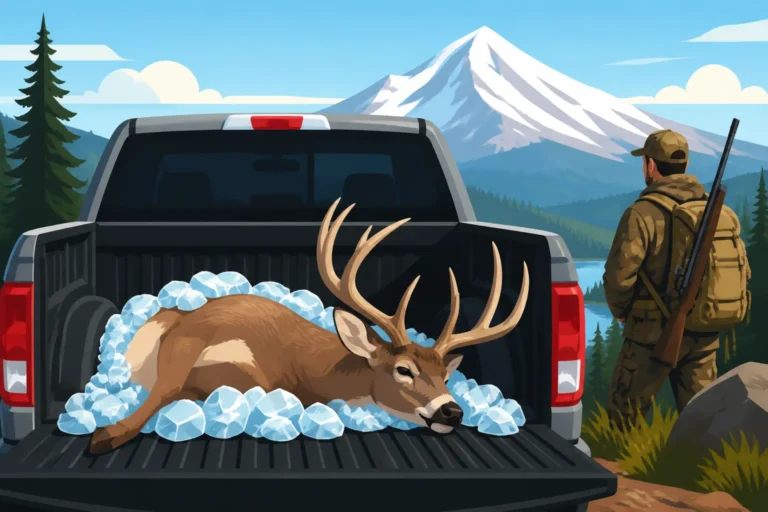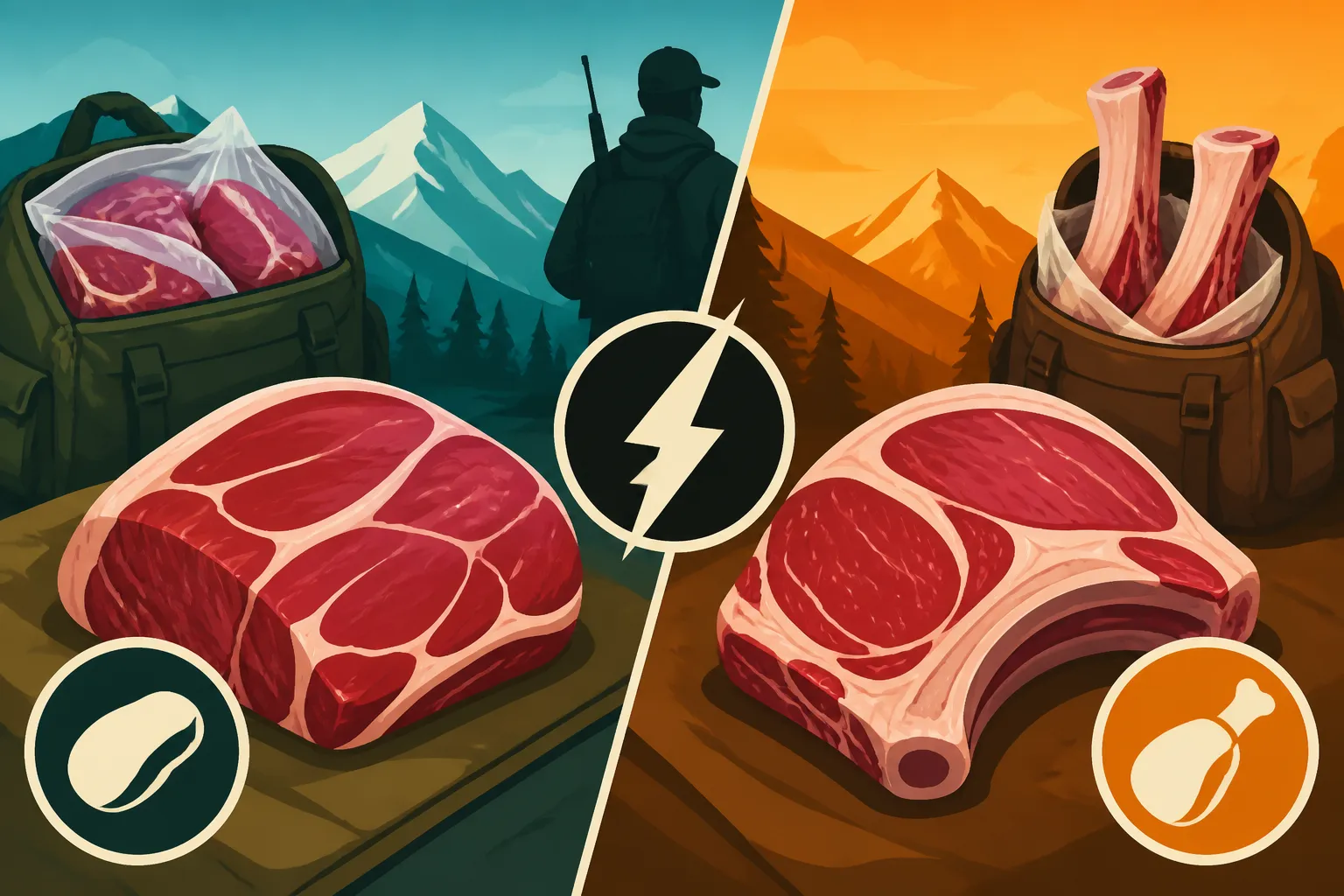
Bone-Out Versus Bone-In Packing
The shot rings out, the animal is down, and that initial surge of adrenaline gives way to the monumental task ahead: getting your hard-earned meat off the mountain. For Washington hunters, especially in our rugged terrain and unpredictable weather, this isn't just a chore – it's a critical strategic decision. Choosing between packing your animal out bone-in or bone-out has huge implications for your effort, the time it takes, and ultimately, the quality of the meat that ends up on your table. This guide aims to break down both methods, offering practical advice to help you decide which approach is best for your next Washington big game hunt.
Understanding the Basics: Bone-In Versus Bone-Out
Before we dive into the pros and cons, let’s make sure we’re all on the same page about what these terms actually mean in the context of hunting. They refer to how much bone remains attached to the meat when you start the packing process. It’s a choice that impacts everything from your pack weight to how quickly you can cool the carcass.
The Traditional Bone-In Approach
When we talk about "bone-in" packing, we're generally referring to breaking the animal down into larger, manageable sections where the bone remains attached to the meat. Think of it like quartering a steer for a butcher shop. For a deer, this usually means splitting the animal into four quarters (two front, two hind), along with the backstraps, tenderloins, neck meat, and sometimes the ribs and brisket. The animal is typically field-dressed (gutted) first, and then these bone-in sections are removed.
This method has been the standard for generations, especially when hunters could get closer to their downed animal with vehicles or had shorter distances to cover. You’re essentially creating a few large, solid chunks of meat that are easier to handle initially, but significantly heavier. For a bull elk, those bone-in hindquarters can be incredibly cumbersome and weigh well over 100 pounds each, demanding serious strength and a robust pack frame. In Washington, particularly on the western side where thick brush and steep terrain are common, wrestling a large, bone-in quarter can be a brutal experience, even if you’re strong.
The Efficient Bone-Out Method
The "bone-out" method, often synonymous with what many hunters call the "gutless method," takes a different approach. Instead of traditional field dressing and quartering, the meat is carefully peeled off the bones in large, boneless sections. The animal is typically laid on its side, and the hide is removed from one side. Then, the front shoulder, hindquarter, backstrap, and tenderloin are removed without disturbing the gut cavity. The animal is then rolled over, and the process is repeated on the other side.
The primary goal here is to drastically reduce weight by leaving all non-essential bone and carcass material in the field. This method is a game-changer for solo hunters or anyone venturing deep into the backcountry, where every ounce in your pack counts. Imagine trying to carry two bone-in elk hindquarters through the dense timber of the Gifford Pinchot National Forest; now imagine carrying the same amount of meat without the bone. The difference is profound. This approach prioritizes packability and lighter loads, making it much more feasible to get an animal out of remote, difficult areas. It's an essential skill for anyone looking to go deep, and many Washington hunters consider it a crucial part of their toolkit for successful Packing an Elk Out of Washington's Backcountry.
Bone-In Packing: Its Advantages and Disadvantages
There's a reason the bone-in method has stuck around for so long. It certainly has its place, but it's important to understand where it shines and where it falls short, especially for hunters in Washington.
When Bone-In Makes Sense
One of the biggest advantages of bone-in packing is often perceived as simplicity, especially if you're not comfortable with detailed butchering in the field. After a standard field dress, you might just saw the sternum and pelvis, then chop the animal into four main sections and bag the other prime cuts. This can feel less daunting to newer hunters.
Another key benefit, particularly in colder temperatures, is that the bone can actually help the meat cool slowly and evenly. Think of it like a natural insulator. If you've shot a deer in late fall on the east side of the state, perhaps up in the Okanogan-Wenatchee National Forest where temperatures can drop quickly, those bone-in quarters might hold their shape better and maintain temperature more consistently. This can be beneficial if you're just dragging the animal a short distance to a waiting vehicle or packing it out over a couple of hours in brisk, freezing weather. In some units, keeping the bone in also helps with proving the sex or species of the animal, which is often required for specific tag validation, so always check the current WDFW regulations for your particular hunt.
The Realities of Bone-In on Washington Terrain
However, the downsides of bone-in packing quickly become apparent in most Washington hunting scenarios. The sheer weight is the most obvious factor. An average adult elk quarter can easily weigh 80-100 pounds with the bone in, and a large Roosevelt bull's hindquarter can push that well beyond 120 pounds. Trying to get even one of these massive pieces out, let alone a whole animal, is a Herculean effort. When you're facing vertical climbs, crossing blowdowns, or navigating through dense salal and devil's club, that extra weight and awkward shape become a severe handicap.
Beyond weight, the bulkiness of bone-in quarters makes them incredibly difficult to fit comfortably into a pack, even a sturdy external frame pack. They often protrude, catch on brush, and throw off your balance, increasing the risk of a fall, especially on steep, uneven ground. This leads to slower travel, more fatigue, and a higher chance of injury. And if you're dealing with Field Dressing in Warm Early-Season Weather common during early archery seasons, leaving the bone in means slower cooling, which significantly increases the risk of meat spoilage. The bone acts as an insulator, holding heat deep within the muscle, potentially ruining hours of hard work.
Bone-Out Packing: The Gutless Revolution
The bone-out method, especially the gutless technique, has transformed how many serious hunters approach big game retrieval, moving beyond the traditional ways and adapting to the challenges of remote hunting.
Benefits of Going Bone-Out
The most immediate and obvious benefit of going bone-out is the significant weight reduction. By leaving the heavy bones in the field, you're immediately cutting a considerable amount of weight from your pack. For an elk, this can mean shaving 100-150 pounds off the total load, making multiple trips far more manageable or enabling a solo hunter to Quartering and Packing an Elk Solo without needing a second mortgage on their spine. This lighter load allows you to move faster and more safely, especially when navigating Washington's famously rugged terrain, whether it's the steep slopes of the Blue Mountains or the dense, wet forests of the Olympic Peninsula.
Another critical advantage, particularly relevant in warmer temperatures or for animals harvested late in the day, is enhanced cooling. Removing the meat from the bone allows it to cool down much more rapidly and evenly. This is vital for preventing bacterial growth and ensuring optimal meat quality. You can often get four boneless hindquarter-sized pieces, two front shoulder pieces, and your backstraps off an elk in about 30-45 minutes using The Gutless Method on an Elk. This speed, combined with rapid cooling, drastically reduces the risk of spoilage, which is a constant worry during early season hunts. Imagine the peace of mind knowing you're Getting a Carcass Cooled Fast on a warm September afternoon, rather than hoping the evening chill will penetrate through bone-in quarters.
The boneless meat is also far more flexible and easier to pack. You can shape it to fit snugly into game bags and then into your pack, distributing the weight more effectively and reducing awkward protrusions. This is a huge benefit when you're scrambling over downed timber or side-hilling on a steep mountain. For anyone Hunting Washington's Wilderness Areas, where vehicle access is non-existent and multi-day pack-outs are common, the bone-out method is virtually a necessity.
Potential Drawbacks and Considerations
While the bone-out method offers many advantages, it's not without its challenges. It requires more precise knife work and a good understanding of animal anatomy. If you're new to the gutless method, it can feel intimidating and initially take more time in the field. Practicing on a deer or even watching numerous instructional videos can help build confidence before you're faced with a massive bull elk.
Another consideration is the need to retain proof of species and sex, as required by WDFW regulations for certain tags. This usually means carefully retaining the sex organs (often attached to a hindquarter), a portion of the head with antlers (if applicable), or a specific part of the hide. You'll need to know these regulations inside and out for your specific hunt and ensure you don't accidentally leave the required proof behind. Some hunters will even use advanced e-scouting tools like those from GoHunt to identify potential routes and extraction points, allowing them to plan exactly where and how they'll manage proof of sex requirements if going bone-out.
Finally, while the meat is lighter, you will likely make more trips for a large animal like an elk, or carry a heavier Pack Weight One Hunter Can Carry on fewer trips. For example, a single elk might require two or three trips for one hunter, or one very heavy trip if two strong hunters are working together. However, even with multiple trips, the overall physical strain is generally less than wrestling bone-in quarters.
Choosing Your Method: Factors for Washington Hunters
Deciding between bone-in and bone-out isn't a one-size-fits-all answer. It's a dynamic choice based on several key factors specific to your hunt in Washington.
Terrain, Distance, and Weather
These three elements are arguably the most critical in influencing your decision. If you've just dropped a deer 100 yards from a forest road on a flat logging landing in the Colville National Forest, a bone-in drag or quarter might be perfectly fine. You can quickly Getting Meat Off the Mountain Before Dark without much fuss.
However, if you're three miles deep in the Pasayten Wilderness, at 6,000 feet elevation, and you've shot a bull in steep, timbered country, bone-out is almost certainly the only sane option. The weight savings and packability become non-negotiable in such remote and challenging environments. Similarly, weather plays a huge role. E-Scouting a Washington GMU From Home can give you an idea of the terrain, but real-time weather forecasts are vital. If it's a warm, early-season hunt (say, September archery elk in the Naneum Unit), the ability to cool meat quickly by boning it out is paramount to prevent spoilage. If it's late November and freezing, the risk of spoilage is much lower, and bone-in might be acceptable for shorter distances.
Solo Versus Group Hunts
Hunting alone significantly shifts the balance toward the bone-out method. As a solo hunter, you are your own pack animal, and every pound is amplified. Trying to manage bone-in quarters by yourself is often impractical, if not impossible, especially for an elk. The gutless method allows a solo hunter to break an animal down into manageable 30-60 pound loads that can be packed out one trip at a time, or over a few trips. It gives you control and independence.
With a group, you have more options. If you have multiple strong hunters, you might be able to coordinate packing out bone-in quarters from a relatively close distance. However, even in a group, many seasoned Washington hunters still prefer the bone-out method for larger animals or longer distances due to the overall efficiency and reduced strain. It makes the job easier for everyone.
Meat Care and Cooling
This cannot be stressed enough: proper meat care is paramount, regardless of your chosen method. Once the animal is down, the clock starts ticking. For either method, quality Game Bag Fabric and Fly Protection is essential. You need breathable bags that protect the meat from dirt, flies, and debris while allowing air circulation.
When going bone-in, cooling involves getting the carcass or quarters into shade, propping them open for airflow, and if possible, hanging them. This can be difficult and slow, especially for large bone-in sections. For bone-out, the process is inherently faster. Once the boneless meat is in game bags, you can spread them out on logs or hang them, maximizing air exposure and cooling. Using a satellite communicator or two-way radio to coordinate with a pickup driver about Cooler Size for a Bull Elk and ice at the trailhead is a smart move, no matter how you pack it.
Here’s a quick comparison of the two methods to help you weigh your options:
| Feature | Bone-In Packing | Bone-Out Packing (Gutless Method) |
|---|---|---|
| Weight | Significantly heavier (includes bone) | Substantially lighter (bones removed) |
| Volume/Bulk | Bulky, awkward shapes, difficult to pack | Flexible, compact, conforms better to pack |
| Initial Field Work | Less intricate knife work, simpler for beginners | More detailed knife work, requires practice |
| Time in Field | Potentially quicker if conditions are ideal | Can be quicker overall for big game, crucial for cooling |
| Cooling Speed | Slower, bones retain heat, higher spoilage risk in warm weather | Faster, meat cools quickly and evenly, lower spoilage risk |
| Packability | Challenging on steep, dense terrain | Much easier to carry, safer on difficult terrain |
| Regulatory | Easier to maintain proof of sex/species | Requires careful retention of specific proof |
| Ideal Scenarios | Short drag, vehicle access, very cold weather | Backcountry, warm weather, solo hunts, steep terrain |
Essential Tips for Successful Meat Packing
Regardless of whether you go bone-in or bone-out, a few universal principles and pieces of gear will make your life a lot easier and ensure your meat is top-notch.
The Right Gear Makes All the Difference
First and foremost, invest in a quality pack frame. This is non-negotiable for big game hunting in Washington. Brands like Kifaru, Mystery Ranch, or EXO Mtn Gear make excellent packs designed to carry heavy, awkward loads comfortably. Don't skimp here; your back will thank you. A sturdy frame pack distributes weight efficiently, protecting your spine and allowing you to haul more effectively. When choosing your gear, consider what you might need for Rifle Setup for Washington Elk and Deer or Archery Gear for Washington's Wet Westside — the same dedication to quality applies to your packing gear.
Sharp knives are also absolutely critical. Carry at least two, and a sharpener. Replaceable blade knives like those from Outdoor Edge or Havalon are incredibly popular because they ensure a razor-sharp edge throughout the entire process. No one wants to struggle with a dull knife when they're cold, tired, and trying to process an animal in the field. Don’t forget a reliable headlamp and spare batteries; sometimes, the pack-out simply extends past sunset, and Using a Light to Track After Dark becomes a reality.
Prioritizing Cleanliness and Cooling
Always pack multiple quality game bags. These are not trash bags! They are breathable cloth bags that protect your meat from dirt, flies, and scavengers while allowing it to cool. Even if you're not planning a bone-out method, separate bags for each quarter and the backstraps are crucial. When your meat is off the mountain, get it into coolers with ice as soon as possible. Drain meltwater regularly, as standing water will ruin meat quickly.
Finally, have a plan for getting your meat to a processor or your own cutting facility as quickly as possible. Don't let your efforts in the field be ruined by poor post-retrieval care. Many hunters use their GoHunt maps not just for finding animals, but also to mark potential processors or rendezvous points, ensuring a seamless transition from field to freezer.
Ultimately, the goal is to get that hard-earned game meat home in the best possible condition. By understanding both bone-in and bone-out methods, and adapting your strategy to the specific conditions of your Washington hunt, you'll be well-prepared for success after the shot.
Disclaimer
The information provided in this guide is for general educational purposes only and should not be considered legal advice. Hunting regulations, seasons, and access rules in Washington can change frequently. Always consult the most current Washington Department of Fish and Wildlife (WDFW) regulations pamphlet and local land management agency rules before planning and engaging in any hunting activities.