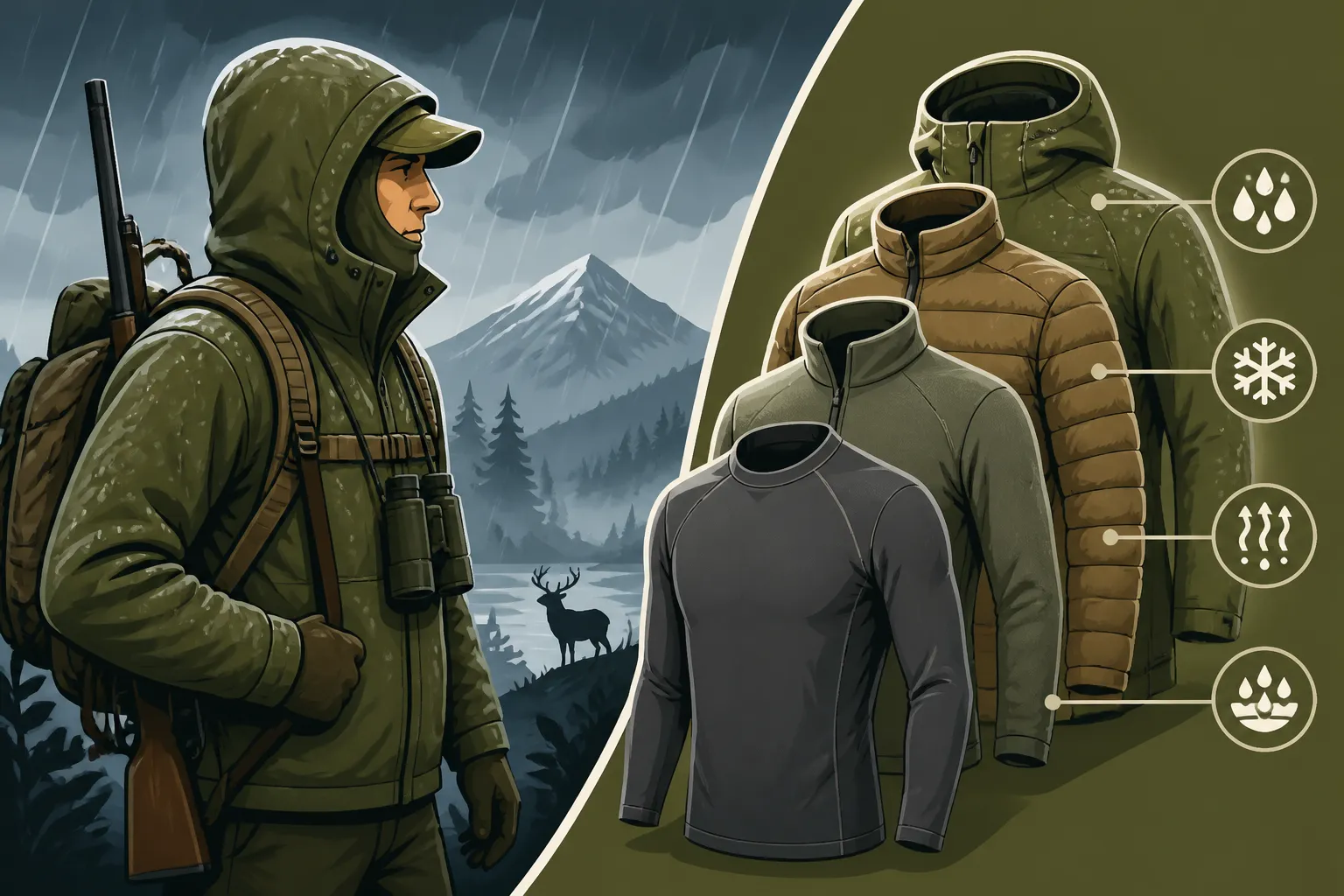
Layering for Wet Cold Weather
There's nothing quite like the feeling of anticipation as you step into the crisp, pre-dawn air, ready for a Washington hunt. But that feeling can quickly turn to misery if the notorious Pacific Northwest weather decides to unleash its full, wet, and cold fury. We've all been there: shivering uncontrollably, soaked to the bone, contemplating if this "character building" experience is really worth it. The good news? It doesn't have to be this way. This comprehensive guide will walk you through the art and science of layering for wet, cold weather, ensuring you stay warm, dry, and comfortable, no matter what Washington's unpredictable skies throw at you.
Understanding the Washington Weather Challenge
Washington's climate is a hunter's paradox. We have everything from the temperate rainforests of the Olympic Peninsula to the arid sagebrush flats of eastern Washington, and the high alpine peaks of the Cascades. What unites much of our prime hunting ground, especially during fall and winter, is a pervasive dampness and a biting chill.
The Dual Threat: Cold and Moisture
The real challenge isn't just cold, or just rain; it's the insidious combination of both. West of the Cascades, you're looking at consistent rain, mist, and fog, often with temperatures hovering in that miserable 35-45 degree range. It's not freezing, but it's cold enough for moisture to suck the heat right out of you. East of the Cascades, while often drier, snow, freezing rain, and piercing winds are common, especially in units like the Blue Mountains or the Okanogan.
The human body loses heat much faster when wet. Water conducts heat away from your skin about 25 times faster than air. So, even if the air temperature isn't brutally cold, if your clothes get wet—whether from external rain or internal sweat—you're going to get cold, fast. This isn't just uncomfortable; it's a genuine safety concern, leading to risks like hypothermia. This is why a strategic layering system isn't a luxury; it's absolutely essential for any serious hunter in Washington.
Why Cotton Kills and Other Misconceptions
Let's get one thing straight right away: cotton has no place in your Washington hunting kit, especially when it's wet and cold. We've all made the mistake, maybe as newer hunters, of thinking a thick cotton hoodie or pair of jeans would keep us warm. But cotton absorbs moisture like a sponge, loses all its insulating properties when wet, and takes forever to dry. It actively works against you by holding cold moisture against your skin, making you colder.
Beyond cotton, other common misconceptions include:
- "More layers always means warmer." Not necessarily. Too many layers can restrict movement, compress insulation, and actually make you sweat more, leading to a net loss in warmth. It's about the right layers, not just more layers.
- "My expensive jacket will keep me warm and dry no matter what." While quality outer shells are crucial, they are just one part of the system. Without proper base and mid-layers, even the best rain gear can't keep you truly comfortable. If you sweat underneath, that moisture still chills you.
- "I'll just power through it." While mental toughness is a hunter's virtue, ignoring the signs of getting too cold and wet can lead to dangerous situations. Recognizing the early signs of hypothermia risk on a wet hunt is vital for your safety.
The key to success is understanding how each layer functions to manage both heat and moisture effectively.
The Core Principles of Layering
A well-designed layering system works in harmony, allowing you to adapt to changing conditions and activity levels. It's built on three fundamental layers: base, mid, and outer.
The Base Layer: Your Second Skin
The base layer is arguably the most critical component. It sits directly against your skin, and its primary job is to wick moisture (sweat) away from your body. This keeps your skin dry, which is paramount for staying warm.
- Materials:
- Merino Wool: This is the gold standard for many hunters. Merino wool is incredible at wicking moisture, insulates even when wet, is naturally odor-resistant, and surprisingly comfortable. It comes in various weights: lightweight for higher activity or milder temps, midweight for versatile cold-weather use, and heavy for static, extreme cold. Brands like Smartwool and Icebreaker are popular.
- Synthetics: Polyester-based fabrics (like Patagonia's Capilene or Sitka's Core series) are also excellent at wicking and drying quickly. They tend to be more durable than merino in some applications and often cost less. While some synthetic base layers can develop odor over time, modern treatments have significantly improved this. For a deep dive, consider comparing Merino Versus Synthetic Base Layers.
- Function: Think of your base layer as managing your microclimate. It pulls moisture from your skin, transferring it to the outer layers where it can evaporate. This prevents the clammy, chilling sensation that comes from sweat cooling on your skin.
- Choosing the Right Weight: For most Washington late-season hunts, a midweight merino or synthetic base layer will be a solid choice. If you're doing heavy packing in steep country or expecting milder early-season rain, a lightweight base might be better, allowing you to add more insulation with your mid-layers.
The Mid-Layer: Insulation for Static and Active Periods
Once your base layer is doing its job of wicking, the mid-layer steps in to provide insulation, trapping warm air close to your body. This is where you adjust your warmth level based on exertion and ambient temperature.
- Fleece: Classic fleece (polyester) is a tried-and-true mid-layer. It's relatively inexpensive, insulates well, and offers decent breathability. However, it can be bulky and doesn't perform as well when truly saturated as some other options.
- Puffy Jackets (Synthetic vs. Down):
- Synthetic Insulation (e.g., PrimaLoft, Coreloft): This is often the preferred choice for Washington's wet environment. Synthetic insulation retains much of its warmth even when wet, dries faster than down, and is less expensive. It's bulkier and heavier than down for the same warmth, but its wet-weather performance is a huge advantage.
- Down Insulation: Down offers the best warmth-to-weight ratio. It's incredibly light and compressible, making it ideal for carrying in a pack. However, its Achilles' heel is moisture. Once down gets wet, it loses almost all its insulating properties and takes a very long time to dry. While some modern down is "hydrophobic" treated, for consistently wet conditions, synthetic is often safer.
- Choosing Your Mid-Layer: You might carry multiple mid-layers. A thinner fleece or active insulation layer for when you're moving, and a warmer puffy jacket for when you stop to glass, eat lunch, or are sitting still on a stand. The ability to shed or add a mid-layer quickly is key to regulating your temperature and preventing sweat buildup.
The Outer Layer: Your Shield Against the Elements
The outer layer is your armor against Washington's brutal weather. Its primary functions are to protect you from wind and precipitation while allowing moisture vapor (from your inner layers) to escape. This is where your investment often pays off most dramatically.
- Waterproof-Breathable Membranes: The holy grail of outer layers. Technologies like Gore-Tex, eVent, and various proprietary membranes (e.g., Kuiu's Toray Dermizax, Sitka's Gore-Tex) are designed to be waterproof yet breathable. They have microscopic pores that are too small for liquid water droplets to pass through, but large enough for water vapor (sweat) to escape.
- Hard Shells: These are typically less flexible and more "crinkly" but offer maximum waterproofness and wind protection. Ideal for persistent rain and heavy snow. Brands like Sitka, Kuiu, and First Lite offer excellent hard shells.
- Soft Shells: More flexible, quieter, and often more breathable than hard shells. They are usually water-resistant rather than fully waterproof, best for light rain, snow, or windy-but-dry conditions. Some hybrids offer good waterproofness with soft shell comfort.
- Key Features:
- DWR (Durable Water Repellent) Coating: This causes water to bead up and roll off the fabric. Over time, DWR wears off, and you'll notice the fabric "wetting out." Re-applying DWR is crucial for maintaining performance.
- Fully Taped Seams: Ensures water doesn't leak through the stitching.
- Ventilation: Pit zips and full-length side zippers on pants are invaluable for dumping heat quickly without taking off the entire layer.
- Hood Design: A well-designed hood that moves with your head and allows for good peripheral vision is critical.
- Trade-offs: There's always a balance between durability, noise, breathability, and cost. A truly quiet, fully waterproof, and highly breathable jacket for the thick, wet western Washington timber will be an investment, but worth every penny. When choosing, consider Rain Jacket Fabrics That Stay Quiet if stealth is paramount.
- Waterproof Pants: Don't forget the bottom half! Full-zip waterproof pants are fantastic. They allow you to pull them on over boots quickly when the weather turns, and the full zip helps with ventilation.
Building a Smart Layering System for Washington Hunts
Once you understand the individual components, it's time to assemble a system that works for Washington's diverse and often challenging conditions.
Adapting Layers for Specific Washington Conditions
Your layering strategy will shift depending on where and when you're hunting in Washington.
- Western Washington Timber Country: Think Roosevelt elk or Blacktail deer in the Olympic National Forest or Gifford Pinchot. Here, it's almost always damp. You'll need durable, waterproof, and quiet outer layers. Focus on moisture-wicking base layers and synthetic mid-layers due to the constant wetness. You might be more active still-hunting through thick brush, so avoid over-insulating. Your Rain Gear That Survives a Washington Westside Season will be tested daily.
- Eastern Washington Mountains and Breaks: Hunting mule deer in the Okanogan-Wenatchee or Blue Mountains often means colder, drier conditions, but heavy snow is common late season. Here, down mid-layers can be more viable if protected by a good hard shell, offering superior warmth. However, if you're dealing with melting snow or freezing rain, synthetic is still a safer bet. Expect significant temperature swings between day and night. Use tools like GoHunt to check historical weather patterns for your specific GMU.
- Early Season vs. Late Season:
- Early Season (September-October): Temperatures can still be mild, but rain is always possible. Focus on lighter base layers and perhaps a lighter puffy or fleece mid-layer. The emphasis is on breathability to manage sweat during active hunts like Archery Elk Hunting in Washington's September Season.
- Late Season (November-December): This is when layering becomes absolutely critical. Temperatures drop, snow becomes prevalent, and the risk of sustained cold and wet increases. You'll need heavier base layers, substantial mid-layers, and robust waterproof-breathable outer layers. Remember those Washington Winter Range Closures That End Late Hunts – access can become tricky, and you'll be dealing with serious cold.
Layering Accessories: Don't Forget the Details
It's often the small things that make or break your comfort in cold, wet conditions.
- Headwear: A significant amount of heat escapes from your head. A good merino or fleece beanie is essential. You might also wear a baseball cap under your hood to keep rain off your face.
- Gloves: This is a tricky one. You need warmth and dexterity. A common system involves thin merino or synthetic liner gloves for light insulation and touch-screen compatibility, paired with waterproof over-mitts or heavier insulated gloves for when the weather really turns. Make sure your hands stay dry, as cold, wet hands quickly sap your morale and ability to perform tasks.
- Gaiters: These are non-negotiable for hunting in wet Washington. Gaiters for Wet Brush keep moisture, snow, and debris out of your boots, and help your pant cuffs stay dry. Look for waterproof, durable options.
- Socks: Just like base layers, wool blend socks are superior to cotton. Carry multiple pairs and change them frequently. A dry pair of socks can make a huge difference to your comfort and prevent blisters. For those long treks across varied terrain, having the right Boots for Washington's Eastside Rock and Westside Mud along with quality socks will be a game changer.
Practical Tips and Field Management
Having the right gear is only half the battle; knowing how to manage it in the field is equally important.
- Prevent "Sweat-Out": This is where many hunters fail. As soon as you start to exert yourself (e.g., climbing a steep ridge, packing out meat), shed layers before you start to sweat heavily. It's much easier to prevent sweating than to dry out wet clothes. If you plan to be Packing an Elk Out of Washington's Backcountry, you'll want to strip down to your base layer or even just a t-shirt for the hike out, then layer up once you stop.
- Carry Spare Dry Layers: Always have a completely dry base layer, socks, and a lightweight puffy jacket stashed in a dry bag inside your pack. Even if your outer layers fail, having something dry to put on can be a lifesaver. This is where maximizing your Pack Volume for a Washington Spike Camp comes in handy.
- Ventilation is Your Friend: Use pit zips, front zippers, and pant leg zips to regulate your temperature without completely removing layers.
- Keep Your Outer Layers on During Light Rain: Don't wait until you're soaked to put on your rain gear. If it looks like rain, or if it starts to sprinkle, put on your outer shell. It's much easier to stay dry than to get dry.
- Store Wet Layers Properly: If you have wet outer layers, try to hang them to air out during breaks. If they must go in your pack, keep them separate in a dedicated dry bag to prevent other items from getting damp. When you're Staying Dry in a Spike Camp, having a vestibule or covered area to hang wet gear is invaluable.
Choosing the Right Gear for Longevity and Performance
Investing in quality gear for Washington hunting is like buying a good truck – it's an upfront cost, but it pays dividends in reliability and performance when you need it most.
Fabric Technologies and Their Real-World Performance
The world of technical fabrics is vast, but a few key terms will help you make informed decisions:
- Waterproof Ratings: Often expressed in millimeters (mm), this indicates how much water pressure a fabric can withstand before leaking. For Washington, aim for at least 15,000mm, with 20,000mm+ being ideal for heavy rain.
- Breathability Ratings: Often expressed in grams per square meter (g/m2/24h), this indicates how much moisture vapor can pass through the fabric in 24 hours. Higher numbers mean better breathability. Look for 15,000g+ for active hunting.
- Durable Water Repellent (DWR): As mentioned, this is a coating on the fabric's exterior that makes water bead up. It's the first line of defense. When water stops beading and the fabric "wets out," it hinders breathability even if the membrane is still waterproof. Re-treating with a spray-on or wash-in DWR product is essential maintenance.
- Fabric Durability: Ripstop nylon and polyester are common choices for outer layers due to their resistance to tearing. For thick brush or rugged terrain, look for heavier denier fabrics (e.g., 200D+) in high-wear areas.
Budget-Friendly Versus Premium Gear
It's no secret that hunting gear can be incredibly expensive. It's easy to look at the top-tier brands and feel discouraged. However, you don't need to break the bank to stay warm and dry in Washington, though a smart investment goes a long way.
| Feature | Budget-Friendly Options | Premium Options |
|---|---|---|
| Base Layers | Synthetic blends from outdoor retailers like REI, Cabela's | High-end Merino wool (Smartwool, Icebreaker), technical synthetics (Sitka, Kuiu) |
| Mid-Layers | Basic fleece jackets (Columbia, North Face), budget synthetic puffies | Lightweight, compressible synthetic or treated down puffies (Sitka, Kuiu, Patagonia) |
| Outer Shells | PVC rain suits (for short, static periods), generic waterproof-breathable jackets (often less breathable/durable) | High-performance Gore-Tex, eVent, or proprietary membrane jackets/pants (Sitka, Kuiu, First Lite) |
| Boots | Entry-level waterproof hiking boots | High-quality leather or synthetic hunting boots with Gore-Tex liner (Kenetrek, Crispi, Schnee's) |
| Wet Performance | Can keep you dry temporarily, but breathability and durability are often lacking; prone to "wetting out" quickly | Superior waterproofness and breathability; holds up well to prolonged abuse; maintains warmth even when wet (for synthetic insulation) |
| Durability | May not withstand prolonged abuse from brush and heavy use | Built to last multiple seasons in rugged conditions |
| Noise | Can be noisy (crinkly) | Often engineered for quiet movement (important for stalking) |
Where to Invest: Your outer shell (jacket and pants) and your boots are the two areas where spending more generally yields better performance and longevity in Washington's conditions. A good pair of boots that keeps your feet dry and supported, and an outer shell that truly keeps the rain out while breathing effectively, are worth prioritizing. Waterproofing Leather Boots regularly will extend their life and performance.
Where to Save: You can often find excellent synthetic base layers and fleece mid-layers at more budget-friendly prices. Look for sales at outdoor retailers or consider reputable used gear from sites like eBay or local consignment shops. You don't always need the absolute latest and greatest, especially if you're just getting started. Many solid gear items will still get the job done.
Gear Maintenance and Longevity
Your expensive gear won't perform if you don't take care of it. Regular maintenance is key to extending its life and ensuring it works when you need it most.
- Washing Technical Fabrics: Use specific technical wash detergents (like Nikwax Tech Wash or Granger's Performance Wash) that won't clog membranes or strip DWR. Avoid harsh detergents, fabric softeners, and bleach.
- Re-applying DWR: Once your outer shell starts "wetting out" (water no longer beads up), it's time to re-apply DWR. There are wash-in and spray-on options available. Follow the product instructions carefully. Often, a warm tumble dry after washing can also reactivate existing DWR.
- Proper Drying: Always air dry your gear thoroughly, especially down items, before storing it. Hanging it in a well-ventilated area is ideal. Never store wet or damp gear, as it can lead to mildew, odor, and fabric degradation.
- Storage: Store your hunting clothes in a cool, dry place, ideally in breathable bags. Avoid compressing down items for long periods, as it can reduce their loft. Clean your boots and apply a leather conditioner or waterproofing treatment before storing them for the off-season.
By understanding the unique challenges of Washington's wet, cold weather and building a smart, adaptable layering system, you can turn miserable hunts into successful, comfortable adventures.
Disclaimer
Please remember that hunting is an inherently risky activity. This information is for educational purposes only and should not replace proper training, experience, or professional guidance. Always check current Washington Department of Fish and Wildlife (WDFW) regulations, weather forecasts, and land access rules before heading into the field. Prioritize safety, be prepared for emergencies, and let someone know your hunt plan.