Columbian Blacktail Deer in Western Washington
Hunting Columbian blacktail deer in Western Washington can feel like chasing ghosts through a green wall of wet brush and towering timber. The sheer density of the vegetation, the constant rain, and the blacktails' innate ability to vanish into thin air make it one of the most challenging, yet rewarding, pursuits in the Pacific Northwest. This comprehensive guide aims to arm you with the knowledge, strategies, and mindset needed to successfully navigate the unique world of Western Washington blacktail hunting.
Understanding the Elusive Columbian Blacktail
Columbian blacktail deer are perfectly adapted to the rugged, often unforgiving landscapes west of the Cascade Mountains. Unlike their mule deer cousins of Eastern Washington or even the whitetails of the northeast, blacktails are creatures of dense cover, utilizing the thick forests and heavy undergrowth to their advantage. They are not animals that stand out in open fields for easy glassing; instead, they are masters of concealment, preferring to live out their lives within yards of where they bed. This inherent shyness and preference for thick habitat are precisely what make them such a formidable quarry, testing a hunter's patience, woodsmanship, and mental fortitude.
Physical Traits and Adaptations for Dense Habitat
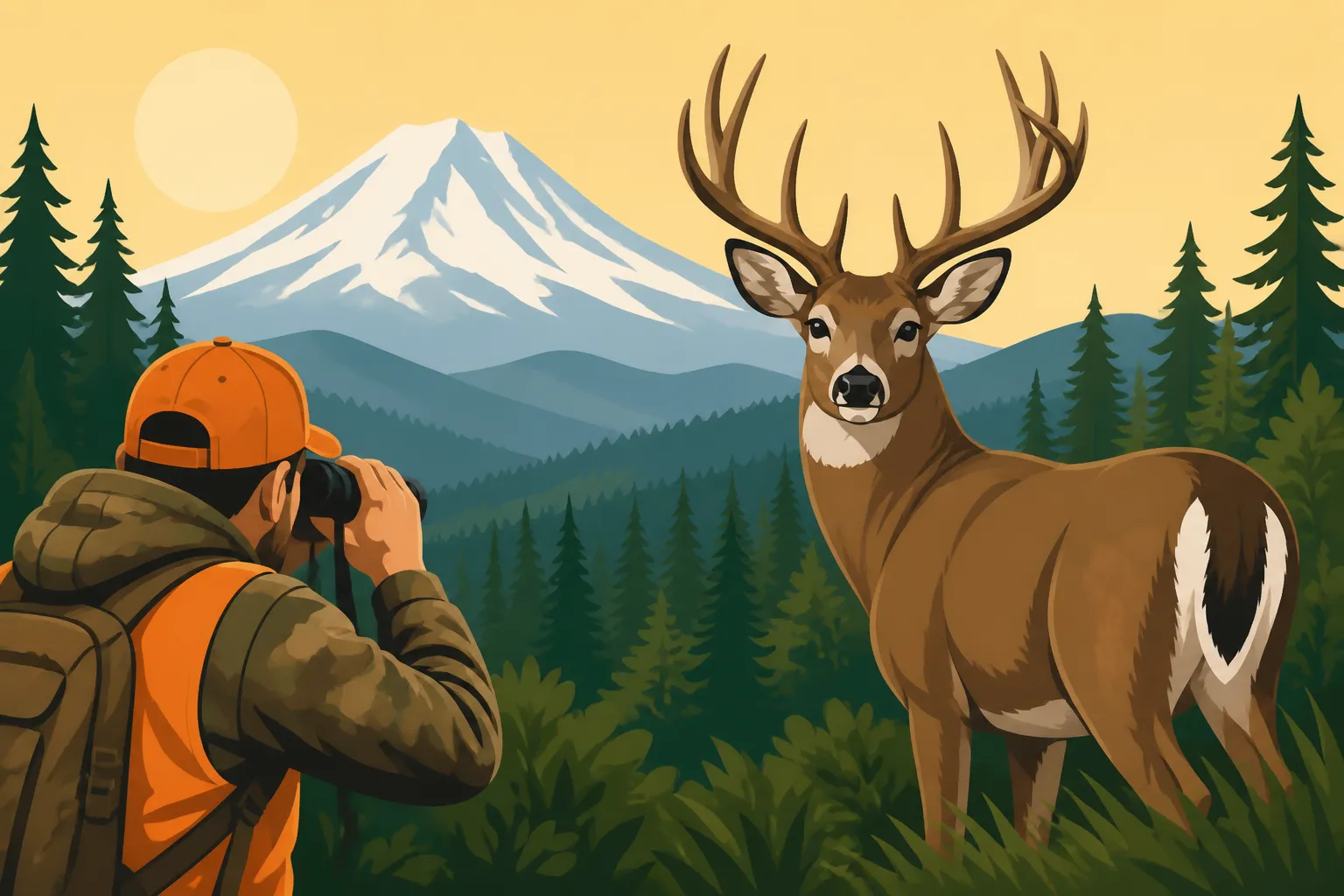
Columbian blacktails are generally smaller than Rocky Mountain elk, but they are incredibly compact and powerful for their size. Adult bucks typically weigh between 120 and 180 pounds, though some can exceed 200 pounds, especially on quality forage areas like the Willapa Hills. Their coats are a rich, dark brown or reddish-brown during summer, fading to a grayer tone in winter. The defining characteristic, of course, is their tail: short, entirely black on top, and often held down when running, which distinguishes them from mule deer with their rope-like, white-based tails. Their ears are smaller than those of a mule deer, and their antlers tend to be more compact, often featuring smaller, tighter forks that are better suited for navigating the dense brush they call home.
These deer possess an incredible ability to move silently through some of the gnarliest terrain imaginable. Their compact build allows them to slip through devil's club, salal, and blowdown without making a sound, a skill most human hunters can only dream of. Their excellent hearing and sense of smell are paramount to their survival, honed by generations of evading predators like cougars and coyotes. When a blacktail senses danger, they don't typically bound away across open ground; they melt into the shadows, often freezing just out of sight, relying on their camouflage and the dense cover to disappear. This means you often won't see them until you're right on top of them, or they're already gone.
Behavioral Patterns and Why They're So Secretive
Blacktail deer are inherently secretive animals. They are typically crepuscular, meaning most active during dawn and dusk, but in heavy cover, they can be seen moving at any time of day, especially if pressured or during the rut. Unlike mule deer that might range widely for food, blacktails often have smaller home ranges, sometimes living their entire lives within a few hundred acres. This is largely due to the abundant food and cover found in their Western Washington habitats. They often bed down in dense clearcuts, thick second-growth timber, or deep ravines where they feel secure.
Their secretive nature extends to their vocalizations and social interactions. While bucks will spar and chase does during the rut, it's a far cry from the bugling spectacle of elk. Blacktails communicate more subtly through scent marking, visual cues, and occasional grunts or bleats. The challenge for hunters is that this reclusive behavior means you rarely see multiple deer at once. Often, it's a single glimpse, a flicker of an ear, or a quick dash through the timber. This requires a completely different approach to hunting compared to open-country species, demanding extreme stealth, patience, and an intimate understanding of their preferred hiding spots. As a hunter, you learn to appreciate every small sign, every broken branch, and every faint track as a piece of the puzzle.
Prime Western Washington Blacktail Habitat
Western Washington offers a mosaic of habitats for blacktail deer, ranging from coastal rainforests to the foothills of the Cascades. Understanding these diverse environments is crucial for predicting where deer will be, especially during different times of the year and under varying weather conditions. It’s not just about "woods"; it's about the specific structure and age of those woods, and how deer use them for food, cover, and travel.
The Role of Clearcuts, Reprod, and Mature Timber
The logging industry has profoundly shaped blacktail habitat in Western Washington, creating a dynamic cycle of food and cover. Clearcuts, while initially barren, quickly become a smorgasbord for deer within 1-5 years post-logging. These young clearcuts, often referred to as "reprod" (reproduction), sprout up with a dense mix of fireweed, huckleberry, salal, vine maple, and young conifers. This lush regrowth provides abundant forage, essentially transforming into a cafeteria for blacktails. Deer will often feed heavily in these areas, especially during low-light hours or on overcast days. However, as the trees grow taller and the canopy closes, these areas become too thick to move through easily and eventually lose their forage value. This can make Reading a Three-Year-Old Clearcut for Bucks an art form, as you learn to identify the subtle trails and bedding areas within the dense growth.
Mature timber, on the other hand, provides critical thermal and security cover, particularly during harsh weather. While older forests don't offer as much forage on the ground due to the dense canopy blocking sunlight, they provide shelter from heavy rains and strong winds. Deer will use mature timber as bedding areas, travel corridors, and escape routes. The edges where clearcuts meet mature timber are often hotspots, as deer can easily transition between feeding and bedding. These transition zones are prime ambush locations, especially when still-hunting. Understanding the age of a clearcut and the density of the surrounding timber is paramount to locating blacktails.
Coastal Rain Forests and Mountain Foothills
The coastal rain forests of the Olympic Peninsula and southwest Washington present a unique challenge and opportunity for blacktail hunters. These areas, characterized by towering old-growth conifers, moss-draped trees, and an incredibly dense understory of fern, salal, and devil's club, are the quintessential blacktail haven. Here, the deer are masters of blending in, their dark coats almost invisible against the damp, verdant backdrop. Hunting these areas demands extreme stealth and a slow, methodical approach. Often, a deer is heard before it is seen, or a faint glimpse through the mist is all you get. Think about how challenging How Close You Get in Coastal Reprod can be – it's often a matter of feet, not yards.
Further inland, as you move towards the foothills of the Cascades, the habitat transitions to a mix of managed timberlands, national forest, and more varied topography with steeper slopes and rockier outcroppings. Here, blacktails might utilize higher elevations during the summer, seeking cooler temperatures and fresh forage, then migrate down to lower elevations as snow begins to fall. The key here is understanding the elevational changes and identifying bottlenecks or transition areas where deer will move between different habitat types. This might mean scouting for natural benches, saddles, or south-facing slopes that offer both forage and sun exposure during colder months. The use of resources like GoHunt can provide invaluable satellite imagery and land ownership maps to help identify these specific habitat features even before you set foot in the woods.
Blacktail Deer Population and Health in Washington
Understanding the health and population dynamics of Columbian blacktail deer in Washington is vital for any dedicated hunter. It’s not just about finding a deer; it’s about contributing to the species' long-term well-being and making informed decisions about where and when to hunt. Like any wildlife population, blacktails face a variety of challenges, from habitat changes to disease and predation.
Current Population Estimates and Trends
The Washington Department of Fish and Wildlife (WDFW) monitors blacktail populations through various methods, including aerial surveys, harvest data, and population modeling. While precise numbers can be elusive due to the deer's dense habitat, general trends indicate healthy populations across much of Western Washington. However, population densities can vary significantly from one Game Management Unit (GMU) to another. Areas with a consistent cycle of timber harvesting and diverse age classes of timber often support higher densities due to a continuous supply of optimal forage and cover. Conversely, areas with extensive tracts of mature, closed-canopy forest or heavy human development may have lower densities.
Historically, blacktail populations have been relatively stable, adapting well to the changing landscape of Western Washington. However, factors like severe winters, changes in timber management practices, and increased predation pressure can cause localized fluctuations. Hunters play a crucial role in providing data through mandatory harvest reporting, which helps WDFW track these trends and adjust management strategies. Staying informed about WDFW's annual game harvest reports and population outlooks can provide valuable insights into which areas are seeing an increase or decrease in deer numbers.
Factors Affecting Blacktail Health and Survival
Blacktail deer face a gauntlet of natural and human-related challenges throughout their lives. Predation is a constant threat, with cougars being the primary natural predator of adult deer, and coyotes preying on fawns. These predators are an integral part of the ecosystem, but their numbers and distribution can impact deer survival, especially in certain areas. For instance, high cougar densities can sometimes lead to localized declines in deer populations.
Habitat quality is another critical factor. While timber harvesting can initially create excellent forage, large, contiguous tracts of very young clearcuts might lack the older, more secure bedding cover that deer need. Conversely, too much mature, dense timber can limit forage. The delicate balance between these habitat types is key. Additionally, environmental factors like prolonged periods of deep snow (though less common in Western Washington compared to the Eastside) or severe drought can stress deer populations, making them more susceptible to disease or starvation.
Diseases, though not as widespread as chronic wasting disease (CWD) in other regions (CWD has not been detected in Washington to date), can sometimes affect local herds. Hemorrhagic disease, for example, can occur during warm, wet summers and lead to mortalities, though often isolated. The WDFW continuously monitors for these threats, and hunters are encouraged to report any sick or unusually behaving animals to help track and understand potential health issues.
Key Blacktail Rut Timing and Activity
For many blacktail hunters, the rut is the Holy Grail – a period when these normally reclusive deer become more active, less cautious, and more focused on breeding. Understanding the nuances of the blacktail rut in Western Washington is crucial for maximizing your chances of success, as the timing and intensity can vary. It's often not the explosive, widely observed event of other deer species, but rather a more subtle, drawn-out affair.
Peak Rut Periods and Pre-Rut Behavior
The blacktail rut in Western Washington typically begins in mid-to-late October and can extend well into November, with peak activity often occurring in the first two weeks of November. However, like any wildlife phenomenon, it's not a precise calendar event; it's influenced by factors like weather, doe estrus cycles, and individual deer maturity. Before the peak rut, in late September and October, bucks enter a pre-rut phase. During this time, they begin to rub their antlers on saplings and make scrapes, establishing their dominance and marking their territory. They'll also start to move more, actively searching for does, though still maintaining a good deal of caution.
During this pre-rut period, hunters might observe an increase in sign, such as fresh rubs and scrapes. This is a great time for scouting to identify areas of increased buck activity. Bucks will be putting on weight and building up their reserves, feeding heavily in clearcuts and along forest edges. As the peak approaches, bucks become more singularly focused on finding receptive does. This is when they are most vulnerable, often moving throughout the day, driven by an instinct to breed. It's not uncommon to see bucks chasing does, or smaller bucks trying to sneak in on a dominant buck's territory. For more specific insights, reading up on Blacktail Rut Timing in Western Washington can provide invaluable detail.
Post-Rut Challenges and Late Season Opportunities
After the peak rut in mid-November, buck activity can taper off significantly. Many bucks are exhausted from breeding, having lost considerable body weight. They will often seek out secure bedding areas to recover and feed heavily to replenish their reserves. This post-rut period can be a challenging time to hunt, as deer revert to their secretive nature and might be less responsive to calling or rattling. They become more nocturnal, moving primarily under the cover of darkness.
However, late season hunts, particularly in late November and early December (where seasons allow), can still offer opportunities, especially for those willing to brave the colder, wetter conditions. At this point, any does that weren't bred during the first estrus cycle may come into estrus again, triggering a secondary, albeit less intense, rut. Additionally, bucks that have recovered from the initial rut might be more relaxed and predictable in their feeding and bedding patterns. Snow, if present, can also be a game-changer, making deer sign much easier to spot and forcing deer to congregate in specific winter range areas. Understanding Elk Behavior in Deep Snow can provide analogous insights into how other large game animals adapt, which can be helpful for deer as well.
Effective Hunting Strategies for Western Washington Blacktails
Hunting blacktails in Western Washington is not a sit-and-wait game for most. It requires an active, patient, and adaptable approach, heavily reliant on stealth and woodsmanship. The dense cover dictates the tactics, favoring those who can move quietly and patiently through the deer's world.
Still-Hunting the Brush and Timber
Still-hunting is arguably the most effective method for pursuing blacktails in Western Washington's dense terrain. It's a slow, deliberate process where the hunter moves at a snail's pace, pausing frequently (often for minutes at a time) to scan the cover ahead. The goal is to move so slowly and quietly that you essentially become a predator, catching deer unaware or at least spotting them before they spot you. This method demands extreme patience and focus. You're not just walking; you're observing every flicker of movement, every unnatural shape, every horizontal line in a vertical world. This slow pace is crucial for Still-Hunting Blacktails in Wet Washington Brush, where every step can be noisy.
When still-hunting, pay close attention to the wind, keeping it in your favor or crosswind. Move into the wind whenever possible to carry your scent away from the deer. Focus on areas where deer are likely to feed or bed – the edges of clearcuts, thick reprod, stream bottoms, and the fringes of mature timber. Use binoculars constantly, even in dense cover, to pick apart shadows and identify parts of a deer. Often, you'll only see a leg, an ear, or a patch of hair. The key is to see them before they see you, allowing you to react, position for a shot, or simply observe.
Reading Sign and Tracking in Wet Conditions
Western Washington's perpetually damp environment can be a double-edged sword for reading deer sign. On one hand, soft, wet ground often holds tracks beautifully, making fresh sign easy to identify. On the other hand, heavy rain can quickly wash away or obscure tracks and scent. Learning to differentiate fresh sign from old is paramount. Look for crisp edges on tracks, shiny, moist droppings, and fresh rubs with exposed light wood. During the rut, new scrapes with pawed earth and overhead licking branches are prime indicators of buck activity.
Tracking blacktails in these conditions requires patience and a keen eye. Look for displaced leaves, bent grass, or disturbed moss that indicate recent passage. Pay attention to how deer move through the brush; they often follow the path of least resistance, creating subtle trails, even within dense tangles. If you find fresh tracks or sign, slow down your still-hunt even further. When tracking a wounded animal, the wet environment can actually aid in Blood Trailing in Salal and Devil's Club, as blood often stands out against the green undergrowth. However, sustained rain can quickly dilute and wash away blood trails, so acting fast is critical.
Stand Hunting and Ambush Tactics
While less common than still-hunting, stand hunting or ambush tactics can be highly effective for blacktails, especially during the rut or in areas with predictable deer movement. This involves positioning yourself in a strategic location – often an elevated tree stand or a well-concealed ground blind – along a known travel corridor, feeding area, or bedding transition. Key locations include saddles between ridges, narrow draws, creek crossings, or pinch points where deer are funneled through.
For example, if you've done your scouting and identified a consistent travel route between a bedding clearcut and a feeding clearcut, setting up an ambush point can pay off. During the rut, bucks will often cruise these travel corridors in search of does. Using a trail camera, like those mentioned in Trail Camera Placement on Ridge Saddles, can help you pinpoint these exact locations and patterns of movement. Patience is key here; you might sit for hours without seeing anything, but when a blacktail does appear, it's often within effective shooting range. This method works best when you can minimize your scent, remain motionless, and avoid making any noise that would alert a deer.
Gear and Preparation for Western Washington Blacktail Hunts
The unique climate and terrain of Western Washington demand specific gear choices to ensure comfort, safety, and success. Forgetting the right rain gear or wearing inadequate boots can quickly turn an exciting hunt into a miserable ordeal. Preparing for constant moisture and varying temperatures is non-negotiable.
Optics for Tight Cover and Low Light
In the dense, often dimly lit forests of Western Washington, optics are critical, but their application differs from open-country hunting. Instead of powerful spotting scopes for long-range glassing, the emphasis shifts to quality binoculars with excellent low-light performance. A good pair of 8×42 or 10×42 binoculars is often ideal, allowing you to pick apart shadows and identify deer parts at close to moderate ranges. You're not looking for the whole deer; you're looking for an ear, an antler tip, or a horizontal line that breaks up the vertical pattern of trees.
Rangefinders are also essential, even in timber. Knowing the exact distance to an animal or a landmark is crucial for accurate shot placement, especially with a bow or muzzleloader where trajectory drops quickly. Consider models with angle compensation, as you'll often be shooting up or down steep hillsides. While a rifle scope might have lower magnification for dense timber, ensure it gathers light well and has a clear reticle that's visible in low light conditions, common under the thick canopy.
Rain Gear and Layering for Constant Moisture
This is perhaps the single most important category of gear for Western Washington blacktail hunting. You will get wet. The goal is to stay as dry as possible, or at least to stay warm even when wet. Invest in high-quality, durable rain gear that is truly waterproof and breathable. GORE-TEX, eVent, or similar proprietary fabrics are excellent choices. Look for quiet materials that won't rustle loudly as you move through the brush. As detailed in Rain Gear That Survives a Washington Westside Season, cheaper options often fail quickly, leaving you soaked and cold.
Layering is also critical. A moisture-wicking base layer (merino wool or synthetic), an insulating mid-layer (fleece or puff jacket), and a waterproof/windproof outer shell will allow you to adapt to changing temperatures and activity levels. Avoid cotton, which absorbs moisture and loses its insulating properties when wet. Don't forget waterproof gloves and a wide-brimmed hat to keep rain off your face and neck. Staying dry and comfortable directly impacts your focus and endurance in the field.
Boots and Packs for Rugged, Wet Terrain
Your footwear needs to be robust, waterproof, and provide excellent traction and ankle support. Western Washington terrain can be steep, slippery, and covered in blowdown, loose rock, and deep mud. Insulated, waterproof leather or synthetic boots with aggressive outsoles are the standard. Ensure they are well broken in to prevent blisters. Gaiters are also highly recommended to keep water, mud, and debris out of your boots, especially when moving through wet brush and tall grass. For additional insights on footwear, consider reading about Boots for Steep Eastside Country, which shares commonalities with the rugged westside, especially regarding ankle support and traction.
A comfortable and capable pack is equally important. For day hunts, a 2,000-3,000 cubic inch pack is usually sufficient to carry your essentials, extra layers, food, and water. However, if you're planning to pack out meat, a frame pack or a hunting pack with a dedicated load shelf is invaluable. Blacktails, though smaller than elk, still represent a significant load to carry out, especially from remote areas. Ensure your pack is waterproof or use dry bags inside to protect your gear from the elements.
Accessing Western Washington Blacktail Country
Finding a place to hunt blacktails in Western Washington can sometimes feel like a puzzle. The landscape is a mix of public and private lands, each with its own set of access rules and regulations. Understanding these options is critical to planning a successful hunt.
National Forests and DNR Lands
Western Washington boasts extensive public land managed by the U.S. Forest Service (National Forests) and the Washington State Department of Natural Resources (DNR). These lands offer some of the best opportunities for blacktail hunting. National Forests like the Olympic National Forest, Gifford Pinchot National Forest, and portions of the Okanogan-Wenatchee National Forest on the west side of the Cascades, provide vast tracts of timber, clearcuts, and high country that blacktails inhabit. Access to these areas is generally open, though some roads may be seasonally closed or require a Northwest Forest Pass for parking.
DNR lands are also significant for public hunting access. These state-managed forests often have a mix of active logging and established recreation areas. While much of it is open to hunting, some DNR areas may have specific rules or closures, and a Discover Pass is often required for parking at developed trailheads or recreation sites. It's always best to check the WDFW hunting regulations pamphlet and DNR's website for specific rules and any temporary closures in the GMU you plan to hunt. Using online mapping tools like those offered by GoHunt or WDFW's own hunt planner can help you identify public land boundaries and road systems easily. For general guidance, explore the topic of Washington DNR Land Open to Hunting.
Navigating Private Timber Company Access
A large portion of Western Washington's prime blacktail habitat lies on private industrial timberlands, managed by companies like Weyerhaeuser and Hancock Forest Management (formerly Campbell Global). Historically, much of this land was open to public access, but in recent decades, many companies have transitioned to permit-based systems, or in some cases, outright closure. This can be a major source of frustration for hunters who remember the "good old days" of open access.
These private timber companies often offer a variety of access options, ranging from annual permits (which can be costly and competitive to acquire) to walk-in only access behind gates, or even "Feel Free to Hunt" programs on specific parcels. Weyerhaeuser, for example, operates a permit system for certain areas, often with limited availability that sells out quickly. Hancock also manages access in various ways, sometimes in partnership with WDFW for specific access programs. It's imperative to research the specific timber company that owns land in your target GMU and understand their current access policies well in advance of the season. Never assume access; always verify. Ignoring private land rules can lead to trespass charges and fines. For more detailed information, look into Timber Company Permits in Western Washington.
Conservation and Responsible Hunting Practices
As hunters, we are stewards of the land and its wildlife. Our actions in the field have a direct impact on the future of Columbian blacktail deer populations and the reputation of hunting itself. Responsible and ethical hunting practices are not just about following the rules; they're about respect for the animal, the habitat, and fellow outdoor enthusiasts.
WDFW Regulations and Reporting Requirements
The Washington Department of Fish and Wildlife (WDFW) sets the regulations that govern blacktail hunting, including season dates, bag limits, weapon restrictions, and antler point requirements in specific GMUs. It is every hunter's responsibility to obtain and thoroughly read the annual Big Game Hunting Seasons and Regulations pamphlet. These rules are in place to ensure sustainable harvest and manage deer populations effectively. For example, some GMUs might have "3-point minimum" rules, which means a buck must have at least three points on one antler to be legal. Understanding Washington's Three-Point Rule and What Counts is crucial to avoid violations.
Perhaps one of the most critical responsibilities is harvest reporting. All successful blacktail hunters are required to report their harvest to WDFW by a specified deadline. This data is absolutely essential for wildlife managers to monitor population trends, assess harvest success, and make informed decisions about future seasons. Failing to report a harvest can result in penalties and compromises the accuracy of vital population data. It’s a simple but incredibly important step that directly contributes to the conservation efforts for blacktails.
Contributing to Blacktail Management
Beyond following regulations and reporting harvest, there are many ways hunters can actively contribute to blacktail management and conservation. Supporting organizations that focus on habitat preservation and enhancement in Western Washington is one way. Groups like the Rocky Mountain Elk Foundation, while primarily focused on elk, often undertake projects that benefit deer and other wildlife. Participating in volunteer work parties organized by WDFW or local conservation groups to improve habitat or maintain public access sites is another direct way to give back.
Staying informed about wildlife issues, attending WDFW public meetings, and providing constructive feedback on proposed rule changes can also influence management decisions. Responsible hunters are often the first to notice changes in deer health or population dynamics in their hunting areas. Reporting unusual observations, such as sick deer (like those potentially showing symptoms of Elk Hoof Disease Symptoms, which could have analogous deer diseases), or habitat concerns, can provide valuable early warnings to wildlife agencies. Ultimately, ethical hunting, respect for wildlife, and active participation in conservation efforts ensure that future generations can continue to experience the challenge and reward of pursuing Columbian blacktail deer in the beautiful, rugged landscapes of Western Washington.
Disclaimer
The information provided in this guide is for general informational purposes only and is not intended as legal advice or a substitute for official Washington Department of Fish and Wildlife regulations. Hunting regulations, season dates, and access rules can change frequently. Always consult the most current WDFW hunting pamphlet and relevant land management agency websites before planning any hunting trip. It is the individual hunter's responsibility to know and follow all applicable laws and regulations.