Wheat Country Mule Deer Behaviour
Hunting mule deer in Washington's vast wheat country presents a unique set of challenges and opportunities that can leave even seasoned hunters scratching their heads. Unlike the rugged mountain ranges or dense timber, these agricultural landscapes demand a completely different approach, where understanding deer movement patterns in relation to crops and cover is paramount. This guide will dive deep into the specific behaviors of mule deer in Eastern Washington's wheat country, helping you unravel their secrets and increase your odds of success.
The Unique Dynamics of Washington's Wheat Country
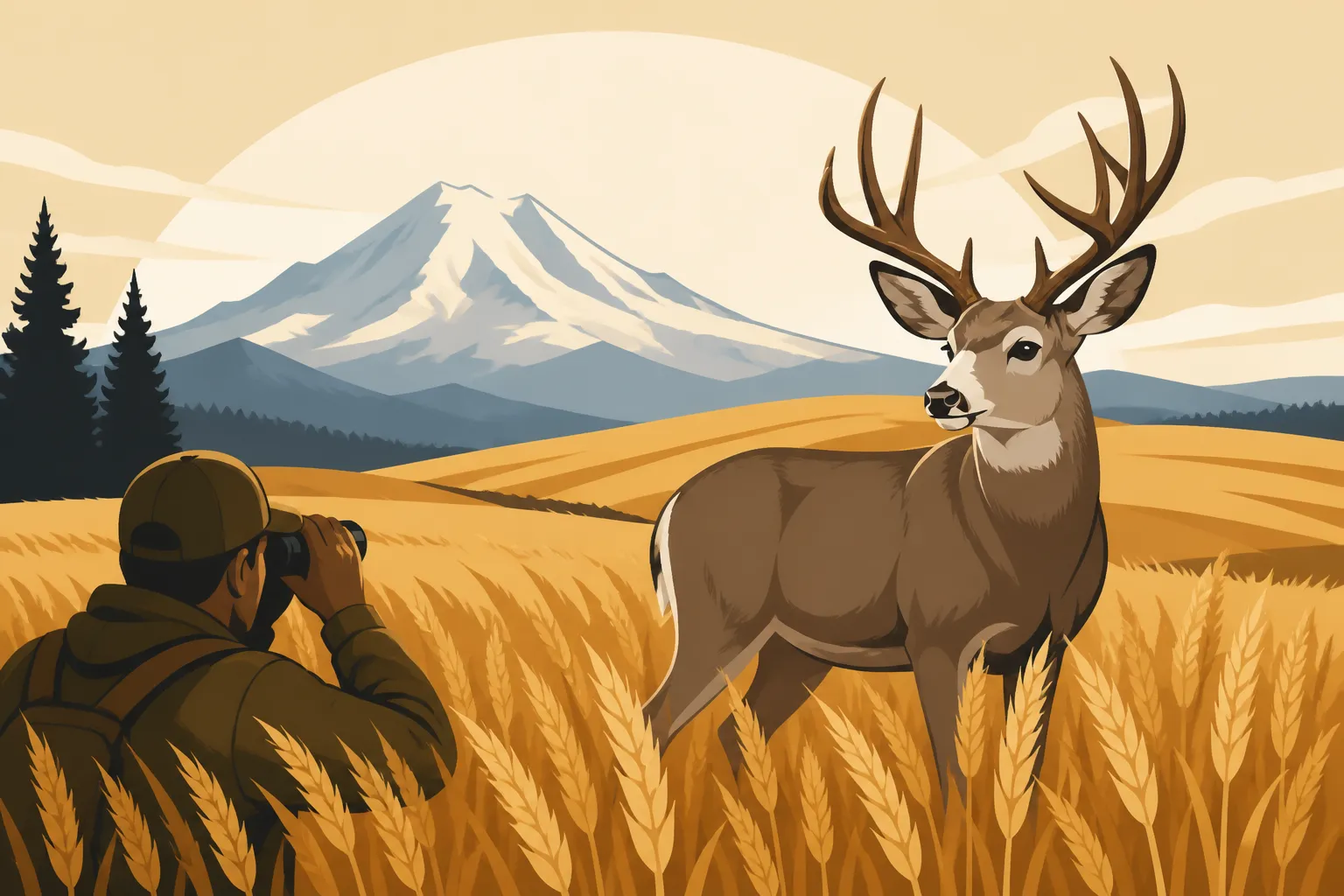
Eastern Washington's wheat country isn't just a backdrop; it's a dynamic ecosystem that dictates almost every move a mule deer makes. This vast expanse of rolling hills, often carved by draws and coulees, transitions from lush green fields in spring to golden harvests in late summer and fall. Understanding these environmental shifts is the first step to deciphering mule deer behavior here.
Understanding the Landscape: Fields, Draws, and Edges
Imagine miles upon miles of gently undulating land, blanketed in wheat, barley, or hay. This isn't dense forest, nor is it wide-open sagebrush desert, though you'll find elements of both. The primary features that influence mule deer in these areas are the expansive fields themselves, the network of timbered or brushy draws and coulees that cut through them, and the crucial edges where these two habitats meet. Deer use the fields for feeding, especially after crops have been harvested and waste grain becomes available. However, they're rarely far from the cover and security offered by the draws. These draws can be surprisingly deep and thick, providing thermal cover, escape routes, and bedding areas. The edges, where a draw meets a field, or where a stubble field meets a freshly planted one, are often prime locations for deer activity, especially during transitional periods of the day.
Impact of Agriculture on Deer Movement
The agricultural calendar fundamentally shapes mule deer behavior. During the growing season, deer might browse on the tender green shoots of emerging crops, but the tall, dense stands of mature wheat offer incredible concealment. You could have a dozen deer bedded within a few hundred yards of a road and never know it. Once harvest begins, typically from late summer into early fall, everything changes. The combines are essentially habitat destroyers, forcing deer out of their cover. This is often when you'll see a surge in deer activity as they adapt to the suddenly open landscape, moving into remaining cover or seeking new refuge. After harvest, the stubble fields become feeding grounds, offering residual grain and new growth, but they lack the thermal and visual cover the standing crops once provided. Hunters must pay close attention to the timing of harvests, as these events can dramatically shift deer locations overnight.
Feeding and Bedding Habits in Wheat Fields
Mule deer are creatures of habit, but those habits are heavily influenced by the food sources and security cover available to them. In wheat country, this translates to specific patterns related to what the land is currently offering.
Preferred Food Sources Throughout the Year
The menu for a wheat country mule deer changes with the seasons. In spring and early summer, they'll graze on the fresh green growth of young crops, as well as native forbs and grasses found in draws and uncultivated areas. As summer progresses and grains ripen, they might nibble on the heads of wheat or barley, though this isn't usually their primary forage. Once the combines roll through, the game changes entirely. Waste grain — the kernels left behind after harvest — becomes an incredibly important, high-energy food source. Deer will spend hours gleaning these stubble fields, often at dawn and dusk. Beyond the fields, the browse in coulees, such as serviceberry, bitterbrush, and various shrubs, provides essential nutrients and moisture, especially during dry periods. They might also target alfalfa or hay fields if present, which offer consistently rich forage.
Bedding Strategies in Open Country
Finding where a mule deer beds in such open terrain is often the biggest puzzle for hunters. Unlike the dark timber of Western Washington where deer often bed in dense patches of trees, wheat country deer use subtle features for security. They'll often choose south-facing slopes in draws for warmth during colder months, and north-facing slopes for coolness during the summer. The thickest brush patches within these draws are prime bedding locations, offering visual concealment and a sense of security. Sometimes, they'll even bed right out in the stubble fields, using a slight depression or a small rise for a vantage point, relying on their camouflage and the vastness of the landscape to avoid detection. The key is often finding areas with broken topography, even small undulations, that provide just enough cover to break up their outline. As you're learning about Mule Deer Numbers in Eastern Washington, remember that finding good bedding spots is critical.
Seasonal Movements and Rut in Agricultural Areas
Mule deer in wheat country, like their counterparts elsewhere, follow distinct seasonal patterns, but the agricultural setting puts a unique spin on these movements, particularly during the rut.
Pre-Rut and Rut Behavior in Wheat Country
The pre-rut and rut are exciting times for hunters, and mule deer in wheat country exhibit fascinating behaviors. As fall progresses and testosterone levels rise, bucks become more active, often covering greater distances in search of does. They'll frequently move between different farmsteads, woodlots, and draws, scent-checking for receptive females. During the peak of the rut, typically in November, you'll see bucks actively chasing does across stubble fields, sometimes seemingly oblivious to their surroundings. These chases can be short, intense bursts, or long, drawn-out affairs across several fields. This is when the visibility of wheat country can be a double-edged sword: you can see deer from a long way off, but they can see you too. Bucks will often "push" does into the cover of draws for breeding, making the edges of these draws hotbeds of activity. Understanding the Blacktail Rut Timing in Western Washington might be different, but the principle of increased buck movement remains.
Migration and Wintering Patterns
While some mule deer herds in Eastern Washington undertake significant migrations to traditional winter ranges, many wheat country deer are more localized, especially if food and cover remain accessible throughout the colder months. Those that do migrate will often move from higher elevation summer ranges down to lower, snow-free agricultural valleys and draws where waste grain or accessible browse provides sustenance. However, even "resident" wheat country deer will adjust their patterns dramatically as winter sets in. They'll conserve energy, often bedding for longer periods and feeding during the warmest parts of the day. Deep snow can push them into sheltered coulees or closer to farmsteads where feed might be more readily available, sometimes leading to conflicts with landowners. Understanding Mule Deer Winter Range and Survival is crucial for those late-season hunts.
Hunting Strategies for Wheat Country Mule Deer
Successfully hunting mule deer in Washington's wheat country requires patience, strategic planning, and a deep understanding of their behavior in this unique environment. It's not a run-and-gun scenario; it's more about calculated moves and exploiting the landscape.
Effective Glassing Techniques
Glassing is your most powerful tool in wheat country. With vast, open spaces, binoculars and spotting scopes are essential. Instead of randomly scanning, break the landscape into grids and systematically search every patch of cover, every fold in the terrain, and every edge. Focus heavily on the draws and coulees, particularly the shaded sides in the afternoon or the sunny sides in the morning. Use a good tripod for your binoculars (10×42 are great, but 15×56 can be even better for vast distances) and a spotting scope to pick apart distant deer from rocks or stumps. Look for movement, subtle changes in color or texture, or parts of a deer – an ear, a patch of hide, the glint of an antler. Patience is key; spend long periods behind your optics, especially during prime feeding times at dawn and dusk, and in the mid-morning as deer move to bed. Consider setting up far back from fields to observe deer unpressured, and then planning your stalk. You can learn more about Glassing Sage and Wheat Edges for Washington Mule Deer for more specific tips.
Stalking and Approach in Open Terrain
Stalking a mule deer in wheat country is arguably one of the most challenging aspects of hunting these animals. With minimal cover, every movement you make is magnified. The key is to use the terrain to your advantage:
- Utilize draws and folds: Never approach across an open field if you can help it. Instead, use the bottoms of draws, the backsides of hills, or any subtle depressions to conceal your approach.
- Wind is critical: Always approach with the wind in your face or quartering, as mule deer have an incredible sense of smell.
- Go slow: Slower than you think is necessary. Stop frequently, use your binoculars to re-verify the deer's location and whether it's moved or picked up your presence.
- Crawl when necessary: For the final approach, you might need to crawl on your hands and knees, or even belly crawl, to stay out of sight.
- Understand their vision: Mule deer have excellent peripheral vision but struggle with depth perception. Slow, deliberate movements are better than quick, jerky ones. They'll often pick up on contrasts against the skyline, so try to keep below ridgelines.
- Patience for the shot: Once in range, be patient. Wait for the deer to stand, turn broadside, or clear any obstacles before taking your shot.
Overcoming Access Challenges on Private Land
A significant hurdle in Washington's wheat country is the prevalence of private land. Much of this prime mule deer habitat is privately owned, making securing access crucial.
- Early engagement: Start scouting and contacting landowners well in advance of the season. Don't wait until opening day.
- Be polite and respectful: A positive first impression goes a long way. Dress neatly, be articulate, and always ask permission.
- Offer help: Sometimes, offering to help with chores, fencing, or weed control can build goodwill and open doors.
- Understand their concerns: Landowners often worry about gates being left open, livestock spooked, or crop damage. Address these concerns proactively.
- Respect their rules: If they grant access, adhere strictly to any rules they set regarding vehicle use, areas off-limits, or times you can hunt.
- Leave it better than you found it: Pack out all your trash, clean up any spent casings, and leave no trace. Consider bringing a small gift or thank-you note after the hunt.
- Utilize resources: Check the WDFW Hunt Planner for Washington's Register to Hunt Properties or Washington's Feel Free to Hunt Properties Explained, which are programs designed to facilitate public access on private lands.
- Digital Tools: Tools like GoHunt can be invaluable for identifying land ownership boundaries, helping you pinpoint exactly who to contact for permission. It's much easier to approach a landowner with specific information about their property. GoHunt also allows you to analyze public and private land parcels, which is essential for pre-scouting these agricultural areas from home.
Weather and Its Influence on Behavior
Weather plays a huge role in how mule deer behave, especially in the exposed wheat country.
- Heat: During warm spells, deer will become more nocturnal, feeding heavily at night and seeking dense cover in draws during the day. Focus your efforts on shaded areas and near water sources.
- Rain/Fog: Light rain or fog can be your friend, as it muffles sound and reduces visibility, potentially allowing for closer stalks. Heavy rain, however, might push deer into thicker cover or make them bed down.
- Snow: Fresh snow can be a game-changer, revealing fresh tracks that can lead you right to deer. Deer also tend to congregate in areas with less snow or where feed is more easily accessible. Remember that Tracking a Buck After a Fresh Snow is an entirely different skill set that becomes vital.
- Wind: High winds can make deer nervous and unpredictable. They often bed down during strong winds or move into sheltered areas to avoid the constant buffeting. They'll also orient themselves to detect danger by scent more easily.
Key Considerations for Wheat Country Hunters
Beyond the general behaviors, there are some specific nuances and challenges that wheat country hunters face. Being prepared for these can make all the difference.
The Challenge of Pressured Deer
Mule deer in easily accessible wheat country can become incredibly pressured very quickly. They learn to associate vehicles and human presence with danger, making them much more wary and nocturnal.
- Hunt away from roads: While tempting to cruise the roads, the most successful hunters get out and walk, penetrating deeper into draws or across fields away from easy access points.
- Early morning/late evening: These are always prime times, but especially with pressured deer. They will often move into fields right at first light or at last light, spending the daylight hours deep in cover.
- Mid-day still-hunting: Don't neglect the middle of the day. If deer are bedded in thick draws, a slow, methodical still-hunt through the cover can sometimes catch them unawares.
- Hunt during the week: If possible, hunt on weekdays when pressure is typically lower than on weekends.
- Focus on overlooked spots: Sometimes, the smallest, most insignificant-looking draw or patch of brush can hold a mature buck that's learned to avoid main areas. GoHunt's satellite imagery can help identify these subtle features.
Respecting Landowners and Property
The relationship with private landowners is paramount in agricultural areas. A good reputation as a hunter can open doors for years to come, while a bad one can close them for everyone.
- Always ask: Even if you think it's public land, double-check your maps and always err on the side of asking. Trespassing is not only illegal but damages hunter-landowner relations for everyone.
- Communicate: If you shoot a deer, let the landowner know. If you're delayed, send a text. Good communication builds trust.
- Gate etiquette: If a gate is closed, close it behind you. If it's open, leave it open. Never assume.
- No littering: This seems obvious, but leaving trash, spent shell casings, or even food wrappers is a sure way to lose access.
- Report issues: If you see damaged fences, other trespassers, or anything concerning, report it to the landowner. This shows you care about their property.
- Firearm safety: Always be acutely aware of buildings, livestock, and roads. Take safe shots and know your backdrop.
Table: Mule Deer Behavior in Wheat Country by Season
| Season | Key Deer Behavior | Preferred Habitat Use | Hunter Strategy Focus |
|---|---|---|---|
| Spring/Early Summer | Grazing on new growth, bucks growing antlers, does fawning. More nocturnal. | Young crops, lush draws for fawning, shaded coulees for bedding. | Scouting for shed antlers, observing movement patterns without disturbing. |
| Late Summer/Early Fall | Increased feeding before rut, reacting to crop harvest, seeking new cover. | Stubble fields (waste grain), remaining standing crops, thickest draws. | Glassing stubble fields at dawn/dusk, identifying travel corridors to cover. |
| Rut (November) | Bucks actively chasing does, covering vast distances, more visible. | Edges of draws and fields, smaller woodlots, seeking receptive does. | Intense glassing for cruising bucks, focusing on activity around draws and cover. |
| Winter | Energy conservation, seeking accessible food, often in larger groups. | Low-elevation stubble fields, sheltered draws, areas with minimal snow. | Tracking in snow, focusing on thermal cover, monitoring winter range closures. |
Hunting mule deer in Washington's wheat country is a rewarding experience that demands a blend of observation, patience, and ethical hunting practices. By deeply understanding how these majestic animals interact with their unique environment, you'll be better equipped to connect with them on their terms and make your hunt a successful one.
Disclaimer
This article is for general informational purposes only and does not constitute professional advice. Laws, prices and regulations vary by location and change over time. Consult a qualified professional for guidance on your specific situation.