Rocky Mountain Bighorn Herds in the Blues
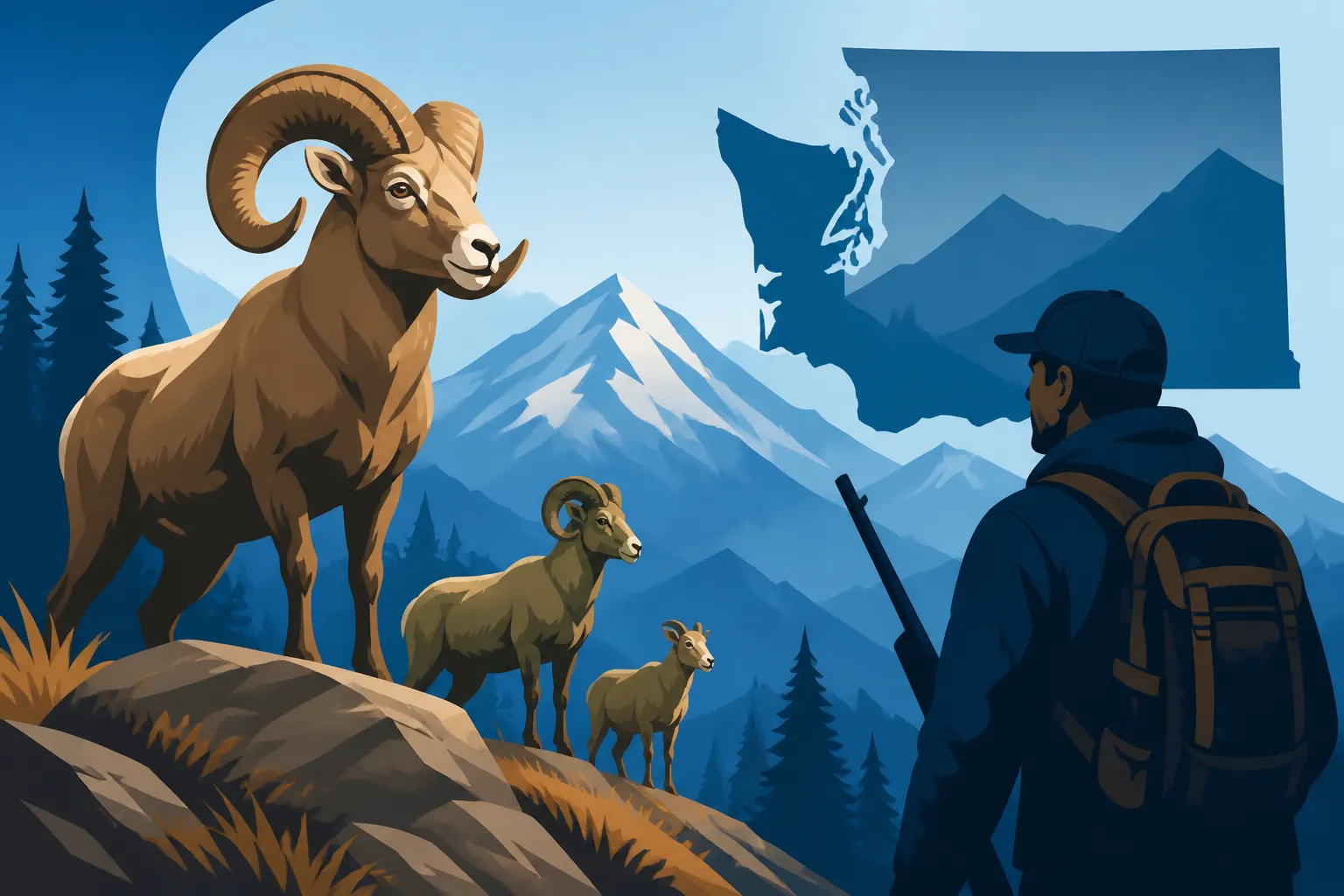
Oh, the Blue Mountains bighorns. Just the thought of them sends a shiver down a hunter's spine, doesn't it? For many of us in Washington, a bighorn sheep tag, especially for one of the majestic Rocky Mountain rams roaming the Blues, is the ultimate dream hunt – something most of us will spend a lifetime applying for and likely never draw. It’s an almost mythical pursuit, steeped in the rugged beauty of a unique corner of our state and the sheer rarity of these incredible animals. This guide is all about peeling back the layers on these elusive Rocky Mountain bighorn herds, understanding their precarious existence in the Blue Mountains, and what it really means for those of us who dream of a sheep hunt of a lifetime.
The Rare Majesty: Rocky Mountain Bighorns in Washington's Blue Mountains
When we talk about bighorn sheep in Washington, it's important to remember we're discussing one of our most precious and fragile big game resources. These aren't your typical deer or elk populations; bighorns exist in very specific, often isolated pockets, and their numbers are carefully managed because of the incredible challenges they face. The Rocky Mountain bighorn sheep that call the Blue Mountains home represent a truly special part of Washington's wildlife heritage, a hardy species adapted to the steep, rugged canyons and rimrock country of the southeastern corner of our state.
Historically, bighorns roamed much of the mountainous West, including wider swaths of Washington. However, a combination of habitat loss, unregulated hunting, and perhaps most devastatingly, diseases introduced by domestic livestock, saw their numbers plummet by the early 20th century. The story of bighorns in the Blues, much like other herds across the state, is one of decline, then a slow, painstaking recovery through translocation efforts. These majestic animals are a testament to resilience, and every single one of them is a treasure. Understanding their history helps us appreciate the monumental conservation efforts that have gone into bringing them back from the brink, even if their populations remain a shadow of what they once were. This isn't just about hunting; it's about preserving an iconic species for generations to come.
Life in the Blues: Habitat, Behavior, and Herd Dynamics
The Blue Mountains, with their mix of vast timbered plateaus, deep river canyons, and exposed basalt rimrock, offer a unique and challenging environment for Rocky Mountain bighorn sheep. These animals are perfectly adapted to navigate this extreme terrain, often preferring steep, rocky slopes and cliffs for escape cover, which also happens to be where they find much of their forage. They are truly creatures of the high country and the steepest, most unforgiving terrain.
During the warmer months, you might find bighorns grazing on various grasses, forbs, and shrubs that sprout in the open meadows and drier hillsides. As winter approaches and snow begins to accumulate, they tend to move to lower elevation winter ranges, often sticking to the south-facing slopes and wind-swept ridges where snow cover is less persistent, exposing crucial forage. This seasonal migration, while perhaps not as dramatic as some elk migrations, is vital for their survival, dictating where they can find food and avoid deep snow. Their social structure typically involves ewes and lambs forming nursery groups, while rams often form separate bachelor herds, only joining the ewes during the rut in late fall and early winter. This is when the spectacular head-butting clashes between rams, competing for breeding rights, can be observed – a truly primal display of strength.
The herd dynamics in the Blues are fascinating but also precarious. We're talking about populations that are not nearly as robust or widespread as elk or deer. They exist in smaller, more fragmented groups, which can make them more vulnerable to localized threats. Monitoring these herds is a continuous process for wildlife managers, who rely on aerial surveys and ground observations to estimate numbers, track lamb survival, and assess overall herd health. Programs like those offered by GoHunt, or simply diving deep into WDFW's annual big game pamphlets, can give you a clearer picture of these specific herds and their long-term trends, which can be invaluable if you're seriously considering applying for a permit.
Blue Mountains Bighorn Herd Numbers
Let's be realistic: we're not talking about thousands of animals roaming the Blues. The numbers for Rocky Mountain bighorn herds in Washington are modest, a testament to the challenges they face and the intensive management efforts required to sustain them. While specific counts fluctuate annually, they generally remain in the low hundreds across the various sub-herds that make up the overall Blue Mountains population. These are not widespread populations; they are concentrated in specific, often remote, areas.
The Washington Department of Fish and Wildlife (WDFW) dedicates significant resources to monitoring these herds. This includes annual aerial surveys, ground observations, and health assessments to track their status. Herd health, lamb recruitment (the number of lambs that survive to yearling age), and adult survival rates are all critical indicators. Understanding these dynamics is crucial for setting sustainable harvest quotas, which are typically very low, often just a handful of permits for the entire region, if any are offered at all in a given year. If you're looking for more detailed information, the annual Washington Big Game Pamphlet Release is your best friend for up-to-date figures and hunting regulations.
The Shadow of Disease: Pneumonia and Conservation Efforts
If there's one single factor that has continuously plagued bighorn sheep populations across North America, and certainly in Washington's Blue Mountains, it's disease – specifically, pneumonia. This isn't just a minor setback; it can be absolutely catastrophic for a bighorn herd, wiping out a significant percentage of animals in a very short period. This reality casts a long shadow over all conservation efforts and hunter expectations for these incredible animals.
The primary culprit is often thought to be bacterial pathogens, frequently carried by domestic sheep. When bighorns come into contact with domestic sheep or goats, they can contract these pathogens, to which they have little or no natural immunity. The result is often a devastating die-off, particularly impacting lambs and older animals. Once a herd is exposed, the disease can linger, causing chronic pneumonia and reduced lamb survival for years, even decades. This cycle makes herd recovery incredibly slow and difficult. You might find it frustrating that such a beautiful animal faces such a pervasive and insidious threat, and frankly, it is. It's a constant battle for wildlife managers to minimize contact zones between wild and domestic sheep to prevent these devastating outbreaks.
Bighorn Pneumonia Die-Offs in Washington
Unfortunately, Washington has a history of Bighorn Pneumonia Die-Offs in Washington, including within our Rocky Mountain bighorn herds. These events are heartbreaking for everyone involved, from wildlife biologists who have dedicated their careers to these animals to hunters who simply admire their wild spirit. A die-off can reduce a healthy herd by 30-70% in a single event, sometimes even more. The recovery from such an event is painfully slow, often taking many years, or even requiring entirely new translocation efforts to re-establish a herd.
These die-offs directly impact hunting opportunities. When a herd suffers a significant loss, WDFW will often reduce or completely eliminate bighorn hunting permits for that area for several years to allow the population to recover. This is a tough pill to swallow for hunters who have waited years or decades to even have a chance at a tag, but it's a necessary step to ensure the long-term viability of the species. This is where researching annual herd health, which you can often do through resources like GoHunt or WDFW reports, becomes crucial if you're applying. You want to understand which herds are struggling and which might have a slightly better outlook.
Managing Threats: Domestic Sheep and Habitat
Beyond disease, other factors impact bighorn survival, though none as acutely as pneumonia. Habitat encroachment, fragmentation, and predation can all play a role. However, the biggest ongoing management challenge remains the separation of wild and domestic sheep. It's a sensitive issue, often involving private land use and ranching communities, but it's undeniably critical for bighorn health. Efforts include creating buffer zones, adjusting grazing allotments for domestic sheep on public lands, and even land acquisitions to expand bighorn habitat away from potential contact points. Understanding Why Domestic Sheep Threaten Bighorns is key to appreciating the complexities of this conservation challenge.
Pursuing a Dream: Applying for a Blue Mountains Bighorn Tag
For the dedicated hunter, a bighorn sheep tag is the holy grail. It's the pinnacle of big game hunting, often described as a once-in-a-lifetime opportunity – and for good reason. Drawing a Rocky Mountain bighorn tag in Washington's Blue Mountains is exceedingly rare, with odds that are often measured in thousands, or even tens of thousands, to one. It requires incredible persistence, a deep understanding of the application process, and frankly, a lot of luck.
Washington doesn't use a preference point system for its special permits, which means every applicant has an equal chance each year, regardless of how many times they've applied before. This can be both frustrating and liberating. On one hand, you don't feel like you're constantly falling behind. On the other hand, it means you can literally apply for 30 years and still never draw. The application window for special hunts is typically a defined period, usually from Washington's April 20 to May 27 Application Window. Missing that window means missing your shot for the entire year, so mark your calendar!
The Application Process for Bighorn Permits
Applying for a bighorn permit, or any special hunt permit in Washington, involves navigating the WDFW licensing system. You'll typically apply online through your WILD account. The process usually requires you to purchase a general hunting license first, and then you can add your special permit applications. You'll specify your hunt choices by GMU and weapon type. For bighorns, these choices are extremely limited, often to specific units within the Blue Mountains and usually only for a ram.
It's crucial to study the annual Big Game Hunting Pamphlet released by WDFW. This document contains all the current information on available hunts, specific GMUs, legal weapon types, and any special regulations. You can also research past draw odds, which, while not a guarantee of future success, give you a realistic idea of how competitive these permits are. Platforms like GoHunt can be invaluable here, offering tools and insights to analyze draw odds and help you make informed decisions about your permit choices, though with bighorns, it's often more about persistence than strategy. For a deeper dive into the specifics, check out How to Apply for a Washington Special Hunt Permit and Washington Special Hunt Permits and How to Apply.
Understanding the Rarity and What to Expect
Let's be blunt: if you draw a Blue Mountains bighorn tag, you have won the lottery. This isn't just hyperbole; it's the simple truth. The number of permits offered is so tiny, directly tied to the health and size of these fragile herds. Because of this extreme rarity, drawing a tag is only the beginning of an epic journey. If you are fortunate enough to draw, you'll want to immediately begin an intense scouting regimen, physically and through E-Scouting Washington GMUs Before the Draw. These animals live in some of the most challenging terrain imaginable, and a bighorn hunt is arguably the most physically demanding hunt in Washington.
A successful bighorn hunt requires not just skill, but also an immense amount of preparation and often, the help of friends or family. You'll be climbing, glassing, and enduring conditions that would send most other hunters packing. But for those who cherish the challenge and the unique opportunity to pursue one of North America's most iconic big game animals, the dream of a Rocky Mountain bighorn in the Blue Mountains remains alive, a testament to the wild spirit of Washington's high country.
Bighorn Sheep Permit Application Overview
Here's a quick overview of key aspects when considering applying for a Rocky Mountain Bighorn Sheep permit in Washington. Remember, details can change annually, so always consult the most current WDFW regulations.
| Aspect | Detail | Considerations |
|---|---|---|
| Application Period | Typically April 20 to May 27 (verify exact dates annually). | Do not miss this window! It's usually firm. |
| Application Method | Online via WDFW WILD account. | Ensure your account is current and linked to your hunter education information. |
| License Requirement | Must purchase a valid Washington hunting license before applying for special permits. | This includes the Big Game Combo license for residents/non-residents. |
| Permit Fee | A small non-refundable application fee per species/application. (Check current fees with WDFW). | This fee is separate from your general hunting license. |
| Preference Points | Washington does not use a preference point system for special permits. | Every applicant has an equal chance each year, regardless of past applications. |
| Hunt Choices | Limited choices, typically for specific GMUs in the Blue Mountains. Usually for "Any Ram" or "Ewe." | Carefully research herd health and permit availability in the annual pamphlet. |
| Draw Odds | Extremely low, often thousands-to-one or more. | This is truly a lottery hunt. Manage expectations. |
| Physical Demands | Extremely high. Bighorns live in very rugged, steep, and remote terrain. | Start a rigorous fitness regimen well in advance if you plan to hunt. |
| Required Equipment | High-quality optics (spotting scope, binoculars), sturdy boots, proper layering, physical conditioning. | Prepare for harsh weather and demanding conditions typical of mountain hunting. |
| Conservation Impact | Hunt revenue contributes directly to bighorn research, habitat improvement, and disease management. | Your application, even if unsuccessful, supports this vital work. |
Remember: Always refer to the official WDFW Big Game Hunting Pamphlet for the most current rules and regulations for Washington Bighorn Sheep Permits. It's your ultimate guide to ensuring you're compliant and informed.
Disclaimer
This article is for general informational purposes only and does not constitute professional advice. Laws, prices and regulations vary by location and change over time. Consult a qualified professional for guidance on your specific situation.