Bobcat Range and Harvest Numbers
For hunters in Washington, understanding the subtle movements and populations of elusive predators like bobcats can feel like trying to decipher a secret code. You know they're out there, leaving tracks in the snow or hints of their presence in the dense undergrowth, but actually encountering one, let alone harvesting one, is a challenge that demands patience, knowledge, and the right approach. This guide is here to shed some light on the mysterious world of Washington's bobcats, covering their natural range, the hunting seasons designed to manage their populations, and practical strategies to increase your odds in the field.
Understanding Washington's Bobcat Population and Range
Bobcats are incredibly adaptable creatures, thriving in a diverse array of habitats across Washington State, from the dense timber of the western slopes to the arid sagebrush and wheat fields of the east. Their elusive nature often makes them seem more scarce than they actually are, but these opportunistic hunters maintain healthy populations throughout the state. Successfully hunting them begins with understanding where they live, what they eat, and how they move through their territories.
Where Washington Bobcats Roam
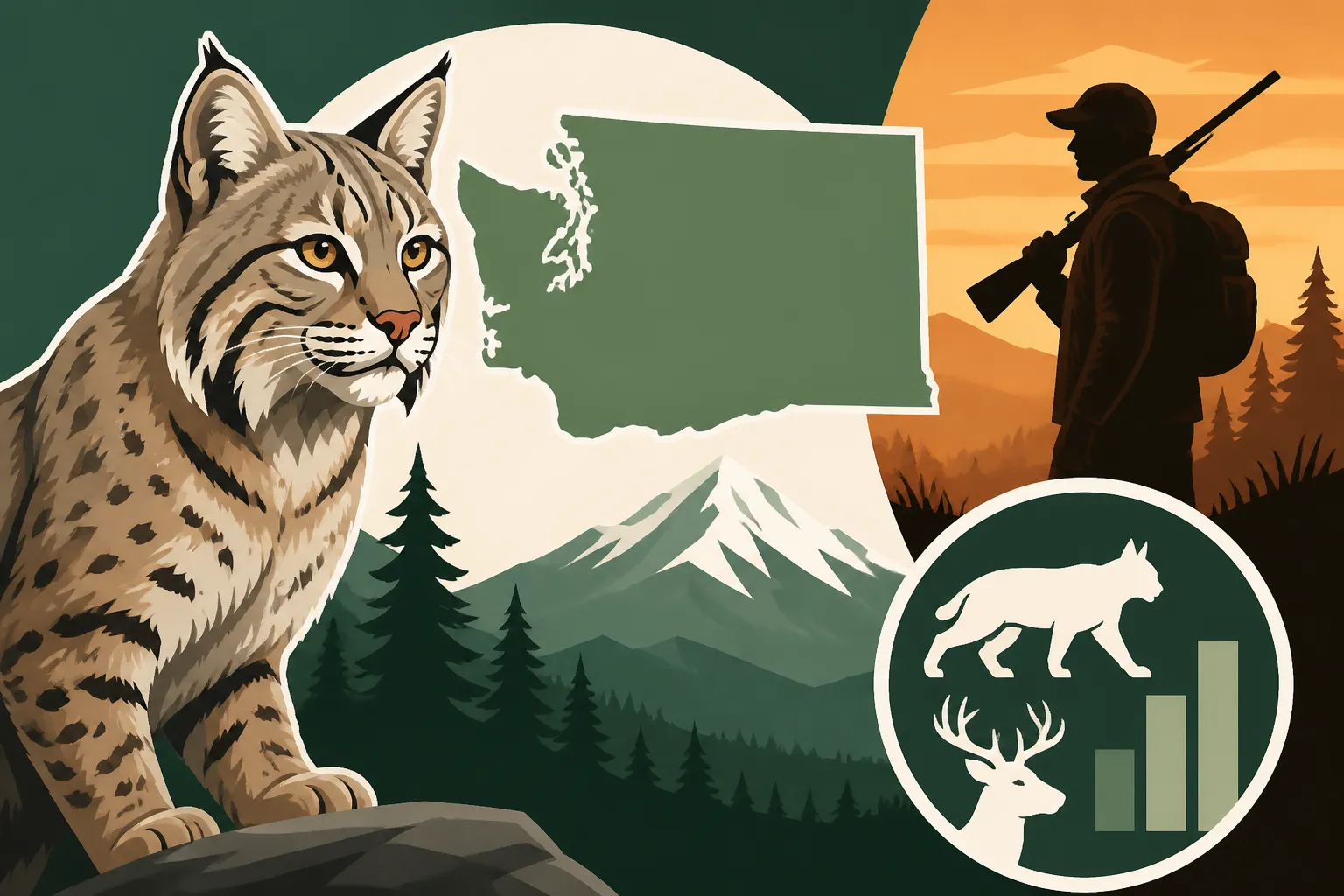
Washington's bobcats are pretty widespread, making their homes almost everywhere you find suitable prey and cover. On the western side of the Cascades, you'll find them in the vast, dense conifer forests, clearcuts, and riparian areas along rivers and streams. These environments provide excellent cover for stalking prey like rabbits, voles, and even young deer, especially in areas with a mix of old growth and regenerating timber. The thick brush offers them a perfect hiding spot, making them notoriously hard to spot. If you’re looking for signs of Cougar Hunting in Washington After the Hound Ban, you’ll often find similar sign for bobcats, just on a smaller scale.
Move to Eastern Washington, and the habitat changes dramatically, but the bobcat adapts seamlessly. Here, they prefer the more open Ponderosa pine forests, broken sagebrush draws, rimrock canyons, and agricultural fringes. These areas, particularly where they border wildlands, provide an abundance of rodents, jackrabbits, and game birds. You might even find them lurking near farmsteads, taking advantage of mice and other small critters that congregate there. Their ability to blend into such varied landscapes is truly remarkable, making them a fascinating species to pursue.
Bobcat Diet and Behavior
Bobcats are primarily carnivorous, and their diet largely dictates where you'll find them. They are incredibly skilled hunters, relying on stealth and explosive speed to ambush their prey. Small mammals like rabbits, hares, voles, and mice form the bulk of their diet. However, they aren't picky and will also target birds, ground squirrels, and even deer fawns if the opportunity arises. This adaptability in diet is a key factor in their success across Washington's varied ecosystems.
Their behavior is mostly solitary and nocturnal, though they can be active during twilight hours or even throughout the day, especially if food is scarce or during breeding season. They establish territories, which they mark with urine, feces, and scratch marks, though these territories can overlap significantly, especially between males and females. Understanding their preference for certain prey and their movement patterns within their home range is crucial for successful hunting. Knowing that they patrol specific routes, often along natural funnels or edges, can help you predict where to set up.
Navigating Washington's Bobcat Hunting Seasons and Regulations
Hunting bobcats in Washington, like any furbearer or predator, requires a good understanding of the specific seasons, licensing requirements, and legal methods. It’s not just about heading out into the woods; it’s about doing it legally and ethically. The Washington Department of Fish and Wildlife (WDFW) sets these rules to ensure healthy populations and fair chase.
Key Season Dates and Licensing
Generally, bobcat seasons in Washington align with other furbearer and predator seasons, typically running through the fall and winter months. These seasons are designed to allow hunters to pursue bobcats when their pelts are prime, making them desirable for trapping or sale, but also to help manage their populations. You won't find a dedicated "bobcat tag" in the same way you do for elk or deer. Instead, bobcats are typically included under a general hunting license or a small game license, though it's absolutely vital to check the current WDFW hunting pamphlet for the most up-to-date information on specific dates and any additional endorsements required. Always verify these details each year, as they can shift.
When planning your hunt, you'll need to ensure your license is valid for the species. Many hunters who pursue deer or elk in Washington will already have the necessary license to also chase bobcats or coyotes, but don't assume. Double-check your specific license package. For detailed information on costs and what licenses cover, you might want to review Washington Big Game Licence and Tag Costs or Washington Small Game Licence Cost. Remember, proper licensing is the foundation of any legal hunt.
Legal Methods and Harvest Reporting
Washington has specific rules about how you can hunt bobcats. While trapping is a common method for furbearers, hunting with firearms or archery equipment is also popular. Generally, you'll be using similar equipment to what you might use for coyotes or other small game, often rimfire rifles, shotguns, or small-caliber centerfire rifles. There are specific rules regarding electronic calls, and it’s always a good idea to refresh yourself on Electronic Calls and What Washington Allows for predator hunting. The goal is always a clean, ethical harvest.
One critical aspect of hunting bobcats and other furbearers in Washington is harvest reporting. Even though you might not have a specific "bobcat tag" to validate, WDFW often requires hunters to report their bobcat harvests within a certain timeframe. This data is incredibly important for wildlife managers to track population trends, understand harvest rates, and make informed decisions about future seasons and regulations. Failing to report a harvest can result in penalties, so make sure you understand the requirements. Keeping accurate records of your hunts is not just good practice, it's often a legal requirement. You can usually do this through your WILD account online.
| Aspect | Western Washington Bobcat Hunting | Eastern Washington Bobcat Hunting |
|---|---|---|
| Primary Habitat | Dense conifer forests, riparian areas, clearcuts, thick brush | Sagebrush draws, rimrock canyons, Ponderosa pine, agricultural fringe |
| Typical Prey | Rabbits, voles, mice, deer fawns, various birds | Jackrabbits, cottontails, ground squirrels, mice, game birds |
| Hunting Style | Still-hunting, calling in dense cover, ambush points | Calling in open country, glassing draws, tracking in snow |
| Visibility | Low, dense cover requires close encounters | Higher, glassing at distance possible, but still challenging |
| Weather Considerations | Frequent rain, wet snow, mild winters | Cold, dry snow, extreme temperature swings |
| Best Time to Hunt | Late fall, winter (for prime pelts, snow tracking) | Late fall, winter (for prime pelts, snow tracking) |
| Key Challenge | Dense cover, making visual detection difficult | Wide open spaces, requires good optics and patience |
Strategies for Successful Bobcat Hunting in Washington
Hunting bobcats is a true test of a hunter's patience, stealth, and calling ability. These animals are incredibly wary, and their small size combined with their natural camouflage makes them exceptionally difficult to spot. But with the right strategies and a bit of persistence, you can definitely increase your chances of bringing one home.
Scouting for Sign and Choosing Locations
Before you even think about setting up a call, effective scouting is paramount. Look for areas with good concentrations of their primary prey – rabbit runs, rodent sign, or even deer trails that might intersect thickets. Bobcat tracks, though smaller than a cougar's, are distinctive, typically showing no claw marks. Look for them along old logging roads, game trails, and sandy streambeds. Scat can also indicate their presence, often containing fur and bone fragments. Understanding Reading Cougar Sign in the Snow can also give you some ideas for how to find bobcat sign.
Focus your scouting on transition areas: where dense cover meets more open terrain, along ridgelines, or at the edges of clearcuts. Bobcats often use these edges as travel corridors. Natural funnels, like narrow canyons or strips of timber connecting larger blocks of cover, are also prime locations. They will often lie up in dense bedding areas during the day, emerging to hunt as light fades or when they are hungry. Once you've identified a promising area, you can use tools like GoHunt to scout digital maps, mark potential ambush points, and identify land ownership to ensure you have legal access. This digital preparation can save you a lot of time and effort in the field.
Effective Calling Techniques and Setup
Calling is arguably the most effective way to hunt bobcats. They respond well to distress calls, mimicking a wounded rabbit, bird, or rodent. Electronic calls are highly effective because they can produce a wide range of realistic sounds at varying volumes. However, mouth calls can also work, especially if you prefer a more traditional approach. When setting up, remember that bobcats are predators and will approach cautiously, often circling downwind to get a scent. This means you need to position yourself carefully.
Always set up with the wind in your favor, ideally with your back to dense cover or against a hill that breaks up your silhouette. This prevents the bobcat from smelling you before you see it. Use natural cover to break up your outline, or consider using a blind or camouflage netting. Start calling softly, then gradually increase the volume. Call in sequences – a minute or two of calling, followed by several minutes of silence. Patience is key; a bobcat might take 20 minutes or even an hour to commit to a call. Don't move or give up too soon. Many hunters make the mistake of leaving a stand too early. When you're using detailed maps from resources like GoHunt, you can identify good calling locations with a clear line of sight downwind, anticipating where a bobcat might appear.
Gear Considerations and Shot Placement
Your gear setup for bobcats will be similar to what you'd use for coyotes. A flat-shooting rifle in a smaller caliber (.17 HMR, .22 WMR, .223 Rem, etc.) is ideal, as bobcats are small and you want to minimize pelt damage if you plan to keep the fur. A good set of binoculars is invaluable for scanning the landscape and spotting approaching predators, especially in more open country. A rangefinder is also a smart addition, helping you confirm distances in the field.
Good camouflage, including a face mask and gloves, will help you blend into your surroundings. Since bobcat season often occurs in colder months, proper layering for warmth and staying dry is crucial. Consider checking out Rain Gear and Layering for Washington Hunts to ensure you're prepared for whatever Washington weather throws at you. When a bobcat finally comes in, aim for a clean, ethical shot. Their vital zone is relatively small, so precise shot placement is critical. Wait for a clear, broadside or quartering-away shot if possible. After the shot, be patient before approaching, as a wounded bobcat can be elusive and difficult to track. Using a game bag designed for small game can help protect the pelt during pack out, especially if you have a long hike back to the truck.
Disclaimer
This article is for general informational purposes only and does not constitute professional advice. Laws, prices and regulations vary by location and change over time. Consult a qualified professional for guidance on your specific situation.