Elk Migration Timing in Washington
Washington elk migration timing and seasonal movement patterns from summer ranges to wintering grounds across the Cascades and Blue Mountains.
Know what you’re after.
Big game, small game, upland birds, and waterfowl — identification, behavior, rut and migration timing, and how each species moves through the season.
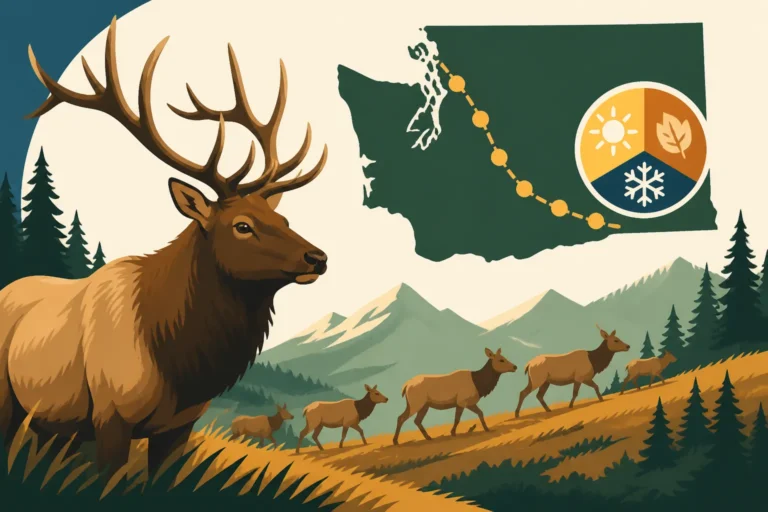
Washington elk migration timing and seasonal movement patterns from summer ranges to wintering grounds across the Cascades and Blue Mountains.

Washington snowpack depth and duration directly determine elk survival rates by restricting forage access and increasing energy expenditure.

Washington elk herds experience increased calf survival, better adult body condition, and altered migration patterns during mild winters.
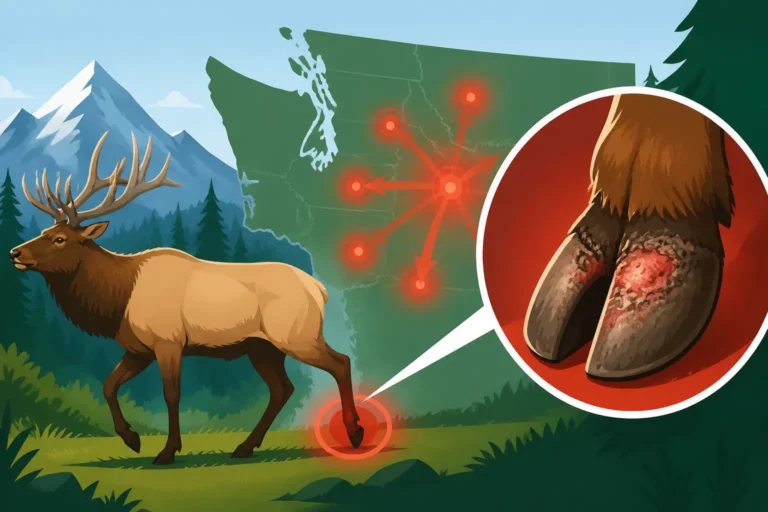
Elk hoof disease symptoms, bacterial causes, and geographic spread across Washington herds are explained for conservationists.

Reporting a limping elk to WDFW provides data that biologists use to track elk hoof disease and manage Washington herds.
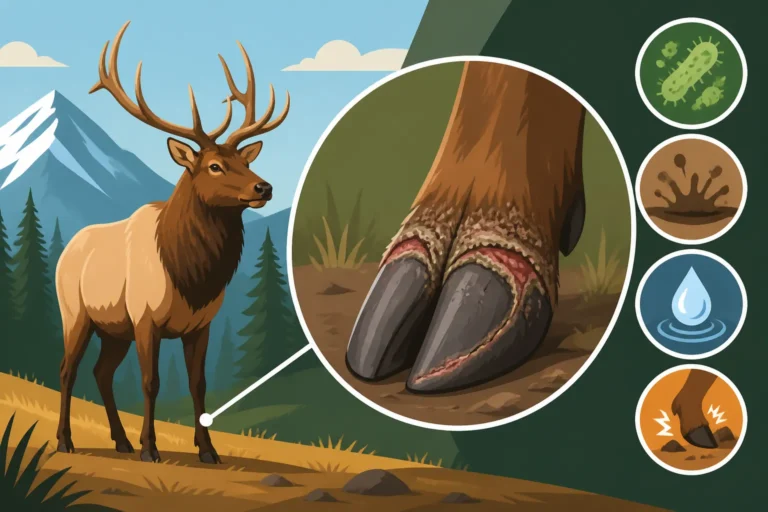
Treponeme-associated hoof disease in Washington elk is caused by aggressive spiral-shaped bacteria that destroy hoof structures.
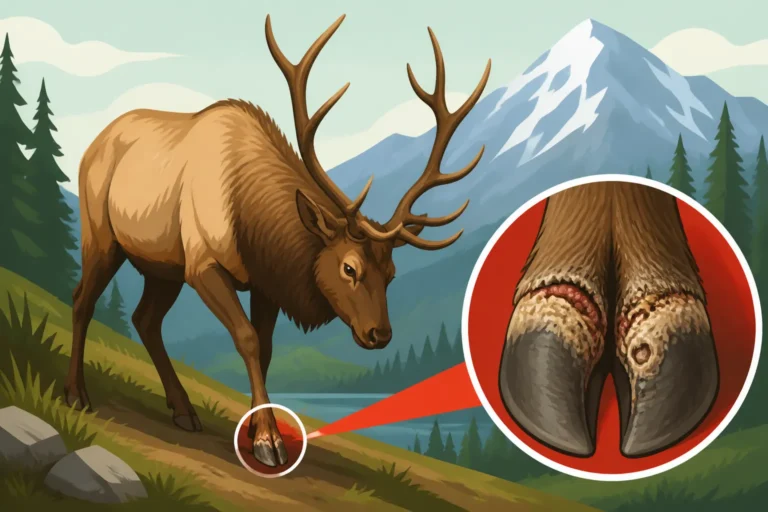
Elk hoof disease symptoms include structural damage, overgrown hooves, and lesions caused by bacteria in Washington herds.

Elk calf survival rates in Washington depend heavily on early vulnerability, mother protection, and various local predators.

Washington elk calving timing, occurring from late May to mid June, aligns with fresh green vegetation and regional climate.
Bull-to-cow ratios in Washington elk herds indicate reproductive success, herd health, and future hunting season opportunities.