How Many Elk Washington Has
It's a question every passionate hunter asks themselves, often staring at a map or walking a familiar ridge: exactly how many elk are roaming Washington's vast and diverse landscapes? It's a natural curiosity, fueled by tough seasons, impressive trail camera photos, or whispered stories of big herds. While pinning down an exact, real-time number is impossible for such magnificent wild animals, this guide will delve into how Washington's elk populations are estimated, where these majestic creatures thrive, and the many factors influencing their numbers across the state.
Understanding Washington's Elk Population Dynamics
The idea of counting every single elk in Washington state is, quite frankly, a fun daydream for us hunters, but a logistical nightmare for wildlife managers. These aren't cattle in a pasture; they're intelligent, wild animals traversing millions of acres of rugged, dense, and often unforgiving terrain. Therefore, when we talk about "how many elk Washington has," we're really discussing carefully calculated estimates that guide management decisions and give us a general picture of herd health.
The Challenge of Counting Wild Elk
Imagine trying to count deer in thick timber. Now multiply that by ten, add steep mountainsides, vast clearcuts, and sometimes impenetrable rainforests, and you start to grasp the monumental task of counting elk. Elk are masters of concealment, especially the Roosevelt elk of Western Washington, which prefer the dense cover of old-growth and second-growth forests. Even the Rocky Mountain elk on the Eastside, while often found in more open country, utilize vast expanses of timber, coulees, and remote wilderness areas that make direct observation extremely difficult. Plus, elk are constantly on the move, migrating between seasonal ranges, feeding grounds, and bedding areas. A count taken in one area on one day might be drastically different a week later.
Furthermore, factors like weather play a huge role. A harsh winter with deep snow can lead to significant overwinter mortality, especially among calves and older animals. Conversely, mild winters and abundant spring forage can lead to high calf survival rates and herd growth. These natural fluctuations mean that a single number is merely a snapshot, not a fixed reality. It's a dynamic system, always changing, which is why wildlife agencies focus on trends and population objectives rather than absolute, unchanging figures.
WDFW's Methods for Population Estimation
So, how does the Washington Department of Fish and Wildlife (WDFW) even begin to put a number on these elusive creatures? They use a combination of scientific methods, each with its own strengths and limitations. The primary tools involve aerial surveys, harvest data analysis, and targeted research studies.
Aerial surveys are a cornerstone of elk population estimation, particularly effective in more open habitats like much of Eastern Washington. Helicopters or fixed-wing aircraft fly predetermined transects, and observers count elk, categorizing them by age and sex when possible. This provides raw data that scientists then extrapolate across the entire Game Management Unit (GMU) or herd area. However, aerial surveys are costly, weather-dependent, and notoriously difficult in densely forested areas. Counting elk under a thick canopy of Douglas firs or in a deep, fog-shrouded canyon is virtually impossible, meaning Westside Roosevelt elk numbers often rely more heavily on other methods.
Another critical piece of the puzzle is hunter harvest data. Every year, hunters are required to report their harvest to WDFW. This data provides invaluable insight into herd composition (how many bulls, cows, and calves are being harvested), success rates, and the distribution of hunter effort. While harvest data doesn't directly tell you total population, it offers a strong indicator of population trends and helps refine models. If success rates are declining despite consistent effort, it suggests a potential dip in the local population. Conversely, rising success rates can point to a thriving herd. You can actually see some of this data come to life through platforms like GoHunt, which often compile and present WDFW data in an accessible way for planning.
Finally, long-term research studies fill in the gaps. Biologists use techniques like GPS collaring to track individual elk movement, understand migration patterns, and determine survival rates for calves and adults. Remote cameras monitor elk use of certain areas, and ground surveys look for signs like scat, tracks, and browsing patterns. By combining all these pieces, WDFW can construct a more comprehensive picture of elk numbers and health, though it's always an ongoing process of refinement and adjustment.
Washington's Diverse Elk Herds: East vs. West
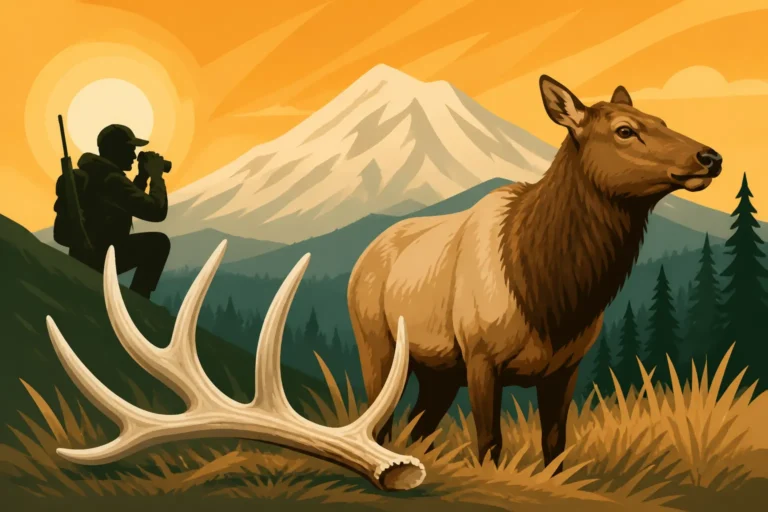
Washington is unique in that it's home to two distinct subspecies of elk: the Rocky Mountain elk in the east and the Roosevelt elk in the west. These magnificent animals have adapted to dramatically different environments, influencing their behavior, distribution, and how their populations are managed and perceived by hunters. Understanding these general differences is key to appreciating the state's overall elk picture.
Rocky Mountain Elk: The Eastside Story
East of the Cascades, stretching from the Okanogan to the Blue Mountains, you'll find Washington's majestic Rocky Mountain elk. These elk are often associated with more open country, vast national forests like the Okanogan-Wenatchee and Umatilla, and agricultural lands that border timbered breaks. They are known for their impressive antler size, often bugling readily during the rut, making archery season especially thrilling. Some of the most well-known Eastside herds include the Yakima, Colockum, and Blue Mountains elk herds.
The Yakima elk herd, for instance, is one of the state's largest and most famous, inhabiting a mosaic of public and private lands, sagebrush plateaus, and timbered canyons. The Colockum elk herd thrives in rugged, diverse terrain, offering both timber and open country hunting opportunities. Then, down in the southeast, the Blue Mountains elk herd roams the forested slopes and canyons that extend into Oregon, known for producing some truly magnificent bulls. Population trends for these herds can vary; some are stable, others might experience minor fluctuations due to calf survival rates or winter severity. Hunters often pore over data on these specific herds using resources from WDFW or tools like GoHunt to discern trends. To understand more about these specific herds, you might want to look at information on The Yakima Elk Herd, The Colockum Elk Herd, or The Blue Mountains Elk Herd.
Roosevelt Elk: Western Washington's Giants
On the other side of the Cascades, in the wet, green world of Western Washington, live the Roosevelt elk. These are the largest-bodied of the North American elk subspecies, though their antlers tend to be stockier and not always as wide-spreading as their Rocky Mountain cousins. Roosevelt elk are creatures of the dense coastal rainforests, vast timber company lands, and steep, brushy mountainsides of the Olympic Peninsula and Southwest Washington. They are notoriously elusive, preferring to live in the thickest cover, which makes hunting them a physically demanding challenge and counting them even harder.
Key Roosevelt elk herds are found in the Willapa Hills, the Olympic Peninsula, and the Gifford Pinchot National Forest areas. The Willapa Hills elk herd, for example, occupies a mosaic of private timber lands and public access areas in Southwest Washington, offering hunters a chance at these formidable animals amidst logging activity and steep terrain. On the Olympic Peninsula, the Roosevelt elk reign supreme, navigating the ancient forests and rugged topography. While these herds are generally robust, their populations are often harder to estimate precisely due to their habitat. Understanding the challenges and unique characteristics of Roosevelt Elk of Western Washington is essential for any hunter considering a Westside hunt. You can also dive deeper into specific herd information, such as The Willapa Hills Elk Herd or the challenges of hunting in the Olympic Unit Roosevelt Elk.
To give you a general overview of the differences, here's a quick comparison:
| Characteristic | Rocky Mountain Elk (Eastside) | Roosevelt Elk (Westside) |
|---|---|---|
| Typical Habitat | Open ponderosa pine, sagebrush, timbered breaks, agriculture | Dense rainforest, thick second-growth timber, brushy slopes |
| Antler Style | Often wider, longer tines, can be very symmetrical | Heavier beams, more compact, often strong main beams |
| Body Size | Large, but generally slightly smaller than Roosevelt | Largest subspecies in North America, very robust and heavy |
| Behavior | More visible in open country, strong buglers | More secretive, utilize thick cover, less vocal |
| Population Trend | Generally stable to increasing in many areas | Stable, but often difficult to accurately count due to habitat |
| Hunting Challenge | Can involve long-range glassing and open country stalk | Extreme physical exertion in thick, steep terrain |
Key Factors Shaping Washington's Elk Numbers
The number of elk in Washington isn't just about successful breeding; it's a complex equation influenced by a multitude of environmental and biological factors. Think of it as a constant push and pull between forces that help populations grow and those that cause them to decline. As hunters, understanding these dynamics not only makes us more informed but also better equipped to adapt our strategies.
Habitat Health and Human Development
At the core of any healthy wildlife population is healthy habitat. Elk need adequate forage, secure cover for bedding and calving, and access to water. In Washington, elk habitat faces ongoing challenges. Urban and rural development encroaches on traditional winter ranges and migration corridors, fragmenting vital areas. Large-scale timber harvest practices, while creating new forage in clearcuts, can also reduce essential thermal and hiding cover, forcing elk into less ideal areas. Conversely, responsible forest management that creates a mosaic of different-aged stands can greatly benefit elk by providing both food and cover.
The availability and quality of forage directly impact cow body condition, which in turn affects their ability to conceive, carry a calf to term, and successfully raise it. A poor forage year due to drought can have ripple effects on calf survival and overall herd health for several years. Similarly, access to critical winter range—areas where snow depths are manageable and food can still be found—is paramount. When these areas are lost or heavily disturbed, elk populations suffer significantly. This is why initiatives to conserve and restore habitat are so crucial, and why understanding land access, whether public or through private timber permits like those for Weyerhaeuser or Hancock, is vital for hunting success.
Predation, Disease, and Environmental Pressures
Nature has its own ways of regulating elk numbers, and predation is a primary one. While human hunters play a significant role, natural predators like wolves, cougars, and bears also exert pressure on elk herds. Wolves, in particular, have been a topic of much discussion regarding their impact on elk populations in certain areas of Eastern Washington. While their presence is a natural part of the ecosystem, their increasing numbers in some regions have added another layer of complexity to elk management. You can learn more about this by researching Washington Wolves and Big Game or Cougar Predation on Washington Deer Herds. Black bears also prey on elk calves, especially during the spring when calves are most vulnerable, and cougars are year-round predators, often taking adult elk.
Disease can be another silent killer, sometimes far more impactful than direct predation. A significant concern in Washington is elk hoof disease, a bacterial infection that causes severe lameness and can lead to death. This disease has been primarily observed in Western Washington and has been a source of frustration and concern for hunters and wildlife managers alike. WDFW actively monitors its spread and impact, but it undoubtedly affects the health and numbers of local herds. Understanding Elk Hoof Disease in Western Washington is important for any hunter in the affected areas. Other diseases, though less widespread, can also occasionally affect herd health.
Finally, environmental pressures, especially severe weather events, can dramatically alter elk populations. Prolonged droughts can reduce forage and water availability, stressing animals and making them more susceptible to disease. Conversely, exceptionally harsh winters with deep, persistent snow can lead to mass starvation, particularly for vulnerable calves and older elk. These natural events are unpredictable and can set back population goals for years. This makes yearly Elk Calf Survival in Washington a critical metric.
How Hunters Can Engage with Elk Population Data
As hunters, we're not just consumers of wildlife; we're often the first line of conservation and play a direct role in the health and management of these incredible animals. Understanding elk population data isn't just academic; it informs our hunt planning, reinforces our ethical responsibilities, and helps us contribute meaningfully to the future of Washington's elk.
Your Role in Elk Management and Conservation
One of the most direct ways hunters contribute to population estimates is through harvest reporting. Every filled tag, every reported elk, provides WDFW with crucial data points. This information helps refine population models, assess herd health, and adjust future tag allocations and season structures. Failing to report a harvest means the data is incomplete, potentially leading to less accurate management decisions down the road. It's a simple, yet incredibly powerful, civic duty for hunters. So, make sure you understand Washington Harvest Reporting Requirements and fulfill them diligently.
Beyond reporting, ethical hunting practices are paramount. This includes proper shot placement, diligent blood trailing, and taking only legal animals. It also extends to being observant in the field. If you notice signs of disease, such as a severely limping elk, reporting it to WDFW can help them monitor the spread and impact of conditions like elk hoof disease. Your eyes and ears in the field are an invaluable resource for wildlife managers. Engaging in public land scouting in Washington before opening day can also provide insights into local game behavior and health.
Leveraging Resources for Informed Hunt Planning
While WDFW collects and manages the raw data on elk populations, there are fantastic resources available to hunters to help interpret this information and apply it to their hunt planning. WDFW's annual pamphlets and online hunt planners offer a wealth of information, including general season structures, special permit opportunities, and often some narrative on herd status. These resources are your first stop for understanding specific GMU regulations and opportunities for Washington Special Hunt Permits and How to Apply.
Beyond the official channels, platforms like GoHunt have emerged as powerful tools for hunters. These services often take raw WDFW data – like harvest statistics, success rates, and population estimates – and present them in user-friendly formats, complete with mapping overlays and historical trend analysis. For instance, you might use GoHunt to compare harvest success rates for a particular GMU over the last five years, cross-referencing that with general population trends described by WDFW. This kind of synthesis allows hunters to make more informed decisions about where to apply for special permits, or which general season unit might offer the best odds.
Remember, no single piece of data tells the whole story. Instead, successful hunt planning involves synthesizing information from multiple sources: WDFW reports, online platforms, anecdotal evidence from other hunters, and your own boots-on-the-ground scouting. Understanding "how many elk Washington has" isn't about a static number, but about appreciating the dynamic, ever-changing populations and being an active, informed participant in their conservation and management. Utilizing tools for E-Scouting Washington GMUs Before the Draw can put this data to practical use long before you step foot in the field.
Disclaimer
This article is for general informational purposes only and does not constitute professional advice. Laws, prices and regulations vary by location and change over time. Consult a qualified professional for guidance on your specific situation.