Late-Season Snow and Road Access
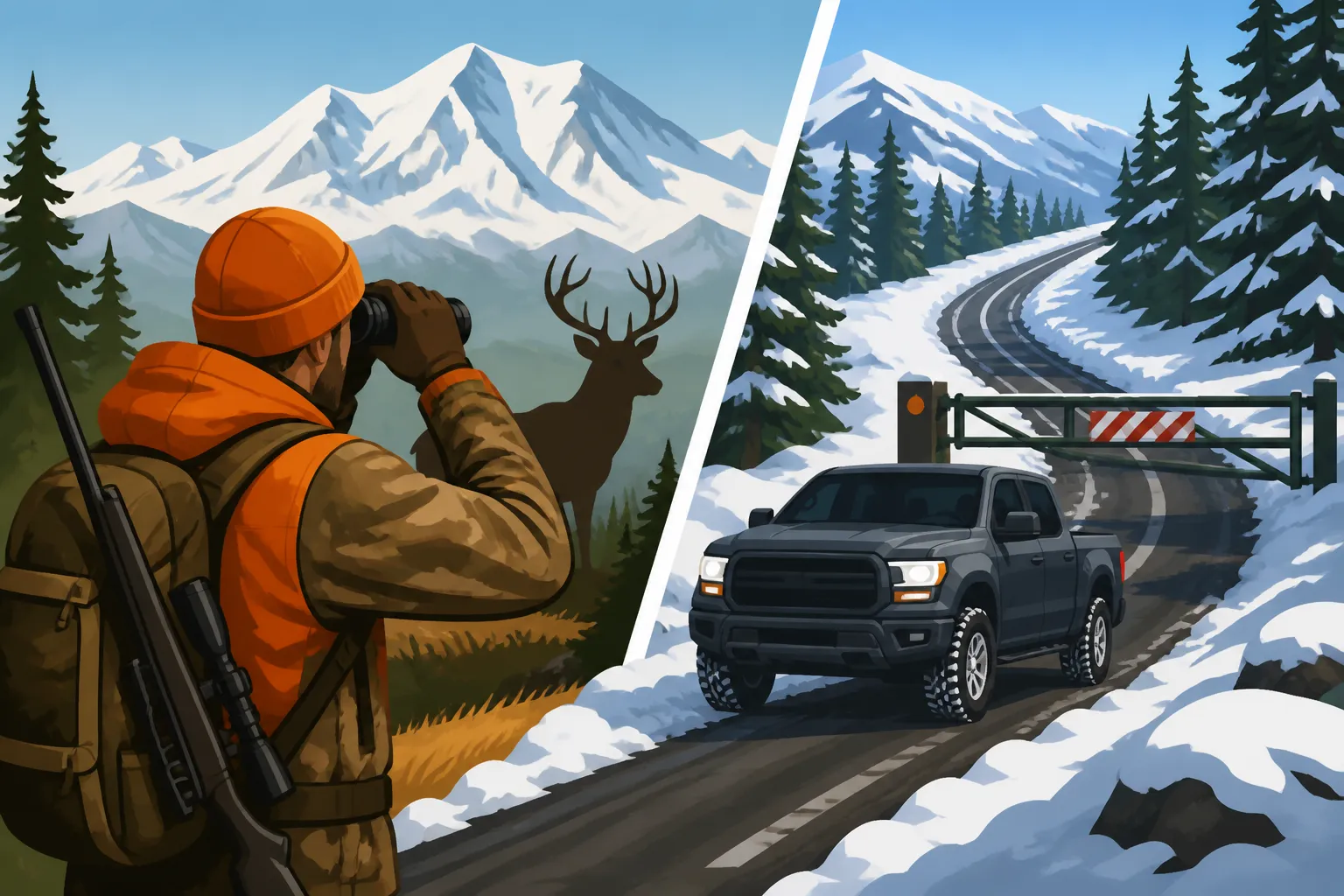
You’ve meticulously planned that late-season Washington hunt, dreaming of crisp air, fresh tracks, and a true test of your skills. But then, a classic Pacific Northwest storm rolls in, dumping feet of snow, and suddenly, the well-maintained forest road you scouted for months is gone, swallowed by drifts, or worse, locked behind a seasonal gate. This abrupt change in conditions, particularly road access, is one of the most frustrating and often overlooked challenges of hunting Washington in the late fall and winter. This guide is here to unravel the complexities of late-season snow and its impact on road access, helping you prepare, adapt, and stay safe so you can focus on the hunt, not the heartbreak of a blocked path.
The Reality of Late-Season Snow in Washington
Washington is a state of incredible, dramatic contrasts, and nowhere is that more evident than in its late-season weather patterns. A "little" snow can mean vastly different things depending on whether you're chasing mule deer in the desert breaks of the east side or still-hunting Roosevelt elk in the thick, damp timber of the west. Understanding these regional nuances is absolutely critical for planning successful access and executing your hunt.
How Snowfall Impacts Different Regions
On the west side of the Cascades, where the rain is legendary, late-season precipitation often starts as a cold, heavy rain that can quickly turn to wet, slushy snow, even at lower elevations. This kind of snow, though often not as deep as its eastern counterpart, is notorious for creating a muddy, impassable mess on forest roads. It’s dense, sticks to everything, and can bring down entire trees, blocking roads with unexpected hazards. The constant freeze-thaw cycles turn dirt roads into a soupy quagmire during the day and an ice rink at night. Higher up in the Olympic or Gifford Pinchot National Forests, though, you’ll find deep, persistent snow that can quickly shut down access for weeks or even months. Hunters pursuing Roosevelt elk often encounter this heavy, wet snow, which clings to the dense canopy, making visibility tough but creating fantastic tracking conditions once you're on foot.
East of the Cascades, the snow typically arrives drier and lighter, but it can accumulate to much greater depths, especially in areas like the Okanogan-Wenatchee National Forest, the Blue Mountains, or the Selkirk Range. Here, roads might not be as muddy, but they can become packed with snow and ice, turning a seemingly benign incline into an impassable slick sheet. The sustained cold temperatures mean the snow doesn't melt off quickly, creating consistent conditions, but also sustained access challenges. This is prime country for Rocky Mountain elk and mule deer, both of which are impacted significantly by deep snow, often pushing them down to critical winter range. The frustration here isn't just mud, it's the sheer impossibility of moving a vehicle without proper traction and clearance, often for miles from where you want to hunt.
When to Expect Road Closures
Road closures in Washington are not a static affair; they're dynamic, evolving with weather, wildlife needs, and land management decisions. Generally, you can expect higher elevation roads in all regions to start closing by late October or early November, especially those on national forest land or in wilderness access points. These closures are often due to snow accumulation making them impassable or unsafe for public travel, and they usually won't reopen until well into spring once the snow has melted and road damage has been assessed and repaired.
Beyond the obvious impassability due to snow, many roads are intentionally closed for specific reasons. WDFW, the Forest Service, and private timber companies implement seasonal closures primarily to protect wintering wildlife, such as deer and elk, from disturbance during their most vulnerable period. These closures prevent road damage from heavy winter use, especially with freezing and thawing cycles, and are crucial for public safety when roads become treacherous. While some closures have fixed dates, often extending from late November through March or April, others are enacted on short notice when conditions warrant. It’s not uncommon to experience an early heavy snowfall in October that forces closures far sooner than anticipated, catching many unprepared hunters off guard.
Navigating Road Access Restrictions
Dealing with Washington's complex road access systems can feel like trying to solve a puzzle with half the pieces missing, especially when snow starts to fly. You might have your favorite spot mapped out, only to find a gate locked or a road sign you don't understand. It's a common struggle, but with the right knowledge and tools, you can navigate these challenges effectively.
Understanding Green Dot and Gate Systems
Washington's Green Dot Road System, primarily managed by WDFW, is a unique access program designed to balance motorized access for hunters and recreationists with the need to protect wildlife habitat. Roads marked with green dots on official WDFW GMU maps usually have specific rules: some are open year-round, some have seasonal closures, and others may restrict vehicle types or even prohibit vehicles past a certain point, requiring walk-in access. The key is that these are not always universal; rules can vary from one GMU to the next, and they are especially prone to modification when heavy snow arrives. A road that was open in September might be suddenly closed in December to protect wintering deer or elk.
Beyond the Green Dot system, you'll encounter a myriad of locked gates, especially when hunting on private timber lands, DNR parcels, or even some Forest Service roads. These gates exist for a variety of reasons: active logging operations, limiting access to sensitive areas, or simply managing who comes and goes on private property. Companies like Weyerhaeuser and Hancock often operate vast tracts of timberland that may have varying access rules, from fee-based permits to designated Walk-In Only Gates on Industrial Timber. The frustration of driving miles only to hit a locked gate that wasn't marked on your basic map is something every Washington hunter has experienced. It means a quick pivot, often a long hike, or a complete change of plans, which can be disheartening when you’re already investing so much effort.
Essential Tools for Checking Road Conditions
In the digital age, there's no excuse for not checking road conditions before you head out, though it can still be a multi-faceted task. The Washington Department of Fish and Wildlife (WDFW) website is your first stop. They publish current Game Management Unit (GMU) maps that often indicate Green Dot roads and special announcements regarding closures. For federal lands, each National Forest (like Okanogan-Wenatchee, Gifford Pinchot, or Colville) has its own website with specific road and trail reports. These are often updated by district rangers and provide the most granular information on what's open or closed due to snow or other hazards.
Private timber companies, such as those that require Timber Company Permits in Western Washington, also maintain online portals or maps detailing their access rules and any current closures. These are absolutely critical if you're hunting on their managed lands. When preparing for your hunt, I always recommend checking these sources right before you leave, as conditions can change rapidly. For comprehensive planning and real-time insights, tools like GoHunt are invaluable. They can consolidate various data points, including land ownership and often provide community-sourced updates on road access, giving you a clearer picture than any single agency might offer. Beyond that, always check Washington State Department of Transportation (WSDOT) for state highway passes, and remember to look specifically for alerts regarding Washington Winter Range Closures That End Late Hunts, as these can affect access points far removed from major highways. Don’t underestimate the value of a quick phone call to the local ranger station; they often have the most up-to-the-minute, ground-level intelligence on road conditions in their area.
Adapting Your Hunting Strategy to Snow
Snow isn't just a barrier to access; it's a game-changer for hunting strategy. For those willing to embrace the cold and the challenge, it can actually open up incredible opportunities, transforming familiar landscapes and offering unique advantages. The woods become a giant canvas revealing every animal's story, but it also demands a higher level of preparedness and caution.
Tracking and Locating Game in Snow
When a fresh blanket of snow covers the ground, the forest suddenly transforms into an open book, revealing the recent movements of every creature. This is where the magic of late-season hunting truly comes alive. Tracks become your primary intelligence, telling you not just what passed, but when and how fast. Learning to identify tracks by size, stride length, and the presence or absence of dewclaws for deer versus elk is a skill that becomes paramount. Fresh, crisp tracks after a snowfall are like breadcrumbs leading directly to your quarry.
Snow significantly impacts animal movement patterns. Both deer and elk, especially with deeper snow, will conserve energy and often move to lower elevations or seek out south-facing slopes where the snow melts faster, exposing forage, and the sun provides warmth. Look for them in thicker cover adjacent to these sunny slopes, where they can bed down and avoid the wind. You’ll find them seeking thermal cover in dense conifer stands to escape the biting cold. For specific insights, understanding Elk Behavior in Deep Snow is crucial, as is knowing how to approach Tracking Bucks in Fresh Eastern Washington Snow. This is where a methodical, slow still-hunting pace becomes incredibly effective. Rather than covering vast ground, focus on reading the sign, moving quietly, and letting the snow do some of the "scouting" for you. Using digital tools to aid your scouting process, such as leveraging GoHunt's mapping capabilities for E-Scouting a Washington GMU From Home to identify potential lower elevation wintering areas, can give you a significant head start before the first flake even falls.
Safety Considerations and Emergency Preparedness
While snow offers unparalleled tracking opportunities, it also amplifies the inherent risks of backcountry hunting. Hypothermia is a very real and present danger, especially in Washington's wet, cold environment. Staying dry is not just about comfort; it's about survival. Invest in quality Layering for Wet Cold Weather systems that include moisture-wicking base layers, insulating mid-layers, and waterproof-breathable outer shells. Avoid cotton at all costs; once wet, it loses all insulating properties.
Beyond personal warmth, vehicle preparedness is non-negotiable. Always carry tire chains, a robust shovel, extra fuel, and recovery gear like a come-along or traction boards. Even if you have a 4×4, deep, soft snow or unexpected ice patches can quickly leave you stranded. Before you even leave home, always, always Leaving a Trip Plan at Home with a trusted contact, detailing your route, your destination, and your expected return time. In areas without cell service, which is common in much of Washington's hunting country, a satellite messenger or Two-Way Radio Use While Hunting is a lifeline, allowing you to call for help even when your phone is useless. Finally, a comprehensive First Aid Kit for a Remote Hunt is not a luxury; it’s an absolute necessity. A minor cut or sprain can become a life-threatening emergency if exposed to cold temperatures in a remote location.
Planning Your Late-Season Hunt
Stepping into Washington's late-season snow means stepping into a different world, one that demands a different kind of preparation. Your gear choices, your caloric intake, and even how you hydrate all need to be reevaluated to match the unforgiving conditions. This isn't just about being comfortable; it's about optimizing your performance and ensuring your safety when the stakes are higher.
Gear for Snowy Conditions
Your gear is your first line of defense against the elements in a late-season Washington hunt. The foundation starts with your feet. You need waterproof, insulated boots with aggressive traction that can handle everything from icy rocks to deep mud and slush. Whether you're navigating the slick volcanic rock of the eastside or the perpetually wet duff of the west, the right footwear is paramount. Consider Boots for Steep Eastside Country for maximum ankle support and rigidity or something designed for the endless mud of western Washington. Don't forget gaiters to keep snow and debris out of your boots and to provide an extra layer of waterproofing over your pants.
Next up, your rain gear isn't just for rain anymore; it's your outer shell against wind and snow. Cheap rain gear simply won't cut it in the sustained wet and cold of Washington. Invest in quiet, durable, truly waterproof, and breathable materials. If you're hunting the west side, specifically look for Rain Gear for Westside Hunting that can stand up to constant saturation without wetting out. Layers beneath that shell are equally important: wool or high-quality synthetics are your friends, helping you regulate temperature without bulking up. Lastly, your pack needs to be up to the task. Even if you're not planning an overnight spike camp, you'll be carrying more emergency gear, extra layers, and potentially more water. Look for a pack with a robust frame that can handle heavy loads, like those discussed in Pack Volume for a Washington Spike Camp, even if you’re only planning a long day hunt. Snowshoes or cross-country skis might also be crucial, depending on predicted snow depth and your target area.
Food and Water in a Winter Environment
When the temperatures plummet, your body becomes a furnace working overtime to maintain core temperature. This means your caloric needs skyrocket. You can't rely on the same lightweight snacks you might bring in September. Pack high-calorie, easily digestible foods that provide sustained energy: nuts, dried fruit, jerky, energy bars, and even small amounts of chocolate can be life-savers. Thermal containers for hot coffee, tea, or even instant soup mixes can provide a welcome warmth boost and a significant morale improvement during a cold day on the mountain. Don’t underestimate the power of a warm drink to temporarily reset your core temperature and keep you going.
Hydration is just as critical in cold weather as it is in warm, though it often feels less urgent. You're still losing fluids through respiration and sweat under all those layers. Insulated water bottles or hydration bladders with insulated hoses are essential to prevent your water from freezing solid. While streams might be frozen, melting snow is an option, but remember it takes fuel and time, so plan accordingly. Never assume you can just scoop up snow and eat it; it will rapidly drop your core temperature and won't hydrate you efficiently. Always aim to boil it if possible, both for safety and temperature. Carry enough water for the day, plus a backup method like a reliable filter or purification tablets.
Common Road Closure Types and What They Mean
Understanding the different types of road closures you might encounter in Washington is key to successful late-season planning. Each closure type often has a specific reason and implies different access options, if any.
| Road Closure Type | What it Means | Common Locations | How to Check |
|---|---|---|---|
| Green Dot | Seasonal restrictions, vehicle type limits (e.g., no full-size vehicles), or permanent closures beyond a certain point. Dates vary by GMU and conditions. | WDFW-managed lands, National Forest roads managed cooperatively with WDFW. | WDFW GMU maps, WDFW website (hunt planner), local WDFW offices. |
| Locked Gate (Private Timber) | Access is restricted; may require paid permits (seasonal or daily), or be designated as walk-in only. Some are permanently closed. | Lands owned by companies like Weyerhaeuser, Hancock Forest Management, Port Blakely, etc. | Individual timber company websites, GoHunt, local sporting goods stores for permits. |
| Seasonal Winter Range | Roads (or entire areas) closed to motorized and sometimes foot traffic to protect vulnerable wintering deer, elk, and other wildlife. | Designated WDFW Wildlife Areas, specific National Forest roads and lands (e.g., Oak Creek Wildlife Area, Naneum). | WDFW hunting pamphlets, WDFW website (wildlife area regulations, winter range closure maps). |
| National Forest Service (NFS) Road Closure | Roads closed due to snow, ice, washouts, fallen trees, or other damage making them impassable or unsafe. Can be temporary or extend through winter. | Any road within National Forests (Okanogan-Wenatchee, Gifford Pinchot, Olympic, Colville). | US Forest Service website (by specific forest/district), local ranger district offices, onX Hunt app. |
| DNR Land Closure | Roads or areas on Department of Natural Resources land closed for active logging, fire danger, or other resource management reasons. | State-managed timber lands and recreation areas. | Washington DNR website (recreation map, forest fire info). |
Disclaimer
The information provided in this guide is for general informational purposes only and is not a substitute for official regulations or professional advice. Hunting regulations, road conditions, and land access rules in Washington are subject to change without notice. Always consult the most current Washington Department of Fish and Wildlife (WDFW) regulations pamphlet, specific land management agency websites (e.g., US Forest Service, Washington DNR, private timber companies), and local offices before planning and undertaking any hunting activity. Safety in the field is your responsibility; always be prepared and exercise caution.