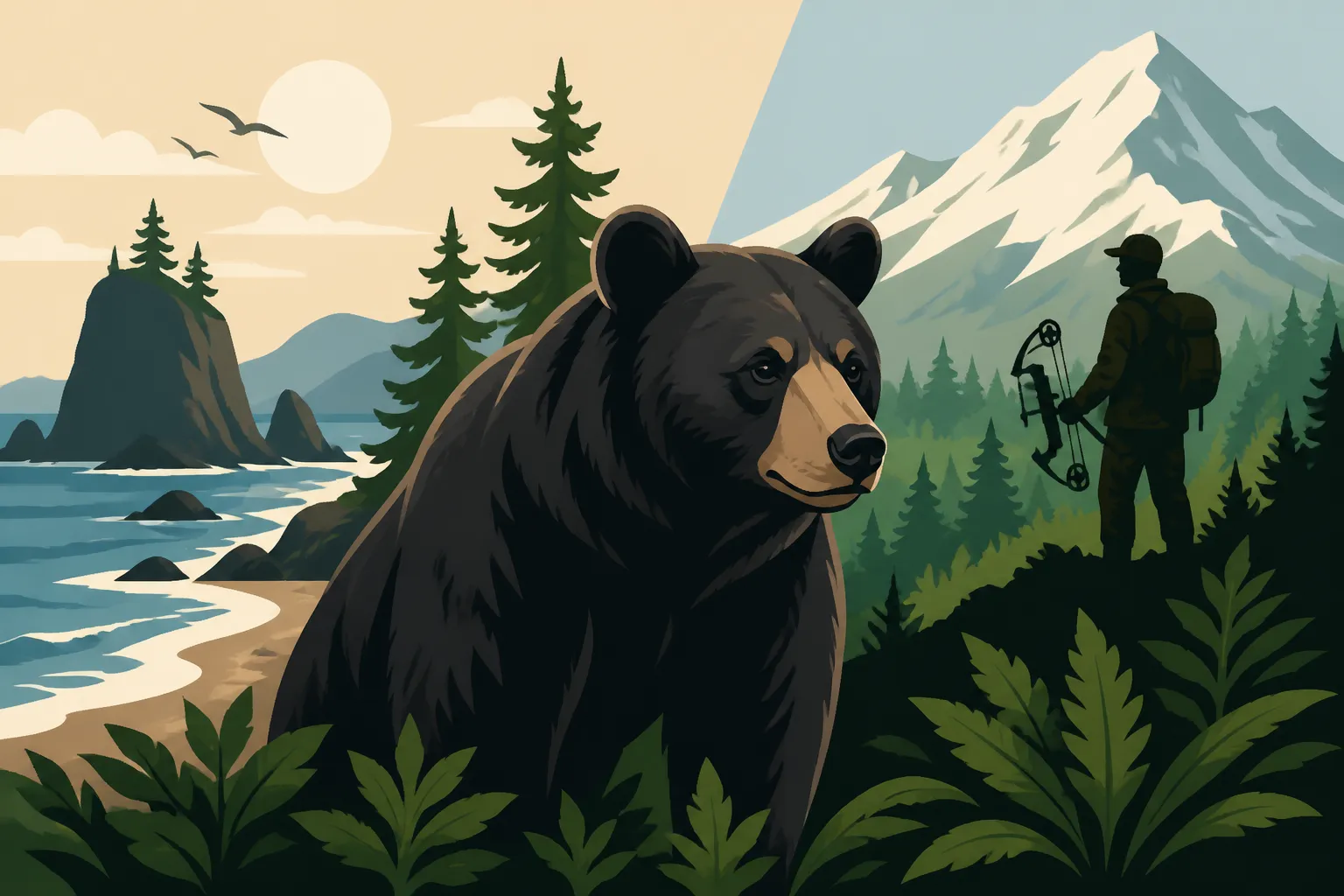
Washington Black Bears Coast to Cascades
Hunting black bears in Washington State can feel like chasing a ghost through the timber – they're notoriously elusive, always one step ahead, and blend into their surroundings with uncanny skill. For many of us, the sheer vastness of Washington's landscape, from dense western forests to sprawling eastern mountains, makes figuring out where these bears live, what they eat, and how to even begin pursuing them a real head-scratcher. This comprehensive guide is here to unravel the mysteries of Washington's black bears, equipping you with the knowledge and strategies to confidently chase these magnificent animals across our diverse state.
Understanding Washington's Black Bear Population
Washington State is home to a robust and widely distributed black bear population. Unlike some other states, you won't find brown or grizzly bears here (outside of a very small, protected population of grizzlies in the Selkirks and North Cascades, which are absolutely off-limits for hunting), so when we talk bears in Washington, we're talking black bears. They're a true success story of wildlife management, thriving in a variety of habitats, which, let's be honest, also makes them a challenging but rewarding quarry for hunters.
Current Population Estimates and Trends
It's always tough to get an exact headcount on a species that lives in such rugged, dense terrain, but the Washington Department of Fish and Wildlife (WDFW) does its best to monitor our black bear numbers. The latest estimates suggest a healthy population, often ranging between 25,000 and 30,000 bears statewide, though this can fluctuate slightly year to year based on cub survival rates and other environmental factors. This healthy population allows for general hunting seasons across much of the state, which is fantastic for hunters seeking this unique challenge.
These numbers are a testament to effective conservation efforts and the adaptability of black bears themselves. When you're out there, glassing a clearcut or still-hunting through a thick stand of reprod, it's easy to feel like bears are rare. But the truth is, they're often just incredibly good at avoiding detection. The species has shown remarkable resilience, expanding into new areas and maintaining strong numbers even with hunting pressure. This trend is generally positive, indicating a stable future for black bear hunting in Washington.
What this means for us hunters is that there are opportunities out there, but you still need to put in the work. A robust population doesn't mean bears are standing around waiting for you. It means that if you understand their habits and preferred habitats, your chances of finding one are quite good. Think of it as a strong foundation for your hunting efforts, rather than a guarantee of success.
Distribution Across the State
One of the most fascinating aspects of Washington black bears is their incredible versatility in terms of where they live. You can find them pretty much anywhere with decent cover and food sources, from the rain-soaked coastal forests of the Olympic Peninsula all the way to the drier, ponderosa-studded mountains of the Kettle Range in the northeast. They truly live up to the "Coast to Cascades" description.
On the west side of the Cascade crest, particularly in areas like the Gifford Pinchot and Olympic National Forests, bears thrive in the dense, wet forests. They're at home in the thick alders along stream bottoms, the dark timber, and the regenerating clearcuts that offer abundant forage. If you're hunting elk in the Olympic Unit, chances are you're also walking through prime bear country. The coastal climate provides a long growing season for berries and other vegetation, which bears absolutely feast on.
Cross over the Cascades to the east side, and you'll find bears adapting to a different kind of wilderness. Here, they might be found in the timbered slopes of the Okanogan-Wenatchee National Forest, feeding in higher elevation meadows, or even venturing into the edges of agricultural land in the foothills. The terrain is often steeper, rockier, and drier, with a mix of pine forests, open sagebrush, and riparian areas. This adaptability is incredible; a bear on the west side might never see a ponderosa pine, while an east-side bear might rarely encounter a salmonberry patch. Understanding these regional differences in habitat is key to focusing your efforts, whether you're new to the area or trying a different part of the state.
Bear Habits and Habitat Preferences
Black bears are creatures of habit, but those habits are heavily influenced by the season and the availability of food. Generally, they prefer areas with a mix of dense cover for bedding and security, and open areas or edges for feeding. This often translates to timber fringes bordering clearcuts, avalanche chutes, creek bottoms, and north-facing slopes that hold moisture and lush vegetation longer into the summer.
In the spring, as soon as they emerge from their dens, bears are looking for the first green growth. This means south-facing slopes, lower elevation clearcuts, and riparian areas where grasses and forbs sprout early. As the season progresses into summer, they'll shift their focus to berry patches – huckleberries, salmonberries, and blackberries are absolute magnets. Then, in the fall, they'll become hyper-focused on hard mast crops like acorns and conifer seeds, packing on calories for winter. This seasonal food availability dictates their movements and where you're most likely to find them.
They are also generally solitary animals, except for sows with cubs, which you'll often see together. Knowing that a sow with cubs is legal to harvest only if the cubs are yearlings (not cubs-of-the-year) is critical for ethical hunting and compliance with WDFW regulations. Always be sure to positively identify your target. Bears also use travel corridors, often well-worn trails along ridge lines, through saddles, or parallel to water sources, connecting their bedding areas to their feeding grounds. Identifying these pathways is a huge part of successful scouting, giving you insight into their daily routines.
Black Bear Diet and Seasonal Foraging
Understanding what Washington black bears eat throughout the year is perhaps the single most important piece of information for a hunter. Bears are opportunistic omnivores, meaning they'll eat pretty much anything that provides calories, but their diet changes drastically with the seasons. If you know what they're looking for, you'll know where to look for them. This seasonal foraging behavior directly influences their movements and where they concentrate.
Spring Green-Up and Early Season Foods
As bears emerge from their winter dens, often in April or May, their digestive systems need a gentle restart. Their first priority is to find easily digestible greens that help clean out their systems and start building back lost weight. This initial phase is crucial, and it means they gravitate towards the first flush of new growth.
Think about those sun-drenched, south-facing slopes, often found on the edges of clearcuts or along open ridges. These areas warm up fastest and are where you'll find tender grasses, clover, and emerging forbs. They're literally seeking out the "green-up" that signals spring. Riparian zones, too, with their consistent moisture, often produce early vegetation that attracts hungry bears. It's not about big, calorie-dense meals yet, but about quantity and ease of digestion. If you want to know where bears feed in early fall, remember that their spring feeding locations will be entirely different.
A good strategy during this time is to spend your mornings and evenings glassing these south-facing slopes and open clearcuts. Bears will often move out of the timber and into these open areas to graze, especially on cooler days. They're essentially giant, furry lawnmowers at this point. Look for any slight disturbance in the green carpet – a patch of flattened grass or an area where the vegetation looks chewed down could indicate recent bear activity. This is also a fantastic time to spot bears on avalanche chutes, as the spring thaw exposes new vegetation.
Summer Berry Patches and Insect Foraging
Once late spring rolls into summer, typically June through August, the bear's diet shifts dramatically to focus on higher-calorie foods, especially berries. Washington is a paradise for berries, and bears take full advantage of it. Huckleberries, salmonberries, thimbleberries, and especially the invasive but abundant Himalayan blackberries become absolute bear magnets.
Finding dense berry patches is like hitting the jackpot. Bears will spend hours, even days, gorging themselves in these areas, trying to pack on as much fat as possible. They'll often create well-worn trails leading into and out of the thickest berry bushes. During hot summer days, they might feed more actively during the cooler mornings and evenings, retreating to shaded, dense cover during the midday heat. This is also when you might catch them tearing apart rotten logs or digging up ant hills and yellowjacket nests, as insects provide a good source of protein and fat.
When hunting in these summer months, focus your scouting on identifying large berry patches. Use maps to find areas with good sun exposure and moisture, often along forest edges, old logging roads, or in younger clearcuts. A good pair of binoculars, like a quality 10×42, is invaluable for scanning these areas from a distance, watching for movement or the distinct silhouette of a bear gorging itself. Remember, a bear in a berry patch can be surprisingly hard to spot, as they often blend in perfectly with the dark foliage.
Fall Mast Crops and Pre-Denning Feasting
As autumn arrives, typically September and October, the bears enter their hyperphagia phase – a period of intense feeding to build up maximum fat reserves before hibernation. This is often the prime time for hunters, as bears are incredibly active and focused on packing on calories. Their diet shifts again, this time to hard mast crops.
Acorns are a huge draw for bears, particularly in areas with significant oak stands, like parts of the Klickitat River drainage or other areas east of the Cascades. They'll spend hours under oak trees, meticulously picking up every last acorn. Conifer seeds, especially from Douglas firs and Ponderosa pines, are also highly sought after. Bears will climb trees to shake down cones or spend time on the ground picking up dropped seeds. This is when where bears feed in early fall becomes all about these high-energy sources.
This intense feeding makes them somewhat predictable. Scouting for bear sign around mast-producing trees is a highly effective strategy. Look for disturbed leaves under oaks, broken branches on conifers, and fresh scat loaded with nut casings or seeds. This is also a great time to be thinking about spot-and-stalk bear hunting in Washington without bait. You can catch bears moving between their feeding areas and secure bedding cover, often making for excellent stalking opportunities. A quality mapping tool like those found on GoHunt can help you identify areas with diverse timber types that might include significant oak or conifer stands, giving you a massive advantage in pinpointing these crucial fall feeding grounds.
Washington Black Bear Seasons and Regulations
Navigating hunting regulations can sometimes feel like trying to read ancient hieroglyphics, but understanding the rules for Washington black bears is absolutely critical. WDFW sets these seasons and guidelines to ensure a healthy bear population while providing ample hunting opportunities. It’s on us, the hunters, to know and follow them to the letter.
General Season Dates and GMU Specifics
Washington's general black bear season typically opens in August or September, depending on the specific Game Management Unit (GMU), and can run through mid-November. The season dates vary by GMU, which means you absolutely must check the current WDFW Big Game Hunting Seasons and Regulations pamphlet for the specific area you intend to hunt. This pamphlet is your bible, not a suggestion!
For example, many GMUs west of the Cascades, with their abundant food sources and milder climates, often open earlier in August, giving hunters a chance to target bears when they are actively feeding on berries. These earlier seasons are popular, but they also mean dealing with warmer weather, which impacts meat care. Eastside GMUs, or those at higher elevations, might open a bit later, aligning with the peak of fall mast crops and cooler temperatures. This staggered approach helps spread out hunting pressure and offers diverse opportunities.
It's not uncommon for a bear season to be open in one GMU right next to another that has different dates, or even no season at all. This specificity means that simply knowing "Washington bear season" isn't enough. You need to know your exact GMU. Using a resource like GoHunt's GMU maps, which integrate WDFW data, can make this process a lot easier, allowing you to quickly cross-reference dates and boundaries with a visual aid. Don't assume anything; always double-check the regulations for your chosen unit. This is also important to consider when thinking about Washington General Season Versus Special Permit Hunts – for bears, most of what we're talking about falls under general season rules, as special permits for bears are exceptionally rare, if they exist at all.
Tagging Requirements and Harvest Limits
Before you even step foot in the woods, you need the right license and tag. For black bear, you'll need a valid Washington hunting license that includes big game, and a separate black bear tag. These are available over-the-counter and are generally part of a big game combination license. Be aware that Washington Black Bear Season Dates are tied to having this tag in your possession.
The harvest limit for black bears in Washington is typically one bear per hunter per license year. This means you can't go out and take multiple bears in the same season. It's a "one and done" deal, which emphasizes the value of each bear and encourages careful shot selection. Once you harvest a bear, you are required to immediately validate your tag by cutting out the correct month and day, and then attaching it to the carcass. This is a non-negotiable step.
Beyond tagging, there are important rules regarding the sex of the bear and the presence of cubs. It is illegal to harvest cubs or any bear accompanied by cubs. This is a crucial ethical and legal consideration designed to protect the bear population's reproductive health. Therefore, positive identification of your target, especially ensuring it's not a sow with cubs, is paramount. This can be challenging when judging bear size at distance or trying to determine if a smaller bear is a cub or a young adult. When in doubt, let it walk.
Legal Equipment and Prohibited Methods
Washington has specific rules about what equipment you can and cannot use to hunt black bears. Generally, modern firearms (rifles, shotguns with slugs), archery equipment (compound bows, recurve bows, longbows), and muzzleloaders are all legal during their respective seasons, provided they meet minimum caliber/poundage requirements. For rifles, this usually means a centerfire cartridge.
What's absolutely critical to remember in Washington is that baiting bears is strictly prohibited. You cannot use any food or attractant to lure bears to a specific location for hunting purposes. This rule is in place to promote fair chase hunting and prevents the artificial concentration of bears. This means strategies like setting up ground blinds over bait piles, common in some other states, are not an option here. Another important rule is that using dogs to hunt bears is also illegal in Washington, a change implemented years ago. This means all bear hunting in Washington is done by traditional still-hunting, tracking, or spot-and-stalk methods.
These regulations shape the entire hunting experience in Washington. They force hunters to become better woodsmen, relying on skill, patience, and knowledge of bear behavior rather than artificial aids. It’s also why learning about Spot-and-Stalk Bear Hunting in Washington Without Bait is such a critical skill for success in our state. The challenge is real, but the reward is immense when you ethically harvest a bear through fair chase.
Key Hunting Strategies for Washington Black Bears
Hunting black bears in Washington requires a blend of patience, keen observation, and an understanding of the terrain. Since baiting and using hounds are illegal, hunters must rely on traditional fair-chase methods that involve extensive scouting and careful execution. This isn't a sit-and-wait game; it's an active pursuit that demands you to cover ground and interpret subtle signs.
Spot-and-Stalk in Open Country
The spot-and-stalk method is arguably the most effective way to hunt black bears in Washington, especially in areas with good visibility. This strategy involves using optics to locate a bear from a distance, then carefully planning and executing a stalk to get within ethical shooting range. This is the cornerstone of Spot-and-Stalk Bear Hunting in Washington Without Bait.
Prime locations for spot-and-stalk include recently logged clearcuts (especially those with new green growth or berry bushes), old burns that are regenerating, avalanche chutes, and open alpine meadows. Bears will move into these areas to feed, particularly during the cooler morning and evening hours, or on overcast days. Your best friend here is a good pair of binoculars on a tripod, or a spotting scope. Spend hours patiently glassing every shadow, every dark patch, every movement. Often, what looks like a stump or a dark rock will reveal itself to be a bear once it moves its head or takes a step.
Once you spot a bear, the real work begins. Assess the wind direction – bears have an incredible sense of smell, and if they catch your scent, the game is over. Plan your approach, using terrain features like ridge lines, dips, and timber to conceal your movement. Move slowly, deliberately, and quietly. Anticipate the bear's direction of travel and try to intercept it or get ahead of it. This requires immense patience and the ability to adapt as the bear inevitably moves while you're stalking. It's a chess match against an animal with superior senses, and success often comes down to who makes the fewest mistakes. This is where spotting bears on avalanche chutes comes into its own as a prime example of this tactic.
Still-Hunting Timber and Clearings
Still-hunting is another highly effective strategy, particularly in denser timber or smaller clearings where long-range glassing isn't an option. This method involves moving extremely slowly and quietly through the woods, pausing frequently to observe your surroundings and listen for sounds. It's about becoming part of the forest, rather than just moving through it.
In still-hunting, you're looking for subtle cues – a flicker of black in the shadows, the rustle of leaves that isn't wind, the snapping of a twig that might not be a deer. Focus on areas bears are known to frequent, such as dense berry patches, riparian zones, or the edges of clearcuts where bears might be moving from bedding to feeding areas. Move a few steps, then stop and scan, often for several minutes, looking for any sign of a bear. Use your eyes, ears, and nose. You might even catch a whiff of a bear's musky scent, a sure sign they're nearby.
The key to successful still-hunting is discipline. Resist the urge to rush. Every step should be intentional. Place your feet carefully to avoid snapping branches. Pay attention to the wind, keeping it in your face or quartering. This method can be incredibly productive, especially when stalking through thick reprod or heavy timber that holds bears during midday. It requires a different kind of patience than glassing, one focused on the immediate environment and micro-movements within the forest.
Scouting for Bear Sign and Travel Corridors
Regardless of your preferred hunting method, effective scouting is the foundation of success. Bears leave a plethora of signs, and learning to interpret them is like learning their secret language. This is especially true for reading cougar sign in the snow, but bears leave plenty of clues year-round.
Look for tracks in soft dirt, mud around water sources, or along old logging roads. Bear tracks are distinct, with five toes and a prominent heel pad. Scat (droppings) can tell you what they've been eating – fresh scat loaded with berry seeds or acorn fragments indicates a current feeding area. Rubs on trees, where bears scratch their backs or mark territory, and claw marks on trees (especially on fruit-bearing trees or conifers they climb for seeds) are also valuable indicators. Torn-up logs or overturned rocks can point to areas where they've been foraging for insects.
Identifying travel corridors is also crucial. Bears often use the path of least resistance, much like humans. Look for well-worn trails, especially those connecting feeding areas (like a berry patch or an oak flat) to bedding areas (dense timber on a north-facing slope). Ridge saddles, creek bottoms, and benches on steep hillsides are common travel routes. These corridors are prime locations for ambushing a bear during their daily movements. Spend time before the season, or during off-hours, just walking and observing, looking for these patterns. A good GPS unit or a mapping app on your phone can help you mark these signs and corridors, building a comprehensive picture of bear activity in your chosen GMU.
Bear Behavior and Identifying Prime Locations
Understanding how a bear thinks and acts is paramount to consistently finding them. Black bears are highly intelligent, incredibly adaptable, and their behavior is almost entirely driven by the need to find food and stay safe. Learning to predict their movements based on these motivations will dramatically increase your hunting success.
Reading Bear Sign: Tracks, Scat, and Rubs
Just like reading a newspaper, deciphering bear sign tells a story about what bears are doing, where they're going, and how recently they've been there. It's not just about seeing a sign; it's about interpreting it.
Fresh tracks in soft soil or mud are gold. Look at the edges of the track: are they crisp and sharp, or are they beginning to soften and crumb? The fresher the track, the closer the bear. Observe the direction of travel and if there are multiple tracks, indicating a sow and cubs (remember, never harvest a sow with cubs-of-the-year). Scat is another incredible indicator. Fresh scat, especially if it's still moist and warm, means a bear passed through very recently. The contents of the scat also tell you what they've been eating, which helps confirm if you're in a current feeding area. If it's full of huckleberry seeds, you know to focus on nearby berry patches. If it's primarily grass, it points to early spring feeding.
Tree rubs and claw marks are also vital clues. Bears rub against trees to scratch, to leave their scent, and possibly as a form of communication. These rubs often occur on prominent trees along travel corridors. Claw marks on trees can indicate bears climbing to access fruit or conifer cones. Look for the height and freshness of these marks. Tearing apart old logs or overturning rocks points to insect foraging. The accumulation of multiple fresh signs in a particular area strongly indicates a bear is using that location regularly. This kind of detective work is deeply satisfying and essential for locating bears.
Understanding Bear Day Beds and Feeding Areas
Bears, like most big game animals, have distinct patterns of bedding and feeding. They generally prefer dense, secure cover for their day beds, often on north-facing slopes or in thick timber where they can stay cool and feel safe from predators (including humans). These bedding areas are typically close to their feeding grounds, but far enough away to offer security.
Feeding areas, as we've discussed, are dictated by seasonal food availability. In spring, it's those green-up slopes. In summer, berry patches. In fall, mast crops. Bears will spend significant time in these areas, often moving between several different patches over the course of a day or week. The trick is to identify both the feeding areas and the adjacent bedding cover. Bears will often move from bedding cover to feeding areas in the early morning and late afternoon/evening.
By understanding this pattern, you can position yourself strategically. You might glass a feeding area from a distance, watching for a bear to emerge from its bedding cover. Or, if you locate a prime feeding area, you can then try to identify the most likely bedding cover nearby and plan a still-hunt through it, or an ambush point along a travel corridor connecting the two. Using tools like GoHunt's satellite imagery can help you identify these pockets of dense cover adjacent to known feeding areas, giving you a better understanding of potential bear movements before you even step foot in the woods.
The Importance of Water Sources
Water is essential for all wildlife, and black bears are no exception. While they can get a lot of moisture from their diet, especially from juicy berries, they still need access to water for drinking, especially in drier areas or during warmer months.
Creeks, springs, seeps, and even small ponds can be magnets for bears, particularly during hot summer and early fall days. They'll often follow riparian corridors as travel routes, taking advantage of the water and the denser cover these areas often provide. During dry periods, these water sources become even more critical and can concentrate bears.
When scouting, pay close attention to water sources. Look for tracks along muddy creek banks or around spring seeps. Bear sign is often more apparent near water, as the soft ground preserves tracks better. If you're hunting a drier, eastern Washington GMU, knowing where the reliable water sources are can be a major factor in locating active bears. Bears often use these areas not just for drinking, but also as cool, shaded places to rest during the heat of the day.
Field Care and Meat Salvage for Black Bears
Once you've successfully harvested a black bear, the work is far from over. In fact, some of the most critical steps happen right after the shot. Proper field care is absolutely essential for salvaging the meat and preserving the hide. Many hunters pursue bears primarily for the meat, which can be delicious if handled correctly, but it's often overlooked due to misconceptions.
Field Dressing and Cooling Considerations
The moment a bear is down, your priority shifts to cooling the carcass as quickly as possible. Bear meat can spoil rapidly, especially during warmer early-season hunts, due to their thick fat layer which acts as an insulator. This is even more critical than when field dressing in warm early-season weather for deer or elk because of that insulating fat.
First, you need to field dress the bear to remove the internal organs. This removes a significant heat source and allows air to circulate inside the body cavity. If possible, elevate the bear off the ground to promote better airflow. In warmer temperatures, skinning the bear immediately can be beneficial, as it removes that insulating fat layer. Don't be afraid to take your time; a few extra minutes spent carefully field dressing and skinning will pay dividends in meat quality.
Once field dressed and potentially skinned, you need to get that meat cooled. If you're close to a vehicle, this might mean getting it on ice in coolers as soon as possible. If you're in the backcountry, you'll need to quarter the bear and get the meat into breathable game bags. Hang the game bags in the shade, allowing air to circulate around them. This is where getting meat off the mountain before dark becomes a critical task, especially if you’re trying to beat the heat.
Skinning and Hide Preservation
Many hunters want to preserve the bear hide, whether for a rug, a skull mount, or tanning. Proper skinning and hide care are crucial to prevent hair slip and ensure a quality trophy.
Skinning a bear can be a bit messy due to the fat, but it's a straightforward process. You'll want to make cuts to allow the hide to be removed cleanly. If you plan a rug, you'll need specific cuts for the head and paws. For a skull mount, you can leave the skull attached to the hide or remove it cleanly. Once the hide is off, it needs to be fleshed – removing as much fat and meat as possible from the hide itself. This is a time-consuming but vital step.
After fleshing, the hide needs to be salted heavily. Non-iodized salt helps draw out moisture and prevents bacterial growth. Spread the hide out, fur-side down, and generously cover the flesh side with salt. Roll it up, or fold it, and let it sit for a day or two, then shake off the old salt and re-salt. If you can't get it to a taxidermist or tanner right away, freezing the hide (well-salted and folded) is often the best option. Always communicate with your taxidermist beforehand about how they prefer the hide to be handled in the field.
Meat Care and Transport to Prevent Spoilage
Bear meat, when properly cared for, is delicious and versatile. However, it's often more prone to spoilage than deer or elk meat due to the fat and the potential for trichinosis.
After field dressing and possibly skinning, get the meat quartered and into quality, breathable game bags. Nylon or cotton game bags work well, allowing air circulation while keeping flies off. Avoid plastic bags, which trap heat and moisture, accelerating spoilage. Keep the meat as clean as possible, trimming away any bloodshot areas or hair. Some hunters also remove excess fat from the meat cuts, as bear fat can sometimes impart a strong flavor, though this is a matter of personal preference. Remember, bear meat and trichinosis risk is real, so always cook bear meat to an internal temperature of at least 160°F (71°C) to kill any potential parasites.
For transport, ice is your best friend. Use large coolers and layer meat and ice, making sure the drain plug is open to allow melted ice water to escape. Keep the coolers in the shade or covered. If you have a long drive home, consider dry ice for added cooling power, but be careful not to let it directly touch the meat, as it can cause freezer burn. Getting the meat to a processor or into your own freezer as quickly as possible after the hunt is crucial for ensuring delicious, unspoiled meals.
Safety and Ethical Considerations When Hunting Bears
Hunting black bears, like any big game pursuit, comes with serious responsibilities. Beyond just knowing the regulations, it’s about conducting yourself safely and ethically in the field. This protects you, other users of public land, and the future of hunting in Washington.
Bear Encounter Safety Protocols
While black bears are generally shy and more inclined to flee than fight, encounters can happen, especially if you surprise a bear or if a sow perceives you as a threat to her cubs. It's vital to know how to react.
Always carry bear spray, know how to use it, and have it readily accessible. Make noise while you hike to avoid surprising a bear. If you see a bear at a distance, give it a wide berth. If a bear notices you, speak calmly and wave your arms to make yourself look bigger. Never run, as this can trigger a chase instinct. If the bear stands up, it's usually just trying to get a better look at you, not necessarily being aggressive. If a bear does approach, continue to make noise, stand your ground, and if necessary, use your bear spray. In the extremely rare event of a black bear attack, fight back aggressively. Knowing these protocols can give you confidence and keep you safe in bear country.
This also extends to campsite safety. Always store food and scented items in bear-resistant containers, hung from a tree, or in your vehicle, never in your tent. Keep a clean camp, pack out all your trash, and never feed bears. These practices not only protect you but also prevent bears from becoming habituated to human food, which can lead to dangerous conflicts and, unfortunately, often the bear's demise.
Ethical Shot Placement and Identification
Ethical hunting begins with positive identification and responsible shot placement. For black bears, this means being absolutely certain of your target and making a clean, humane kill.
As mentioned earlier, it is illegal to harvest cubs or sows with cubs-of-the-year in Washington. This means you must take the time to properly identify your bear. Are there smaller bears accompanying it? Is its size indicative of an adult, or could it be a yearling? Sows With Cubs and the Legal Line is a critical piece of knowledge. If there's any doubt, hold your shot. A few seconds of patience can prevent a major ethical and legal violation.
Once you've identified your target, aim for the vitals: the heart and lungs. On a broadside bear, this means aiming just behind the shoulder, slightly low. On a quartering-away shot, aim to hit the opposite shoulder. Avoid head shots, which are often unreliable and can lead to a wounded animal. Use a firearm and bullet combination that is adequate for bears; don't skimp on power. After the shot, give the bear time if it runs, then follow up cautiously, ready for another shot if needed. Blood trailing in thick timber can be challenging, but it's your responsibility to recover your animal.
Understanding WDFW Reporting Requirements
Harvest reporting is not optional; it's a mandatory part of hunting in Washington and a crucial component of wildlife management. Every hunter who harvests a black bear must report their kill to WDFW by the specified deadline, typically within a few days of harvest or by the end of the season.
Reporting can usually be done online through your WILD account or by phone. You'll need to provide information about the date of harvest, the GMU, and the sex of the bear. Even if you don't harvest a bear, you might be required to report an "unfilled" tag, depending on the species and season. Always check the regulations pamphlet for the exact reporting requirements for black bears.
This data is incredibly valuable to WDFW. It helps biologists track harvest numbers, monitor population trends, and make informed decisions about future hunting seasons and management strategies. Failing to report a harvest can result in penalties, but more importantly, it undermines the very science that ensures healthy wildlife populations and continued hunting opportunities for all of us. It's a small but significant responsibility that every ethical hunter gladly undertakes.
Common Challenges and Tips for Success
Even with the best planning and scouting, hunting Washington black bears is a challenge. The weather, the terrain, and access issues can all throw a wrench into your plans. But by anticipating these common hurdles and having a few tricks up your sleeve, you can increase your chances of success and make your hunt more enjoyable.
Weather Impacts on Bear Activity
Washington weather is, to put it mildly, unpredictable. And it has a massive impact on bear activity, making or breaking a hunt.
On the west side, especially during early seasons, you're often dealing with warm, wet conditions. Bears might be more active in the mornings and evenings, retreating to cool, dense cover during midday. Rain can make trails muddy and quiet your footsteps, but also reduce visibility. Too much heat can make bears lethargic and force them to seek deep shade or even wallows. When field dressing in warm early-season weather, you know that meat care becomes a major race against time.
On the east side, summer and early fall can bring hot, dry conditions. Bears will be drawn to cooler, higher elevations and more dependent on consistent water sources. Wind can make glassing difficult and carry your scent far. A sudden cold snap or early snow can drastically change bear behavior, pushing them to feed harder before denning. Always check the forecast leading up to and during your hunt. Be prepared for anything: sun, rain, wind, heat, or even an early dusting of snow. Dressing in layers and having good rain gear is essential, no matter which side of the Cascades you're hunting.
Navigating Public and Private Land Access
Washington has a mosaic of land ownership, and figuring out where you can legally hunt can be a headache. You'll encounter National Forests, DNR lands, BLM, and a significant amount of private timberland, each with different access rules. This is why understanding Washington Game Management Units Explained is crucial, as is knowing how to find legal hunting ground.
National Forests and BLM lands are generally open to hunting, but even here, there can be specific restrictions or road closures. DNR (Department of Natural Resources) lands also offer great opportunities, but some may require a Discover Pass for parking. Private timber companies, such as Weyerhaeuser and Hancock Forest Management, own vast tracts of prime bear habitat. While some offer public access through permits or fee programs, others might be completely closed or have specific walk-in only restrictions. Always research land ownership and access rules well in advance of your hunt. Don't assume that just because it looks like good country, you can hunt it.
Tools like the GoHunt mapping system, onX Hunt, or even the WDFW's own hunt planner map are invaluable for identifying land ownership boundaries and access points. These resources can save you countless hours of driving around and prevent accidental trespassing. Taking the time to understand the access situation in your chosen GMU is not just about staying legal; it's about maximizing your time in prime bear country. Also, learning about hunting behind timber company gates can unlock a lot of prime territory.
Using Technology for Scouting and Navigation
In today's hunting world, technology can be a game-changer, especially for scouting and navigating Washington's complex terrain and land ownership. Embrace it, learn it, and use it to your advantage.
Modern mapping apps like GoHunt's map layers are incredibly powerful. They allow you to e-scout from home, identifying potential clearcuts, berry patches, and dense timber based on satellite imagery. You can mark waypoints for bear sign, water sources, and potential bedding areas. Crucially, these apps also display land ownership boundaries, ensuring you stay on legal hunting ground. Downloading offline maps is also essential, as cell service is often nonexistent in remote hunting areas.
Beyond mapping, trail cameras can be invaluable tools for identifying active bear areas, even though they can't be used for real-time hunting. Placing them on game trails, around water sources, or near potential feeding areas can confirm bear presence and even give you an idea of their preferred travel times. However, be aware of trail camera rules on Washington public land to ensure compliance. GPS devices, satellite communicators like Garmin inReach or Zoleo, and two-way radios are also excellent safety tools, especially if you're hunting solo or in remote areas without cell service. They allow you to communicate in emergencies and ensure you always know your exact location.
By combining traditional woodsman skills with modern technology, you can significantly enhance your chances of harvesting a Washington black bear. It's about working smarter, not just harder, and leveraging every tool at your disposal to understand these magnificent animals better.
Disclaimer
Please note: Hunting regulations and seasons can change annually. Always consult the most current Washington Department of Fish and Wildlife (WDFW) hunting regulations pamphlet before planning any hunt. This guide is for informational purposes only and does not supersede official WDFW regulations.