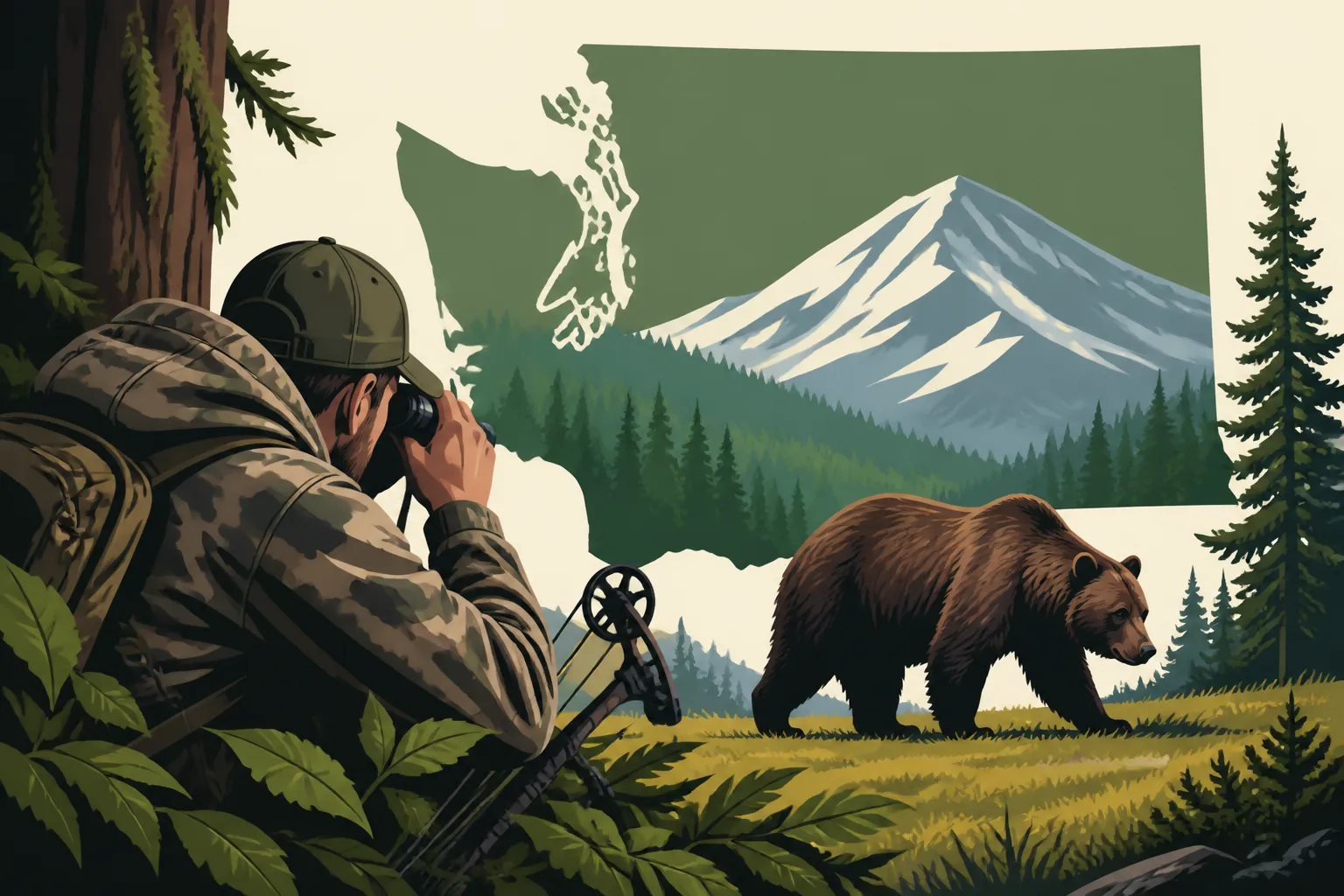
Spot-and-Stalk Bear Hunting in Washington Without Bait
For many Washington hunters, the dream of bagging a black bear can feel like a distant one, especially with the state's unique and often frustrating regulations around baiting and using hounds. It's a real head-scratcher when you're used to other states' methods, but thankfully, success is absolutely achievable. This comprehensive guide will walk you through the ins and outs of effective spot-and-stalk bear hunting in Washington, ensuring you understand the rules, the bear, and the terrain to make your next hunt a triumph.
Understanding Washington's Bear Regulations and Restrictions
Navigating Washington's hunting regulations can sometimes feel like trying to track a ghost in a dense fog. When it comes to black bears, the rules are particularly distinct from many other states, often leading to confusion and, frankly, a bit of exasperation for hunters accustomed to different approaches. It's not just about knowing what you can't do, but understanding why these rules are in place and how they shape the way we hunt.
Why Baiting and Hounds Are Banned
The prohibitions against baiting and using hounds for bear hunting in Washington are a direct result of voter initiatives that passed decades ago. In 1996, Initiative 655 banned the use of hounds and bait, along with several other controversial hunting practices. This wasn't a decision made by wildlife managers alone but reflected a significant shift in public sentiment regarding fair chase and the ethics of hunting. For many hunters, this felt like a punch to the gut, removing traditional and effective methods they'd relied upon for generations. The argument from proponents was often centered on animal welfare and the idea of giving the animal a "fairer" chance, even if it made harvesting a bear significantly more challenging for hunters.
These bans present a unique set of obstacles. Without the ability to condition bears to a specific food source or track them relentlessly with dogs, hunters are forced to rely solely on their scouting abilities, patience, and understanding of bear behavior in their natural environment. It means you can't just set up a camera over a bait pile and wait; you have to actively search, observe, and pursue. This often leads to lower success rates compared to states where these methods are allowed, but it also cultivates a deeper appreciation for the hunt and the animal itself. It's a stark reminder that hunting in Washington requires a different skill set, emphasizing true wilderness craft over technological or manipulative advantages.
Key Season Dates and Tag Requirements
Washington's black bear seasons are generally structured around two primary periods: an early fall season, which often coincides with the peak of the huckleberry and other berry crops, and a later fall season that extends into the colder months as bears bulk up for hibernation. These seasons vary by Game Management Unit (GMU) and year, so it is absolutely critical to consult the most current Washington Big Game Hunting Seasons and Rules pamphlet from the Washington Department of Fish and Wildlife (WDFW) before planning your hunt. Typically, the general bear season might open in early August or September and run through mid-November, sometimes extending to the end of the year in specific GMUs. However, some areas have very limited or no bear season, so don't assume every GMU is open.
To legally hunt black bear in Washington, you'll need a valid hunting license and a separate bear tag. Many resident and non-resident hunters opt for a "Big Game Combo" license, which often includes a bear tag as part of the package, simplifying the purchasing process. If you don't buy the combo, a standalone bear tag is readily available over the counter. Remember, once you harvest a bear, you are legally required to report your kill to WDFW within ten days. This harvest reporting is vital for wildlife managers to track populations and ensure sustainable hunting opportunities for future generations. Failing to report can result in penalties, so always make sure you fulfill this crucial step. You can usually report online through your WILD account. For more specific details, check out the article on Washington Bear and Cougar Seasons.
Identifying Legal Bears and Ethical Considerations
One of the most significant ethical and legal challenges in spot-and-stalk bear hunting is accurately identifying your target. Washington regulations strictly prohibit harvesting a sow with cubs. This is where patience and good optics become paramount. Cubs, even larger ones, can often be obscured by vegetation or simply be a short distance from the sow. You might spot what appears to be a lone bear, only for a cub to emerge from behind a log moments later. The frustration of passing up a perfect shot because of this uncertainty is real, but it's a non-negotiable part of ethical hunting here. Always take the time to observe the bear for an extended period, scrutinizing the surrounding area for any signs of offspring before making a decision to shoot.
Beyond avoiding sows with cubs, ethical hunting also demands a clean, humane kill. Bears, with their thick hide, heavy bone structure, and dense fat layers, require precise shot placement. The most effective shots typically target the vitals (lungs and heart). Understanding bear anatomy and practicing your shooting in varying field positions are crucial. When you do harvest a bear, approaching it cautiously is always advised. Even a mortally wounded bear can be dangerous. Give the animal time, observe from a distance, and approach from above and behind the head if possible, confirming it's expired before handling. It's also important to be aware of Sows With Cubs and the Legal Line to ensure you're always hunting within the confines of the law and respecting the species.
Bear Biology and Behavior: What Drives Washington's Black Bears
To successfully spot-and-stalk a black bear in Washington, you absolutely have to think like one. Understanding their biology and behavior isn't just academic; it's the foundation of effective scouting and hunting. Bears are creatures of opportunity, constantly driven by their stomachs, and their movements are almost entirely dictated by the availability of food throughout the seasons.
Seasonal Food Sources and Foraging Habits
Black bears are omnivores with incredibly diverse diets, and what they're eating shifts dramatically with the seasons in Washington. In the spring and early summer, after emerging from their dens, bears are primarily focused on protein and tender green vegetation. They'll frequent avalanche chutes and moist meadows, digging for roots and grubs, and grazing on succulent grasses and clover that provide quick energy after months of fasting. This is also a time when they might seek out winter-killed animals, providing an important protein boost.
As summer progresses into early fall, the diet shifts dramatically to berries. Huckleberries, salmonberries, blackberries, and blueberries become a primary food source, especially on the western side of the Cascades and at higher elevations in Eastern Washington. Bears will spend hours, even days, gorging themselves in productive berry patches, packing on crucial fat reserves for the coming winter. You’ll often find them working these areas systematically, leaving behind tell-tale signs of bent branches and scat full of berry seeds. Later in the fall, particularly in oak and madrone forests, acorns become a highly prized commodity. Bears will travel significant distances to capitalize on an abundant mast crop, and tracking their movements through these areas can be incredibly productive. In coastal and riverine areas, don't overlook salmon spawning runs as a critical late-season food source, though these can be harder to hunt due to dense riparian vegetation and human activity.
Preferred Habitats Across Washington's Diverse Landscapes
Washington’s black bear population thrives across a vast array of habitats, from the dense, wet rainforests of the Olympic Peninsula to the dry, ponderosa pine forests and open sagebrush country of Eastern Washington. On the west side, bears are most often found in thick, regenerating timber stands, particularly those with abundant berry-producing understory like salal and huckleberry. Clearcuts, especially those a few years old that are starting to "green up" and produce berries, are also prime locations. These areas offer both food and thick cover for bedding. River bottoms and drainages, often overlooked, provide consistent water sources and dense travel corridors. The key here is to look for areas with a mosaic of dense cover and accessible food sources, often associated with past logging activity.
East of the Cascades, bears still favor timbered areas but might utilize them differently. Steep, north-facing slopes with cooler temperatures and denser timber offer refuge during hot days, while south-facing slopes, particularly those with huckleberries or other berry-producing shrubs, become feeding magnets during cooler parts of the day. As you get into the drier, eastern regions, bears are often concentrated near riparian areas, springs, and creeks, which provide water and lush vegetation. Look for pockets of timbered draws surrounded by more open country, as these can funnel bears and offer excellent glassing opportunities. Areas with mixed conifer and deciduous trees, especially where oaks are present, are also worth investigating during mast years.
Daily and Annual Movement Patterns
Black bears are generally most active during the twilight hours of dawn and dusk, but their activity can extend throughout the day, particularly during cooler weather or when food sources are abundant. On hot, sunny days, they'll often bed down in dense cover during the midday heat, emerging in the late afternoon to feed. Overcast or rainy days, however, can see them actively foraging for much longer periods, as the cooler temperatures make them more comfortable. Understanding these daily rhythms is crucial for planning your spot-and-stalk efforts. Early mornings, when thermals are often descending, and late evenings, as thermals begin to rise, are generally the most productive times to be glassing.
Annually, bears undertake smaller-scale migrations based on food availability. They might move from lower-elevation spring green-ups to mid-elevation berry patches in summer, and then to higher-elevation huckleberry fields or lower-elevation acorn flats in the fall. These movements are not as dramatic as, say, elk migrations, but they are predictable once you understand the local food progression. For example, if you know a particular basin consistently produces a good huckleberry crop in August, bears will likely be there. As autumn deepens and food becomes scarcer, bears become increasingly focused on calorie intake, spending more time foraging to build up fat reserves before denning for winter. This pre-denning feeding frenzy can offer some of the best hunting opportunities, as bears are highly motivated and less wary.
E-Scouting and Pre-Season Preparation for Bear
Successful spot-and-stalk bear hunting in Washington hinges heavily on thorough pre-season preparation and effective e-scouting. Since you can't rely on bait or hounds, your ability to identify promising areas from home, understand the terrain, and then confirm your suspicions in the field is paramount. This isn't just about throwing darts at a map; it's a strategic, data-driven approach that significantly increases your odds.
Leveraging Online Tools and Maps
In today's hunting world, digital mapping applications like GoHunt, Gaia GPS, and onX Hunt are indispensable tools for e-scouting bears in Washington. These platforms allow you to overlay various data layers, providing a comprehensive understanding of potential bear habitat without ever leaving your couch. Start by identifying areas known for healthy bear populations within a GMU you're considering. Then, dive deeper. Look for areas with a high density of known bear food sources. For instance, in Western Washington, focus on clearcuts that are 3-10 years old, as these often have abundant berry bushes and new growth. On the east side, scout for large huckleberry patches at higher elevations or oak stands in river breaks.
Beyond food, examine terrain features that provide cover and water. Dense timber stands, particularly on north-facing slopes, offer cool bedding areas during warm months. Identify springs, creeks, and riparian zones, as bears always need access to water. Pay close attention to recent burn areas, which often see a flush of new growth and berry production in subsequent years, attracting bears. Platforms like GoHunt often have specific map layers for habitat types or public land ownership, which can be invaluable. Always download maps for offline use before you head into the field, as cell service is often nonexistent in prime bear country. For a deep dive into using these tools, you might find tips in resources like E-Scouting a Washington GMU From Home.
Identifying Key Terrain Features and Access Points
Once you've identified general areas on your digital maps, start pinpointing specific terrain features that will concentrate bears or provide advantageous glassing positions. South-facing slopes that warm up earlier in the spring often provide the first green feed, drawing bears out of their dens. Later in the season, these same slopes, if covered in berries, will be feeding hot spots. Look for saddles, ridges, and natural funnels that bears might use for travel between bedding and feeding areas. These pinch points can be excellent places to focus your efforts.
Identifying potential glassing knobs and vantage points is equally critical. You want elevated positions that offer expansive views of multiple drainages, clearcuts, or natural openings where bears might be feeding. Use the contour lines on your maps to find points with good sightlines and relatively easy, quiet access. Remember to also scout for access points into these areas. Washington has a mix of public lands (National Forests, DNR lands) and private timber company lands, some of which require permits or have specific access rules. Understanding Washington Green Dot Road Systems and knowing which roads are open, seasonally closed, or require walk-in access is crucial. Mark these access points and potential hiking routes on your map, noting any gates or restrictions.
Scouting for Sign and Past Bear Activity
While e-scouting provides a fantastic starting point, nothing beats boots on the ground for confirming bear presence. Before the season opens, if allowed, hike into your targeted areas specifically looking for bear sign. Fresh bear scat, especially if it's full of berry seeds or grass, is a clear indicator that bears are actively using the area. Look for tracks in muddy areas near water sources or along old logging roads. Black bear tracks are distinctive, showing five toes with prominent claws.
Pay attention to more subtle signs as well. Overturned rocks or torn-up logs indicate bears digging for grubs or insects. Trees with bark rubbed off or claw marks higher up can suggest bear activity, possibly territorial marking or a rub tree. Areas where berry bushes have been bent over or stripped clean of berries are strong indicators of recent feeding. The fresher the sign, the more confidence you can have that bears are currently in the vicinity. While trail cameras are excellent for confirming animal presence, always be mindful of Trail Camera Rules on Washington Public Land to ensure you're compliant with WDFW regulations on public land. Observing and interpreting these signs accurately is a vital skill for putting yourself in the best position to spot a bear.
Mastering the Art of Spot-and-Stalk
Spot-and-stalk hunting for bears in Washington is a true test of patience, observational skills, and woodsmanship. It's a method that requires you to actively locate the animal from a distance and then meticulously plan and execute an approach that keeps you undetected. This isn't about rushing; it's about precision and control.
Strategic Glassing Techniques for Finding Bears
Glassing is arguably the most crucial skill for spot-and-stalk bear hunting, particularly in Washington’s diverse and often vast landscapes. It demands patience and a systematic approach. Find a vantage point that offers wide, unobstructed views of potential bear habitat – clearcuts, berry patches, avalanche chutes, or timbered draws. Set up your spotting scope or binoculars on a sturdy tripod. Begin by glassing the most obvious areas first, then systematically grid-search the entire area, paying close attention to shadows and subtle movements. Don't just scan; study the landscape. Bears can blend in incredibly well, often appearing as nothing more than a dark patch or a moving shadow. Many successful hunters attribute their finds to persistent, focused glassing rather than just quick scans.
The best times for glassing are typically early morning (first light) and late evening, when bears are most active. Overcast days can also be highly productive, as bears may feed longer into the day without the intense heat. Use your binoculars to pick apart distant dark patches, looking for distinct bear characteristics like a humped back, small ears, or the sway of a black bear's walk. Don't forget to glass areas that might seem unlikely, like the edges of dense timber where a bear might be emerging to feed. Think about where you'd be if you were a bear, looking for food or a comfortable place to bed down. You can learn a lot from applying techniques like Glassing Breaks at First Light, even if your target is a bear instead of a mule deer.
Reading Terrain and Approaching a Bear Undetected
Once you’ve spotted a bear, the real chess match begins: the stalk. This is where your understanding of terrain, wind, and the bear's behavior becomes critical. Before you move, take ample time to observe the bear’s activity, direction of travel, and any potential bedding areas it might be heading toward. Map out your approach using natural cover – ridge lines, thick timber, depressions, or even large boulders – to shield your movement. Always consider the wind direction. Bears have an incredible sense of smell, and a shift in the breeze can instantly blow your stalk. Use a wind checker frequently to confirm the prevailing direction and thermals. In the mornings, thermals generally fall, carrying your scent downhill; in the evenings, they rise.
Move slowly, deliberately, and quietly. Every step should be calculated to avoid breaking twigs, scuffing rocks, or making sudden movements that could catch the bear's attention. Stop frequently, use your binoculars to re-locate the bear, and reassess your approach. If the bear is feeding, try to time your movements with its head down. If it's walking, anticipate its path and try to cut it off or position yourself ahead of it. Washington's terrain can be incredibly challenging, with dense underbrush in the west and rocky, open slopes in the east. Adapt your stalk to the environment, using the thick cover to your advantage in the timber, and low-crawling or utilizing every contour on more open ground. The goal is to get within comfortable shooting range without the bear ever knowing you were there.
The Critical Shot: Placement and Follow-Up
When you finally get within shooting range, the moment of truth arrives. Bears, especially black bears, are incredibly tough animals, and a precise shot is absolutely paramount for a clean, ethical kill. Their vitals are tucked tight behind the shoulder, slightly lower and further forward than with deer or elk, due to their robust bone structure and thick layer of fat and muscle. A quartering-away shot can be excellent if you aim to hit the opposite shoulder, ensuring penetration through the vitals. Avoid shots directly into the shoulder plate if possible, as it can be incredibly dense and deflect your bullet or arrow.
After the shot, observe the bear's reaction closely. Did it drop? Did it run? Note its direction of travel and any landmarks. If it doesn't drop immediately, give it time – often 30 minutes to an hour – before beginning your follow-up, unless you saw a clear, fatal hit. This allows the bear to expire and prevents it from being pushed further. When tracking, look for blood, broken branches, or disturbed earth. Be cautious during the follow-up; a wounded bear can be dangerous. Carry a sidearm if you are comfortable and legally permitted. The aim is always to recover the animal efficiently and respectfully, minimizing suffering. Ensure your Rifle Setup for Washington Elk and Deer is sufficient for the job, as bear vitals can be surprisingly resilient.
Gear Essentials for Washington Bear Hunters
Hunting black bears in Washington requires thoughtful gear selection to contend with the state's rugged terrain and notoriously unpredictable weather. From optics that help you find bears in dense cover to a pack that can haul out a heavy load, every piece of equipment plays a critical role in your success and comfort.
Optics for Spotting and Confirming Bears
Given that baiting is prohibited, high-quality optics are not just helpful; they are absolutely indispensable for spot-and-stalk bear hunting in Washington. You'll be spending hours, if not days, behind your glass. A good pair of 10×42 binoculars is the workhorse for most hunters, offering a wide field of view and sufficient magnification to scan broad areas. However, for serious bear hunters focusing on vast clearcuts or open mountain faces in Eastern Washington, a pair of 15×56 binoculars or a spotting scope (20-60x range) mounted on a sturdy tripod will be a game-changer. These higher magnification tools allow you to pick apart distant shadows, confirm if a dark blob is indeed a bear, and evaluate its size and legal status (looking for cubs).
When choosing optics, prioritize optical clarity and low-light performance. Brands like Vortex, Leupold, and Swarovski offer excellent choices at various price points. A tripod is non-negotiable for sustained glassing with a spotting scope or even high-magnification binoculars. It eliminates shake, reduces eye strain, and allows for meticulous grid-searching. Don't forget a rangefinder, especially when hunting in steep, broken country. It’s vital for accurately judging distances, which can be deceptive in varying terrain. For stability and comfort during long glassing sessions, a good Binocular Harness Versus Neck Strap is also highly recommended.
Clothing, Footwear, and Weather Protection
Washington's weather is notoriously fickle, especially during the fall bear seasons. You can experience sunshine, rain, and even snow all in a single day. Layering is key. Start with a moisture-wicking base layer (merino wool or synthetic), add an insulating mid-layer (fleece or puffy jacket), and top it off with a high-quality, waterproof, and breathable outer shell. This rain gear isn't just for keeping you dry; it also needs to be durable enough to withstand brush and quiet enough not to spook animals during a stalk. In the dense, wet forests of Western Washington, waterproof capabilities are critical, making a quality Rain Gear That Survives a Washington Westside Season an absolute must-have.
Your feet will be your primary mode of transportation, so invest in durable, waterproof, and comfortable boots that are well broken-in. For the steep, often rocky terrain of Eastern Washington or the slick, muddy slopes of the Westside, boots with excellent ankle support and aggressive tread are essential. Consider boots with GORE-TEX or similar waterproof membranes. Gaiters can be invaluable for keeping water, mud, and debris out of your boots, especially when pushing through wet brush. For more insights on footwear suitable for different terrains, refer to the guide on Boots for Washington's Eastside Rock and Westside Mud.
Packing and Meat Care Considerations
Once you've successfully harvested a bear, the work truly begins. Bears are heavy, often surprisingly so, and their meat and hide need to be handled properly and quickly, especially in warmer early-season temperatures. A robust pack system is non-negotiable. A good internal or external frame pack with a dedicated meat shelf or ample capacity is essential for hauling out the quarters, hide, and skull. Don't underestimate the weight; even a modest black bear can be a substantial load. You'll want a pack that can comfortably carry a significant amount of weight, potentially exceeding what a single hunter can manage in one trip if it's a large bear. For tips on managing heavy loads, check out Pack Weight One Hunter Can Carry.
Durable, breathable game bags are equally important. They protect the meat from flies, dirt, and debris while allowing it to cool. Bring enough for all four quarters, backstraps, tenderloins, and the hide. In warm weather, getting the meat cooled down quickly is paramount to prevent spoilage. Field dressing should be done immediately, and if possible, quarter the bear and get the meat out of direct sunlight and into a shaded, cool area. Having a lightweight bone saw, a sharp knife, and a knife sharpener in your pack will make the field dressing and quartering process much smoother. For specific advice on keeping meat fresh in challenging conditions, consult Field Dressing in Warm Early-Season Weather.
Advanced Tactics and Common Challenges
Even with a solid understanding of bear behavior and the right gear, bear hunting in Washington presents its own set of advanced tactics and common challenges. Overcoming these obstacles often separates a successful hunter from one who goes home empty-handed.
Hunting Recent Burns and Clearcuts
Recent burn areas and clearcuts are often hotspots for black bear activity in Washington, primarily because these disturbed landscapes stimulate a flush of new growth. After a fire or logging operation, sunlight reaches the forest floor, promoting the growth of grasses, forbs, and especially berry-producing shrubs like huckleberries and salmonberries. Bears are quick to capitalize on these new, abundant food sources. When e-scouting, actively look for areas with recent logging activity or fire perimeters from previous years. The sweet spot is often clearcuts that are 3-10 years old, where vegetation is dense but not yet fully mature timber.
Hunting these areas requires patience and a good pair of binoculars, along with careful navigation. The vegetation can be incredibly thick, making stalks challenging and visibility limited. Bears often bed down in the thickest reprod, emerging to feed on the edges or in small openings. Find elevated vantage points that allow you to glass into these clearcuts, focusing on the interface between the new growth and standing timber. Pay close attention to subtle movements or dark patches. When stalking in these areas, move deliberately and quietly. The noise of snapping twigs can be amplified in dense brush. Use the contours of the land and the thick vegetation as cover. Learning to "read" these environments for signs of animals, much like Reading Clearcuts and Reprod for Blacktail Bucks, can be adapted for bear hunting.
Dealing with Wind, Thermals, and Scent
A bear's nose is its primary defense and hunting tool, making wind and thermals the single most critical factor in a spot-and-stalk hunt. Bears can detect human scent from incredible distances, so failing to account for wind direction will almost certainly result in a blown stalk. Wind patterns are dynamic and constantly shifting with terrain and time of day. In mountainous terrain, cold air descends into valleys in the morning (down-canyon thermals), and warm air rises up slopes in the evening (up-canyon thermals). During midday, swirling winds can be especially tricky.
Always hunt into the wind or with a crosswind. Before initiating a stalk, use a wind checker (like a small bottle of powder or milkweed seeds) to confirm the exact wind direction at your location. As you move, recheck frequently, especially when cresting ridges, entering new drainages, or approaching your target. Consider setting up your glassing position so that the wind is in your favor for potential stalks. Minimize your scent by wearing clean hunting clothes, avoiding strong deodorants or colognes, and storing your gear away from strong odors. While scent control sprays can help, nothing completely eliminates human odor. Your best defense is always the wind.
Overcoming Low Bear Density and Pressure
While Washington has a healthy black bear population, they aren't evenly distributed, and some GMUs can have relatively low densities or areas that receive significant hunting pressure. This can make finding a bear a real challenge. The key to overcoming this is persistence, thorough scouting, and often, being willing to put in the extra miles to reach less accessible areas. Don't be afraid to venture off the beaten path and into terrain that deters other hunters. If you're consistently seeing fresh tracks and scat but no bears, it might indicate that the bears are highly pressured and primarily moving at night or during the thickest parts of the day.
In low-density areas, focus your efforts on the absolute prime habitat, such as the most productive berry patches, recent burns with abundant food, or remote riparian zones. Look for "hidden" pockets of habitat that might be overlooked by others. This is where detailed e-scouting with tools like GoHunt, identifying obscure access points, and being prepared for a strenuous hike can pay dividends. Patience becomes even more critical; you might need to commit multiple days to a single promising area, systematically glassing every square inch during prime times. Sometimes, it means moving to a completely different area if your initial reconnaissance doesn't turn up any fresh sign. Success in these situations is often a testament to sheer willpower and a deep understanding of bear behavior.
| Habitat Feature | Western Washington Black Bear Habitat | Eastern Washington Black Bear Habitat |
|---|---|---|
| Primary Food | Huckleberries, salmonberries, salal, grasses, acorns, riparian greens | Huckleberries, chokecherries, serviceberries, grasses, oak acorns |
| Preferred Cover | Dense reprod, old-growth timber edges, deep canyons, riparian thickets | Ponderosa pine forests, steep north-facing slopes, timbered draws |
| Key Terrain | Clearcuts (3-10 yrs old), river bottoms, avalanche chutes, dense brush | Mountain slopes, huckleberry fields, dry creek beds with cover, burns |
| Water Sources | Abundant creeks, rivers, springs, consistent rainfall | Springs, perennial creeks, seeps, reservoir edges |
| Seasonality Focus | Early fall (berries), late fall (acorns, pre-denning) | Mid-summer (high elevation berries), fall (acorns, pre-denning) |
| Access Considerations | Private timber permits (Weyerhaeuser, Hancock), Green Dot Roads | National Forest roads, BLM lands, some private timber |
Disclaimer
Hunting is an inherently dangerous activity. Always prioritize safety, understand and adhere to all Washington Department of Fish and Wildlife (WDFW) regulations, and respect private land ownership. The information provided in this guide is for informational purposes only and should not replace official regulations or professional instruction. Hunt safely and ethically.