Elk Calf Survival in Washington
Every hunter who's spent time in Washington's elk country, whether it's the dense timber of the westside or the vast, rolling hills of the east, understands the profound beauty and inherent mystery of these magnificent animals. One of the most talked-about, and often most frustrating, aspects of elk management and hunting is the survival rate of their calves. It feels like a silent, invisible battle happening in the shadows, and it dictates the health of our herds more than almost anything else. This guide is going to peel back the layers on elk calf survival in Washington, exploring the intricate dance of predation, habitat, weather, and human impact that determines how many of those little spots make it to their first birthday.
Understanding the Fragile Start: Elk Calf Survival Basics
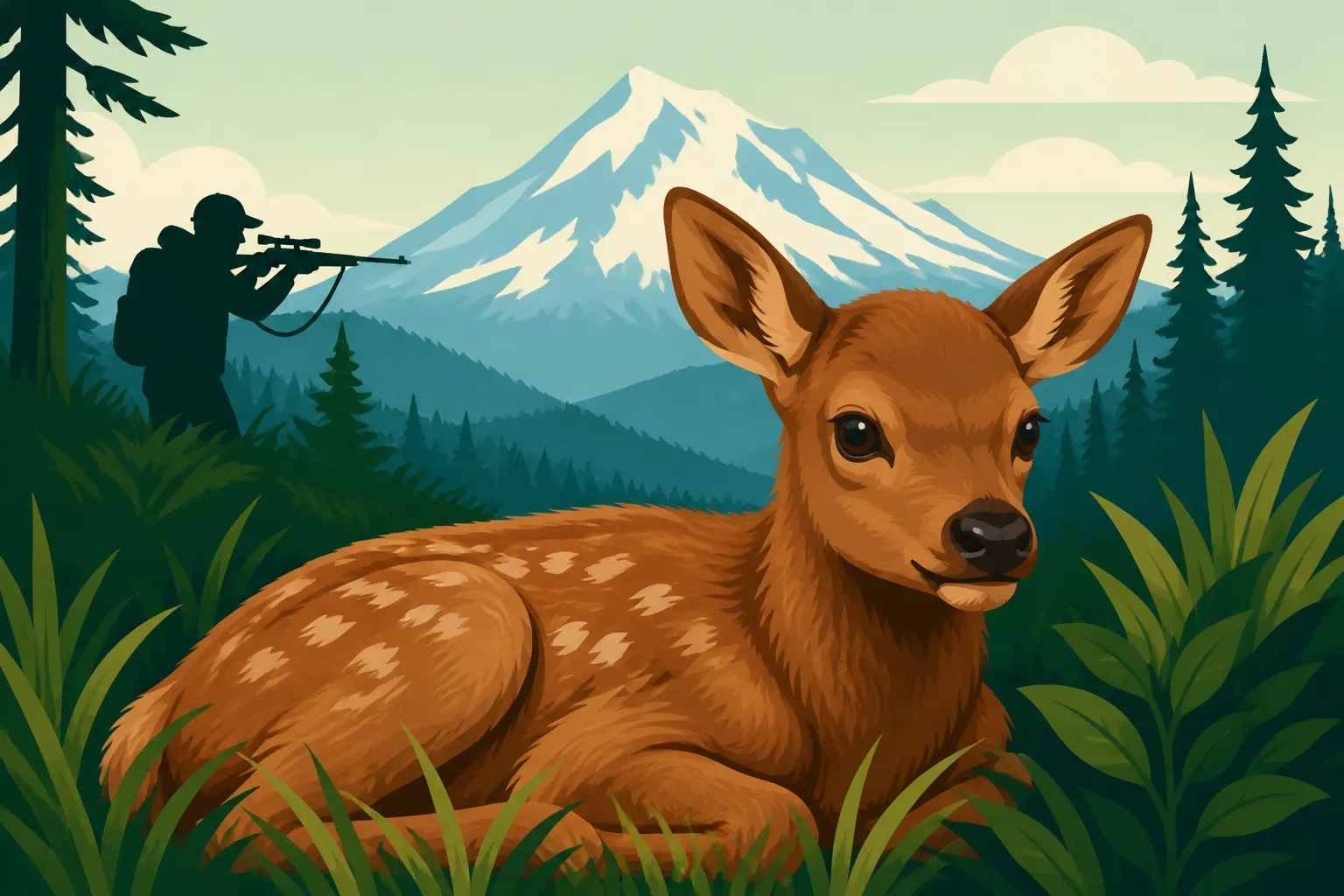
When you stumble upon a tiny, spotted elk calf hidden deep in the brush, it’s impossible not to be struck by its vulnerability. These newborns represent the future of the herd, yet their first few months are fraught with danger. It’s a make-or-break period that directly impacts how many mature bulls and cows we’ll see in the coming years.
The Critical First Few Weeks
The moment an elk calf drops to the ground, often in a secluded, brushy patch or deep timber, its life becomes a race against time and circumstance. For the first few days, sometimes even a couple of weeks, calves are incredibly fragile. Their primary defense mechanism is concealment. They'll lie perfectly still, relying on their camouflage and lack of scent to evade predators, while their mothers keep a watchful, yet often distant, eye.
During this period, access to good nutrition for the cow is paramount, as it directly influences the quality and quantity of her milk. A cow that's struggled through a tough winter or one that's been stressed by early-season disturbances might not produce enough, making her calf weaker and more susceptible to illness or unable to outpace a predator. The weather plays a huge role too; prolonged cold, heavy rains, or unseasonably hot spells can push these tiny bodies past their limits. It's a miracle, really, how many make it through, given the odds stacked against them right from the start.
How WDFW Tracks Calf Recruitment
The Washington Department of Fish and Wildlife (WDFW) dedicates significant effort to tracking calf recruitment – essentially, how many calves survive to about six months old and join the broader herd. This isn't just a casual headcount; it's a critical piece of data that informs hunting season structures, tag allocations, and overall herd management strategies. WDFW employs various methods, including aerial surveys conducted in late winter or early spring, after the bulk of winter mortality has occurred. They fly specific routes, counting elk and categorizing them into calves, cows, and bulls, which helps establish Bull-to-Cow Ratios in Washington Herds.
These surveys, while invaluable, are challenging. Dense cover, particularly in western Washington, can make accurate counts difficult, and elk are masters of evasion. Ground observations, hunter harvest data, and even anecdotal reports from folks out in the woods also contribute to the bigger picture. The numbers they crunch help biologists understand if a herd is growing, stable, or declining, and whether specific management actions are needed. As hunters, these WDFW efforts directly influence our opportunities in the field, making the survival of those little spotted calves a very tangible concern for everyone involved. For instance, the data they gather on elk calf survival rates directly feeds into how many special permits are issued for each unit and whether general seasons might see changes in the future.
Major Predators and Their Impact on Washington Elk Calves
It's a harsh reality in the wild: nature is a brutal balancing act, and nowhere is this more evident than in the predator-prey relationship. For elk calves, predators represent the most significant threat to their survival, particularly during those vulnerable first months. Understanding which predators are at play and how they operate gives us a clearer picture of why calf recruitment fluctuates.
Cougar Predation Dynamics
Cougars, or mountain lions, are incredibly efficient predators, and elk calves are a prime target, especially in areas where cougar populations are robust. These stealthy hunters prefer to ambush their prey, and a stationary, camouflaged calf makes for an easier meal than a healthy adult elk. Cougars are year-round residents, and their diet shifts with prey availability. During calving season, they often key in on concentrated nursery areas, taking advantage of the high density of vulnerable young.
The impact of cougars on calf survival can be substantial, particularly in specific Game Management Units (GMUs) where habitats support both healthy cougar numbers and elk. Research often indicates that cougars are responsible for a significant percentage of calf mortality. While healthy elk herds can often sustain some level of cougar predation, prolonged periods of high cougar density coupled with other stressors like poor habitat or harsh winters can push calf survival into concerning territory. The complex relationship between cougars and elk is constantly monitored by WDFW to ensure a sustainable balance, as discussed in Cougar Hunting in Washington After the Hound Ban.
Bear Predation Patterns
While cougars might be the apex specialists in killing large game, black bears are opportunistic omnivores that are not to be underestimated as a threat to elk calves. Especially in the spring and early summer, when bears are emerging from hibernation and looking for easily accessible protein, newborn calves represent a significant food source. Bears often stumble upon hidden calves, or actively seek them out in calving grounds.
The western side of Washington, with its dense forests and higher bear populations, often sees a greater impact from bear predation on calves than the more open, eastern landscapes. Bears don't typically stalk and chase like cougars; rather, they rely on scent and chance encounters. A sow bear needing to feed her cubs will not pass up an easy meal. While the percentage of calf mortality attributed to bears might fluctuate year to year and region to region, their presence during the calving season is a definite factor in the overall survival equation. You can see how Washington Black Bear Population Estimate relates to this pressure.
Wolf Presence and Calf Survival
The reintroduction and natural expansion of wolf packs in Washington have added another layer of complexity to elk calf survival. Wolves are highly social and effective pack hunters, often targeting the weakest or most vulnerable animals in a herd – and calves certainly fit that description. In areas where wolf packs are established, studies have shown a noticeable impact on elk calf survival rates.
The dynamics here are fascinating and often hotly debated. Wolves can influence elk behavior, causing them to move more frequently, sometimes away from traditional calving grounds or into areas with less cover. This added stress can indirectly affect calf survival. The degree of impact, however, varies significantly depending on the specific wolf pack's territory, its preferred prey, and the density of the elk herd itself. Some herds might be more resilient, while others in nascent wolf territories might experience more pronounced dips in calf recruitment. Hunters and wildlife managers alike pay close attention to Washington Wolf Pack Numbers and their distribution, as it's a relatively new and evolving factor in Washington's big game ecosystem.
Other Predators and Scavengers
While cougars, bears, and wolves represent the "big three" predators for elk calves, it's worth remembering that other animals play a smaller, yet sometimes significant, role. Coyotes, for example, are common across Washington and are highly opportunistic. While they might struggle to take down a healthy, strong calf, a weakened or compromised one, or a calf separated from its mother, can become easy prey. Bobcats, though smaller, are also efficient predators of fawns and can occasionally take a calf. Even large raptors, like golden eagles, have been observed preying on very young or sick calves, though this is less common.
These "secondary" predators often act as scavengers, cleaning up kills made by larger predators, or preying on calves that are already severely weakened by other factors. Their cumulative effect, while not as dramatic as that of a single wolf pack or cougar, still contributes to the overall mortality rate, particularly when environmental conditions are tough, and calves are already struggling.
Environmental Factors Shaping Calf Survival Rates
Beyond the constant threat of predators, the natural world itself presents a formidable gauntlet for young elk. The quality of their surroundings and the unpredictable nature of weather play immense roles in whether a calf thrives or simply succumbs to the elements.
The Role of Habitat Quality
Healthy habitat is the cornerstone of robust elk populations, and for calves, it's absolutely non-negotiable for survival. Calving cows seek out specific types of terrain: areas with dense cover for concealment, proximity to reliable water sources, and ample, nutritious forage. Think thick brush, dense timber stands, or secluded pockets of tall grass. These spots offer protection from the elements and a place for calves to hide from predators during their most vulnerable stage.
When habitat quality declines, due to factors like excessive logging, wildfires, human development, or even overgrazing by too many animals, the stress on calving cows and their offspring increases dramatically. Less cover means more exposure to predators and harsh weather. Poor forage quality means cows might not be in optimal condition to support a pregnancy or lactate adequately, leading to weaker calves more susceptible to disease and less likely to evade danger. The health of Washington's forests and grasslands directly translates to the health of its elk calves.
Weather Extremes and Natural Events
Washington's diverse climate, from the wet, mild winters of the westside to the deep snows and arid summers of the east, means weather is always a wild card. For elk calves, extreme weather events can be devastating. Prolonged periods of deep snow in winter can stress pregnant cows, depleting their energy reserves and potentially leading to higher calf mortality rates come spring. A cow that enters calving season in poor condition is more likely to give birth to a smaller, weaker calf, or may even abandon it if her own survival is jeopardized.
Conversely, a late, cold spring with persistent rains can be equally detrimental. Newborn calves are not well-equipped to handle hypothermia, and a prolonged chill can quickly overcome their tiny bodies. Drought conditions in the summer can dry up essential water sources and reduce forage quality, again putting stress on cows and impacting milk production. Wildfires, another increasing concern in Washington, can destroy critical calving grounds and force elk into unfamiliar, more exposed territory. The impacts of these natural events, especially Snowpack Effects on Elk Survival, cascade through the herd, directly affecting the youngest members.
Disease and Nutritional Stress
While not as immediately dramatic as a predator attack, disease and nutritional stress can be silent killers of elk calves, often weakening them to the point where they become easy targets for other threats. Calves rely entirely on their mothers' milk for immunity in their first weeks, so if a cow is sick or malnourished, her calf's immune system will be compromised.
Diseases such as pneumonia or various bacterial infections can sweep through calf populations, especially in areas of high density. In Washington, we’ve sadly seen the devastating effects of diseases like elk hoof disease on adult elk, and while less directly observed in calves, a mother affected by such an illness will certainly not be able to provide the best start for her young. You can learn more about Elk Hoof Disease Symptoms and its broader impact on herds. Furthermore, if forage quality is poor due to drought or degraded habitat, cows can't maintain their body condition, which means lower quality or quantity of milk. This nutritional stress makes calves stunted, weaker, and less able to develop the speed and agility needed to escape predators or cope with environmental challenges.
Human Influence: From Roads to Regulation
It’s easy to point fingers at Mother Nature or the local wolf pack when discussing calf survival, but we, as humans, also play a significant, often complex, role. Our presence, our infrastructure, and our management decisions ripple through the elk populations, sometimes for better, sometimes for worse.
Road Systems and Disturbance
The vast network of logging roads, forest service roads, and even less-traveled two-tracks that crisscross Washington's elk country create a double-edged sword for wildlife. On one hand, these roads can provide crucial access for hunters, timber companies, and recreationists. On the other hand, they represent significant sources of disturbance, especially during critical times like the calving season. Increased human presence, whether it's vehicles, hikers, or mountain bikers, can push cows away from ideal calving habitat, forcing them into less secure areas where calves might be more exposed to predators or harsher conditions.
Beyond direct disturbance, roads also offer corridors for predators, allowing them to cover more ground efficiently. They can also lead to increased vehicle collisions with elk, though calves are less frequently impacted by this than adults. The implementation of specific regulations, such as Washington Green Dot Road Systems that limit motorized access in certain areas, is an attempt to mitigate some of these impacts, providing critical sanctuaries for elk and other wildlife to live with less human pressure.
Hunting Pressure and Cow Mortality
This is always a touchy subject among hunters, but it's a necessary part of the conversation when we talk about calf survival. The debate around cow tags and their potential long-term effects on herd recruitment is ongoing. WDFW issues cow tags in specific GMUs to manage herd size, reduce agricultural damage, and ensure the health of the overall population by balancing numbers with available habitat. When a cow is harvested, it's not just that individual animal removed from the population; it's also her potential future offspring.
However, it's crucial to understand that WDFW's decisions are based on extensive data, including calf recruitment rates. They aim for a sustainable harvest that doesn't jeopardize the future of the herd. In some areas, removing older, less productive cows might even lead to stronger, healthier calves from younger, more vigorous cows who then have better access to resources. The key is balance and careful management, ensuring that hunting pressure, particularly on cows, is maintained at a level that supports, rather than hinders, healthy calf survival and overall herd growth.
Management Strategies and Conservation Efforts
WDFW is on the front lines of managing Washington's elk herds, and calf survival is a huge part of their focus. Their work involves a multi-pronged approach that includes rigorous monitoring, habitat improvement projects, and strategic predator management. They use data gathered from aerial surveys and other sources to understand How WDFW Counts Big Game and assess population health, which directly informs their management plans.
Conservation groups, often supported by hunters, also play a vital role. Organizations like the Rocky Mountain Elk Foundation, for instance, are actively involved in habitat restoration, securing winter range, and improving calving grounds, all of which directly benefit calf survival. Furthermore, WDFW often engages in programs to mitigate conflicts between elk and agricultural interests, which can also indirectly benefit calves by reducing the need for aggressive herd reduction measures. Hunters, by purchasing licenses and tags, directly fund these efforts. Tools like GoHunt can help hunters understand these complex factors by providing detailed harvest statistics and unit-specific information, empowering them to make informed decisions and better understand the overall health of the herds they pursue.
Regional Variations in Washington Elk Calf Survival
Washington is a state of incredible ecological diversity, and what holds true for elk in the dense, wet forests of the Olympic Peninsula doesn't necessarily apply to the sagebrush-steppe of the Columbia Basin. This regional variation is keenly felt when it comes to elk calf survival, with different challenges and successes depending on where the elk call home.
Westside Roosevelt Elk Challenges
The Roosevelt elk of Western Washington are giants of the rainforest, adapted to a world of endless green, constant moisture, and dense, tangled undergrowth. For their calves, this environment presents a unique set of challenges. While the thick cover provides excellent concealment from predators, it also means that these calves are born into a landscape where visibility is often limited, and encounters with predators like black bears and cougars can be sudden and close-quarters. The constant dampness can also make young calves susceptible to hypothermia if they don't find adequate shelter.
Forest management practices, such as clearcutting and replanting, create a mosaic of habitat. While young clearcuts can provide abundant forage, they often lack the dense thermal and security cover that mature timber offers, potentially leaving calves more exposed. The impact of Elk Hoof Disease Symptoms has also been a significant concern for many of these western herds, and while it primarily affects adults, its presence can stress a herd, potentially leading to less resilient calves. Understanding the specific nuances of Roosevelt Elk of Western Washington helps us appreciate the unique struggles their calves face.
Eastside Rocky Mountain Elk Survival
Shift your gaze to Eastern Washington, and you'll find Rocky Mountain elk living in a vastly different world. Here, the landscape is characterized by more open ponderosa pine forests, rolling grasslands, and sagebrush country, often subject to more extreme temperatures – hot, dry summers and cold, snowy winters. For Rocky Mountain elk calves, the primary challenges often revolve around exposure and the harshness of the elements.
In more open country, calves have fewer places to hide, making them potentially more vulnerable to predators like cougars and wolves. Deep winter snows can severely impact maternal health, directly affecting calf viability in the spring. Conversely, dry summers can lead to poor forage conditions, impacting lactation and early calf development. Herds in areas like the Blue Mountains or the Okanogan Highlands face these very real, annual struggles. Factors like Snowpack Effects on Elk Survival and the availability of crucial winter range are paramount for the survival of Rocky Mountain Elk East of the Washington Cascades calves, shaping herd dynamics year after year.
Key Herd Comparisons
To truly appreciate the varied survival challenges, it helps to look at some of Washington's major elk herds and their specific contexts. While broad generalizations exist, each herd is a unique ecological entity.
| Herd Name | Region of Washington | Primary Habitat Type | Key Calf Survival Challenges | Major Predation Impact |
|---|---|---|---|---|
| Yakima Elk Herd | South Central Eastside | Ponderosa, grasslands, shrub-steppe | Winter range access, drought, human-wildlife conflict near agriculture. | Cougar, Wolf, Coyote |
| Colockum Elk Herd | Central Eastside | Ponderosa, bitterbrush, open slopes | Winter forage availability, harsh winters, fire impacts. | Cougar, Wolf, Bear |
| Blue Mountains Elk Herd | Southeast Eastside | Conifer forests, open meadows | Deep snow, limited winter range, habitat fragmentation, wolf presence. | Wolf, Cougar, Bear |
| Willapa Hills Elk Herd | Southwest Westside | Coastal forest, dense timber, clearcuts | Hoof disease, high black bear density, human disturbance, dense cover for predator advantage. | Bear, Cougar |
| Olympic Elk Herd | Olympic Peninsula Westside | Rainforest, dense timber, high rainfall | Hoof disease, black bear density, heavy rainfall, limited open forage. | Bear, Cougar |
As you can see, the specific environmental conditions and predator mix for a herd like The Yakima Elk Herd are quite different from those impacting The Willapa Hills Elk Herd. Understanding these regional differences, which is often easier with detailed resources like those provided by GoHunt, is key to comprehending the overall picture of elk calf survival in our state. Each of these herds, including The Colockum Elk Herd and The Blue Mountains Elk Herd, faces a unique blend of pressures that shapes the fate of its youngest members.
What Hunters Can Do to Support Healthy Elk Populations
As hunters, we're more than just participants in the outdoor lifestyle; we're often the most passionate conservationists. Our actions, both in and out of the field, have a direct bearing on the health of elk populations and, by extension, the survival of their calves. We have a responsibility, and an opportunity, to contribute positively.
Ethical Hunting Practices
First and foremost, ethical hunting practices are paramount. This means understanding and strictly adhering to all WDFW regulations, including seasons, bag limits, and legal hunting methods. It means being absolutely sure of your target and what's beyond it, and making clean, humane shots to minimize any suffering. Responsible shot placement, especially on larger animals like elk, reduces the chance of wounded animals that become easy prey for predators or succumb to the elements. Remember to meticulously follow up on any shot animal.
It also means respecting the land and other users. Leaving no trace, packing out all your trash, and avoiding unnecessary disturbance in sensitive areas (especially during calving season if you happen to be scouting) all contribute to a healthier environment for elk. And, of course, submitting your Washington Harvest Reporting Requirements is crucial for WDFW to gather accurate data, which helps them make informed management decisions that directly impact calf recruitment and future hunting opportunities.
Habitat Stewardship and Advocacy
Beyond the hunt itself, active habitat stewardship is one of the most powerful ways hunters can support elk populations. This involves participating in, or financially supporting, organizations dedicated to habitat conservation and restoration. Groups like the Rocky Mountain Elk Foundation, Backcountry Hunters & Anglers, and other local conservation organizations are often involved in projects to improve forage, enhance water sources, and restore vital winter and calving ranges.
Advocacy is another critical component. Staying informed about proposed land use changes, timber sales, or development projects that could impact elk habitat, and then voicing your opinion to local and state decision-makers, can make a real difference. Engaging with WDFW through public comment periods on rule changes or management plans ensures that the hunter's perspective, which is often deeply rooted in conservation, is heard. Tools like GoHunt can be invaluable here, providing current information on habitat conditions and management proposals, allowing hunters to easily track and engage with issues affecting Washington's wildlife.
Reporting Observations
Finally, one of the simplest yet most impactful things a hunter can do is become an extra pair of eyes and ears for WDFW. When you’re out scouting or hunting, you’re in places that biologists can't be all the time. If you observe unusually high calf mortality, find animals exhibiting signs of disease (like lameness due to hoof disease), notice significant habitat degradation, or even just see an unusual concentration of predators in a calving area, report it.
WDFW has systems in place for reporting wildlife observations, including disease. This ground-level, real-time data from informed individuals can be incredibly valuable to wildlife managers. It helps them track trends, identify emerging problems, and respond more effectively to issues impacting calf survival. Think of yourself as a citizen scientist; your unique perspective from the field can directly contribute to the knowledge base that guides the conservation and management of Washington's cherished elk herds.
Disclaimer
Please remember that hunting regulations, seasons, and wildlife management practices in Washington can change. Always consult the official Washington Department of Fish and Wildlife (WDFW) regulations and proclamations for the most current and accurate information before planning any hunting activity. This guide is for informational purposes only and should not replace official WDFW resources.