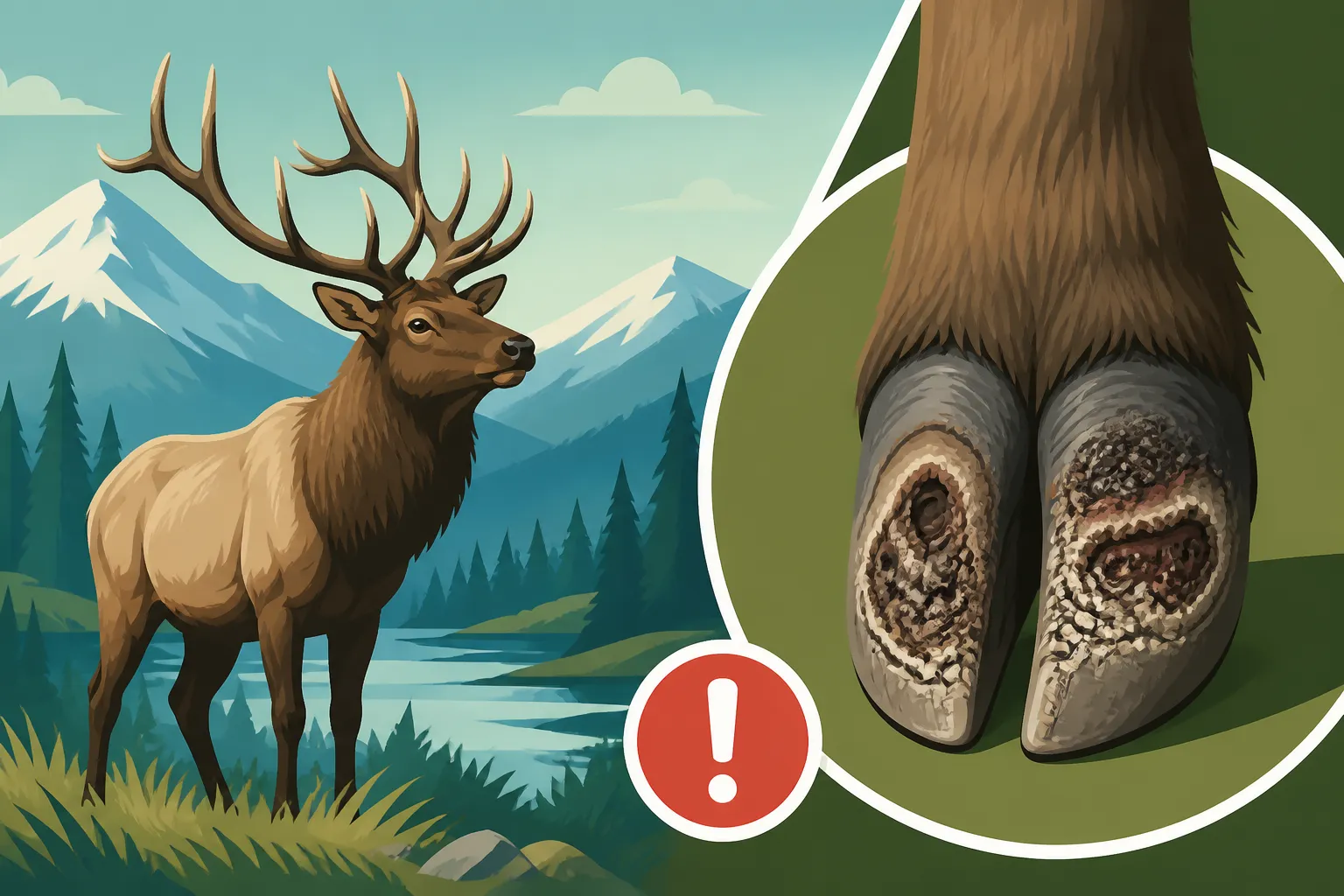
Elk Hoof Disease in Western Washington
It's tough to see a magnificent animal, a Washington elk, struggling with an obvious limp, its hooves overgrown or misshapen. For many hunters and outdoor enthusiasts, this sight is heartbreaking and raises serious questions about the health of our herds. This guide dives deep into elk hoof disease, often referred to as treponeme-associated hoof disease (TAHD), exploring its causes, impact on elk, and what we, as responsible citizens and hunters, can do to understand and help manage this challenging issue in Western Washington.
Understanding Elk Hoof Disease
Elk hoof disease, sometimes abbreviated as EHD, is a condition that has been a growing concern for wildlife managers and hunters alike, particularly in the Pacific Northwest. It's not just a minor ailment; it can severely impact an elk's quality of life and survival.
What is Elk Hoof Disease (EHD)?
At its core, elk hoof disease is a debilitating bacterial infection that attacks the hooves of elk. It's primarily caused by several species of Treponema bacteria, which are the same types of bacteria responsible for digital dermatitis in cattle, a painful foot condition. While initially thought to be a simple overgrowth, we now understand it's a complex infection that erodes the hoof tissue, leading to structural damage. The disease first gained significant attention in Washington in the early 2000s, especially in the southwestern part of the state.
Unlike a broken leg or a simple stone bruise, EHD is an insidious infection that can progressively worsen. It starts internally within the hoof structure and slowly works its way out, causing lameness and often disfigurement. The bacteria thrive in wet, muddy conditions, which unfortunately are abundant in much of Western Washington's timbered and low-lying areas. It's important to remember that this isn't just "hoof rot" in the traditional sense, which is a broader term for various foot ailments; EHD is a specific, often chronic, bacterial infection with distinct characteristics. Understanding What Causes Elk Hoof Disease is key to appreciating its persistence and the challenges in managing it.
Recognizing the Signs and Symptoms
Spotting an elk with EHD in the dense timber and thick brush of Western Washington can be challenging, but there are distinct signs once you get a good look. The most obvious symptom is lameness or limping, ranging from a slight hesitation to severe disability where the elk can barely bear weight on an affected limb. Upon closer inspection, you might notice overgrown, deformed hooves that look like slippers or corkscrews, sometimes twice their normal length. The hooves can also be sloughing off, meaning parts of the outer hoof wall are detaching, exposing the sensitive inner tissues.
You might see dark, ulcerated lesions on the hoof, especially around the coronary band (where the hair meets the hoof) and between the toes. These lesions are incredibly painful and can lead to secondary infections. Sometimes, the entire hoof capsule might be missing, leaving only a raw, bleeding stump. While you might assume any limping elk has EHD, knowing these specific visual cues for Elk Hoof Disease Symptoms helps confirm the diagnosis. The pain from these lesions not only makes movement agonizing but also makes it difficult for elk to forage efficiently, escape predators like cougars or wolves, and even participate in breeding activities.
How EHD Spreads Among Elk
The spread of elk hoof disease is largely through direct contact between elk and indirectly through environmental contamination. The Treponema bacteria are shed into the environment via infected hooves and can survive for periods in wet soil, mud, and water. When healthy elk walk through these contaminated areas, the bacteria can enter through small cuts or abrasions on their hooves, initiating a new infection. This is particularly problematic in areas with high elk densities or where elk congregate frequently, such as feeding grounds, mineral licks, or natural travel corridors.
Think about those muddy game trails or wallows you often find in the woods – these can become perfect breeding grounds for the bacteria, especially in the perpetually damp environment of Western Washington. Higher population densities mean more elk interacting, increasing the chances of direct transmission and widespread environmental contamination. The sheer number of elk often seen in herds like the Willapa Hills Elk Herd or the Coweeman unit can exacerbate the spread once the disease is present. This environmental persistence makes containment incredibly difficult in a wild setting, contributing to the continued Elk Hoof Disease Spread in Washington.
The Impact of Hoof Disease on Washington's Elk
The presence of elk hoof disease is far more than just an aesthetic issue; it has profound implications for individual elk, entire herds, and the intricate balance of the ecosystem in Washington.
Physical Suffering and Mobility Impairment
Imagine walking on raw, exposed flesh or hooves that are constantly causing pain with every step. That's essentially what an elk with advanced EHD experiences. The infection causes intense discomfort, leading to severe lameness that cripples their natural abilities. An elk's life in the wild depends on its mobility – to find food, escape danger, and navigate varied terrain. When their hooves are compromised, these essential functions become incredibly difficult.
A limping elk is a hungry elk because foraging takes more energy and yields less reward. It's also a vulnerable elk, easily targeted by predators because it cannot run or climb effectively. This increased vulnerability can also lead to more direct human-wildlife conflicts as affected elk may seek easier food sources closer to human habitation. The constant pain and reduced mobility can lead to emaciation, stress, and a general decline in overall health, making them susceptible to other diseases or environmental stressors.
Population Level Effects
While EHD doesn't typically cause massive, sudden die-offs like some more acute diseases, its chronic nature can have significant long-term impacts on elk populations. Individual animals suffering from the disease are less likely to survive severe winters, successfully reproduce, or raise healthy calves. This can lead to a gradual decline in herd health and, potentially, in overall population numbers over time. Reduced calf survival, in particular, is a major concern, as it directly impacts the future recruitment into the herd.
Additionally, the stress and nutritional deficits caused by EHD can weaken an elk's immune system, making it more susceptible to other illnesses. While specific population declines directly attributable solely to EHD can be hard to quantify due to many contributing factors (habitat loss, predation, hunting pressure), it's undeniable that a widespread, debilitating disease like EHD acts as a continuous drag on herd vitality. We often discuss Elk Calf Survival in Washington and the impact of predators; EHD adds another layer of challenge to the survival rates of young elk.
Challenges for Hunters
For hunters, EHD presents a complex set of challenges and ethical dilemmas. First, identifying an animal with advanced EHD can be disheartening. No one wants to harvest a suffering animal that provides poor meat quality. Hunters often wrestle with the decision of whether to harvest an infected animal, weighing the humane dispatch of a suffering animal against the desire for healthy game meat. The Washington Department of Fish and Wildlife (WDFW) generally advises against harvesting severely affected animals for consumption due to potential meat quality issues and ethical considerations.
Furthermore, the disease can influence hunting opportunities and management strategies. If EHD is significantly impacting a local herd, WDFW might adjust tag allocations or season structures to help the population recover. Hunters are also asked to play a crucial role in monitoring the disease, which means taking the time to observe and Reporting a Limping Elk to WDFW whenever they encounter one. This commitment to reporting is vital for wildlife managers to understand the disease's prevalence and spread, and tools like GoHunt can help hunters stay informed about specific GMU conditions or disease updates.
Geographic Distribution and Hotspots in Western Washington
Elk hoof disease isn't uniformly distributed across Washington. While cases have been reported in various locations, certain areas in Western Washington have emerged as clear hotspots where the disease is more prevalent and persistent.
Where EHD is Most Prevalent
The disease first emerged and has been most concentrated in southwest Washington, particularly in the lower Columbia River Basin and the coastal mountains. Areas within the Willapa Hills and the associated Game Management Units (GMUs) have consistently reported higher incidences of EHD. This includes units like Coweeman, Toutle, Ryderwood, and parts of the Lewis River unit. These regions are characterized by dense timber, significant rainfall, and extensive logging activity, creating ideal conditions for the bacteria to thrive.
While southwest Washington remains the epicenter, reports of EHD have extended further north into the Olympic Peninsula and even into parts of the Cascades foothills. However, the prevalence generally decreases as you move away from the initial hotspots. It's a continuous monitoring effort by WDFW to track where the disease is spreading and how intensely it impacts different local Washington Elk Herds and Where They Live. Hunters scouting or planning a trip to a GMU like Coweeman Unit Timber Roads should be especially vigilant and informed about the potential for encountering affected animals.
Environmental Factors Contributing to Spread
The primary environmental factors contributing to the spread and persistence of EHD are moisture and soil conditions. The Treponema bacteria flourish in wet, muddy environments. Western Washington, with its abundant rainfall, frequent fog, and typically soft, saturated soils for much of the year, provides an almost perfect incubator for these pathogens. Areas with poor drainage, consistent standing water, or frequently churned-up muddy trails (like those heavily used by elk or timber equipment) can become significant reservoirs for the bacteria.
Beyond just moisture, high elk densities play a crucial role. Where many elk share the same habitat, the chances of direct transmission and environmental contamination increase exponentially. Habitat characteristics such as dense cover and specific forage types might also indirectly contribute by concentrating elk in certain areas or affecting their nutritional status. Timber harvesting can create new muddy roads and clearings that might temporarily alter elk movement and habitat use, potentially influencing localized spread. Furthermore, any area where elk are regularly concentrated, such as supplemental feeding sites (though less common in Western Washington for general populations), can become a nexus for disease transmission.
Management and Research Efforts by WDFW
The Washington Department of Fish and Wildlife (WDFW) is at the forefront of managing and researching elk hoof disease. It's a complex battle with no easy solutions, but continuous effort is being made to understand and mitigate its effects.
WDFW's Monitoring and Reporting Program
WDFW relies heavily on public cooperation to monitor the spread and prevalence of EHD. They maintain a robust monitoring and reporting program, encouraging hunters, hikers, and all outdoor enthusiasts to report sightings of limping or affected elk. These reports are crucial because they help WDFW track the geographic distribution of the disease, identify new hotspots, and assess its impact on various herds.
When you Reporting a Limping Elk to WDFW, you're asked to provide details like location, date, estimated severity of lameness, and any visible hoof deformities. This data is fed into a statewide database, which allows biologists to map disease trends and focus their efforts. WDFW also conducts field observations and, when possible, collects samples from harvested or deceased elk to confirm diagnoses and study the bacteria involved. This extensive network of public reporting is indispensable for managing a widespread wildlife health issue. Hunters can find information about these programs and other hunting rules in the annual Washington Big Game Pamphlet Release.
Research into Causes and Potential Solutions
Researchers at WDFW and collaborating institutions are actively working to unravel the mysteries of EHD. This includes detailed studies of the specific Treponema bacteria strains involved, understanding their virulence, and how they interact with the elk's immune system. They are investigating why some elk seem more susceptible than others and if there are any genetic predispositions. Research also focuses on environmental factors, trying to pinpoint specific habitat characteristics or soil types that might exacerbate the disease.
Finding a "cure" for a disease in wild, free-ranging animals is incredibly difficult, if not impossible, on a large scale. Instead, research often focuses on management strategies that could reduce transmission or enhance elk resilience. This might involve habitat modifications, exploring potential vaccinations (though highly challenging for wildlife), or understanding how herd densities influence disease dynamics. Collaborative efforts with universities and veterinary experts are vital to this ongoing scientific investigation, providing critical insights that guide WDFW's management decisions.
Hunter's Role in Disease Management
Hunters play a pivotal role beyond just reporting sightings. Responsible hunting practices can contribute significantly to disease management. When harvesting an elk, especially in known EHD areas, hunters are encouraged to inspect the hooves. If an animal shows signs of mild to moderate EHD, WDFW's guidance often suggests that the meat is still safe for consumption, provided proper field dressing and cooling (as you would for any animal, following advice like Field Dressing in Warm Early-Season Weather). However, severely affected animals with widespread infection or emaciation should be avoided for consumption and reported.
Another critical aspect of a hunter's responsibility is preventing further spread. This involves proper carcass disposal, especially the lower legs and hooves, to prevent the Treponema bacteria from contaminating new areas. Burying or removing affected parts from the area of harvest is often recommended. Additionally, cleaning boots, clothing, and vehicles of mud and debris when moving between different hunting areas can help prevent inadvertently transporting the bacteria. Tools like the WDFW Hunt Planner Map Layers, or third-party platforms like GoHunt, can provide updated information on specific GMU conditions and advice, allowing hunters to make informed decisions and contribute positively to wildlife health. Checking these resources before you head out is a smart move.
Ethical Considerations and Hunter Responsibility
Encountering an elk affected by EHD naturally brings up ethical questions for hunters. It's not just about rules and regulations, but about our responsibility to the wildlife we pursue and the landscapes we cherish.
Deciding to Harvest an Affected Animal
The decision to harvest an elk showing signs of EHD is a personal one, but it should be informed by ethical considerations and WDFW guidelines. If you encounter an elk that is severely lame, struggling to move, and appears emaciated or in extreme distress, harvesting it may be a humane act of euthanasia. In such cases, the animal is likely to succumb to the disease, predation, or starvation eventually, and a quick, ethical shot can prevent prolonged suffering. However, if the animal is only mildly limping with minor hoof issues, and appears otherwise healthy and robust, the decision is less clear-cut.
WDFW generally advises against consuming meat from severely emaciated or diseased animals. The quality of the meat will likely be poor, and while EHD is not known to be transmissible to humans, it's prudent to err on the side of caution. Always prioritize a clean, ethical kill regardless of the animal's health. When in doubt, it’s best to contact WDFW for specific guidance, especially if you're not sure about the severity or safety of consumption. This goes hand-in-hand with making good choices when Judging Antler Points Before the Shot or considering any other factor impacting the hunt.
Handling and Disposing of Carcasses
Proper handling and disposal of elk carcasses, especially those from animals suspected of having EHD, are critical to minimizing disease spread. After harvesting an animal, even if it appears healthy, it's a good practice to thoroughly inspect the hooves. If EHD is suspected, the hooves and lower leg portions should not be left exposed in the field. The bacteria can persist in the environment, leading to further contamination.
The best practice is to remove these parts from the hunting area and dispose of them in a landfill or bury them deeply in a location away from water sources and where scavengers won't readily uncover them. This helps contain the bacteria and prevents its spread to other elk or even domestic livestock. If you're utilizing the gutless method, focus on keeping the infected hoof material separate and disposing of it responsibly.
Preventing Further Spread
Beyond carcass disposal, hunters have several personal responsibilities to help prevent the spread of EHD. The bacteria can hitch a ride on mud clinging to your boots, clothing, tires, or even your hunting equipment. Before moving between different hunting areas, especially from a known EHD hotspot to an unaffected area, take the time to thoroughly clean your gear. This means scrubbing off mud from your boots, hosing down tires and vehicle undercarriages, and washing clothing.
Even if you're not hunting an affected animal, practicing good biosecurity is paramount. Avoid creating new muddy areas or disturbing known wallows and wet areas unnecessarily. Be mindful of areas that might serve as Washington Winter Range Closures That End Late Hunts, as these congregation points can be prime locations for disease transmission. It's a collective effort, and every hunter's vigilance contributes to protecting the health of Washington's majestic elk herds. Staying informed through resources like WDFW's official website and supplemental information from platforms like GoHunt is a fantastic way to ensure you're always acting as a responsible steward of our wildlife.
Summary of Elk Hoof Disease Key Information
| Feature | Description | Action for Hunters |
|---|---|---|
| Cause | Bacterial infection, primarily by Treponema spp. | No direct action, but understand why it's persistent. |
| Symptoms | Lameness, overgrown/deformed hooves, sloughing hooves, dark lesions. | Inspect animals thoroughly before and after harvest. |
| Spread | Direct contact between elk, contaminated wet soil/mud. | Clean boots, vehicles, and gear when moving between GMUs. |
| Primary Hotspots | Southwest Washington (e.g., Willapa Hills, lower Columbia River Basin). | Be extra vigilant and informed when hunting in these areas. |
| Impact on Elk | Severe pain, reduced mobility, difficulty feeding/escaping predators, stress. | Consider humane dispatch for severely affected, suffering animals. |
| WDFW Role | Monitoring, research, public education. | Reporting a Limping Elk to WDFW is crucial for data collection. |
| Carcass Disposal | Hooves/lower legs can harbor bacteria. | Remove and properly dispose of affected parts (landfill/deep burial). |
| Meat Consumption | Generally safe for mildly affected, otherwise healthy elk; avoid for severe cases. | Use good judgment; if severely emaciated or diseased, do not consume. |
Disclaimer
The information provided in this guide is for general informational purposes only and is not a substitute for official regulations or professional veterinary advice. Always consult the Washington Department of Fish and Wildlife (WDFW) for the most current rules, regulations, and guidance regarding elk hunting and disease management in Washington State. Hunting involves inherent risks, and safety should always be your top priority.