Cougar Home Range Size
There's a mystique about cougars in Washington, isn't there? You hear a distant scream in the timber or catch a fleeting glimpse of tawny movement, and instantly, your mind races. These powerful, stealthy predators are the undisputed kings of their domain, but figuring out their domain—their home range—can feel like trying to solve a riddle in the dark. For both the avid hunter trying to understand their quarry and the curious outdoors person hoping to catch a glimpse of this magnificent animal, grasping the nuances of a cougar's territory is absolutely crucial. This guide will pull back the curtain on these elusive creatures, helping you understand how they live, move, and thrive across Washington's diverse landscapes.
Understanding the Elusive Cougar Home Range in Washington
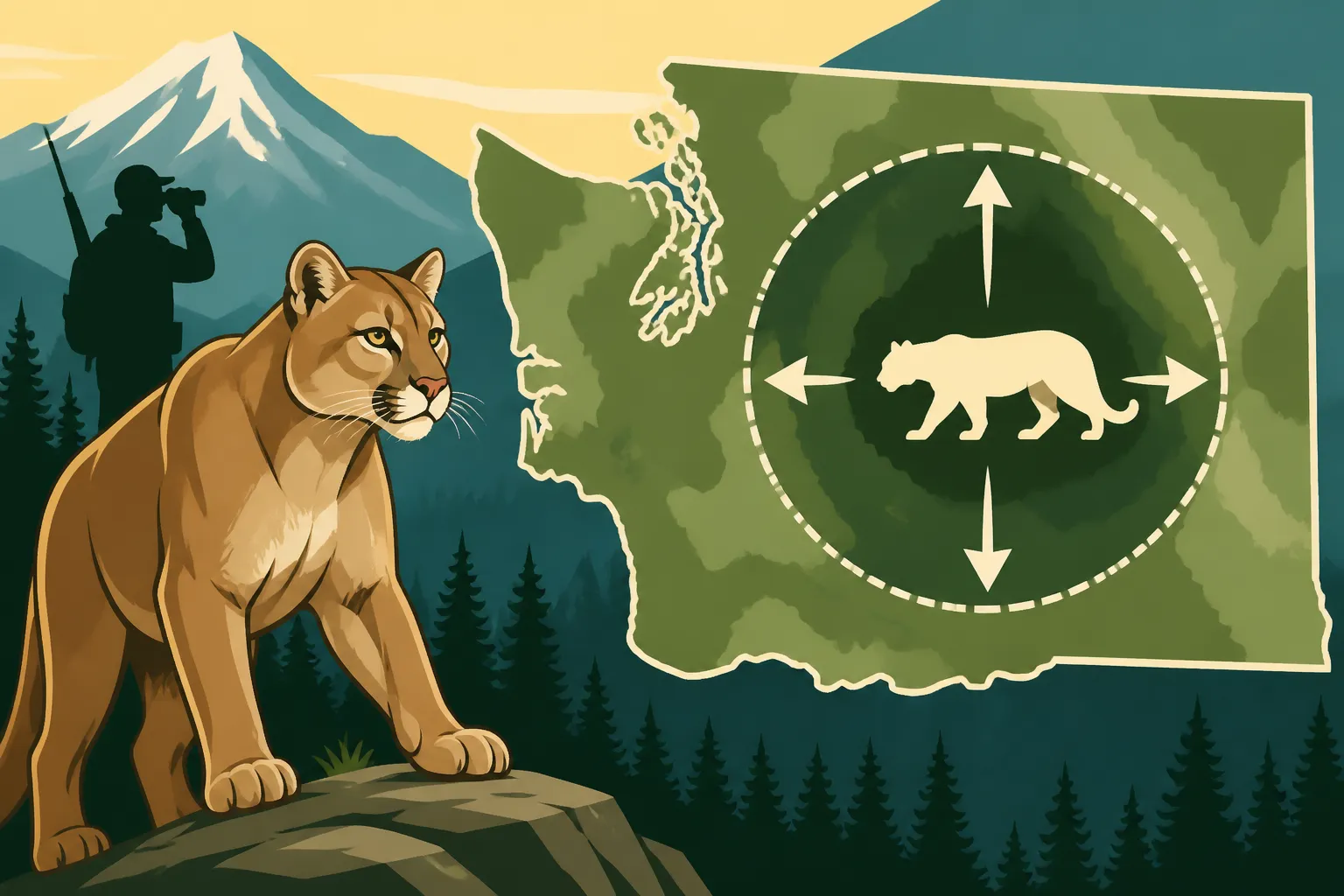
When we talk about a cougar's "home range," we're not talking about a small backyard patch. These animals are true wanderers, and their territories can be vast, shifting, and incredibly complex. It’s not a fence-line boundary drawn on a map, but more like a fluid, living space that they use for hunting, resting, and raising their young. Understanding this concept is the first step in appreciating just how challenging, yet rewarding, it can be to hunt or even just observe these incredible cats in Washington's wild places.
What "Home Range" Actually Means for a Cougar
A cougar's home range is essentially the total area an individual animal uses over a period of time to find food, mates, and shelter. It's their entire world. Unlike some animals that have very defined, aggressively defended territories, cougar home ranges often overlap, especially between different sexes. For a male, his range might be about asserting dominance and finding breeding opportunities across a large swath of ground. For a female, it's more about having a reliable food source and safe denning sites for her kittens within a generally smaller, though still significant, area. The cougar isn't always active in every part of its range every day, but it knows every ridge, every ravine, and every game trail within its expansive domain. They'll regularly patrol, leaving behind scent marks and scrapes as clear messages to other cougars that this is their stomping ground, at least for now.
Key Differences Between Male and Female Ranges
There's a significant difference in how male and female cougars establish and utilize their home ranges, and it’s a big part of why finding them can be so unpredictable. Generally speaking, adult male cougars maintain much larger home ranges than females. Think about it from a biological perspective: a male needs to access multiple females for breeding, and that means covering a lot more ground. His range might encompass the ranges of several females, allowing him to check on potential mates and ensure he has breeding access. These extensive male ranges often act as a central hub for multiple female territories.
Female cougars, on the other hand, typically have smaller, more exclusive ranges. Their primary concern is securing enough prey to support themselves and their kittens. They'll focus on areas with consistent food sources and good cover for raising young. While a female's range might overlap with another female's to some extent, especially in prime habitat, they tend to be more solitary and territorial when it comes to defending their hunting grounds from other females. This difference in range size and behavior means that if you're tracking a particularly large set of prints, you might be on the trail of a mature male covering vast distances, while smaller tracks could lead you to a female who is more likely to be staying closer to a specific area.
The Ever-Shifting Nature of Cougar Territories
One of the most fascinating, and challenging, aspects of cougars is that their territories aren't static. They're fluid, dynamic, and can change based on a whole host of factors. A cougar’s home range can expand or contract depending on the season, the availability of prey, the presence of other cougars, and even human activity. During a harsh winter, if traditional prey like deer or elk move to lower elevations, a cougar might follow, temporarily shifting its core hunting area. Young cougars dispersing from their mother's care will also wander great distances, seeking to establish their own range, which often involves challenging or avoiding existing adults.
This constant shift means that the "hot spot" you found last year might not be quite as active this year. It forces hunters and wildlife enthusiasts to be adaptable and to continually read the landscape for fresh signs. It's a game of observation and deduction, understanding that these animals are masters of their environment and will adjust their movements to optimize their chances of survival. Knowing that a cougar's territory isn't fixed is key to avoiding frustration and developing a more effective strategy for encountering these incredible creatures.
Factors That Dictate Cougar Territory Size in Washington
So, what exactly drives these territorial decisions for a Washington cougar? It's not arbitrary; rather, it's a complex interplay of environmental factors that shape their movements and define the boundaries of their personal kingdoms. Understanding these influences can give you a significant advantage in predicting where a cougar might be spending its time, whether you're hunting for Cougar Hunting in Washington After the Hound Ban or simply trying to understand their ecology.
The Abundance and Distribution of Prey
Without a doubt, the single biggest factor influencing a cougar's home range size is the availability of prey. Cougars are obligate carnivores, meaning they must eat meat to survive. If the deer and elk populations are dense and widely distributed, a cougar won't need to travel as far to find its next meal. This can result in a smaller, more concentrated home range. Conversely, in areas where prey animals are scarce or highly scattered, cougars are forced to cover much greater distances to maintain their caloric needs, leading to a significantly larger territory.
Consider the diverse ecosystems in Washington. In the dense, wet forests of Western Washington, where Roosevelt Elk of Western Washington and Columbian Blacktail Deer in Western Washington can be found in relative abundance, a cougar might have a smaller, albeit still substantial, range compared to one in the arid, open country of Eastern Washington, where mule deer might be more spread out. A healthy prey base means less effort expended, and less risk, for the cougar, allowing them to focus their energy on hunting effectively within a more manageable area. This constant pursuit of food is the engine that drives cougar movement across the state.
Habitat Type: From Dense Timber to Open Breaks
The type of terrain and vegetative cover also plays a huge role in how cougars carve out their ranges. Dense timber, thick brush, and rugged mountainous terrain offer excellent cover for stalking prey and for retreating undetected. In such environments, cougars can hunt more efficiently and may feel more secure, potentially allowing for slightly smaller home ranges if prey is also abundant. These areas provide the perfect ambush points and plenty of secluded spots for daytime bedding or denning. If you're Reading Cougar Sign in the Snow in a heavily timbered canyon, you're in prime habitat.
However, in more open country, like the sagebrush flats of the Columbia Basin or the eastern slopes of the Cascades, cougars have less cover and must rely more on their stealth and ability to travel long distances under the cloak of darkness or during low-light conditions. This often translates into larger home ranges, as they need to expand their search to find suitable hunting opportunities and safe havens. They might utilize specific drainages, rimrock edges, or isolated stands of timber as travel corridors and ambush sites. The very structure of the landscape dictates how far a cougar must roam to meet its needs, affecting everything from daily movements to overall range size.
The Influence of Other Cougars and Human Activity
Cougars are generally solitary animals, and while their home ranges can overlap, especially between males and females, competition for resources and breeding opportunities certainly influences their movements. A dominant male will often maintain a large range that includes several females, and he'll actively deter other males from encroaching on his prime breeding territory. Subordinate or younger cougars, especially those dispersing, might be pushed into less ideal habitat or forced to adopt larger, more transient ranges until they can establish their own.
Human activity also has a profound impact. Development, logging, road building, and recreational use can fragment habitat, displace prey, and introduce disturbances that force cougars to alter their natural movements. In areas with higher human presence, cougars might become more nocturnal or utilize more remote, rugged terrain. While Washington has regulations like What I-655 Banned for Cougar Hunters which changed hunting methods, the presence of hunters themselves, even without hounds, contributes to pressure that can subtly influence cougar behavior. Areas with strict regulations or limited access might see cougars maintaining more consistent ranges due to less human interference, while heavily impacted zones could lead to more nomadic patterns. Understanding this delicate balance between wildlife and human presence is vital for appreciating the challenges these animals face.
How Knowing Cougar Home Range Helps Washington Hunters
Alright, let's get down to brass tacks: how does all this biological information actually help you, the Washington hunter, out in the field? It’s not just academic; understanding cougar home ranges can significantly refine your hunting strategy and increase your chances of success, especially when you're hunting without dogs. It's about thinking like the animal and moving with purpose.
Predicting Cougar Movement and Travel Corridors
Armed with knowledge about home range size and the factors that influence it, you can start to predict where a cougar might travel. For instance, if you're in an area with a healthy population of Mule Deer of Eastern Washington and dense cover, you know a cougar might not need to travel quite as far daily as one in sparser country. You can then focus your scouting efforts on understanding the likely travel corridors within those smaller-scale ranges.
Look for natural funnels like saddles between ridge lines, benches above steep slopes, or creek bottoms that offer easy passage and cover. These are the highways cougars use to move between bedding areas and hunting grounds. Identifying these corridors, especially in areas with recent prey sign, can dramatically narrow down your search. Cougar Territory and Movement often follows these natural breaks in the landscape, making them prime locations to place a trail camera or spend time glassing. Even if you don't see a cougar, knowing where they should be moving is a huge step forward.
Strategizing Your Hunt Based on Territory Insights
Once you have a general idea of a cougar's likely home range and its preferred travel routes, you can start to strategize your hunt. If you've located a fresh kill site, understanding that a cougar will often return to that kill over several days to feed can help you decide How Long to Sit a Cougar Stand. You're not just guessing; you're leveraging their predictable feeding behavior within their known territory. If you're trying techniques like Calling Cougars With a Fawn Distress Sound, knowing the typical size and shape of a female's range (which tend to be smaller and more focused on prey) might lead you to set up in areas where fawns are common, increasing your chances of success.
Furthermore, if you're targeting a specific general area in Washington for a cougar hunt, knowing the overall population density (which often corresponds to the available habitat and prey, influencing average home range size) can inform your expectations. You might spend more time actively still-hunting or checking for fresh sign in an area with more fragmented habitat, recognizing that the cougar there might be more transient. In contrast, in a vast, contiguous wilderness, you might focus on systematic grid searching or covering more ground over time. Using mapping apps like GoHunt can help you visualize these larger areas and plot out potential territories based on terrain and known prey concentrations.
Patience, Persistence, and Adapting to the Hunter's Chess Match
Ultimately, hunting cougars in Washington, especially without hounds, is a true test of patience and persistence. Even with a solid understanding of their home range, these animals are incredibly elusive. You're essentially playing a chess match against a master of camouflage and stealth. The territory insights don't guarantee an encounter, but they provide the framework for a more educated and efficient search.
When you're Finding Cougar Tracks Without Hounds, your understanding of their likely movement patterns within their home range guides you on where to look for those crucial signs. Are you in a travel corridor? Near a bedding area? Close to water? Each piece of the puzzle adds up. You have to be willing to adapt, too. If initial scouting suggests a cougar has moved outside what you initially predicted for its core range, perhaps due to a new logging operation or a significant shift in elk distribution, you need to be flexible enough to adjust your search area. It's an ongoing learning process, and every hunt offers new lessons in the intricate world of cougar behavior.
| Factor Influencing Home Range Size | Effect on Range | Typical Example |
|---|---|---|
| Prey Abundance | High prey = Smaller range | Dense deer/elk populations in Western Washington |
| Prey Distribution | Scattered prey = Larger range | Sparse mule deer in arid Eastern Washington |
| Habitat Cover | Dense cover = Smaller range | Thick timber, rugged mountains for stalking |
| Openness of Terrain | Open terrain = Larger range | Sagebrush flats, exposed rimrock |
| Sex of Cougar | Males = Larger range | Roaming for breeding opportunities |
| Age of Cougar | Young dispersers = Transient, larger ranges | Seeking to establish new territory |
| Other Cougar Presence | High density = Smaller individual ranges | Competition for resources |
| Human Activity/Disturbance | High disturbance = Larger, more erratic ranges | Logging, road development, recreation |
Practical Tools and Tactics for Pinpointing Cougar Activity
Understanding the theoretical aspects of cougar home ranges is one thing, but translating that into practical, in-the-field success requires specific tools and tactics. Even without hounds, you can still significantly improve your chances by using modern technology and honing your woodsman skills to detect these shadowy predators in Washington.
Leveraging E-Scouting and Mapping Platforms (GoHunt)
Before you ever set foot in the woods, the best cougar hunters start with their maps. E-scouting has revolutionized the way we approach big game hunting, and cougars are no exception. Platforms like GoHunt, or other robust mapping applications, are invaluable for visualizing potential cougar habitat. You can study topographical maps to identify those critical travel corridors—ridge lines, canyon bottoms, and benches—that cougars are likely to use. Look for areas with a mosaic of dense cover and potential feeding grounds, and pay close attention to water sources.
GoHunt allows you to overlay different map layers, revealing property boundaries (crucial for Hunting Behind Timber Company Gates or understanding public land access), satellite imagery to identify specific vegetation types, and even historical burn areas that might now be providing excellent new growth for prey animals. By spending hours digitally scouting, you can pre-plan routes, mark waypoints for potential sign, and eliminate unproductive ground before you even leave home. This isn't just about finding any cougar, it's about finding likely cougar habitat within their typical home range, drastically reducing wasted time in the field.
Reading the Landscape: Sign, Tracks, and Scrapes
Once you're actually in cougar country, your eyes and ears become your most important tools. Cougars are masters of stealth, but they do leave behind evidence of their presence. Learning to read these subtle signs is a skill that comes with time and experience, but it's absolutely vital. Look for fresh tracks, especially after a rain or snow, along old logging roads, game trails, and creek beds. Pay attention to their size, stride, and direction of travel. Reading Cougar Sign in the Snow can be especially productive, as it makes tracks, scat, and even kill sites much more obvious.
Beyond tracks, keep an eye out for scrapes – piles of duff, leaves, or dirt that cougars scrape together with their hind feet and often urinate or defecate on. These are territorial markers, like a billboard saying, "I'm here!" Look for them along ridges, at trail intersections, or at the base of large trees. Kill sites are another huge indicator. While cougars often cover their kills, you might find partially buried carcasses, drag marks, or large patches of blood and hair. These are all clues that you are within a cougar's active home range. Remember, the fresher the sign, the closer you are to the cat.
Trail Cameras: Your Eyes in Their World
In the ongoing chess match against elusive cougars, trail cameras are one of your best allies. Placing cameras strategically in areas identified through e-scouting and sign-reading can provide invaluable intelligence about cougar presence and movement patterns within their home range. Think about those natural travel corridors, fresh kill sites, or areas with consistent scrapes – these are prime locations for a camera. For instance, Trail Camera Placement on Ridge Saddles can capture animals moving between drainages, offering a glimpse into their travel habits.
While Washington has rules regarding trail camera use on public lands, deploying them responsibly can help you confirm cougar activity, identify individual cats, and even discern their preferred times of travel. You might set up a camera overlooking a deer trail entering a dense bedding area, or near a reliable water source during dry periods. Reviewing camera footage can confirm that a cougar is indeed using a particular part of its home range, allowing you to tailor your hunting efforts to those specific locations and times. It’s like having an extra set of eyes that never gets tired, collecting data on the movements of these incredible, enigmatic animals.
Disclaimer
This article is for general informational purposes only and does not constitute professional advice. Laws, prices and regulations vary by location and change over time. Consult a qualified professional for guidance on your specific situation.