Where Washington’s Ten Elk Herds Are
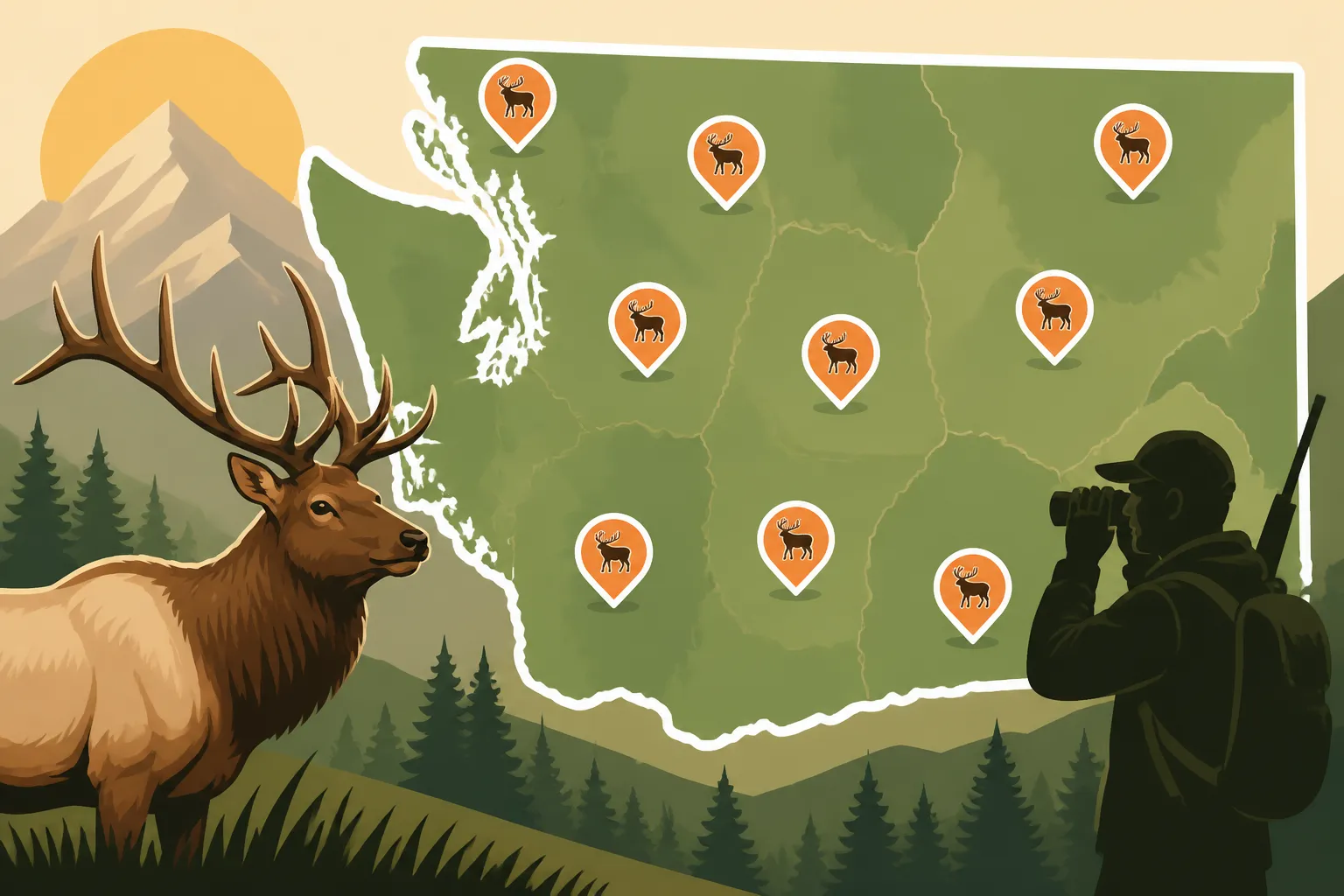
It can feel overwhelming when you're dreaming of a Washington elk hunt, trying to figure out where to even begin looking. With such diverse terrain, from dense rainforests to high desert mountains, understanding where the state's major elk herds reside is the first crucial step to planning a successful hunt. This guide will help you pinpoint the general locations and characteristics of Washington's ten key elk herds, giving you a solid foundation for your scouting and hunting endeavors.
The Divide: East vs. West and the Elk They Hold
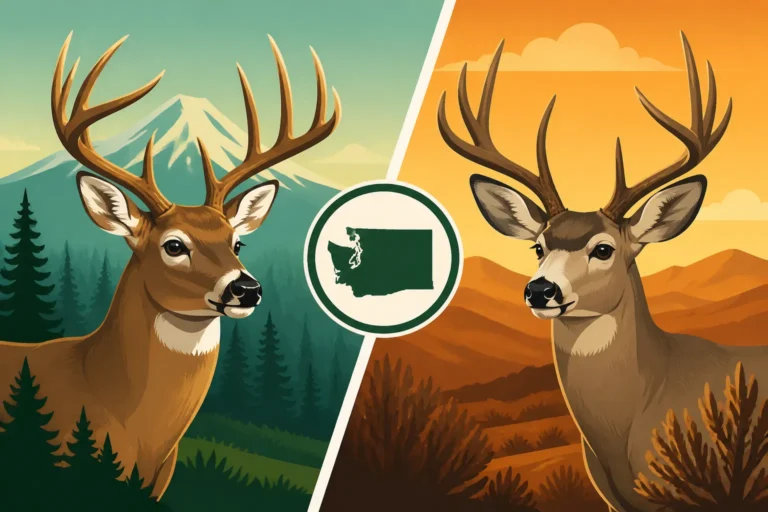
Washington state is dramatically bisected by the Cascade Mountain Range, a geological feature that not only shapes our weather but also dictates the distribution and characteristics of our elk herds. This natural barrier creates two distinct worlds for elk, each with its own challenges and rewards for hunters. Understanding this fundamental divide is paramount before diving into the specifics of individual herds.
Roosevelt Elk: Western Washington's Giants
On the rain-drenched, rugged western side of the Cascades, you'll find the magnificent Roosevelt elk. These are the largest subspecies of elk in North America, known for their impressive body size and often heavy, intricate antlers, though their typical antler spread might not be as wide as a Rocky Mountain bull's. Their habitat is dense, often unforgiving coastal rainforests, expansive timber company lands, and the steep, brushy slopes of the Olympic and Cascade foothills. Hunting Roosevelt elk is often a game of close-quarters combat, navigating through thick alder, salal, and devil's club, where visibility is measured in yards, not miles.
Tracking these animals requires a different kind of patience and skill. The thick vegetation means you'll often hear them before you see them, and their movements can be surprisingly silent for such large animals. They thrive in areas with abundant rainfall, which fuels the lush forage they depend on. This environment can make glassing incredibly difficult, so still-hunting and listening for subtle sounds like snaps, rustles, or even the drip of water from their hide become essential tactics. When considering Roosevelt Elk of Western Washington, remember that you're entering their domain, where the terrain is king.
Rocky Mountain Elk: Eastern Washington's High Country Dwellers
Cross the Cascade crest into Eastern Washington, and the landscape transforms dramatically. Here, you'll find the Rocky Mountain elk, typically smaller in body size than their Roosevelt cousins but often sporting wider, more symmetrical antler racks. Their world is one of drier Ponderosa pine forests, vast sagebrush steppe, open timbered draws, and rolling hills that give way to high mountain basins. Hunting Rocky Mountain elk often involves extensive glassing, covering vast tracts of country with powerful optics, and being prepared for longer shots.
The open nature of the east side means you can often spot elk at great distances, allowing for careful stalk planning. However, this also means the elk can spot you, demanding careful attention to wind, terrain, and cover. Their seasonal movements are often dictated by snow levels and forage availability, pushing them from high summer ranges to lower wintering grounds. Understanding Rocky Mountain Elk East of the Washington Cascades means appreciating the interplay of elevation, weather, and expansive terrain. It’s a completely different mental and physical game than hunting on the west side.
Understanding Washington's Major Elk Herds
Washington is home to ten distinct elk herds, each with its own unique characteristics, habitats, and challenges for hunters. While the WDFW refers to them as "herds," think of these more as regional populations managed within specific Game Management Units (GMUs). Knowing which herd inhabits which area is fundamental to focusing your scouting efforts. GoHunt, for example, offers incredible mapping layers that visually represent these GMU boundaries, which is incredibly helpful when planning your approach.
Westside Roosevelt Herds
Western Washington is home to six of the state's ten elk herds, primarily Roosevelt elk. These herds occupy everything from the dense Olympic Peninsula rainforests to the timbered foothills near Mount St. Helens.
- Olympic Elk Herd: This is perhaps the most iconic Roosevelt elk herd, inhabiting the Olympic Peninsula. These elk thrive in the rainforests and steep, brushy terrain. Access can be challenging, often requiring extensive hiking into roadless areas, but the reward can be finding truly magnificent animals. They're spread across multiple GMUs, making in-depth research of specific units crucial.
- Willapa Hills Elk Herd: Located in southwest Washington, primarily in Pacific and Wahkiakum counties, this herd lives in a mosaic of dense private timberlands and state-owned forest. Hunting here often involves navigating extensive private land access programs, as discussed in Hunting Washington's Register to Hunt Properties. The terrain is characterized by steep, wet hills and clearcuts. The Willapa Hills Elk Herd is a key focus for many westside hunters.
- Mount St. Helens Elk Herd: Situated in the Gifford Pinchot National Forest and surrounding timberlands, this herd is perhaps the most famous and heavily studied due to the 1980 volcanic eruption that dramatically altered its habitat. Elk here utilize a mix of old growth, regenerating clearcuts, and the unique blast zone landscape. The terrain is incredibly rugged and steep.
- North Cascades Elk Herd: This herd occupies the western slopes of the northern Cascade Mountains. While smaller and more scattered than some other Roosevelt herds, they offer a truly wild backcountry hunting experience. Access is often via long trails into wilderness areas, and animals can be found in high alpine basins or dense timber.
- Cowlitz Elk Herd: South of the Mount St. Helens herd, this population ranges across the lower Cowlitz River basin, primarily in state and private timberlands. Similar to the Willapa Hills, access can be a mix of public and private opportunities.
- Southwest Washington Elk Herd: This covers a broader area in the very southwestern corner of the state, often overlapping with the Willapa Hills and Cowlitz ranges. It's a general term for the various localized groups of Roosevelt elk in that diverse landscape.
Eastside Rocky Mountain Herds
Eastern Washington hosts four major Rocky Mountain elk herds, each associated with distinct geographical regions and offering diverse hunting experiences, from high desert to mountainous wilderness.
- Yakima Elk Herd: This is one of Washington's largest and most sought-after herds, primarily residing in the vast L.T. Murray Wildlife Area and surrounding national forest lands in central Washington. It's characterized by large numbers of elk and some truly impressive bulls. Hunting The Yakima Elk Herd often involves intense scouting, glassing, and long stalks in open, often dusty, terrain. Hunters frequently use platforms like GoHunt to analyze unit boundaries and public land access.
- Colockum Elk Herd: Just north of the Yakima herd, the Colockum herd inhabits the Colockum Wildlife Area and adjacent lands between the Columbia River and the Wenatchee River. This herd also offers excellent opportunities, with terrain ranging from sagebrush draws to high-elevation timber. Understanding their migratory patterns is key, especially when considering Elk Migration Timing in Washington.
- Blue Mountains Elk Herd: Located in the southeastern corner of the state, in the Umatilla National Forest and surrounding state and private lands, the Blue Mountains herd is renowned for producing some of the state's largest Rocky Mountain bulls. This is rugged, often steep country with a mix of timber and open slopes. The Blue Mountains Elk Herd is a classic example of mountain elk hunting, often requiring horses or llamas for deep backcountry access.
- Selkirk Elk Herd: Found in the extreme northeastern corner of Washington, primarily in Pend Oreille County and the Colville National Forest, this herd is part of a larger transboundary population that extends into Idaho and British Columbia. It's a mix of timber, mountains, and river valleys, offering a different type of Rocky Mountain elk hunting compared to the arid lands further west.
Here's a quick overview of Washington's major elk herds and their primary characteristics:
| Herd Name | Primary Location | Elk Subspecies | Key Characteristics | Typical Habitat | Hunting Style |
|---|---|---|---|---|---|
| Olympic | Olympic Peninsula | Roosevelt | Largest body size, dense antlers, challenging access | Rainforest, steep timber, brush | Still-hunting, tracking, close quarters |
| Willapa Hills | Southwest WA (Pacific/Wahkiakum) | Roosevelt | Dense private timber, clearcuts, rolling wet hills | Regenerating clearcuts, dense timber, riparian | Navigating private access, still-hunting |
| Mount St. Helens | Mount St. Helens area | Roosevelt | Rugged terrain, blast zone, old growth, clearcuts | Steep slopes, regenerating forest, volcanic ash | Challenging stalks, glassing clearcuts |
| North Cascades | Western North Cascades | Roosevelt | Scattered, wild, high alpine to dense timber | High country basins, dense timber, wilderness | Backcountry, long hikes, spot-and-stalk |
| Cowlitz | Lower Cowlitz River basin | Roosevelt | Mix of private timber and state land, similar to Willapa | Managed timberlands, river bottomlands | Access-dependent, still-hunting |
| Southwest Washington | General SW WA (overlap w/ above) | Roosevelt | Broad regional classification for various smaller groups | Diverse, from coastal to foothills | Varies by specific unit |
| Yakima | Central WA (L.T. Murray) | Rocky Mountain | Large numbers, impressive bulls, open country | Sagebrush steppe, Ponderosa pine, arid mountains | Extensive glassing, long stalks, open shots |
| Colockum | Central WA (Columbia River to Wenatchee) | Rocky Mountain | Healthy population, varied terrain from desert to timber | Sagebrush, Ponderosa pine, higher elevation timber | Glassing, spot-and-stalk |
| Blue Mountains | Southeast WA (Umatilla NF) | Rocky Mountain | Known for large bulls, steep and rugged | Steep mountains, conifer forests, open slopes | Backcountry, physical demands |
| Selkirk | Northeast WA (Pend Oreille County) | Rocky Mountain | Transboundary herd, mixed habitat with Idaho/BC | Timber, mountains, river valleys, mixed forest | Mix of still-hunting and glassing |
Factors Influencing Elk Distribution and Movement
Knowing where Washington's ten major elk herds generally reside is a fantastic starting point, but elk are constantly on the move. Their distribution within these broad herd ranges is influenced by a complex interplay of environmental factors and human activity. Understanding these dynamics is key to anticipating their presence and making good decisions in the field. This is where tools like GoHunt, with its weather overlays and historical data, can become incredibly valuable for predicting movement.
Habitat Preference and Seasonal Migration
Elk are creatures of habit, yet highly adaptable. Their movements are largely dictated by their fundamental needs: food, water, and security. In the spring and summer, you'll often find them utilizing higher elevation areas where lush forage is abundant, and calving occurs in seclusion. As fall hunting seasons approach, their patterns shift. Bulls become more vocal and active during the rut, often seeking out specific bedding areas near feeding grounds. During this time, knowing Best Bugle Sequence for Early September can make a huge difference.
As winter approaches, particularly in Eastern Washington, elk will migrate to lower elevations to escape deep snows and access more palatable browse. These winter ranges are often designated as critical habitat and can be closed to human access to protect the animals. On the west side, while snow isn't as much of a factor, heavy rainfall and cold can push them to more sheltered, dense timber. Factors like wildfire and logging can also dramatically alter their preferred routes and feeding areas, creating new opportunities or displacing animals to unexpected locations.
Human Impact and Access Challenges
Human presence and land management practices profoundly influence where elk choose to spend their time. Roads, for instance, can fragment habitat and create disturbance, often pushing elk into thicker, harder-to-reach areas. This is particularly true on public lands where vehicular access might be widespread. When you're E-Scouting Washington GMUs Before the Draw, pay close attention to road densities and designated motorized access. Many elk will gravitate towards areas with limited vehicle traffic.
Private land, especially large timber company holdings, also plays a massive role. Some companies offer permits, while others, like those participating in the "Feel Free to Hunt" or "Register to Hunt" programs, provide more public access, though this often requires signing up well in advance. Meanwhile, some private lands are simply off-limits, creating safe havens for elk. Understanding Getting Written Permission on Private Land or how to navigate programs like Hunting Washington's Register to Hunt Properties is critical. Even on public land, designated wilderness areas or road closures, like those in the Green Dot road system, create quiet zones where elk feel secure, often requiring hunters to pack in deep.
Resources for Pinpointing Elk Hotspots
With a general understanding of Washington's ten elk herds and the factors influencing their movement, your next step is to drill down into specific areas. Thankfully, there are a number of excellent resources available to hunters to help pinpoint those potential elk hotspots, ensuring your boots hit the ground in the right place at the right time. Leveraging these tools can significantly boost your odds of success and make your scouting much more efficient.
WDFW Tools and Data
The Washington Department of Fish and Wildlife (WDFW) is your primary official source for information. Their website is a treasure trove of data, if you know where to look. The annual Big Game Hunting Pamphlet is indispensable, detailing season dates, regulations, and specific GMU boundaries. While it doesn't explicitly map individual elk herds, it clearly outlines which GMUs are open for elk hunting and provides vital information on antler restrictions or weapon specific rules. This is your foundation for understanding the legal landscape of your hunt.
Beyond the pamphlet, the WDFW's "Hunt Planner" mapping tool is a fantastic resource. While it might take a bit to get used to, it allows you to overlay GMU boundaries, public land ownership, and even some habitat data. This helps you visualize the terrain and understand access points. Additionally, the WDFW often publishes herd management plans and population survey data for specific herds, which can offer insights into herd health, calf recruitment, and overall population trends, invaluable for long-term planning. You can also find details on specific GMUs, like the Colockum GMU Boundaries in Washington, directly on their site.
Digital Scouting Platforms
In today's hunting world, digital scouting platforms have become absolutely essential, and they truly shine when it comes to understanding elk distribution. Tools like GoHunt offer advanced mapping features that allow you to layer public and private land ownership, wilderness boundaries, topo maps, satellite imagery, and even historical weather data. You can mark potential bedding areas, feeding zones, water sources, and travel corridors from the comfort of your home. This capability is invaluable for E-Scouting Washington GMUs Before the Draw.
For example, when looking at a GMU within The Yakima Elk Herd range, GoHunt allows you to quickly identify large tracts of public land, locate natural pinch points, and see historical burn areas that might be producing new forage. These platforms also help you understand access points on different land types, whether it's national forest, DNR land, or private timberland with specific permit requirements. You can even use them to evaluate terrain severity and plan your routes for Packing an Elk Out of Washington's Backcountry, long before you ever set foot in the woods. They take the guesswork out of where to focus your initial, precious scouting efforts, allowing you to prioritize areas with the highest potential.
Disclaimer
This article is for general informational purposes only and does not constitute professional advice. Laws, prices and regulations vary by location and change over time. Consult a qualified professional for guidance on your specific situation.