Black Bear Weight in Western Washington
One of the most common dilemmas facing a black bear hunter in Western Washington is trying to gauge the true size of an animal in the dense timber, brush, or vast clearcuts that define our landscape. It's incredibly difficult to tell if that dark blob moving through the salal is a respectable boar or a smaller, younger bear, let alone how much it truly weighs. This guide aims to demystify black bear weights in our unique Western Washington environment, helping you understand the factors that influence their size and what to realistically expect when you connect with one.
Understanding Black Bear Size in Western Washington
Western Washington's environment, characterized by its towering evergreen forests, rugged coastlines, and often wet weather, plays a significant role in the characteristics of its black bear population. Unlike their counterparts in more open Eastern Washington country, these bears often live in denser cover, which can influence their diet, movement patterns, and ultimately, their size. While there's a wide range, most hunters are curious about what an average or a truly big bear in our neck of the woods might weigh.
General Weight Ranges for Western Washington Black Bears
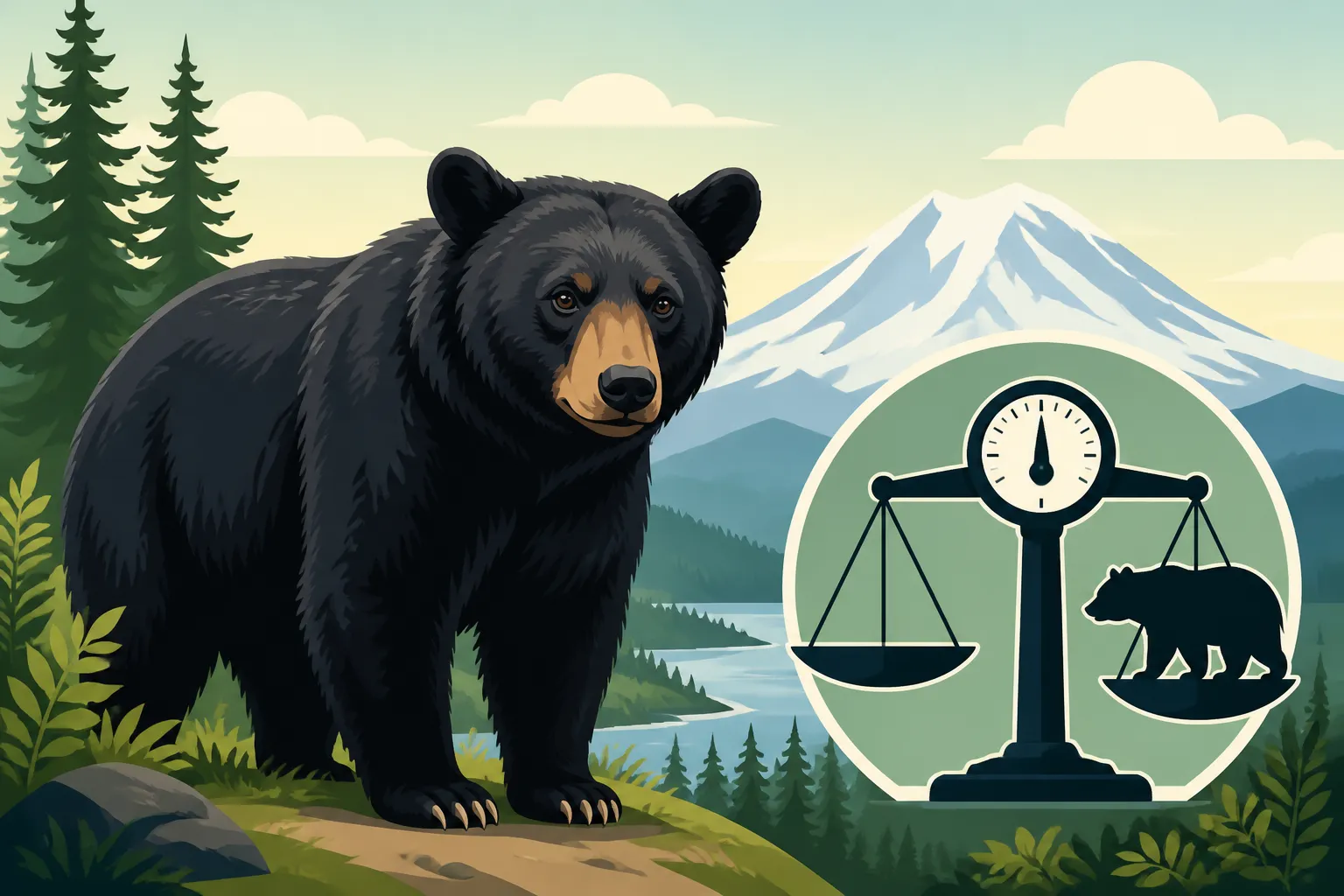
When we talk about black bear weights, it's important to differentiate between live weight and field-dressed weight. The numbers you hear most often are live weights, which is what the animal weighs before any field dressing takes place. For black bears in Western Washington, the live weight can vary quite dramatically. A young bear, perhaps a two-year-old, might only tip the scales at 80-150 pounds. Mature sows (females) generally range from 150 to 250 pounds, though some larger individuals certainly exist. Mature boars (males) are typically heavier, often starting around 200 pounds and climbing up to 350-400 pounds. Every so often, a truly exceptional boar will push the 500-pound mark or even slightly beyond, but these are truly the giants of the forest and not the norm. These larger bears are often found in areas with consistent, high-quality food sources, like those rich in huckleberries or salmon streams. You can get a sense of the broader picture of bear populations by looking into the Washington Black Bear Population Estimate.
Regional Nuances Affecting Weight
Within Western Washington, there can be subtle regional differences that influence bear weights. Bears in the dense, old-growth forests and salmon-rich river systems of the Olympic Peninsula or the coastal ranges might have access to a more protein-heavy diet, especially during salmon runs, potentially allowing them to put on more weight. In contrast, bears in the foothills of the Cascades might rely more heavily on berries, grubs, and vegetation, which can still lead to substantial size but perhaps with a different seasonal peak in weight gain. Factors like consistent food availability and the absence of extreme competition can contribute to Where Washington's Biggest Bears Live. The specific habitat a bear lives in, whether it's a lowland clearcut or a high-elevation huckleberry patch, directly impacts its nutritional intake and thus its size.
Factors Influencing Black Bear Weight
A bear's weight isn't static; it's a dynamic figure that fluctuates throughout the year and is heavily influenced by a combination of biological and environmental factors. Understanding these elements can give you a better idea of what to expect from the bears you encounter.
Age and Sex
Just like any other animal, a bear's age is a primary determinant of its weight. Young bears are, naturally, smaller. They're still growing and learning to forage efficiently. As they mature, especially between 4-7 years old, they reach their prime in terms of growth and weight gain. After this, while they might get older, their weight gain tends to stabilize or become more dependent on seasonal food availability.
Sex is another critical factor. Boars generally grow larger and heavier than sows. This is due to a combination of genetics and behavior. Boars have a longer growth period and don't expend the immense energy required to raise cubs, allowing them to dedicate more resources to their own body mass. Sows, especially those with cubs, often appear leaner as they are constantly moving and burning calories to feed themselves and their offspring. This makes it crucial to know Sows With Cubs and the Legal Line before making a harvest decision.
Diet and Seasonal Changes
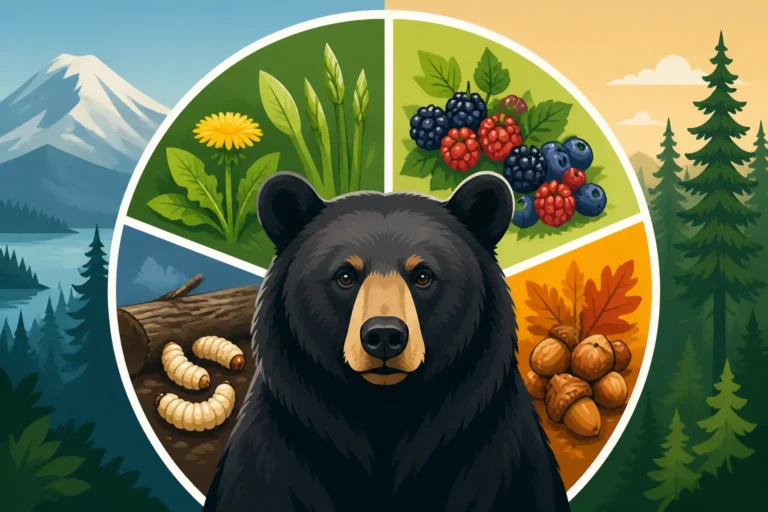
The black bear's diet is incredibly varied, and what they eat directly impacts their weight. In Western Washington, bears are opportunistic omnivores. In spring, they emerge from their dens leaner and will forage on green-up vegetation, tender shoots, and winter-killed carcasses. As summer progresses, their diet shifts dramatically. Berries, particularly huckleberries, blackberries, and salal berries, become a huge part of their caloric intake, allowing them to rapidly gain weight. Later in the season, particularly in late summer and early fall, bears near rivers and coastal areas will gorge on spawning salmon, which is a significant source of protein and fat. Knowing Bear Diet Through the Washington Seasons is key to understanding their behavior and where to find them.
This reliance on seasonal food sources means a bear's weight can fluctuate by as much as 30% or more from spring to fall. They are at their heaviest in late summer and early fall, packing on fat reserves in preparation for hibernation. By the time When Washington Bears Den rolls around, they're at their peak weight. Conversely, when Washington Bear Season Opening Date arrives in August, they are often in the process of rapidly gaining this weight.
Habitat and Food Availability
The specific habitat a bear occupies directly affects its access to food, which in turn impacts its weight. Areas with a mosaic of mature forests, active clearcuts, and riparian zones (areas along rivers or streams) often provide a rich and diverse food supply. Clearcuts, for instance, often explode with berry bushes and other forage plants in the years following logging, making them prime feeding grounds. Riparian zones offer crucial protein sources through salmon during spawning seasons. Tools like GoHunt can be invaluable for identifying these diverse habitat types and potential feeding areas, giving you an edge in scouting for areas where larger bears might reside. When planning a hunt, it's worth considering Where Bears Feed in Early Fall to maximize your chances of encountering well-fed animals.
Estimating Live Weight in the Field
Trying to accurately estimate a bear's live weight in the field is a tough skill to master, especially in the often thick cover of Western Washington. It's not just about bragging rights; it's about ethical hunting and understanding the challenge of packing out your animal. You're usually looking for visual cues, and the more you learn to read them, the better your judgment will become.
Visual Cues for Judging Size
- Head Size and Shape: This is one of the most reliable indicators. Younger bears tend to have a more triangular-shaped head with ears that look proportionally large for their head. A mature boar will have a broader, blockier head, often described as a "football" shape, and its ears will appear small relative to the overall head size. The distance between the ears will also seem greater.
- Body Proportions: Look at the overall body mass. Younger bears often appear lanky, with legs that seem long for their body. A mature bear, especially a boar in the fall, will have a thick, heavy build. Its belly might sag low, and its back will appear broad and muscular, not skinny or angular. Pay attention to how the legs fit the body; on a big bear, the legs can look quite short in proportion to the deep body.
- Neck and Shoulder Mass: Large boars will have thick, muscular necks and shoulders that blend seamlessly into their body, giving them a "no neck" appearance. Smaller bears will have a more defined neck.
- Behavior: Larger, older bears often move with a more deliberate, confident gait. They might be less skittish than younger bears or sows with cubs. Observing their behavior can give you clues, especially when considering Judging Bear Size at Distance.
- Comparison to Known Objects: If possible, try to compare the bear to a known object in the environment, like a stump, a log, or even a small sapling. This can help with perspective, though it's still tricky in thick cover.
Common Misconceptions and Ethical Considerations
One of the biggest mistakes hunters make is estimating size based on distance. A bear can look much bigger or smaller than it actually is depending on how far away it is or the terrain it's on. A bear walking uphill can look smaller, while one on level ground might appear larger. Lighting conditions, dense shadows, and moving vegetation further complicate accurate assessment. Another common error is mistaking a very shaggy, heavy-coated young bear for a larger animal, especially earlier in the season before the coat has been rubbed or thinned.
Beyond judging size for trophy purposes, accurate estimation is crucial for ethical hunting. You want to ensure you're taking a legal animal and, ideally, an adult bear that has had a chance to breed, contributing to the health of the population. Being able to confidently identify a mature animal, and distinguish it from a sow with cubs or a younger bear, is a hallmark of responsible hunting. This often involves observing the animal for several minutes, if possible, before making a decision. Using quality optics is essential for this, and a good rangefinder can eliminate distance distortions, which is also helpful for accurate Shot Placement on a Quartering Elk or bear.
Field-Dressed Weight vs. Live Weight
After the shot, the excitement of the hunt shifts to the hard work of getting your bear out of the woods. This is where understanding the difference between live weight and field-dressed weight becomes very real. Most hunters will never weigh a live bear, but they will absolutely feel the weight of a field-dressed animal on their back.
The Realistic Weight You'll Pack Out
Field dressing a bear involves removing the internal organs (guts). This process significantly reduces the animal's weight, making it more manageable for transport. For an average Western Washington black bear, you can expect the field-dressed weight to be roughly 70-75% of its live weight. So, a 200-pound live bear might yield a field-dressed carcass of 140-150 pounds, while a 300-pound live bear could be around 210-225 pounds field-dressed. A massive 450-pound boar might still mean packing out 315-330 pounds of animal. This is a substantial load, often requiring multiple trips or a strong hunting partner. For context, you might be interested in learning about How Many Trips an Elk Takes as a similar packing challenge.
Breaking Down a Bear for Easier Transport
Given the dense cover and often steep terrain in Western Washington, packing out an entire field-dressed bear, even a smaller one, can be incredibly challenging. Many hunters opt to quarter the bear or even use the gutless method to break it down into smaller, more manageable loads.
Here’s a general breakdown of what to expect for field-dressed vs. live weight for a Western Washington black bear:
| Bear Category | Estimated Live Weight (lbs) | Estimated Field-Dressed Weight (lbs) | Weight Reduction (approx.) |
|---|---|---|---|
| Young Bear (1-2 years) | 80 – 150 | 56 – 110 | 30% |
| Mature Sow | 150 – 250 | 105 – 175 | 30% |
| Mature Boar | 200 – 400 | 140 – 280 | 30% |
| Exceptional Boar | 400 – 500+ | 280 – 350+ | 30% |
Note: These are estimates. Individual bear weights can vary significantly based on diet, age, and genetics.
The gutless method, which involves skinning and quartering the animal without removing the entrails, is a popular choice for large game in rugged terrain, and the principles are similar whether you're dealing with a bear or considering The Gutless Method on an Elk. This method breaks the animal down into four quarters, often the backstraps, tenderloins, and trim meat, allowing you to load your pack efficiently. Each quarter, especially from a large bear, can still weigh 50-80 pounds or more. Knowing your limits and understanding Pack Weight One Hunter Can Carry is crucial to avoid injury and ensure a successful pack out. Having sturdy game bags is absolutely essential, particularly in warmer early-season weather, to protect the meat from dirt and insects. Planning for Packing an Elk Out of Washington's Backcountry or a bear requires similar foresight and gear.
Successfully hunting a black bear in Western Washington is a rewarding experience, but it’s one that truly tests your preparation and knowledge. By understanding the factors that influence their size and what to expect in terms of weight, you can approach your hunt with greater confidence and respect for the challenge. Always prioritize ethical shots and safe recovery practices, and remember that the real trophy is the meat you bring home and the memories you make in our incredible Washington wilderness. GoHunt's mapping features can also help you plan your extraction route, scouting out favorable terrain even before you step foot in the woods.
Disclaimer
This article is for general informational purposes only and does not constitute professional advice. Laws, prices and regulations vary by location and change over time. Consult a qualified professional for guidance on your specific situation.