Whitetail Rut Timing in Washington
There's nothing quite as frustrating as showing up for deer season only to find the whitetails aren't doing what the magazines say they should be doing. You've heard all about the "rut," that magical time when bucks lose their minds, but trying to pinpoint exactly when that madness will hit in Washington can feel like chasing a phantom. This guide is going to strip away the mystery and give you a clear, grounded understanding of whitetail rut timing here in Washington, helping you predict and capitalize on this crucial period.
The Biological Clock: Understanding Washington Whitetail Rut Triggers
The whitetail rut isn't just a switch that flips on a calendar date; it's a complex biological event driven by a cascade of factors. While there are general windows of activity, understanding what triggers the rut helps you adapt your hunting strategy to the specific conditions of any given year. It's about thinking like a biologist, not just a hunter with a calendar.
Photoperiod: The Primary Driver
At the heart of the whitetail rut, the undisputed king of triggers is photoperiod – the amount of daylight in a 24-hour cycle. As autumn progresses, the days get shorter and the nights get longer. This decreasing light is the primary cue that tells a buck's body, and a doe's body, it's time to get ready for reproduction. Think of it as the ultimate alarm clock that can't be snoozed.
This biological imperative is incredibly strong, which is why the rut generally occurs around the same time each year, regardless of minor weather fluctuations. It ensures that fawns are born in spring when forage is abundant and the weather is mild enough for their survival. While you might wish the rut would kick off earlier or later based on your schedule, nature has a much bigger plan in mind. The consistent shortening of days is an undeniable signal to the deer's endocrine system, initiating hormonal changes in both sexes. Bucks start producing more testosterone, leading to increased aggression, antler hardening, and a drive to seek out does. Does, in turn, become receptive to breeding during their estrous cycles. This photoperiod-driven rhythm is why we can reliably predict a "rut window" even if the exact peak varies slightly.
Environmental Factors That Influence Timing
While photoperiod sets the stage, other environmental factors can definitely influence the intensity and visibility of rutting activity. These are the variables that make the rut feel a little different each year, leading to all those "the rut is early!" or "the rut is late!" discussions around the campfire.
- Weather: Sudden drops in temperature, especially after a warm spell, can kick deer activity into high gear. Cooler weather means deer move more, making them more visible. Conversely, unseasonably warm temperatures can make bucks more nocturnal, pushing their primary movement into the cooler hours of darkness, which can frustrate hunters sitting in a stand all day. A crisp, cool morning with a light frost can be absolutely electric for deer movement, getting those bucks up and cruising. Rain can also impact visibility; a light drizzle might keep deer moving, while a heavy downpour could send them seeking shelter.
- Moon Phase: This is a hotly debated topic among hunters. Some swear by the "rutting moon," while others dismiss it entirely. While scientific consensus leans towards photoperiod being the dominant factor, some anecdotal evidence suggests that certain moon phases might influence the timing of peak daytime activity. A full moon, for instance, could lead to more nocturnal movement, with deer resting during the bright midday hours. However, the overall physiological rut cycle remains governed by the light-dark ratio, so don't hinge your entire strategy on lunar cycles.
- Food Availability: Abundant food sources can keep deer healthier and more active, potentially leading to more intense rutting behavior. If food is scarce due to drought or a harsh winter, deer might be less energetic overall, impacting the vigor of their rut movements. In years with a bumper acorn crop, deer might stay concentrated in specific areas, which can make them easier to locate during the rut. Conversely, scattered food sources might mean bucks have to cover more ground to find does, making them seem more dispersed.
The Hormonal Rollercoaster
The invisible force driving the rut is a complex interplay of hormones. For bucks, decreasing daylight signals the pituitary gland to increase testosterone production. This surge is what makes them shed velvet, harden antlers, and eventually start rubbing trees, scraping the ground, and becoming increasingly aggressive with other bucks. This isn't just about fighting; it's about establishing dominance and claiming breeding rights.
Does also experience hormonal changes, primarily driven by estrogen. They enter estrus, a short window of time (typically 24-36 hours) during which they are receptive to breeding. If a doe isn't bred during her first estrous cycle, she will come into estrus again roughly 28 days later. This can lead to a "second rut" in some areas, or a sustained period of rutting activity as different does cycle through. Understanding this hormonal dance helps us realize why buck behavior shifts so dramatically and why patience is often rewarded, even if you feel like you missed the very peak. Bucks are relentless in their pursuit, driven by a primal urge that overrides much of their usual cautious nature, creating unique hunting opportunities.
Pinpointing the Peak: General Whitetail Rut Timing Across Washington
While we know photoperiod is the main driver, the specifics of "peak rut" can still vary based on geography and local deer populations within Washington. It's not a statewide light switch that flips on for everyone at the exact same moment. Northeast Washington, being the state's whitetail mecca, often provides the most consistent timing, but it's worth considering other areas too.
Northeast Washington: The Whitetail Stronghold
When we talk about whitetail rut timing in Washington, our minds immediately turn to the northeastern corner of the state—places like Stevens, Pend Oreille, and Spokane counties. This region boasts the highest densities of whitetails, and consequently, the most noticeable and often intense rutting activity.
Generally speaking, in Northeast Washington, you can expect the pre-rut to really pick up in late October. This is when bucks start making more scrapes and rubs, becoming more active during daylight hours as they scent-check traditional doe bedding and feeding areas. They're feeling the urge, but the does aren't quite ready. This is a fantastic time for patterning bucks based on their sign. The peak rut in this region typically falls in the first two weeks of November. This is when you'll see the most frantic chasing, bucks actively pursuing does, and perhaps a few more sparring matches breaking out. Does are entering estrus, and the bucks are fully committed to breeding. This narrow window is often when hunters have the best chances of encountering a mature buck during daylight, as they throw caution to the wind. After mid-November, activity will gradually taper off into the post-rut, where bucks are still cruising but with less intensity, looking for any unbred does. Sometimes, a "second rut" can occur in early December, as younger does or those that weren't successfully bred cycle again. To get a better handle on where these deer live, you might want to check out information on Whitetail Numbers in Northeast Washington.
Lesser-Known Whitetail Pockets and Their Rut
While Northeast Washington gets all the glory, whitetails aren't exclusively confined to that corner. There are smaller, more localized populations in other parts of the state, often in agricultural fringes or mixed timberlands, particularly east of the Cascades. These populations might be less dense, but the rut still happens.
In areas like parts of the Columbia Basin or even some lower-elevation fringes of the Okanogan, whitetail rut timing can often align closely with their northeastern cousins, still primarily driven by photoperiod. However, population density plays a role. In sparser areas, you might not see the same frenetic chasing or intense competition among bucks, simply because there are fewer deer. Bucks might have to cover more ground to find receptive does, making their movements a bit more spread out. Don't discount these areas; a lone cruising buck can still make for an exciting hunt. For those exploring new areas, tools like GoHunt can be invaluable for e-scouting and identifying potential whitetail habitat, even in less-talked-about GMUs. Their mapping overlays can help you locate suitable cover and historical deer activity, which is crucial when trying to predict where a rutting buck might travel. You can find more insights on using such tools by looking into E-Scouting Washington GMUs Before the Draw.
Regional Nuances and Variances
It's important to remember that general timelines are just that—general. Within Washington, factors like elevation, timber density, and specific agricultural practices can cause localized shifts.
For instance, deer in higher elevations might experience a slightly delayed rut compared to those in lower river bottoms, simply because seasonal changes might feel a little different or because their nutritional cycles are marginally different. Heavy snows can push deer into specific wintering areas, and if that happens during the peak rut, it can concentrate activity in those transition zones. Conversely, a mild fall might mean deer remain more scattered, delaying the intensity of visible rutting behavior. Always factor in the microclimate and specific landscape of your hunting area. Observing early-season sign, talking to landowners, and staying informed about local conditions are key to fine-tuning your expectations. Knowing how to differentiate between species is also helpful, as some areas may have a mix of deer; consult resources like Telling a Whitetail From a Mule Deer if you're unsure.
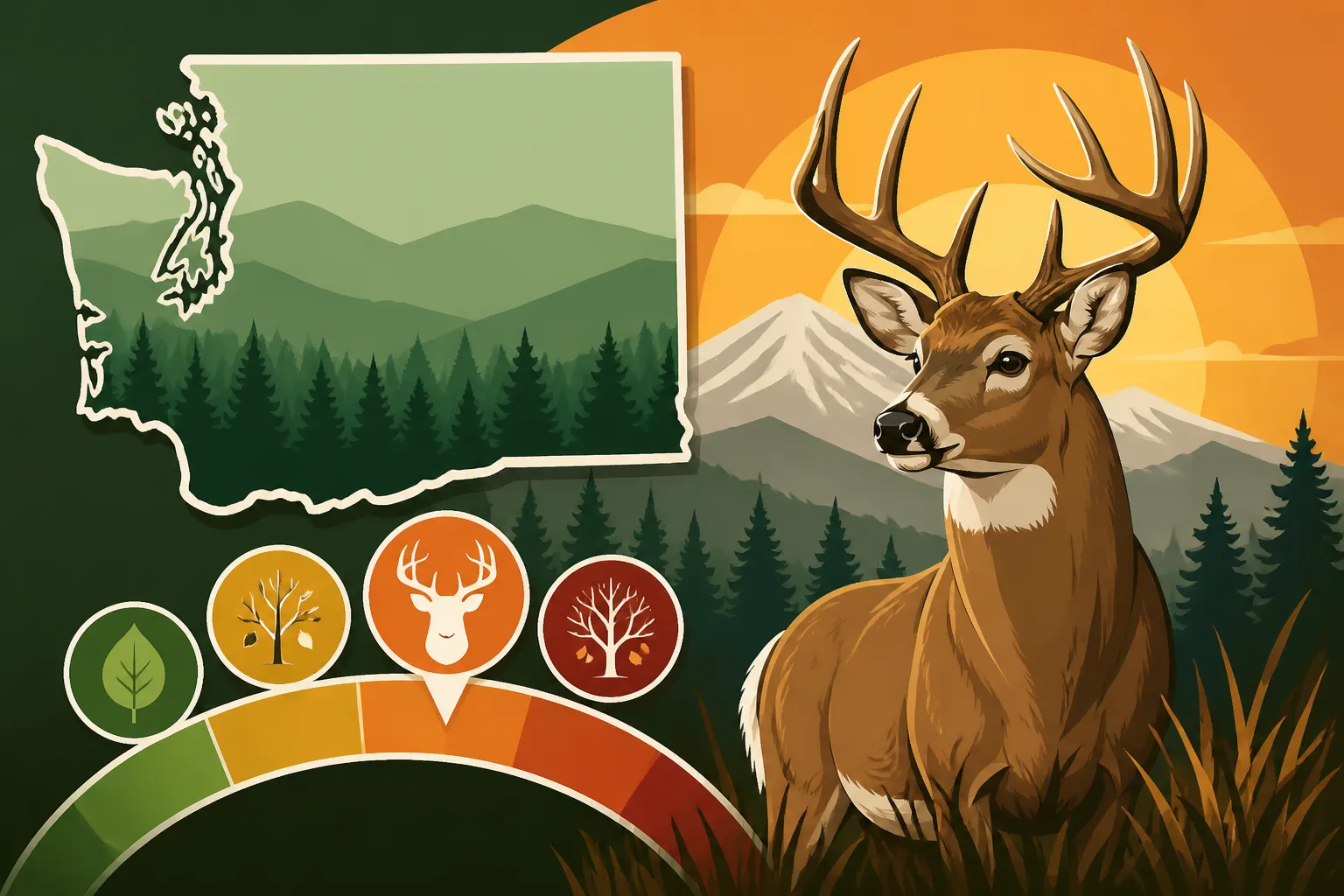
Here's a quick overview of the whitetail rut phases and typical timing in Washington's primary whitetail areas:
| Rut Phase | Typical Timing in NE Washington | Buck Behavior | Doe Behavior | Hunting Strategy |
|---|---|---|---|---|
| Pre-Rut | Late October – Early November | Increased rubs/scrapes, scent checking, sparring | Feeding heavily, still in groups | Patterning, stand hunting feeding/bedding transitions |
| Peak Rut | First Two Weeks of November | Intense cruising, chasing, breeding, less cautious | Seeking bucks, receptive to breeding (estrus) | Calling, still hunting, covering ground, checking scrapes |
| Post-Rut | Mid-November – Early December | Still cruising for unbred does, tiring | Bred, or still cycling if not bred, recovering | Hunting thick cover, secondary rut opportunities |
Reading the Signs: Recognizing Rut Phases in the Field
Being able to recognize what stage the rut is in when you're actually out in the field is a critical skill for any Washington whitetail hunter. The calendar gives you a general idea, but the deer themselves will tell you the real story if you know what to look for. Forget the exact date; pay attention to their actions.
The Early Stages: Pre-Rut Excitement
The pre-rut is a period of anticipation and increasing activity, typically kicking off in late October. Bucks are feeling the hormonal shift, and while does aren't yet receptive, the stage is being set for the main event. This is often an excellent time to be in the woods because bucks are becoming more visible during daylight as they start to flex their muscles and establish their dominance.
- Scrapes and Rubs: You'll notice a significant increase in both rubs (where bucks rub their antlers on trees to mark territory and shed velvet remnants) and scrapes (bare patches of ground where bucks urinate and deposit scent from their forehead glands). Fresh rubs are particularly exciting – shiny, often with sap still weeping, indicating a buck has recently been there. Scrapes will have an overhead branch, known as a "licking branch," that bucks chew and scent mark. A cluster of fresh scrapes in an area is a definite sign that bucks are actively patrolling and checking for does.
- Increased Daytime Movement: Bucks that were previously nocturnal or very reclusive will start to show themselves more during daylight hours. They're still somewhat predictable, often moving between bedding areas and feeding grounds, but they're now scent-checking, looking for any early signs of a receptive doe. This makes them vulnerable to hunters who have diligently scouted and can intercept them on these travel corridors. Scouting before the season can be a huge advantage for this. Consider learning more about Public Land Scouting in Washington Before Opening Day to maximize your chances.
- Sparring Matches: You might observe younger bucks, and occasionally mature ones, engaging in light sparring matches. These aren't full-blown fights but rather tests of strength and dominance, helping them establish a pecking order before the does come into estrus. This activity also serves to strengthen neck muscles in preparation for more serious confrontations during the peak.
The Chase Is On: Peak Rut Indicators
This is what every hunter dreams of: the peak rut. In Washington's whitetail country, this usually means the first couple of weeks of November. During this phase, everything changes. Buck behavior becomes less about routine and more about reaction.
- Bucks Chasing Does: The most obvious sign is seeing bucks actively chasing does. This isn't just a casual walk; it's often a frantic, high-speed pursuit through the timber. This means does are entering estrus and bucks are relentless in their pursuit. It can be quite a spectacle to witness.
- Reduced Caution: Mature bucks, typically very wary and cautious, often let their guard down significantly during the peak rut. Their singular focus on breeding overrides their natural survival instincts, making them more susceptible to hunter encounters. They might appear in areas they wouldn't normally during daylight, or ignore subtle cues that would otherwise send them bolting.
- Increased Rubs and Scrapes (But Less Focus): While bucks will continue to make rubs and scrapes, their focus shifts from creating them to checking them. They're quickly moving through their territory, hoping to intercept a hot doe. You might find fresh scrapes, but the buck creating it might not linger for long. They're on the move, covering ground.
- Vocalizations: You might hear more grunting from bucks as they pursue does or respond to calls. These grunts are a way for bucks to communicate their presence and dominance. While not as vocal as elk, whitetail bucks do use a range of sounds during this period.
Winding Down: Post-Rut Behavior
After the intense activity of the peak rut, things start to calm down. This is the post-rut, typically from mid-November through early December. Don't be fooled into thinking the rut is entirely over, though. There are still opportunities.
- Cruising and Searching: Bucks are still actively cruising, but with less urgency and more purpose. They're looking for any does that didn't get bred during the primary estrous cycle or for younger does that are now cycling for the first time. This can often lead to a "secondary rut" where localized activity picks up again.
- Return to Feeding: As the breeding drive wanes, bucks start to focus more on replenishing their energy reserves. They've lost a significant amount of weight and fat during the rut, so food becomes a priority. Hunting near prime food sources can be effective during this period.
- Increased Wariness (Again): Bucks will gradually return to their more cautious, reclusive ways. They're no longer driven by the same intense breeding urge and will be more attuned to threats. This means you'll need to employ more stealthy tactics, similar to early season hunting. If you're hunting in areas with specific rules, remember to review Washington's General Season Versus Special Permit Hunts to ensure you're in compliance.
Strategizing Your Hunt: Capitalizing on Each Rut Phase
Understanding the different phases of the rut isn't just academic; it's about translating that knowledge into actionable hunting strategies. Each phase presents unique opportunities and demands different approaches to increase your odds of success. Don't hunt the pre-rut like the peak rut, or you'll likely go home empty-handed.
Pre-Rut Tactics: Patterning and Patience
The pre-rut is all about intelligence gathering and setting yourself up for success. Bucks are starting to move more, but they're still somewhat predictable. This is the time to gather information, not necessarily to go full-speed into aggressive hunting.
- Scout, Scout, Scout: This cannot be stressed enough. Before the full madness begins, bucks are focused on establishing their territories and checking for early signs of does. Look for fresh rubs, active scrapes, and distinct travel corridors between bedding and feeding areas. Pay attention to pinch points, funnels, and natural barriers that might guide a buck's movement. A well-placed trail camera on an active scrape or rub line can reveal patterns you'd never see otherwise. For tips on effective trail cam use, consider Using Trail Cameras to Find Washington Bulls, adapting the principles for deer.
- Stand Placement: Based on your scouting, place stands or set up ground blinds in locations that intercept these predictable buck movements. Focus on transitions: edges of clearcuts, saddles between ridges, creek bottoms, or lines of timber that connect different habitat types. Bucks will cruise these areas. Access your stands quietly and efficiently, minimizing your disturbance.
- Patience is Key: While bucks are more active, they aren't completely reckless yet. This means long sits in your stand, often from before dawn until well after dark, can be incredibly effective. The goal is to be present when a buck decides to move through your area. Minimal calling, if any, is usually best during this phase; focus on observation. For those looking to maximize their opportunities, exploring the Washington Multi-Season Deer and Elk Tags could be beneficial, allowing flexibility across different periods.
Peak Rut Aggression: Active Hunting Strategies
When the peak rut hits, it’s time to shift gears. Bucks are often less cautious and more singularly focused on does. This is when aggressive, mobile strategies can pay off big time.
- Calling: During the peak rut, calling can be incredibly effective. Grunts, bleats (especially doe bleats), and even rattling antlers can pique a buck's interest. Bucks are looking for receptive does or for other bucks that might be encroaching on their territory. A well-timed grunt can often pull a curious buck out of thick cover or divert one that's cruising by. Experiment with different calls and volumes.
- Still Hunting and Spot-and-Stalk: If you're a mobile hunter, the peak rut offers fantastic opportunities for still-hunting (moving slowly and deliberately through the woods, stopping frequently to look and listen) or spot-and-stalk hunting, particularly in more open areas or along field edges where you can glass. Bucks are on the move, and so should you, within reason. Don't be afraid to cover ground, checking known doe bedding areas and traditional travel routes. When traversing challenging terrain, understanding how to navigate Blacktail Deer Hunting in Western Washington Timber can offer valuable insights, even if it's a different species, on moving through dense forests.
- Hunting All Day: Just like the pre-rut, but for different reasons, hunting all day during the peak rut can be highly productive. Bucks are pursuing does at all hours, and midday can be surprisingly active, especially if other hunters have bumped deer or if the weather is particularly favorable (cool and crisp). Don't give up just because it's noon!
- GoHunt for Real-time Data: While not live data, tools like GoHunt provide invaluable GMU data, public land boundaries, and historical harvest reports. During the peak rut, understanding popular hunting areas and deer densities can help you prioritize where to focus your efforts. Overlaying private timber land boundaries from a GoHunt map can also show you potential areas for access, which is crucial for maximizing your time. You might want to consider Hunting Behind Timber Company Gates if you're looking for additional ground.
Post-Rut Adjustments: Finding Tired Bucks
The post-rut can be challenging, but opportunities still exist for persistent hunters. Bucks are worn out, but they're still driven by two main things: finding any remaining receptive does and eating to recover lost weight.
- Focus on Food and Cover: As the intense breeding phase wanes, bucks shift their priorities back to survival. They need to recover the weight they lost. Focus your efforts on prime food sources – late-season acorns, agricultural fields, or winter browse – near thick, secure bedding cover. Bucks will be looking for easy meals and places to rest undisturbed.
- Secondary Rut: Keep an eye out for a "secondary rut" in late November or early December. This occurs when younger does or those that weren't bred during their first estrous cycle come into heat again. While not as widespread or intense as the primary rut, it can still spur mature bucks into action, making them visible again.
- Thick Cover and Bedding Areas: During this phase, bucks are often more wary and will spend significant time in thick cover, conserving energy. Still-hunting through dense reprod, thickets, or deep draws near food sources can be productive. Be patient, move slowly, and pay attention to subtle deer sign. Finding a good GMU Map for Washington can help you identify these areas from home.
By understanding the distinct phases of the whitetail rut and adapting your hunting strategies accordingly, you can significantly increase your chances of success here in Washington. It's a dynamic period, and the more you learn to read the signs and respond to the deer's behavior, the more rewarding your hunts will be.
Disclaimer
This article is for general informational purposes only and does not constitute professional advice. Laws, prices and regulations vary by location and change over time. Consult a qualified professional for guidance on your specific situation.