Coyote Density in Eastern Washington
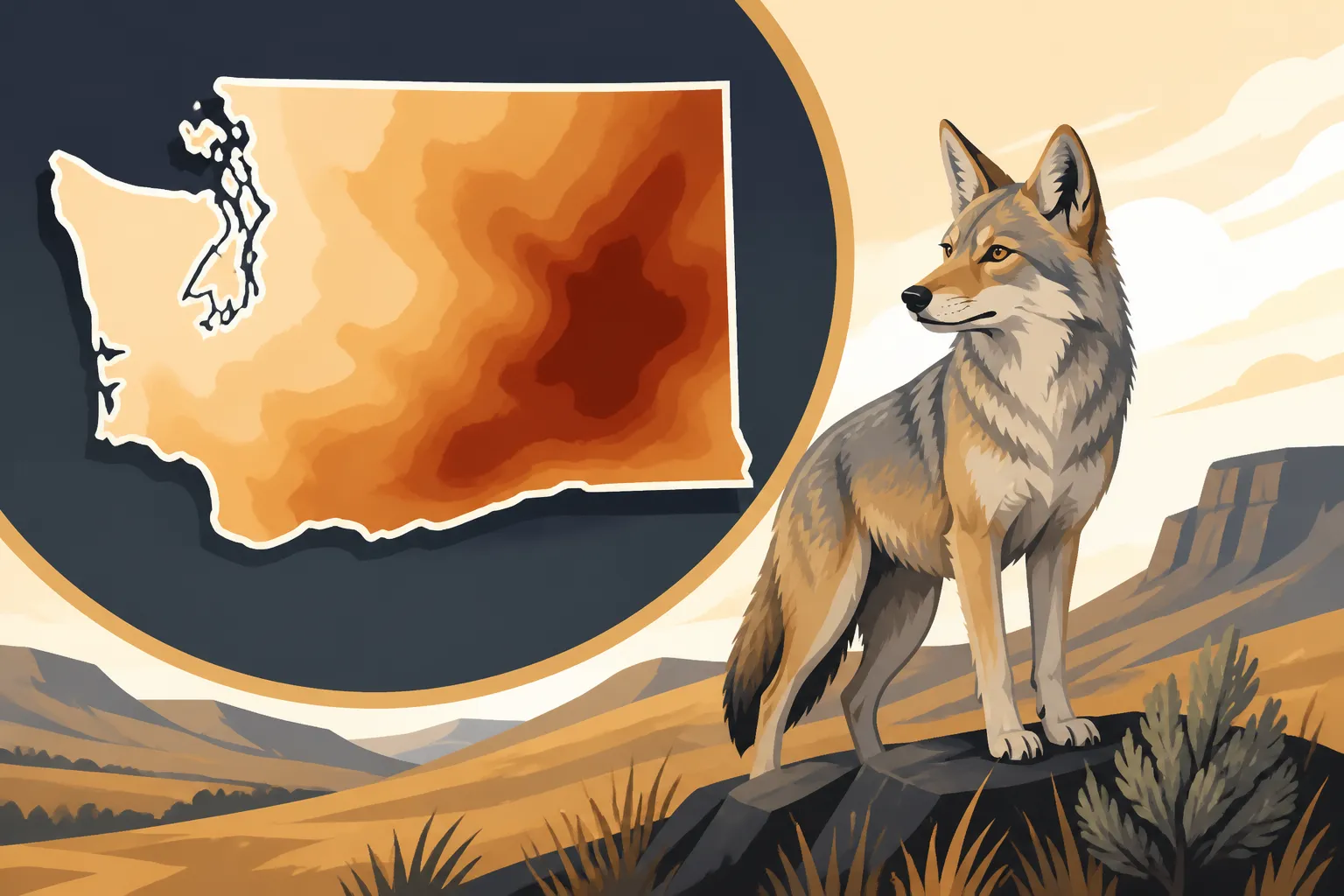
Trying to get a handle on the coyote population in Eastern Washington can feel like chasing shadows, especially when you're seeing varying numbers from one ridge to the next. It’s a common frustration for hunters and landowners alike who want to understand these cunning predators better. This guide is here to break down the factors influencing coyote density across the diverse landscapes of Washington's eastside, helping you decipher where and when you're most likely to encounter them.
What Drives Coyote Numbers in Eastern Washington?
Coyotes are incredibly adaptable animals, and their populations are a direct reflection of the environment around them. In Eastern Washington, with its dramatic shifts from arid scrubland to lush river bottoms and vast agricultural fields, understanding why coyotes thrive in certain areas is key to understanding their density. It's not just random; there's always a reason behind their presence.
Habitat and Food Availability
Think about it: a coyote needs a place to live, a place to hide, and food to eat. In Eastern Washington, these basic needs are met in a myriad of ways, leading to localized pockets of high and low density. For instance, the sprawling wheat fields of the Palouse and Columbia Basin are veritable buffets for small rodents like voles and mice. Where the prey is abundant, coyotes will follow and establish territories. That dense cover along a riparian zone near a river or creek, winding through otherwise open country, provides the perfect travel corridor and denning sites.
Contrast that with a high-elevation, sparse timber patch in the northern Selkirks. While coyotes certainly live there, the overall availability of easily accessible small prey might be lower, and they might rely more on larger game, which requires a larger home range. So, you might find fewer coyotes per square mile, but they could be just as active. The presence of deer fawns and elk calves during spring and early summer also provides a crucial food source, and areas with higher fawn/calf recruitment often see more coyote activity around that time. It's all about that food chain, plain and simple.
Human Influence and Management
Humans are an undeniable part of the ecosystem in Eastern Washington, and our activities definitely play a role in coyote populations. Farming practices, for example, can inadvertently create ideal habitat. Think of irrigation ditches providing year-round water, or grain fields offering dense cover and food for rodents, which in turn feed coyotes. Ranching operations, while sometimes clashing with coyotes, can also inadvertently provide food sources through livestock carcasses or afterbirth.
On the flip side, human management also impacts their numbers. Washington State allows year-round hunting for coyotes, with no bag limit or closed season. This sustained pressure, particularly in areas with high human population density or agricultural interests, can keep local numbers in check. However, coyotes are notoriously resilient. They learn to avoid human activity, becoming more nocturnal or utilizing dense cover, which can make it seem like there are fewer, even if their numbers are still relatively high. It's a constant push and pull, a testament to their incredible survival skills.
Pinpointing Coyote Hotspots Across Eastern Washington Regions
Eastern Washington is a vast, geographically diverse area, and where you are makes a huge difference in the kind of coyote density you might encounter. What works for finding coyotes in the sagebrush won't necessarily be the same strategy for the timbered mountains or the vast agricultural fields.
Farmlands and Agricultural Edges
The agricultural heartlands, like the Columbia Basin and the Palouse, are often prime coyote country. Picture endless wheat fields, interspersed with irrigation canals, coulees, and small, brushy creek bottoms. These seemingly benign landscapes are actually fantastic coyote habitat. The fields themselves are bursting with rodents, a primary food source. The edges where fields meet brush or timber offer crucial cover for resting and denning. The irrigation canals and streams provide water and natural travel corridors, allowing coyotes to move unseen.
In these areas, you might not see coyotes constantly, but their sign will be everywhere if you know what to look for. Tracks along dusty roads, scat piles, and the occasional howl at dawn or dusk are good indicators. They become incredibly adept at using even the smallest patches of cover to their advantage. If you're looking to call them in these open areas, understanding their travel lanes and setting up with the wind right is critical. Check out Coyote Calling in Open Wheat Country for more specific tactics in this kind of terrain.
Sagebrush Steppe and Dry Forest Interface
Move west towards the Okanogan, Yakima River Canyon, or areas bordering the eastern slopes of the Cascades, and you enter the sagebrush steppe and dry forest interface. Here, the landscape changes to rolling hills covered in sage, bitterbrush, and scattered Ponderosa pine. Water becomes a more critical resource, and coyotes will often be concentrated around springs, intermittent creeks, and river bottoms.
This type of terrain offers different advantages for coyotes. The broken topography of draws and coulees provides excellent ambush points and denning sites. The vastness allows for larger territories, but where water is scarce, coyotes, and their prey, will converge. Look for activity along game trails leading to water sources or in the bottom of brushy draws. These areas can sometimes offer good sightlines for spotting, but coyotes are masters of using every ripple in the landscape to stay hidden.
Mountainous and Timbered Breaks
Finally, consider the timbered breaks of the Selkirk Mountains in the northeast, the Blue Mountains in the southeast, or the eastern edge of the Cascade Range. While seemingly dense, coyotes are still very much present. They often utilize logging roads, old clearcuts (which can be rich in small prey), and game trails as their highways. Proximity to deer and elk winter ranges becomes a significant factor, especially during late fall and winter when weakened or scavengeable game is more available. Understanding Elk Calf Survival and Predation gives you insight into the direct impacts coyotes can have on young game, making these areas productive for coyotes when calves are present.
You might not hear them as often in thick timber, but their presence is felt. They're often seen following deer and elk herds, looking for opportunities. When the snow falls, tracking becomes easier, and you can really get a sense of their movements and where they're concentrating. For those venturing into these more remote areas, remember to consult maps for access and public land boundaries; Washington Wildlife Area Rules might apply in certain popular hunting grounds.
Seasonal Shifts in Coyote Activity and Density
Just like other wildlife, coyotes' behavior and how we perceive their numbers change dramatically with the seasons. It's not that the actual total population fluctuates wildly over a few months, but their distribution, activity patterns, and vocalizations certainly do. Knowing these shifts can help you understand where the "density" feels highest.
Spring and Early Summer: The Denning Season
From late winter through early summer, coyotes become much more localized. This is their denning season, when pups are born and raised. The adult coyotes will restrict their movements to be closer to their dens, which are often found in rocky outcrops, dense brush, old culverts, or hollow logs. During this time, you might experience a higher perceived density in a smaller area. You might see the same coyotes repeatedly, or hear more frantic barking and yipping as parents communicate or fend off perceived threats.
They are incredibly busy hunting during this period, bringing food back to the hungry pups. While ethical hunters often avoid active den sites, understanding this life cycle explains why you might find a high concentration of sign or activity in a particular drainage or brushy hillside during these months. Keep an eye out for fresh tracks heading towards a likely denning location.
Late Summer and Fall: Family Groups and Dispersal
As late summer rolls around, the pups are grown enough to start venturing out with the adults. This is when you'll often see larger family groups hunting together, especially at dawn and dusk. This cohesive hunting can make it seem like there are more coyotes, as several might appear in an area where you only saw one or two before. Their territories might expand as the family units range further.
Then comes the "dispersal" phase, typically in late fall. Young coyotes, now yearlings, start to strike out on their own to find new territories. This can temporarily lead to an increase in coyote sightings in areas where they weren't previously common, as these young animals explore and establish their own turf. This period, especially as other hunting seasons open, is a fantastic time for predator calling. Learning Predator Calling for Coyotes in Eastern Washington can be particularly effective when young, less experienced coyotes are on the move and looking to establish dominance or respond to calls.
Winter: Scavenging and Survival
Winter brings its own set of challenges and opportunities for coyotes. Deep snow can make hunting small prey harder, forcing coyotes to travel further and rely more heavily on scavenging. They will often follow wintering deer and elk herds, hoping for an easy meal from an animal weakened by weather or old age. This is why you might see an increase in coyote activity around popular winter range areas for big game, especially in places like the Wenas Wildlife Area. Wenas Wildlife Area Hunting is a prime example of an area where big game concentrate, making it attractive to predators like coyotes.
When snow covers the ground, tracking becomes an invaluable tool. You can literally read the story of their movements, identifying travel corridors, hunting patterns, and areas of concentration. This is also a good time to consider night hunting for predators, adhering strictly to Washington's Night Hunting Rules for Predators in Washington, as the coyotes are often out searching for food under the cover of darkness.
Tools and Techniques for Locating Coyotes
Understanding coyote density is one thing, but actually finding them in the field requires a blend of modern tools and traditional outdoor savvy. Luckily, we live in an age where technology can give us a significant leg up.
E-Scouting and Mapping Resources
Before you even tie your boots, you can do a ton of reconnaissance from your couch. Satellite imagery, readily available through apps and online platforms, is your best friend. Look for features that scream "coyote country." That means identifying field edges, especially where agriculture meets dense cover like brush or timber. Riparian corridors – the green lines along rivers and creeks – are always hotspots, offering water, cover, and travel routes. Isolated timber patches or rocky outcrops in otherwise open country often serve as denning sites or bedding areas. Look for natural pinch points where animals are funneled, or saddles on ridges where they might cross.
Tools like GoHunt are fantastic for this, as they integrate land ownership information, topographical maps, and other valuable layers directly onto satellite imagery. You can mark potential spots, plan your approach, and even check access points, all before leaving home. This kind of detailed E-scouting helps you focus your efforts on areas with the highest potential for coyote density, rather than just wandering aimlessly. It's about working smarter, not harder, especially when dealing with such cunning animals.
Field Sign and Local Intelligence
No amount of E-scouting can replace boots on the ground and good old-fashioned intelligence gathering. Once you're in the field, learn to read the sign. Fresh tracks in the dust or snow tell you where they're traveling and how recently. Scat (feces) can indicate their diet and general presence. Listen for vocalizations – howling at dusk or dawn, or the excited yipping of a family group. These calls can give away their location and density in an area. Electronic Calls and What Washington Allows can be very effective if you know what you're doing.
Don't underestimate the power of local knowledge. Talk to farmers, ranchers, and even other hunters in the area. They often have invaluable, real-time information about where coyotes are causing problems, where they've been seen recently, or areas where they congregate. A farmer battling gophers might point you to a specific field edge that's teeming with activity. Understanding the movement patterns of game animals, such as Finding Mule Deer in Wheat Stubble Edges or where Whitetail Numbers in Northeast Washington are robust, can also help predict where coyotes will be, as they often follow their prey.
| Eastern Washington Region | Typical Habitat | Coyote Density Indicators | Best Time for Activity |
|---|---|---|---|
| Palouse/Columbia Basin | Wheat fields, riparian zones, coulees | Tracks along field edges, scat, evening howls, rodent activity | Year-round, especially evening/morning |
| Sagebrush Steppe (Okanogan/Yakima) | Sagebrush, draws, dry creeks, scattered timber | Tracks near water sources, vocalizations in draws, prey concentrations | Spring (denning), Fall (dispersal) |
| Mountain/Timber (Selkirks/Blues) | Mixed forest, clearcuts, mountain breaks | Tracks on logging roads/game trails, near wintering big game | Winter (scavenging), Spring (calving) |
Coyote Impact on Game Species and Local Ecosystems
Coyotes, like any apex predator, are a vital part of the ecosystem in Eastern Washington. Their presence often sparks lively debate among hunters, particularly concerning their effect on deer and elk populations. Understanding their role helps paint a clearer picture of their density and its wider implications.
Predator-Prey Dynamics with Deer and Elk
It's natural for hunters to worry about coyotes' impact on big game, especially on vulnerable fawns and calves. There's no denying that coyotes are opportunistic predators, and young deer and elk are certainly on their menu. During the spring fawning and calving seasons, areas with high coyote density will inevitably see some predation on the young. For instance, in areas where deer or elk populations are already stressed by habitat loss or harsh winters, an unchecked coyote population could indeed slow recovery. We've certainly heard many accounts from hunters observing coyotes actively hunting during these critical periods.
However, the relationship isn't always straightforward. Coyotes often target the weakest, sickest, or least wary individuals, which can actually help strengthen the overall herd health in the long run. They also primarily rely on smaller prey for the bulk of their diet. While they are known to take a fawn or calf, it's rarely their only food source. In Eastern Washington, where many deer and elk herds are healthy, the impact of coyotes might be less severe than many fear, often offset by good habitat and decent recruitment rates. Understanding factors like Elk Calf Survival and Predation is crucial for a balanced perspective. It's a complex dance where many factors influence big game numbers, and coyotes are just one part of the equation.
The Ecosystem Role of Coyotes
Beyond their role in predator-prey dynamics with larger game, coyotes serve a crucial function as generalist predators and scavengers. They are incredibly effective at controlling populations of rodents, rabbits, and other small mammals that can sometimes be considered pests by agricultural interests. Imagine the explosion of vole populations in certain crop fields without coyotes around to help keep them in check! This indirect benefit often goes unnoticed but is vital for ecosystem balance.
Coyotes also act as nature's clean-up crew. They'll scavenge carcasses of animals that died from other causes, preventing the spread of disease and recycling nutrients back into the environment. They're resilient and adaptable, filling a niche that helps maintain biodiversity. While sometimes a nuisance, their presence speaks to a healthy, functioning ecosystem. Their numbers, and where you find them, are truly a reflection of the overall health and productivity of the Eastern Washington landscape, from the smallest mouse to the largest elk.
Disclaimer
This article is for general informational purposes only and does not constitute professional advice. Laws, prices and regulations vary by location and change over time. Consult a qualified professional for guidance on your specific situation.