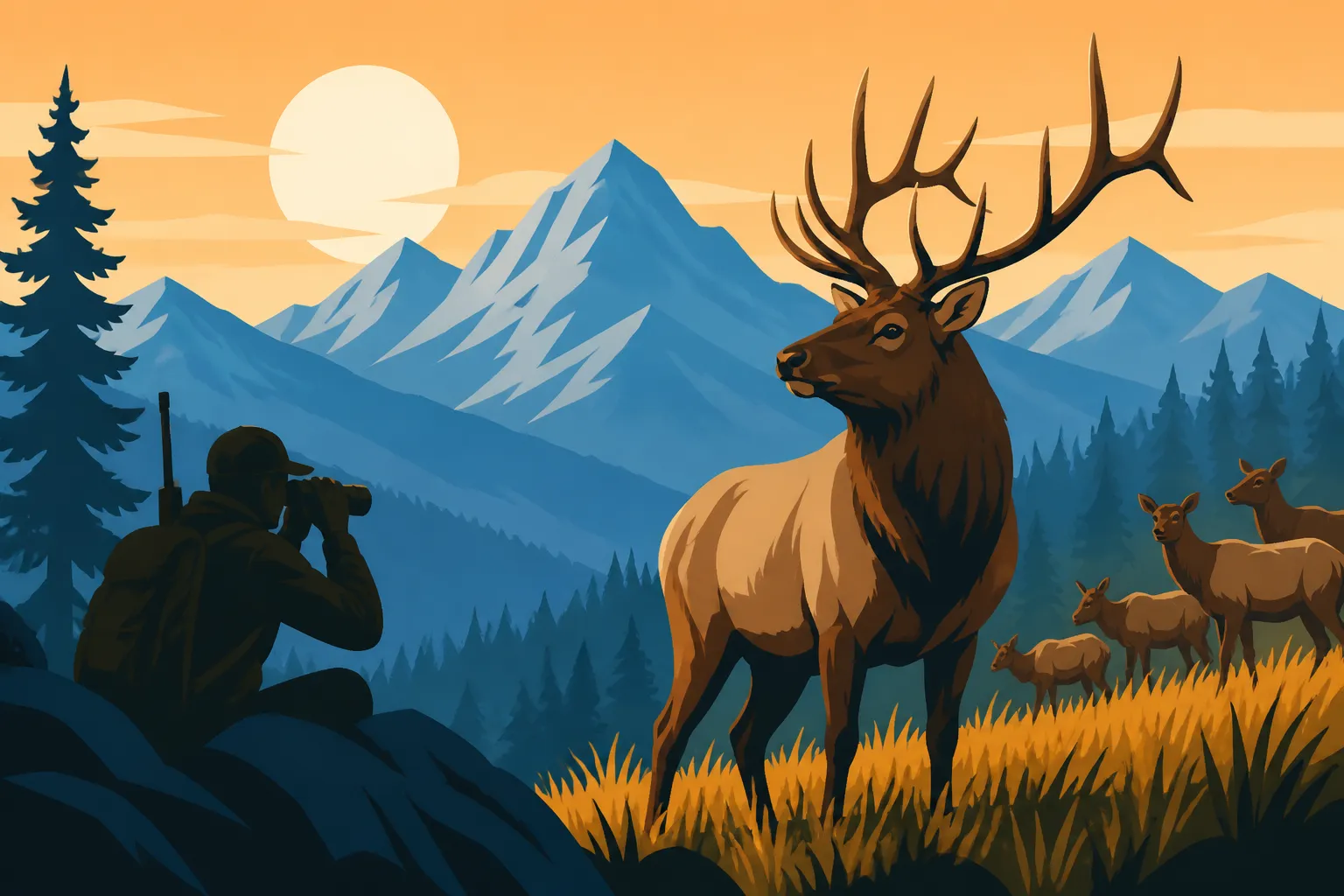
The Blue Mountains Elk Herd
Many hunters dream of chasing elk in Washington, but the sheer size and complexity of managing different herds can feel overwhelming. The Blue Mountains, specifically, hold a mystique and a challenge that often leaves folks scratching their heads about where to even begin. This comprehensive guide is designed to peel back the layers on Washington's Blue Mountains Elk Herd, giving you a deep dive into their habitat, population, behaviors, and the best strategies to pursue these magnificent animals in this unique corner of our state.
Understanding the Blue Mountains Elk Herd's Landscape
The Blue Mountains elk herd isn't just one big blob of animals; they are intimately tied to the specific landscape they inhabit. This region, often just called "The Blues" by locals, is a sprawling, rugged expanse of southeastern Washington and northeastern Oregon. It's a truly unique ecosystem that shapes every aspect of elk life, from their daily movements to their long-term survival. For any hunter hoping to punch a tag here, understanding this country is paramount.
Geographic Boundaries and Key Terrain
The Blue Mountains stretch for miles, generally bounded by the Snake River to the north, the Grande Ronde River to the east, the Walla Walla River drainage to the west, and dipping south into Oregon. This isn't a single, continuous mountain range like the Cascades; instead, it's a series of plateaus, deep river canyons, and rolling uplands, all dissected by numerous drainages. You'll find yourself navigating steep-sided canyons, like those carved by the Wenaha and Tucannon rivers, often with incredibly dense timber on north-facing slopes and drier, more open south-facing aspects.
This varied topography creates a mosaic of microclimates and vegetation, directly influencing where elk feed, bed, and travel. It's a place where a flat map simply doesn't do justice to the vertical reality you'll experience. You might be glassing across a canyon that looks a mile wide, only to realize it's a vertical mile from rim to river. This ruggedness naturally funnels elk movement, and savvy hunters learn to read these natural corridors, which can be critical for predicting movement patterns, especially during the rut when bulls are on the move.
Habitat Types and Elevation Ranges
The habitat in the Blue Mountains is incredibly diverse, ranging from low-elevation grasslands and agricultural fields to high-elevation subalpine forests. At the lower elevations, especially near the agricultural fringe, you'll find a mix of private land with hay fields, wheat stubble, and pasture. As you gain elevation, ponderosa pine forests dominate, eventually transitioning into mixed conifer stands of Douglas fir, grand fir, and larch. The highest ridges and plateaus hold pockets of subalpine fir and Engelmann spruce, often interspersed with vast open meadows and old growth timber.
This vertical stratification means elk can utilize vastly different food sources and cover types throughout the year. In the early season, they might be in the higher, cooler timber, but come winter, they’ll be seeking out those south-facing slopes at lower elevations that shed snow faster. Understanding these different zones is crucial for predicting where elk will be at any given time, particularly as the season progresses. The Blue Mountains are also known for significant timber production, and understanding how to navigate this landscape, including areas behind Hunting Behind Timber Company Gates, can be key to unlocking access. Knowing the elevation where certain timber types thrive can also help you narrow down your search for prime bedding or feeding areas.
Water Sources and Migration Corridors
Water is a critical factor for elk, and the Blue Mountains are crisscrossed with numerous creeks, streams, and rivers that serve as vital water sources. The Tucannon, Wenaha, Asotin, and Grande Ronde rivers, along with their countless tributaries, provide consistent water, even during dry late-summer months. In addition to these perennial flows, seeps, springs, and small ponds are scattered throughout the timbered areas, often acting as magnets for elk, particularly during the archery and early rifle seasons when temperatures can still be quite warm.
Beyond daily water needs, these river systems and the connecting ridges often serve as ancient migration corridors, guiding elk between their summer and winter ranges. While not as pronounced as some other Western migrations, the elk here still move significantly in response to snowpack and forage availability. Identifying these natural travel routes, often marked by heavy game trails, can be incredibly productive. For instance, understanding the routes elk take when moving between higher summer feeding grounds and lower-elevation wintering areas can be a game-changer, especially during late-season hunts where snow pushes them down into more accessible country. GoHunt's mapping features can be instrumental in identifying these subtle terrain features and historical travel paths, giving you an edge in your planning by visualizing where animals are likely to move.
Blue Mountains Elk Population Dynamics
Understanding the health and trends of the Blue Mountains elk herd is vital for any hunter. The Washington Department of Fish and Wildlife (WDFW) dedicates significant resources to monitoring this herd, as it's one of the state's most important and iconic elk populations. The data collected helps inform season setting, permit allocations, and long-term conservation strategies. However, like any wild population, the Blues elk face numerous pressures and fluctuations.
Current Population Estimates and Trends
For decades, the Blue Mountains elk herd has been one of Washington's stronghold populations. While exact numbers fluctuate year to year due to factors like calf survival, disease, and harvest, WDFW surveys typically aim to keep the population within specific management objectives for each Game Management Unit (GMU) within the region. Historically, the Blues have shown strong numbers, often exceeding target objectives, which has led to more liberal harvest opportunities in some areas.
However, like many Western herds, they face challenges. Recent estimates show a generally stable to slightly declining trend in some areas, which is a constant concern for wildlife managers. Factors contributing to this can be complex, from habitat changes to disease prevalence, as well as shifts in predator populations. Hunters can stay informed by reviewing the annual WDFW Game Management Plans, which provide detailed population objectives and survey results for individual GMUs, offering insights into How Many Elk Washington Has and how the Blues stack up. These reports are invaluable for serious hunters looking to understand the bigger picture of herd health.
Bull-to-Cow Ratios and Calf Recruitment
Crucial indicators of a herd's health are the bull-to-cow ratios and calf recruitment rates. In the Blue Mountains, WDFW aims for specific post-season bull-to-cow ratios to ensure adequate breeding success, typically ranging from 15-20 bulls per 100 cows in general season units, and higher in quality or special permit units. A robust ratio helps ensure that breeding opportunities are plentiful and that the genetic diversity of the herd is maintained.
Calf recruitment, or the number of calves that survive to approximately six months of age per 100 cows, is equally important. A healthy calf recruitment rate, often in the range of 25-35 calves per 100 cows, indicates a productive and sustainable herd. If these numbers dip too low, it signals potential issues with predation, nutrition, or disease impacting Elk Calf Survival in Washington. Hunters often find that areas with higher bull-to-cow ratios correlate with better opportunities for mature animals, especially in units managed for quality. WDFW's management goals for the Blues often aim to provide diverse hunting opportunities, balancing general season access with quality experiences in special permit areas, directly influencing these critical ratios and herd composition.
Challenges: Disease, Predation, and Human Impact
The Blue Mountains elk herd is not immune to the challenges facing wildlife across the continent. Elk Hoof Disease, though more commonly associated with Western Washington, has unfortunately been documented in pockets of the Blues, posing a significant threat to herd health. While the prevalence is lower than in coastal regions, it's a concern that WDFW actively monitors. This painful affliction can severely impact an elk's ability to forage, escape predators, and survive harsh winters.
Additionally, predation from cougars and bears, and increasingly, wolves, impacts calf survival and herd dynamics. Washington's wolf population, while still recovering, has expanded into portions of the Blue Mountains, adding a new layer of complexity to elk management. Human impact also plays a substantial role. Habitat fragmentation from development, timber harvesting practices, and road access all influence elk behavior and distribution. Finding effective ways to manage these diverse pressures while maintaining a healthy, huntable elk population is a constant balancing act for WDFW, and it's why understanding these factors is so important for hunters. The more informed we are, the better partners we can be in conservation, contributing to data collection by reporting observations and adhering to management guidelines.
Elk Behavior and Seasonal Movements in the Blues
Elk are creatures of habit, but their habits are deeply influenced by the seasons, available forage, and pressure from hunters and predators. In the Blue Mountains, these seasonal shifts dictate where elk will be and how they behave, making a hunter's understanding of these patterns absolutely critical. Knowing what to expect throughout the year allows for more effective scouting and strategic hunting, increasing your chances of success.
Spring Green-up and Calving Grounds
As the snow begins to melt in late spring, usually May and early June, the Blue Mountains come alive with a flush of new growth. This "green-up" signals the return of nutritious forage, and it's when elk begin to move from their lower-elevation winter ranges to higher, richer feeding grounds. Cows, heavy with calves, will seek out secluded, timbered areas with good cover and access to water for calving. These calving grounds are often located on north-facing slopes or in dense patches of timber where newborns can be hidden from predators like bears and cougars.
During this period, elk are particularly vulnerable, and human disturbance is minimal to ensure calf survival. While it's not a hunting season, understanding these spring movements helps pinpoint potential summer ranges and even late-season concentrations. Calving grounds can influence where you find elk months later, as cows often return to familiar areas year after year. The abundance of early spring forage in these areas helps mothers recover from winter and provides essential nutrients for milk production, directly correlating with healthy calf development.
Summer High Country and Bachelor Groups
By mid-summer, much of the Blue Mountains elk herd has migrated to the higher elevations. Here, cooler temperatures, lush forage in subalpine meadows, and abundant water provide ideal conditions for bulls to grow their antlers and cows to raise their calves. Bachelor groups of bulls, often ranging from spikes to mature five and six points, will congregate in these high country areas, feeding heavily and building up their reserves for the impending rut. They'll often seek out dense timber for bedding during the heat of the day, moving into open parks and clearings to feed in the cooler mornings and evenings.
This is prime time for E-Scouting Washington GMUs Before the Draw and conducting long-range glassing. Areas like the Wenaha-Tucannon Wilderness are known for holding elk throughout the summer. Using optics to pick apart distant hillsides and clearcuts can reveal these groups, providing invaluable intel for the fall. You might spot a massive bull feeding alone on a remote slope, or a whole group of bulls lazily chewing their cud in a secluded basin, offering a sneak peek at what might be available come hunting season. GoHunt's satellite imagery and terrain analysis can be incredibly useful in identifying these summer haunts before you ever set foot on the mountain.
Fall Rut Activity and Winter Range Concentration
As late August rolls into September, the air in the Blue Mountains gets a crisp edge, and the elk rut begins to stir. Bulls, their antlers hardened, start to become more vocal, and the landscape fills with the primal sounds of bugles. During the archery and early rifle seasons, bulls are actively seeking and gathering cows, leading to intense competition and challenging hunting. This is when elk become most visible and vocal, but also incredibly wary.
They'll move between bedding areas in dense timber and feeding grounds in meadows or open timber, often utilizing the same migration corridors they've used for generations. Understanding Bugling and Cow Calling in Washington's Archery Elk Season becomes vital here, as calling can often be the most effective strategy. As winter approaches and snow begins to accumulate, elk are gradually pushed down to their traditional winter ranges at lower elevations. These areas, often south-facing slopes that melt out faster, provide critical forage and shelter from the harsh conditions. By late season, knowing these winter concentrations can be the key to success, as elk will often be congregated in predictable patterns, making Late-Season Hunting in Washington Snow a very specific challenge and opportunity.
Hunting Considerations for the Blue Mountains Elk
Hunting the Blue Mountains for elk is a quintessential Washington experience, but it requires careful planning, physical conditioning, and a deep understanding of the regulations and the terrain. It’s not a place for the faint of heart or the unprepared. The rewards, however, can be truly spectacular, offering opportunities for both general season hunters and those lucky enough to draw a special permit.
General Season Opportunities and Special Permits
Washington offers both general season and special permit opportunities for elk in the Blue Mountains. General seasons, typically held in September for archery, October for muzzleloader, and November for modern firearm, provide over-the-counter tags and wide access. These hunts can be challenging due to hunting pressure and the sheer vastness of the public land, but consistent effort often pays off. Many hunters focus on the Washington General Season Versus Special Permit Hunts debate, and for good reason—the experiences can be vastly different.
Special permits, on the other hand, are highly coveted and significantly increase your odds of encountering mature bulls, often in less crowded conditions. These permits are typically for specific GMUs, weapon types, or dates, and require applying through the WDFW draw system, which you can learn more about in detail by researching Washington Special Hunt Permits and How to Apply. Success rates on special permits can be substantially higher, but the draw odds are notoriously low for the most desirable hunts, making strategic application key. Tools like GoHunt's draw odds and unit breakdowns can be incredibly valuable here, helping you make informed decisions about where to put in for your chances.
Access Points and Road Systems
Access in the Blue Mountains is a complex beast. You'll find a mix of national forest lands, state Department of Natural Resources (DNR) lands, and extensive private timber holdings, all with varying access rules. The Umatilla National Forest covers a significant portion of the Blues, offering vast expanses of public land. However, navigating these areas often involves a network of "Green Dot" roads – roads that are open to vehicle traffic on specific dates or for specific purposes, while others are permanently closed to motorized vehicles. Understanding Washington Green Dot Road Systems is absolutely crucial, as unauthorized vehicle travel can lead to citations and even criminal charges, not to mention impacting wildlife.
Many private timber companies, such as Weyerhaeuser or Hancock, own significant portions of the lower and mid-elevation timberlands. Access to these lands often requires purchasing permits or passes well in advance of the season, and some areas are strictly walk-in or by reservation. Always check the most current WDFW regulations and land manager websites before heading out. Identifying walk-in only gates on industrial timber can often lead to less pressured elk, but be prepared for a substantial hike. This intricate mosaic of ownership and access rules highlights why proper pre-season research is non-negotiable for hunting the Blue Mountains effectively.
Strategic Scouting and Hunt Planning
Effective scouting is paramount for success in the Blue Mountains. This isn't a place where you can just show up on opening day and expect to find elk easily. Start your research early, long before the season begins. Use online mapping tools like onX Hunt or GoHunt to analyze terrain, identify potential bedding and feeding areas, pinpoint water sources, and mark historical migration corridors. Look for recent timber cuts, which often provide new forage and cover, making them excellent places to focus, as you might do when Reading Clearcuts and Reprod for Blacktail Bucks.
Once you have a few promising spots, make a plan for in-person scouting, or at least dedicate ample time to Public Land Scouting in Washington Before Opening Day. This might involve physically walking trails, checking for fresh sign, and setting up trail cameras, making sure to understand Trail Camera Rules on Washington Public Land. Pay attention to prevailing wind directions, escape routes, and potential pinch points. Consider glassing large areas from strategic vantage points, a technique beautifully detailed in Glassing Eastern Washington Breaks for Mule Deer, which applies equally well to elk. Remember, these elk are hunted, and they will adapt their behavior to pressure, so having multiple backup plans and scouting alternative areas is always a smart move.
Challenges and Conservation Efforts
The Blue Mountains elk herd, despite its historical robustness, faces a complex web of challenges in the 21st century. Conservation is a continuous effort, and hunters play a significant role in supporting the health and sustainability of this iconic population. From habitat management to disease mitigation, ongoing work is essential to ensure future generations can also experience the thrill of hunting these magnificent animals.
Managing Habitat and Timber Practices
Habitat is the foundation of any healthy wildlife population, and the Blue Mountains are no exception. The region's checkerboard of public and private timberlands means that logging practices significantly influence elk habitat. While some clear-cutting can provide new forage in the short term, large-scale, unmanaged logging can fragment habitat, reduce old-growth cover, and create an excess of road access, increasing pressure on elk.
WDFW, in collaboration with the U.S. Forest Service and private timber companies, works to promote sustainable forest management practices that benefit wildlife. This includes planning for timber harvests that create diverse age classes of trees, maintaining critical thermal and hiding cover, and restoring natural fire regimes where appropriate. For hunters, understanding how to navigate and hunt regenerating clearcuts can be crucial, as elk often frequent these areas. Another critical element is staying aware of Checking Washington Fire Closures Before You Go, as wildfires can dramatically alter habitat and access. It's a delicate balance, ensuring economic vitality while preserving the ecological integrity of the elk's home.
Addressing Elk Hoof Disease and Predation
As previously mentioned, Elk Hoof Disease (EHD) remains a serious concern. Although primarily a Westside issue, its presence in the Blues means constant vigilance is required. WDFW continues to research the disease, its causes, and potential mitigation strategies, and they rely heavily on hunters and landowners to report limping or diseased elk. This collective effort is critical in tracking the spread and understanding the impact of Elk Hoof Disease in Western Washington, and its manifestation in the eastern part of the state.
Simultaneously, managing predator populations is an ongoing challenge. While cougars and bears are natural parts of the ecosystem, their populations, along with the recovering wolf population, require monitoring to ensure they don't unduly depress elk numbers, particularly calf survival. WDFW uses harvest guidelines for cougars and bears, and manages wolves under a separate recovery plan, all with the goal of balancing predator and prey dynamics. Hunters contribute directly to this by participating in bear and cougar seasons, as well as by reporting sightings of predators or affected elk, becoming essential partners in the ongoing monitoring efforts.
Future Outlook and Hunter's Role
The future of the Blue Mountains elk herd is a testament to ongoing conservation efforts and the dedication of hunters. While challenges remain, WDFW is committed to adaptive management strategies, utilizing the best available science to maintain a healthy and huntable population. New technologies for studying elk movement and health are constantly being employed. Researchers often use GPS collars to track elk movements, helping to understand their migration patterns, winter range use, and vulnerability to various factors.
As hunters, our role extends far beyond merely buying a tag. We are crucial partners in conservation, providing funding through license and tag sales, acting as eyes and ears in the field, and advocating for sound wildlife management. Participating in WDFW public meetings, submitting accurate harvest reports, and practicing ethical hunting are all ways we contribute. Supporting organizations that champion wildlife habitat and access, like the Rocky Mountain Elk Foundation, also helps ensure the Blues remain a premier elk hunting destination. Understanding that each trip into the field offers a chance to observe, learn, and contribute to the bigger picture is part of what makes hunting in the Blue Mountains such a rich and meaningful experience.
| Blue Mountains Elk Herd Key Metrics (Approximate) | General Season Units | Special Permit Units (Quality) |
|---|---|---|
| Bull-to-Cow Ratio (Post-Season Target) | 15-20 bulls:100 cows | 25-35 bulls:100 cows |
| Calf Recruitment Rate (Target) | 25-35 calves:100 cows | 30-45 calves:100 cows |
| Hunter Success Rate (General Season) | 5-10% | 20-40%+ |
| Typical Harvest (Annual Avg.) | Varies by unit | 1-5 bulls per permit |
| Terrain Difficulty | Moderate to High | High |
This table provides general benchmarks. Actual numbers and success rates vary significantly by specific GMU, year, and season. Always consult current WDFW regulations and harvest reports for the most up-to-date information on Washington Game Management Units Explained.
Disclaimer
Please be aware that hunting regulations, seasons, and access rules in Washington can change frequently. Always consult the most current Washington Department of Fish and Wildlife (WDFW) hunting pamphlets and emergency rule changes before planning or engaging in any hunting activity. This guide is for informational purposes only and does not supersede official WDFW regulations.