Blue Mountains Hunting in Southeast Washington
The Blue Mountains of Southeast Washington present a truly formidable and rewarding challenge for hunters. This vast expanse of rugged terrain, sprawling timber, and deep canyons can feel overwhelming, especially if you're new to its unique demands. It's a place where majestic elk roam, where mule deer hide in the draws, and black bears forage in the huckleberry patches, but finding them and successfully harvesting them requires more than just luck – it demands meticulous preparation, a deep understanding of the landscape, and the right strategies. This comprehensive guide is designed to help you navigate the complexities of hunting the Blue Mountains, from understanding its diverse habitats and game species to mastering access, refining your hunting tactics, and ensuring you're fully equipped for a successful and safe experience.
Understanding the Blue Mountains: A Unique Hunting Landscape
The Blue Mountains, often simply called "The Blues" by those who hunt them, are an anomaly in Washington state. Unlike the dense, wet forests west of the Cascades or the sagebrush deserts further north in Eastern Washington, the Blues offer a distinct blend of timbered peaks, rolling foothills, and deep, canyon-cut drainages. This isn't your easy roadside hunt; this is big country that demands respect, stamina, and a willingness to explore.
Geography and Habitat: More Than Just Timber
When you look at a map of the Blue Mountains, you'll see a patchwork of public and private lands, primarily dominated by the Umatilla National Forest, interspersed with Washington Department of Fish and Wildlife (WDFW) wildlife areas and privately owned timber company holdings. The habitat varies dramatically as you move through the elevation bands. At lower elevations, particularly on the western and northern edges, you might find agricultural fields, private pastures, and pockets of riparian habitat along rivers like the Touchet and Tucannon. As you climb, you transition into ponderosa pine, Douglas fir, and grand fir forests, often with a surprisingly open understory on the dryer, south-facing slopes, contrasting sharply with the thick, dark timber on north-facing aspects. Higher still, you'll hit stands of lodgepole pine and true firs, eventually opening into subalpine meadows and scattered huckleberry patches that are absolutely crucial for bear and elk in the late summer and early fall. Understanding this mosaic is key to predicting game movement and behavior.
The steep canyons, carved by numerous creeks and rivers, act as natural travel corridors for game and often hold pockets of thermal cover that animals use to escape extreme temperatures. These draws can be incredibly difficult to navigate, with dense brush, downed timber, and treacherous footing. Hunters often underestimate the vertical challenge of the Blues, mistaking the rolling appearance on a topographical map for gentle terrain. Trust me, your quads will feel every contour line.
Key Game Species: Elk, Mule Deer, and Bear
The Blue Mountains are perhaps most famous for their Rocky Mountain elk herds, particularly the well-known Blue Mountains Elk Herd Size. These elk are the crown jewel of hunting in this region, drawing hunters from across the state and beyond. They are large, majestic animals, and the opportunity to pursue a branch-antlered bull here is a dream for many. These herds utilize the diverse habitat, moving from high-elevation summer ranges in the dense timber and alpine meadows down to lower-elevation winter ranges as snow deepens, often involving significant migrations.
Mule deer are another popular species in the Blues. While their numbers fluctuate, the big-bodied bucks found in this rugged country are a testament to their resilience. You'll primarily find them in the more open, drier habitats, often favoring the ponderosa pine stands and brushy draws. Don't be surprised to find mule deer sharing habitat with whitetails, especially on the northern and western fringes of the Blues. Understanding the differences between these two deer species is important for legal harvest, as some units have antler restrictions that apply differently.
Black bears are abundant in the Blue Mountains, thriving in the timbered country and gorging themselves on the plentiful berry crops in late summer and early fall. Hunting opportunities for bear are often tied to specific huckleberry patches or natural travel funnels, providing a thrilling spot-and-stalk experience. Cougars also inhabit the Blues, preying on the robust deer and elk populations, offering a challenging pursuit for dedicated hunters who are prepared to cover serious ground.
Weather and Terrain: Preparing for the Unexpected
Hunting the Blue Mountains means being ready for anything Mother Nature throws at you. Early archery seasons in September can bring scorching, dry heat, creating dusty conditions and raising fire danger. A few weeks later, during rifle season, you could experience anything from crisp autumn days to torrential rain, sleet, or even an early snowstorm that can shut down roads and transform the landscape overnight. Late-season hunts almost guarantee deep snow and bitterly cold temperatures, making access and survival critical considerations.
The terrain itself is relentlessly steep and broken. Expect to traverse countless steep ridges, descend into deep canyons, and climb out again. Logging roads, while providing some access, often dead-end or become overgrown, forcing you into dense timber or across clearcuts. The footing can be treacherous, with loose rock, slick mud, and unseen downed timber underfoot. This isn't terrain for the faint of heart or the unprepared. Physical fitness is paramount; you'll be covering miles with significant elevation gain and loss, often with a heavy pack.
Navigating Access: Public and Private Lands
One of the biggest hurdles and sources of frustration for hunters in the Blue Mountains is navigating the complex quilt of land ownership. Knowing where you can legally hunt and how to access it is half the battle. This isn't a place where you can just wander anywhere; boundaries matter, and respecting private property is non-negotiable.
Umatilla National Forest and WDFW Wildlife Areas
The vast majority of public hunting land in the Blue Mountains falls under the jurisdiction of the Umatilla National Forest. This federal land is generally open to hunting with the appropriate licenses and tags, offering extensive opportunities for backcountry hunting. However, "open" doesn't always mean "easy access." Many areas require long hikes, and motorized access is often restricted to designated routes. Always consult a current forest service map or use a digital mapping application like onX Hunt to clearly identify boundaries and road statuses.
In addition to the National Forest, the Washington Department of Fish and Wildlife manages several key wildlife areas within or adjacent to the Blues. These areas, such as the W.T. Wooten Wildlife Area along the Tucannon River, the Asotin Creek Wildlife Area, and the Wenaha-Tucannon Wilderness area, are critical for game populations and often provide excellent hunting opportunities. They are generally open to public hunting but may have specific regulations or access rules, such as parking permit requirements or restrictions on vehicle use. Always check the specific rules for the wildlife area you intend to hunt. These areas are often managed to protect critical winter range or provide habitat for specific species, so respecting all signage and regulations is crucial.
Timber Company Lands and Access Challenges
Beyond the public lands, large tracts of the Blue Mountains are owned by private timber companies. Historically, some of these lands were open to public access, but that's been changing rapidly. Many timber companies now charge access fees, require permits, or simply close their gates to public entry. This can create "landlocked" sections of public land or drastically alter traditional access routes, leading to significant frustration for hunters who've relied on these roads for decades.
It's absolutely essential to research the current access policies of timber companies like Weyerhaeuser or Hancock before planning your hunt. Some companies offer fee-based recreational permits for walking or even driving certain roads, while others have agreements with WDFW for specific "Register to Hunt" or "Feel Free to Hunt" programs. Without proper permission, you risk trespassing, which can result in hefty fines and loss of hunting privileges. Always have written permission or a valid permit in hand if you plan to access private timber lands.
Understanding Green Dot Roads and Road Closures
The WDFW's "Green Dot" road system is a critical component of navigating hunting access in parts of the Blue Mountains. This system designates certain roads as open for vehicle access, while others are closed to protect wildlife habitat, prevent erosion, or manage hunter density. The Green Dot system is designed to provide walk-in hunting opportunities away from vehicle traffic, but it requires hunters to understand its rules. A green dot on a map or sign indicates the road is open for vehicle use up to a certain point, while an un-dotted road, or one with a different marker, is likely closed.
Road closures are frequent and can be temporary or permanent, often due to weather conditions like snow, heavy rains, or fire danger. Many roads within the National Forest and WDFW wildlife areas are gated and locked during certain times of the year, particularly during winter to protect crucial Washington Roads Closed to Protect Wintering Deer and elk winter range. Always check the WDFW website, forest service alerts, and use updated mapping apps like onX Hunt which often show current road statuses, before you head into the field. Getting stuck behind a closed gate or having your access cut off by an unexpected closure can ruin a hunt and even put you in a dangerous situation.
Elk Hunting Strategies in the Blues
Elk hunting in the Blue Mountains is what draws many hunters to this region. These magnificent animals present a thrilling chase, but they are also incredibly challenging to pursue in this diverse and rugged landscape. Success often hinges on understanding their seasonal movements, responding to hunting pressure, and adapting your tactics.
Early Season Archery Tactics: Bugling and Locating Herds
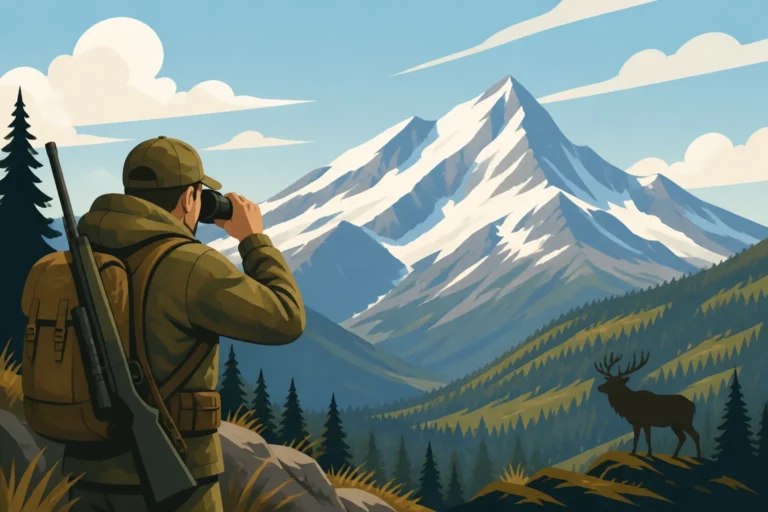
The early September archery season in the Blues is an exhilarating time, coinciding with the peak of the elk rut. Bulls are often vocal, bugling their challenges across canyons and responding to cow calls. This is prime time for calling and aggressive tactics. Your strategy often begins with locating a herd. This might involve setting up on a high point at first light and using powerful binoculars or a spotting scope to glass distant ridges and canyon bottoms, listening intently for those telltale bugles. Bugling and Cow Calling in Washington's Archery Elk Season is a critical skill here.
Once a bugle is located, the real work begins. You'll need to use the terrain to your advantage, closing the distance while staying downwind. Wind direction is everything; elk have an incredible sense of smell, and a shifting breeze can ruin a setup instantly. Aggressive calling, mimicking herd sounds with cow calls and satellite bull bugles, can often draw a bull in, especially if he thinks he's defending his cows or challenging a rival. Sometimes, though, the best tactic is to use soft cow calls to locate a herd and then silently stalk into their bedding area, hoping to catch a bull off guard. Remember, these are not captive animals; they are wild, smart, and often heavily pressured.
Rifle Season Challenges: Hunting Pressure and Migration
Rifle season in the Blue Mountains, typically starting in October, brings a different set of challenges. The sheer volume of hunters increases dramatically, putting significant pressure on elk. Animals that were vocal during the rut often become quieter and more reclusive, retreating into the thickest, nastiest timber they can find. This is where your pre-season scouting pays off, identifying those overlooked pockets of cover, steep draws, and remote benches that other hunters avoid.
During rifle season, elk behavior shifts from rut-driven to survival-driven. They will often move to dense bedding areas during the day and feed primarily at night or in very low light. This means still-hunting through thick timber, paying meticulous attention to wind and sign, becomes crucial. You might find elk beginning their migration to lower elevation winter ranges as snow starts to accumulate at higher elevations, making travel corridors and pinch points excellent places to intercept moving animals. Understanding these Elk Migration Timing in Washington patterns can give you a significant advantage. This often involves long, silent walks, punctuated by periods of stopping, listening, and carefully scanning your surroundings.
Late Season Opportunities: Snow and Winter Range
Late season hunts in the Blue Mountains, if you're lucky enough to draw a tag or have access to a specific unit, are defined by snow. As the snow deepens at higher elevations, elk are forced down onto their designated winter ranges. These lower-elevation areas, often WDFW wildlife areas or accessible timber company lands, can concentrate elk, providing unique opportunities. However, access can be severely limited by snow-covered roads, and some winter ranges are closed to protect the animals.
Hunting in deep snow requires specialized gear, including snowshoes, and an even higher level of physical endurance. Tracking becomes a primary tactic; fresh snow reveals exactly where elk have been and which way they're heading. The ability to Tracking a Buck After a Fresh Snow (or elk) can be a game-changer. However, finding elk on winter range also means you must be extra cautious about disturbing them, as their energy reserves are critical for survival. Ethical hunting practices and strict adherence to regulations regarding winter range closures are paramount to ensuring the health of the herd.
Deer Hunting: Mule Deer and Whitetails
While elk often steal the spotlight in the Blue Mountains, the region also offers excellent deer hunting for both mule deer and pockets of whitetails. Each species presents its own unique challenges and requires different strategies to be consistently successful.
Glassing for Mule Deer in Open Country
Mule deer in the Blues typically inhabit the more open, broken country, preferring the ponderosa pine stands, brushy draws, and canyon edges. Their natural inclination is to use their incredible eyesight and the terrain to avoid detection. This makes Glassing Eastern Washington Breaks for Mule Deer an incredibly effective tactic. Finding a high vantage point at first light or last light and methodically scanning distant slopes, clearcuts, and shadowed draws with high-quality binoculars or a spotting scope is often the most productive way to locate a buck.
Look for subtle movements, a horizontal line in a vertical world, or the flick of an ear. Mule deer often bed down on slopes where they can see below them and have the wind at their backs, allowing them to smell anything approaching from above. Once you spot a deer, the stalk begins. This is where careful planning, patience, and using every bit of available cover become essential. Wind direction is critical, as is understanding how to approach the animal without being seen or heard in the often-loose, noisy terrain.
Still-Hunting Whitetails in Northeast Blue Mountain Foothills
While mule deer dominate much of the Blues, pockets of white-tailed deer can be found, particularly in the northern and northeastern foothills, often in areas with more agriculture, thicker timber patches, and brushy creek bottoms. Whitetails are masters of cover, and their strategy relies on stealth and quick, explosive bursts of speed. This makes traditional Western glassing tactics less effective.
Instead, still-hunting through their preferred thickets, riparian zones, and timber stands is often the most productive method. This involves moving incredibly slowly, taking one or two steps, then stopping for several minutes to scan, listen, and let your eyes pick apart the dense cover. Look for horizontal lines, patches of lighter hair, or the telltale flash of white. Understanding Whitetail Rut Timing in Washington can also provide opportunities for stand hunting near active scrape lines or pinch points where bucks are cruising for does. Patience and a keen eye for detail are your best allies when pursuing whitetails in this type of habitat.
Rut Timing and Stand Hunting Opportunities
Both mule deer and whitetails in the Blue Mountains experience a rut period, typically in November. For mule deer, this means bucks become less cautious, actively seeking does, and can sometimes be found in more open areas than usual. Understanding how to Rattling and Grunting for Blacktails (which can also work for mule deer, albeit with some adaptation) or simply observing active scrape lines can lead to encounters with rutting bucks.
For whitetails, the rut is a prime time for stand hunting. Identifying natural travel corridors between bedding and feeding areas, pinch points where deer are funneled by terrain or dense cover, or areas with fresh rubs and scrapes can lead to successful ambush points. Setting up before first light and remaining still and patient for extended periods is key. While not as common as in the Midwest, careful scouting for these opportune locations can yield big results during the late deer season in the Blues.
Bear and Cougar Hunting Considerations
Beyond elk and deer, the Blue Mountains offer exciting opportunities for black bear and cougar hunting, species that contribute to the region's rich biodiversity and present their own unique challenges.
Spot-and-Stalk Bear Hunting Areas
Black bears are common throughout the timbered regions of the Blue Mountains, particularly where food sources are abundant. In late summer and early fall, bears will be actively feeding to put on weight for winter. This makes areas rich in huckleberries, serviceberries, and other mast crops prime locations for Spot-and-Stalk Bear Hunting in Washington Without Bait. Identifying these specific food sources through scouting is crucial. Look for scat, overturned rocks, and broken branches in berry patches.
High-elevation meadows, avalanche chutes, and the edges of recent clearcuts that are regenerating with palatable vegetation are also excellent places to glass for bears. Often, bears will emerge into these open areas to feed during cooler morning and evening hours. Patience and good optics are your friends here. Once a bear is spotted, a careful stalk, always mindful of wind direction and escape routes, is necessary. Remember to correctly Judging Bear Size at Distance to ensure it's a legal animal and not a sow with cubs, which are protected.
Reading Cougar Sign and Calling Techniques
Cougar hunting in Washington, especially after the hound ban, is one of the most physically demanding and challenging pursuits available. These elusive predators are masters of stealth, constantly moving within their vast territories in search of prey. In the Blue Mountains, cougars thrive on the abundant elk and deer populations. Success often comes down to dedication, understanding cougar behavior, and covering extensive ground.
One of the most effective strategies is to Reading Cougar Sign in the Snow. Fresh snow reveals their tracks, indicating recent movement and potential kill sites. Following a fresh track can lead you to a cougar, though it can be a multi-day ordeal requiring significant endurance. Without snow, look for scat, scratch marks on trees, and caches where they've buried a kill. Another tactic involves predator calling. Using fawn distress calls or rabbit distress sounds can sometimes draw in a curious cougar, particularly in areas with dense cover where they feel secure. This often requires long, patient stands in carefully chosen locations, ensuring the wind is in your favor and you have good visibility.
Essential Gear and Preparation for the Blue Mountains
Hunting the Blue Mountains is an equipment-intensive endeavor. The rugged terrain and unpredictable weather demand reliable gear that can stand up to the challenge. Skimping on essential items can not only lead to discomfort but can also compromise your safety and success.
Optics for Long-Range Glassing
Good optics are non-negotiable for hunting in the Blue Mountains, especially for species like mule deer and elk that are often spotted at great distances. A quality pair of 10×42 binoculars is a solid starting point, offering a good balance of magnification and field of view for scanning timber and closer ranges. However, for truly effective long-range glassing across wide canyons and distant ridge lines, a pair of 15×56 binoculars or a high-quality spotting scope mounted on a sturdy tripod can be a game-changer.
These higher magnification optics allow you to pick apart distant cover, identify subtle movements, and confirm if that dark spot is a rock or a bedded animal. A rangefinder with angle compensation is also essential for accurate shot placement in the steep, broken terrain common throughout the Blues. Investing in good glass will increase your effective scouting range and help you make more informed decisions in the field.
Footwear and Layering for Varied Conditions
Your feet will take a pounding in the Blue Mountains, so high-quality, supportive, and waterproof boots are paramount. Look for boots with stiff soles for good ankle support on uneven terrain and excellent traction for steep climbs and descents. Ensure they are well broken-in before your hunt to prevent blisters, which can quickly end a trip. Boots for Washington's Eastside Rock and Westside Mud need to be rugged and dependable.
Layering your clothing is equally critical due to the wide range of temperatures and conditions you'll encounter. A good layering system starts with a moisture-wicking base layer (merino wool or synthetic) to manage sweat. Mid-layers provide insulation, and a durable, waterproof and windproof outer shell is essential for protection against rain, snow, and wind. Rain Gear and Layering for Washington Hunts will save you from misery. Remember that quiet fabrics are important, especially for close-quarters hunting in timber. Always carry extra layers, even on day hunts, as weather can change drastically in a matter of hours.
Navigation and Communication in Remote Areas
The Blue Mountains are vast and remote, with limited cell service in many areas. Reliable navigation tools are not just convenient; they are a safety necessity. A dedicated GPS unit or a smartphone with a robust hunting app like onX Hunt or GoHunt, loaded with offline maps, public/private land boundaries, and satellite imagery, is essential. Mark your truck, camp, and important waypoints. These apps can show you the Green Dot road system and help you identify legal access points. Always carry a physical map and compass as a backup, and know how to use them, regardless of your digital tools.
For communication, beyond cell service, consider carrying a two-way radio to stay in touch with hunting partners. For true wilderness areas or solo hunts, a satellite messenger or personal locator beacon (PLB) is a critical safety device, allowing you to send emergency messages even when completely out of cell range. Always Leaving a Trip Plan at Home with someone reliable, detailing your intended route and return date.
Planning Your Hunt: Research and Permits
A successful hunt in the Blue Mountains begins long before you set foot in the field. Thorough research and understanding the permit system are critical steps that can make or break your season.
Special Hunt Permits Versus General Season
Washington offers both general season hunting opportunities and highly coveted Washington Special Hunt Permits and How to Apply. The Blue Mountains are home to several desirable special permit hunts for elk, moose, and even bighorn sheep. These permits are drawn through a lottery system and often offer extended seasons, specific weapon choices, or access to areas with higher game densities or trophy potential. While the odds of drawing a special permit can be low, applying is worth the effort for the quality of the hunt they often provide.
General season hunts, while more accessible, often coincide with higher hunter pressure and can require more creative strategies to find unpressured animals. It's crucial to understand the regulations for your chosen Game Management Unit (GMU), including antler restrictions, legal weapon types, and season dates. Whether you're hunting general season or with a special permit, always review the most current WDFW hunting regulations pamphlet.
E-Scouting and Pre-Season Reconnaissance
E-scouting is your secret weapon for the Blue Mountains. Before you even leave home, use tools like Google Earth, WDFW’s hunt planner maps, and detailed land ownership maps available on platforms like onX Hunt. Look for key features: south-facing slopes for early season feeding, dark timber for bedding areas, natural travel corridors between different habitat types, water sources, and potential access points or barriers. Identify Green Dot roads and potential walk-in areas.
Once you have a few promising spots identified, if possible, conduct some pre-season reconnaissance. Even a few days spent hiking into potential areas, looking for sign, and understanding the terrain can provide invaluable insight. You can find out if old logging roads are still passable, locate active game trails, and see how the vegetation actually looks on the ground versus on a map. This ground-truthing can confirm or deny your e-scouting assumptions and save you precious hunting time. Public Land Scouting in Washington Before Opening Day is a habit every serious hunter should adopt.
Staying Informed on Regulations and Closures
The regulatory landscape in Washington, especially concerning land access and seasonal closures, is dynamic. Fire restrictions, road closures due to weather, timber company policy changes, and WDFW emergency rules can all impact your hunt. It is your responsibility to stay informed. Regularly check the WDFW website for emergency rule changes, harvest reports (especially for cougar seasons which close by quota), and current information on specific wildlife areas.
Additionally, always check the Umatilla National Forest website for information on road conditions, trail closures, and fire restrictions, particularly during dry hunting seasons. Local WDFW offices and forest service ranger stations can also be excellent resources for the most up-to-date local conditions. Being prepared for these changes means you can adapt your plans rather than having your hunt completely derailed.
| GMU Name | Primary Game Species | Terrain Type | Key Access Notes |
|---|---|---|---|
| Mayview (149) | Elk, Mule Deer, Whitetail | Steep, timbered canyons, open benches | Mix of public & private; Green Dot system prominent. |
| Tucannon (154) | Elk, Mule Deer, Whitetail | Diverse, deep river breaks, dense timber | W.T. Wooten Wildlife Area; private timber. |
| Dayton (162) | Elk, Mule Deer | Rolling hills, timbered draws, agricultural | Mix of private farms and public timber. |
| Blue Creek (166) | Elk, Mule Deer, Bear | Steep timber, high country, deep canyons | Umatilla National Forest access; remote areas. |
| Wenaha (172) | Elk, Mule Deer, Bear | Rugged wilderness, dense forest | Wenaha-Tucannon Wilderness; walk-in only. |
| Grande Ronde (175) | Elk, Mule Deer, Whitetail | River breaks, open grasslands, timbered rims | Mix of private & public along Grande Ronde River. |
Field Care and Packing Out in the Blues
Successfully harvesting an animal in the Blue Mountains is just the first step. The real work, and often the most grueling, begins when it’s time to care for your meat and pack it out of this unforgiving terrain. Being prepared for this challenge is crucial for both meat preservation and hunter safety.
Rapid Field Dressing and Cooling Techniques
The Blue Mountains can get warm, even in early fall, and proper field care is paramount to preserving the quality of your meat. Once an animal is down, especially an elk, time is of the essence. You need to rapidly field dress the animal to begin the cooling process. Removing the entrails quickly dissipates body heat, which is the primary enemy of fresh meat. If you're in a remote location and anticipating a long pack out, or if the weather is warm, consider using The Gutless Method on an Elk. This method allows you to break the animal down into quarters and boneless meat without gutting, making it faster and cleaner, and often more efficient for packing.
Once quartered, get the meat into breathable game bags immediately. Do not use plastic bags, as they trap heat and moisture, promoting bacterial growth. Hang the game bags in the shade, allowing air to circulate around them. If temperatures are high, fanning the meat or even placing bags in a cool stream can help accelerate cooling. Getting the meat cooled down quickly is the single most important step to prevent spoilage.
The Challenge of Packing Out Heavy Loads
Packing an elk or a large mule deer out of the Blue Mountains is a monumental task. The terrain is relentlessly steep, often covered in downed timber and thick brush. You'll be crossing numerous drainages, climbing steep ridges, and battling fatigue. A good external frame pack designed for heavy loads is indispensable. Don't underestimate the weight of an elk quarter; a front shoulder can weigh 70-80 pounds, and a hindquarter even more.
Expect to make multiple trips, especially if you're hunting solo or with a small group. Pace yourself, take frequent breaks, and stay hydrated. Consider using trekking poles to help with stability and reduce strain on your knees, especially on descents. Packing an Elk Out of Washington's Backcountry is an experience that will test your physical and mental limits, but the reward of wild game meat makes it all worthwhile. Never push yourself beyond your physical limits, as accidents often happen when exhaustion sets in.
Staying Safe and Prepared for Emergencies
The Blue Mountains are truly wild country, and safety should always be your top priority. Accidents can happen, and in remote areas with no cell service, help can be hours or even a day away. Always hunt with a partner if possible, and stick to your agreed-upon plans. If hunting solo, take extra precautions and carry a satellite messenger.
Beyond navigation and communication, always carry a comprehensive first-aid kit capable of handling trauma, cuts, blisters, and other common hunting injuries. Know how to build a fire, even in wet conditions, and carry emergency shelter. Be aware of the risks of hypothermia, even on mild days, as rain and wind can quickly drop core body temperature. Understand local wildlife, including potential encounters with wolves or bears, and know how to react. A well-prepared hunter is a safe hunter, and in the Blue Mountains, preparation means the difference between a memorable hunt and a dangerous ordeal.
Disclaimer
This article is for general informational purposes only and does not constitute professional advice. Laws, prices and regulations vary by location and change over time. Consult a qualified professional for guidance on your specific situation.